
Jinghe Goji: The Red Ruby of China’s Goji Hometown, Made for Eating Dry or Steeping Alike
红果千畦映日红 Hóng guǒ qiān qí yìng rì hóng – A thousand fields of red fruit mirror the sun
Jinghe County is a nationally designated hometown of goji, set on the Tianshan’s northern foot – directly downwind of the Alashankou gales. Where other places fear wind, Jinghe prays for it: the dry gales sanitize the fields and hold off disease, while the day-night swing locks sugar into the fruit. From June through October the county’s hundreds of thousands of mu of goji redden in sequence, drying floors turn to red carpets, and the air itself carries a faint sweetness of fruit.
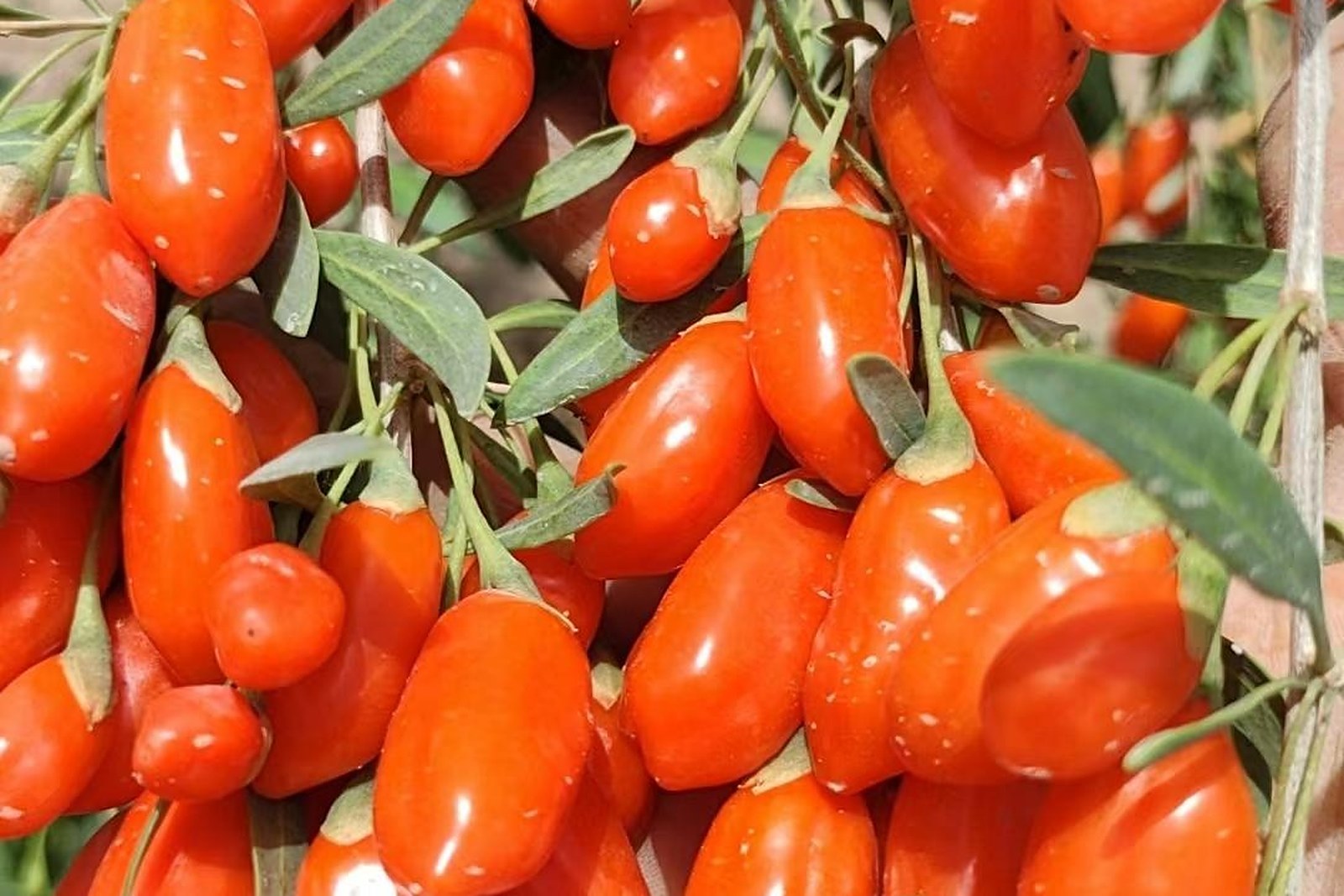
The growing side is undergoing a quiet upgrade: more and more plots run drip lines and biological control – insect lamps at the field heads, sticky boards between branches, chemical pesticide pressed to a minimum. Cooperatives standardize inputs, purchasing, and grading; grower incomes have risen about thirty percent over the scattered-planting era, and residue-test pass rates hold high. Every top-grade bag you buy condenses this oasis’s agricultural modernization – the red fruit’s confident sweetness rides on a cleaner chain. Veterans still remember drying fruit at the mercy of the sky; today’s yards run transparent rain shelters, and no sudden shower can rob a year’s harvest.
Jinghe’s wind does one more turn of work at the drying yards: fresh fruit spread on bamboo mats dries fully in two days of hot dry wind, plumper than oven-dried fruit – wind-drying keeps a layer of fruit aroma that baking loses, the first watershed between Jinghe fruit and everyone else’s. Old growers sort the two at a glance: wind-dried shows shallow wrinkles and a whitish stem scar; oven-dried runs darker and more shriveled.
Jinghe’s goji history starts in the 1960s with seed stock from Ningxia – and the climate here outdid the origin: more gale days, longer sunshine, a wider day-night swing, fuller sugar and pigment in the fruit. Today Jinghe goji is a nationally protected geographical-indication product, the county’s planted area steady at well over a hundred thousand mu, its dried-fruit output a serious share of the national total.
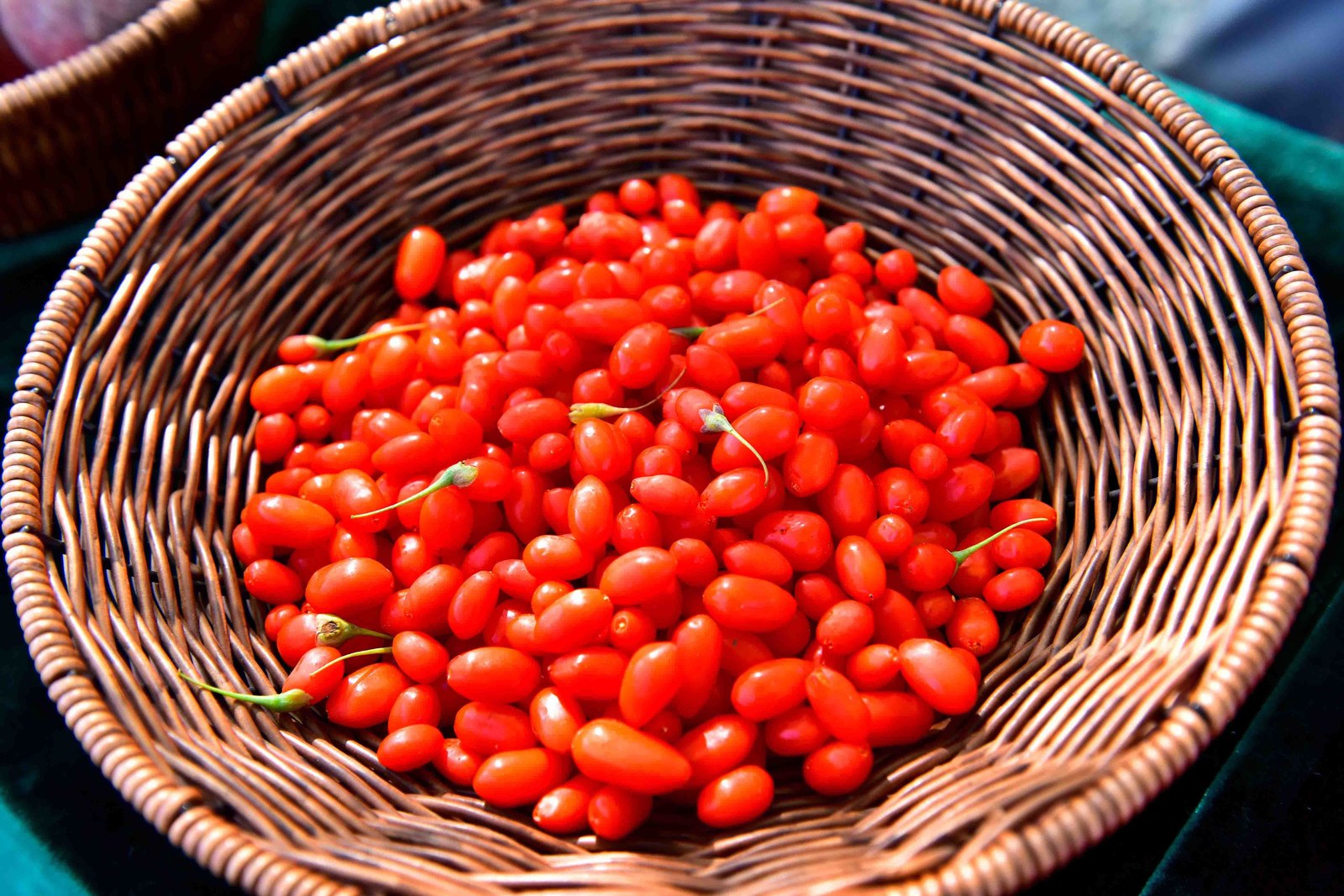
The fruit looks the part: large grain, thin skin, thick flesh, few seeds – dried to a deep, restrained crimson, non-sticky and non-clumping in the palm. Eating it dry is the harshest quality exam: good Jinghe fruit opens faintly sour, then unrolls a long returning sweetness with no bitter tail. Locals throw a handful into steeped water, congee, and stew alike – the red in the thermos against the steppe’s green.
Beyond the red fruit, the same 博尔塔拉蒙古自治州 Bó’ěrtǎlā Měnggǔ Zìzhìzhōu Bortala Mongol Autonomous Prefecture holds other flavors: 赛里木湖冷水鱼 Sàilǐmù Hú lěngshuǐyú Sayram coldwater fish, 手把肉 shǒubàròu hand-grabbed lamb, 蒙古奶茶 Měnggǔ nǎichá Mongol milk tea, and 风干羊肉 fēnggān yángròu wind-dried mutton – four more doors into the same 博尔塔拉蒙古自治州 Bó’ěrtǎlā Měnggǔ Zìzhìzhōu Bortala Mongol Autonomous Prefecture. With the goji bagged, our Bortala travel map fills the day.
A short oleaster tree lines many goji fields – the shelterbelts the older generation planted to hold sand and wind. In May their blossom steeps the whole oasis in sweetness, timed before the goji’s June blush, yielding spring’s sugar to the flowers. Growers say the oleaster roots fix nitrogen and feed the soil – the old nanny of the goji fields; half the red fruit’s sweetness belongs to these unassuming trees.
The most ceremonial scene is dawn harvest: with dew still on, the skin is toughest and picks without bursting; crews enter the rows at five with lamps lit, each picker gathering thirty-odd kilograms a day. Fresh fruit must not be crushed – the field carts run padded with cloth, shuttling basket after basket to the drying yards. The red industry’s red is pushed out one basket at a time.
Grading is a public science here: top, first, and second grades by grain size; spring, summer, and autumn fruit by picking round. Buyers check three things – color: deep oily crimson means sun-dried naturally, eye-popping scarlet suggests tampering; shape: a white fleck at the fruit-cord mark marks a good one; texture: a handful that falls loose with a sandy rustle is dry enough.
June’s first flush is the most precious, August’s summer crop the biggest, and the county’s goji trading market runs all day through harvest – sorting, grading, and loading lines without visible end. With timing, you can watch pickers’ fingers blur in the rows: goji must be picked by hand, every grain a feat of fingertips.
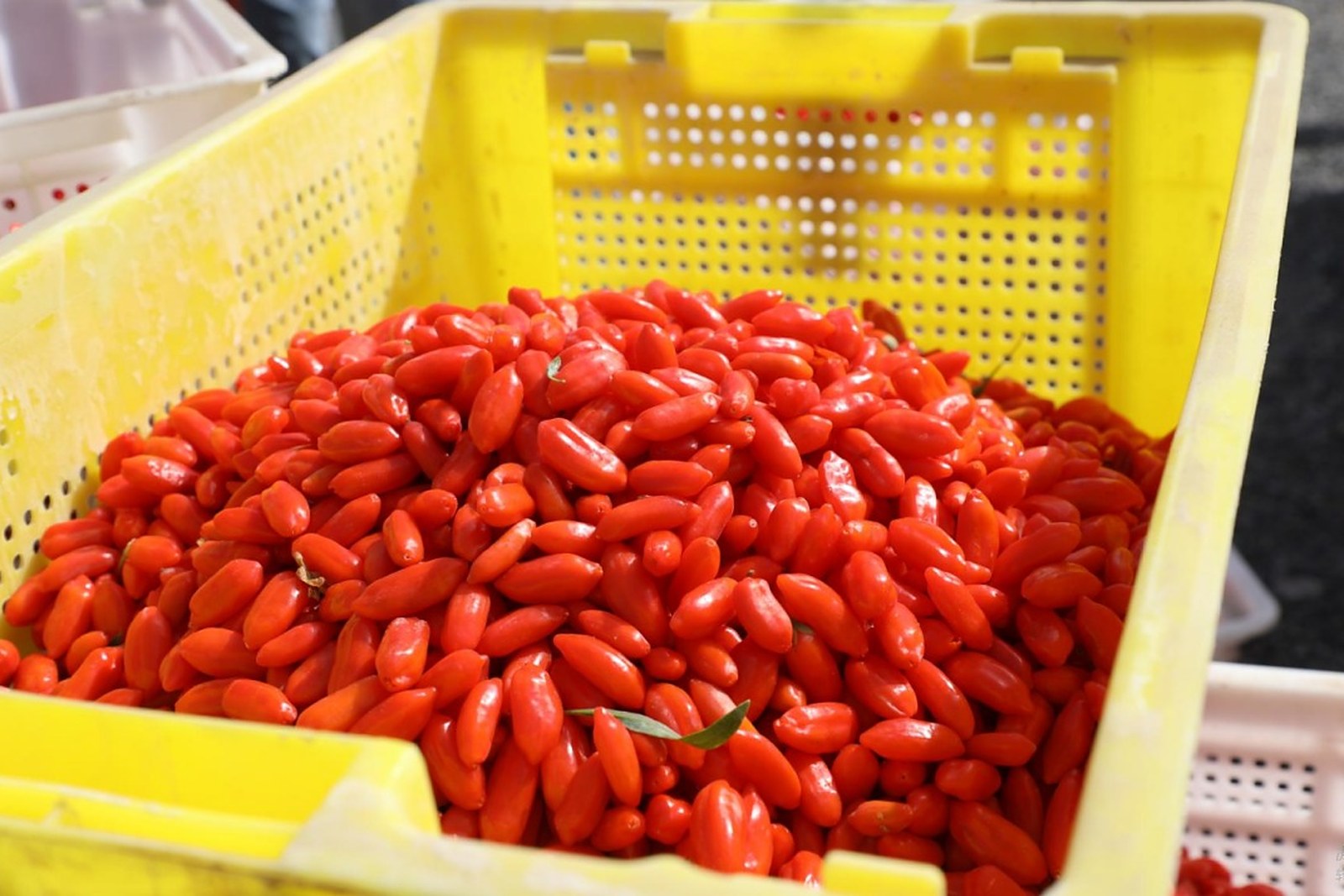
If time is short, the specialty shops at Jinghe’s expressway service area sell the real thing – geographical-indication products are registered in the channel and cannot be faked. Prices run a touch above the county market, but the detour into town is saved. Veterans buy two bags: one for the road, one for gifts – the red berry is this highway’s handiest souvenir.
Deep processing keeps arriving: goji puree, goji cake, goji beer – red products claim half the county supermarket shelf. The puree is the recent hit: tear a sachet and drink, compressing the daily handful of goji into three seconds, with young consumers now the main force.
Local cooking goes far beyond steeping: goji-stewed lamb ribs are the winter dish for honored guests, the fruit swelling translucent in the broth; goji honey water is the summer cooler; even the ice-cream shops pour a goji flavor – red fruit and milk fat, an unexpected harmony. County restaurants cook fresh goji in season, the June-July fruit’s clean sweet-sour available only at origin.
Each late-June first flush is called the goji world’s 「first-pick tea」 – largest grains, fullest flesh, highest price – and savvy buyers reserve with growers in advance. July-August summer fruit is the volume backbone at friendly prices for daily steeping; autumn fruit runs small but sugar-heavy, the choice for congee and infusions.
For the industry’s full picture, the Goji Culture Hall in the county town is worth an hour: breeding, planting, picking, drying, and grading shown with specimens and panels, hands-on picking included. Outside, the drying yards blanket red in harvest – the whole field a carpet of rubies.
The trading market peaks about ten in the morning: supplies from each township converge, and inspecting, haggling, weighing, and loading flow in one motion, the air thick with dried-fruit sweetness. Outside buyers work the sacks with sampling probes – weigh a grain, snap a grain, taste a grain, and thirty seconds grades the lot. For loose retail, use the street-front shops: fairer prices than the roving stalls.
One hidden game: drive the goji-themed village loop, which strings the core growing villages together with viewpoints and photo boards – at harvest the whole road runs red, and any field ridge frames a poster shot. Village shops pour growers’ own goji-leaf tea, clean and returning-sweet, a different character from the red fruit; deft housewives steam goji flower-rolls and buns, purple-red doughs made for the camera. The loop ends at the Jinghe River Estuary national nature reserve: red fruit, then wetland – waterbirds rising through the reeds, two colors in one camera day.
Words and Names
What the Locals Know
flowcloud would say Jinghe goji is a red blended by wind and sun: the gales here are not a hazard, they are the quality inspector.All checked November 2026.
Where to find it: The county-town trading market is the one-stop point – look for plump grains and even, deep crimson top-grade fruit; for field scenery take the country roads around town, with harvest scenes running June through October. All checked November 2026.