
A Thousand Years of Curing: Jinhua Ham, the Leg That Seasons China
雪腿腌成琥珀色,一刀切下满堂香 Xuě tuǐ ānchéng húpò sè, yī dāo qiē xià mǎn táng xiāng – A snow-white leg cured to amber; one slice fills the hall with fragrance
金华火腿 Jīnhuá huǒtuǐ Jinhua ham is the cured hind leg that has seasoned Chinese kitchens since the Tang dynasty – a 两乌头 liǎngwūtóu two-black-white local pig’s leg, salted, pressed, washed and sun-dried through the winter, then aged until the flesh turns amber-red and the fat smells faintly of chestnuts. The technique reads like a calendar: salting in the coldest weeks, washing and sunning as spring warms, fermenting through summer until the surface wears its coat of green mold the way a good cheese does. Sliced paper-thin it eats sweet-salty on its own; diced it is the secret engine of 火踵神仙鸭 huǒzhǒng shénxiān yā duck simmered with ham knuckle and a hundred other dishes that borrow its salt.
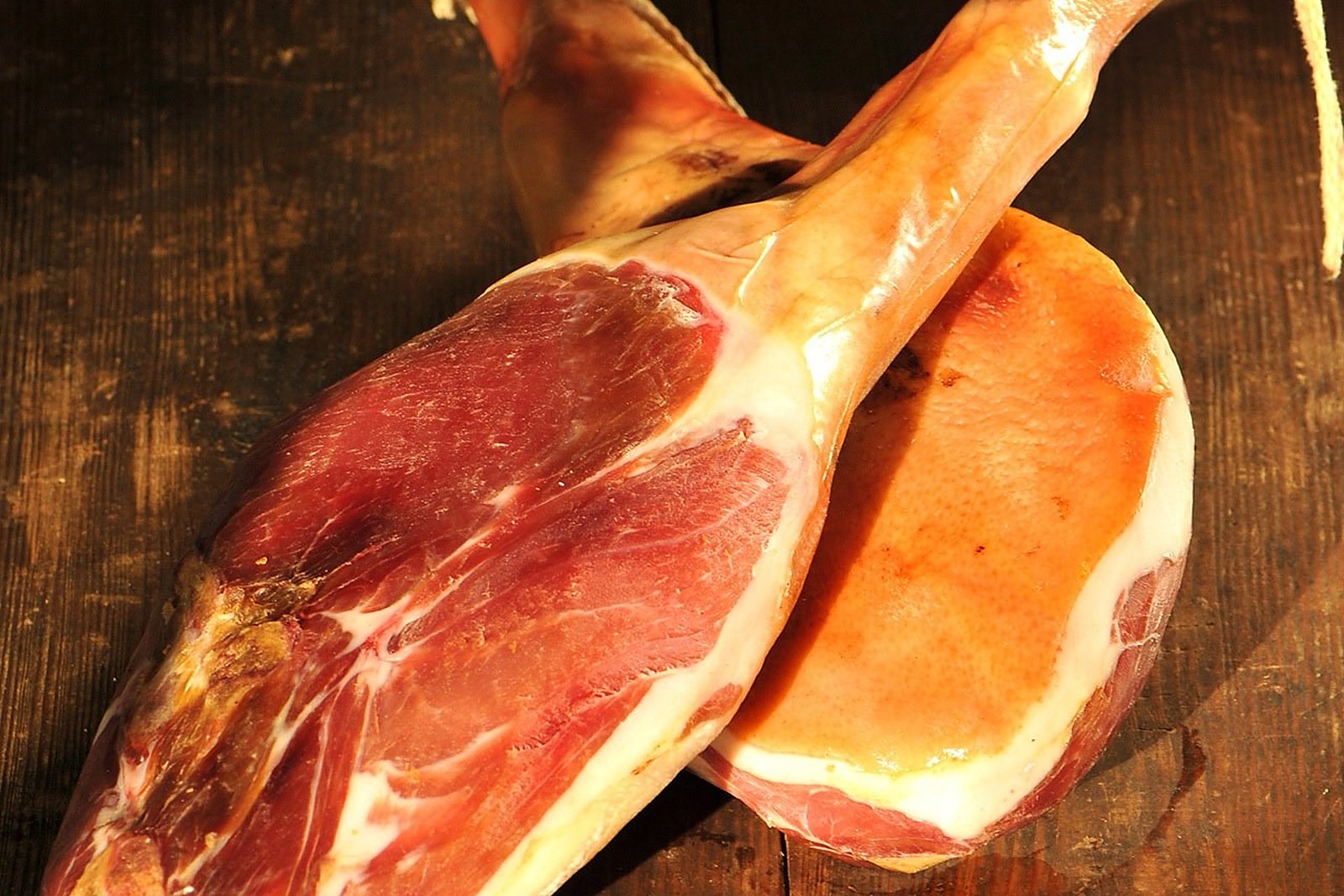
The real thing carries the bamboo leaf brand and the shape of the leg itself – slender shank, round hip, the paw curled under. Supermarket rows sell vacuum packs; the warehouse shops around the old quarter sell whole legs hanging like violins, each stamped with the year it began.
Legend gives the invention to a Song-dynasty general, 宗泽 Zōng Zé Zongze, whose hometown armies carried salted legs on campaign and brought the taste back to the imperial court. Whatever the truth, Jinhua’s guilds codified the craft centuries ago, and today the licensed workshops still grade legs by shape, weight and the traditional six_processes, many run by families whose names have cured ham for generations.
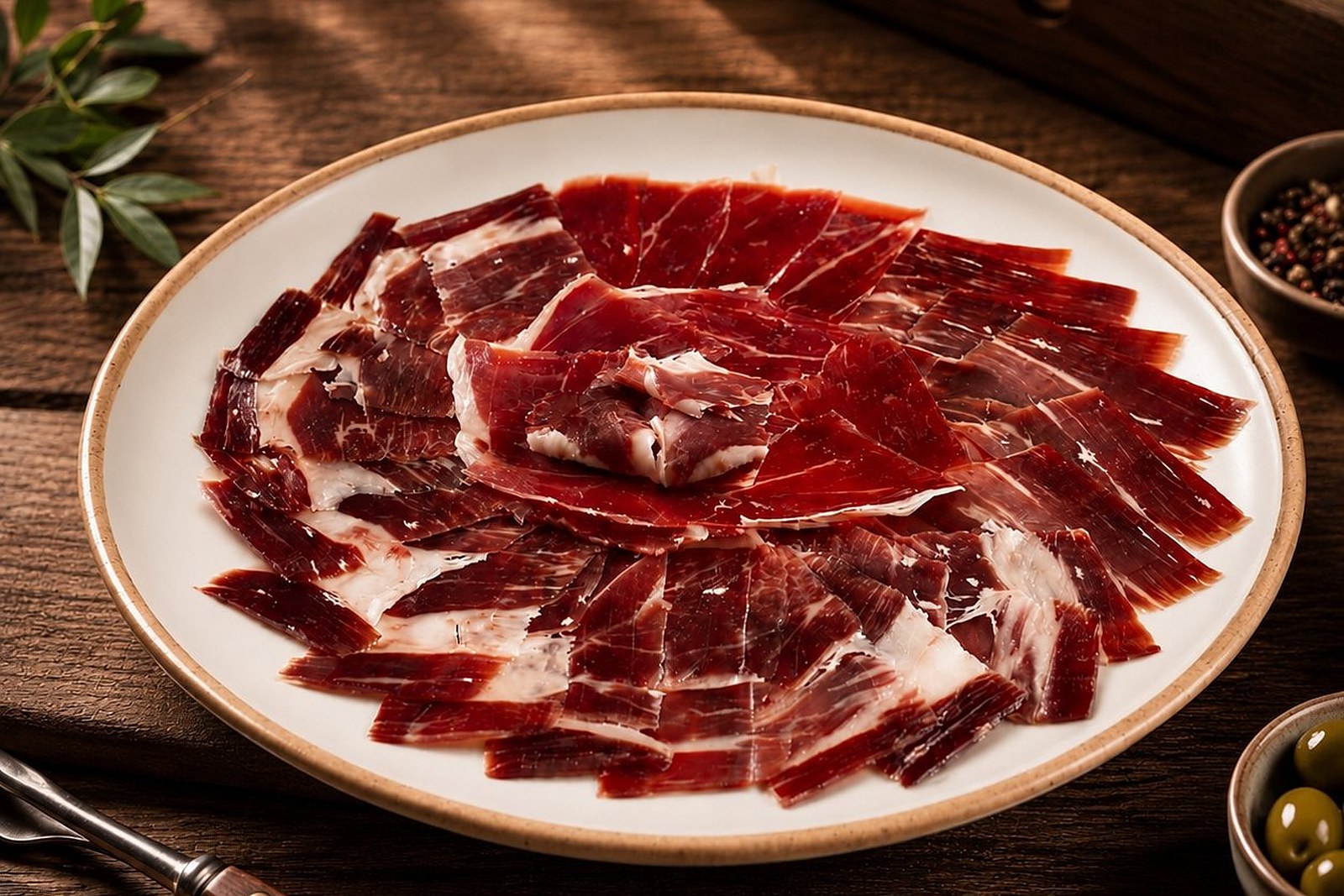
Eat it the local way: thin slices with tea in the morning, or the classic 蜜汁火方 mìzhī huǒfāng – amber cubes of ham steamed with lotus seed and a honey glaze, sweet and salt in one bite. Chefs will tell you the ham’s job is to give away its flavor: a rind added to broth transforms the pot without ever starring in it.
The same city holds more flavors worth chasing: 金华酥饼 Jīnhuá sūbǐng the crisp preserved-greens pastries, 鸡子馃 jīzǐguǒ the egg-filled pancakes, 肉麦饼 ròumàibǐng the pork-filled flatbreads, or 金华煲 Jīnhuá bāo the clay-pot stews – four more doors into the same 金华市 Jīnhuá Shì Jinhua City table.
Words and Names
火腿 huǒtuǐ ham, literally “fire leg”; 两乌头 liǎngwūtóu the local black-and-white pig breed; 蜜汁火方 mìzhī huǒfāng honeyed ham cubes with lotus seed; 宗泽 Zōng Zé the Song general of Jinhua legend.
What the Locals Know
The mold is the proof: a leg with an even bloom of green mold has fermented right, and locals shake the shank like a hammer – a hollow ring means the bone has loosened and the cure went deep. Buy whole legs in winter for gifting, and never refrigerate a cut face uncovered; a cloth of rice paper keeps the fat from browning.
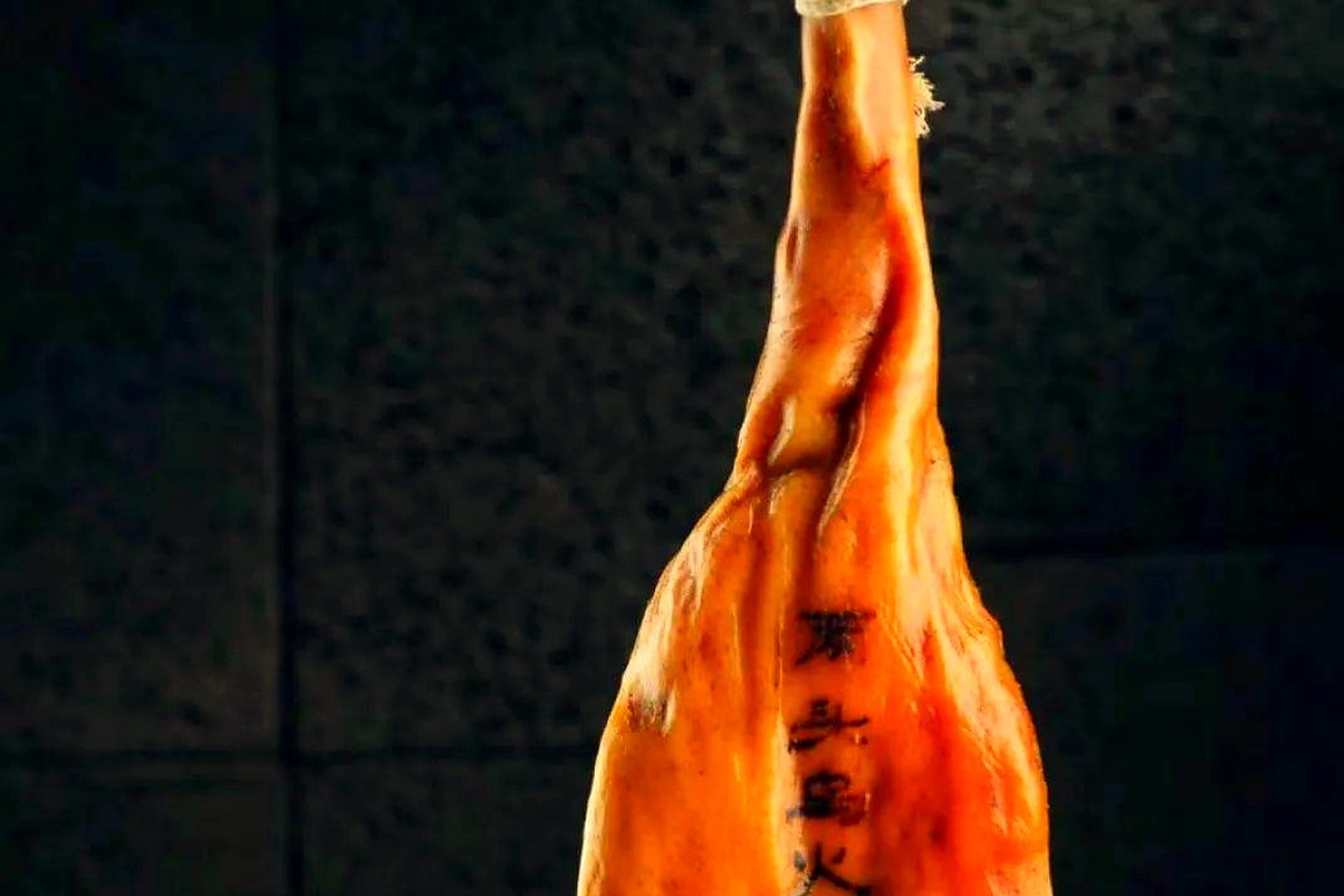
flowcloud would say Jinhua ham is winter pressed into amber: a leg that takes a year to learn patience, smells of chestnut and old courtyards, and salts a thousand pots it never sits in. All checked November 2026.
Where to find it: Ham shops cluster around Jinhua’s old town streets and the warehouse rows near the West Hill road – the pick is any licensed counter hanging whole legs with the bamboo-leaf brand, selling thin slices to taste and vacuum packs to carry, from tens of yuan for a packet to hundreds for a whole aged leg. All checked November 2026.