
Crisp as Autumn Leaves: Jinhua’s Preserved-Greens Pastry
千层酥皮藏干菜,炉边一咬碎满襟 Qiān céng sūpí cáng gāncài, lú biān yī yǎo suì mǎn jīn – A thousand flaky layers hide preserved greens; one bite by the oven scatters crumbs down your shirt
金华酥饼 Jīnhuá sūbǐng Jinhua crisp pastry is the city’s walking snack – a disc the size of a palm, laminated into flaky layers around a filling of 梅干菜 méigāncài preserved mustard greens and diced fatty pork, baked against the wall of a charcoal urn until the shell shatters and the filling goes dark and jammy. The dough gets its layers from lard rolled through it a dozen turns; the filling gets its depth from greens dried in autumn sun and steamed again, savory-sweet the way good preserved things are. Street ovens sell them warm by the paper bag, five or six to a serving, and the crumbs are part of the contract.
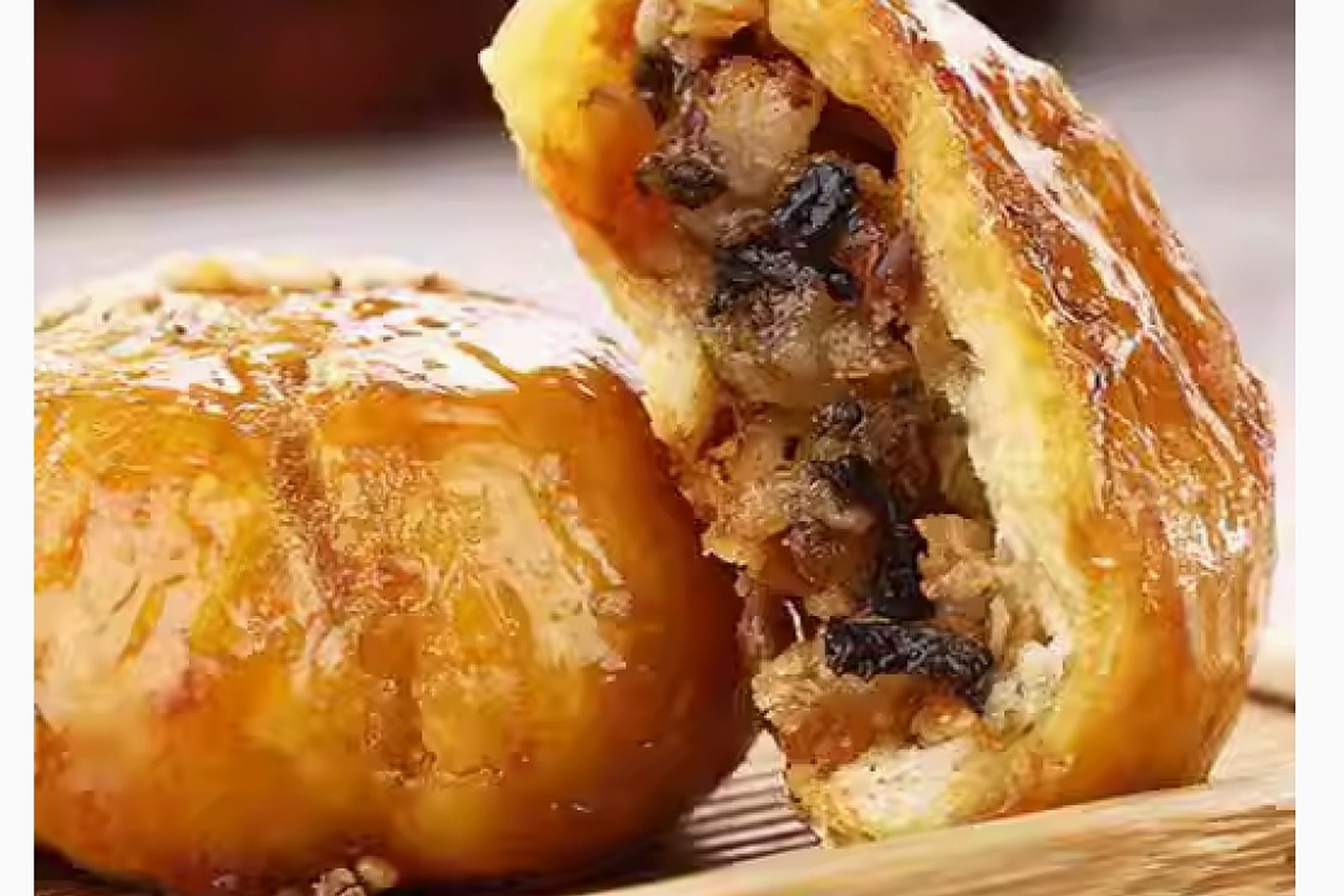
The ovens are urn-shaped and absolutely vertical: the baker slaps each disc onto the hot inner wall, pulls them blistered and golden minutes later, and the queue at a famous counter stretches past the neighboring shops on winter mornings. A proper subing shatters at first bite – if it bends, it is yesterday’s.
The pastry carries its own founding story: 程咬金 Chéng Yǎojīn Cheng Yaojin, the Tang rebel-general-turned-protective-god, is said to have sold flatbreads in Jinhua before better fortunes found him, and the trade’s old shops kept his portrait by the till. Whatever the lineage, the modern version – dry-fried greens, half-fat pork, sesame lid – was fixed by the guilds before the war and travels well: Jinhua emigrants pack subing the way other cities pack tea.
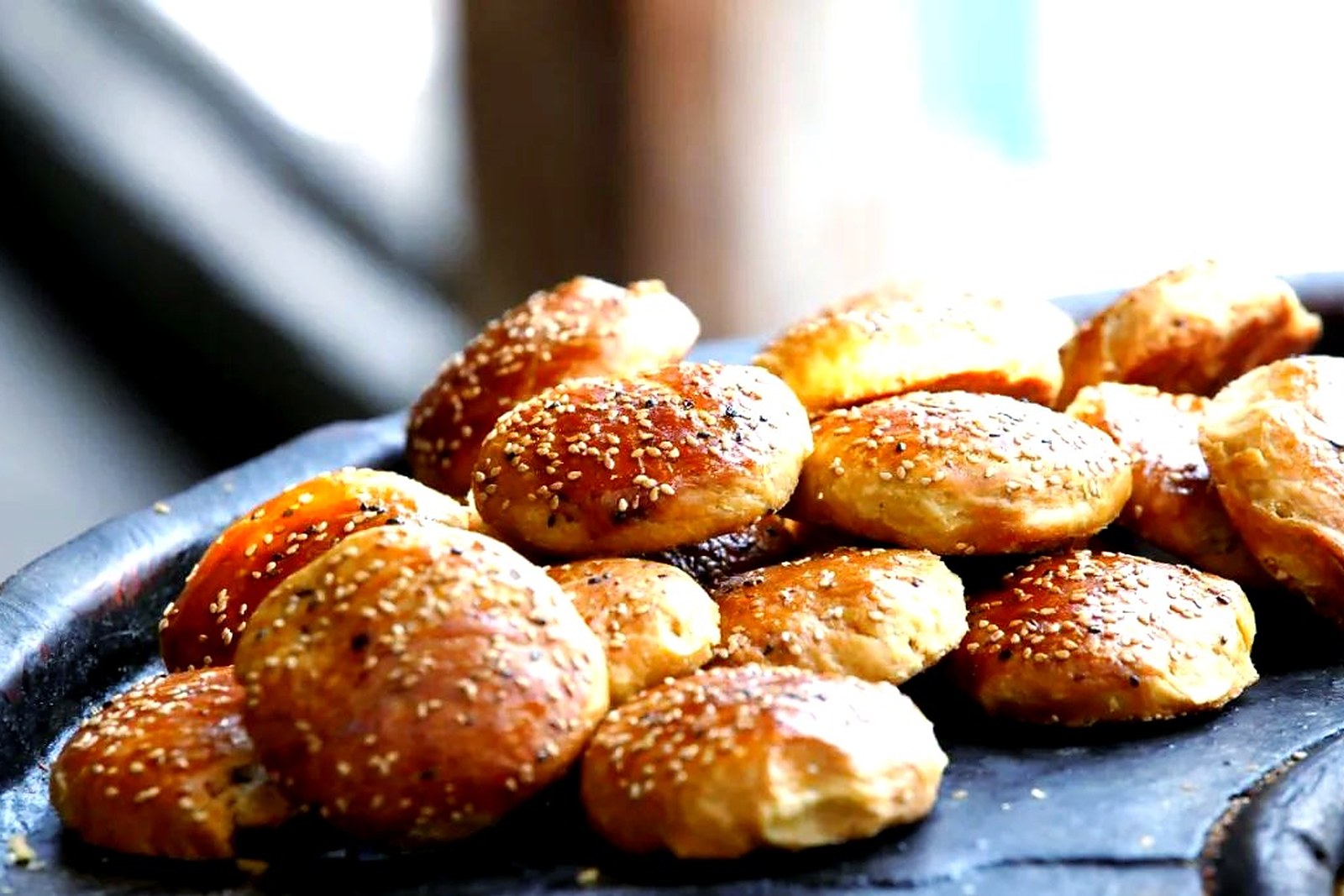
Eat them the local way: fresh from the urn, held in the paper bag, scalding crumbs and all – with a cup of tea for the long version. Shops pack them in tins for the train, and locals know the honest test: day-old subing should still snap at the edge, only the center softening.
The same city holds more flavors worth chasing: 金华火腿 Jīnhuá huǒtuǐ the thousand-year cured ham, 鸡子馃 jīzǐguǒ the egg-filled pancakes, 肉麦饼 ròumàibǐng the pork-filled flatbreads, or 金华煲 Jīnhuá bāo the clay-pot stews – four more doors into the same 金华市 Jīnhuá Shì Jinhua City table.
Words and Names
酥饼 sūbǐng crisp pastry; 梅干菜 méigāncài sun-dried fermented mustard greens; 程咬金 Chéng Yǎojīn the Tang folk hero of the pastry’s origin tale; 西市街 Xīshì Jiē West Market Street, the traditional oven row.
What the Locals Know
The greens are the argument: every shop dries its own in autumn, and the difference shows in the filling’s sweetness months later. Ask for 刚出炉的 gāng chūlú de – just out of the urn – and watch for the baker pulling a fresh wall of discs; a batch bought within ten minutes of the pull is a different food from the same counter at noon.
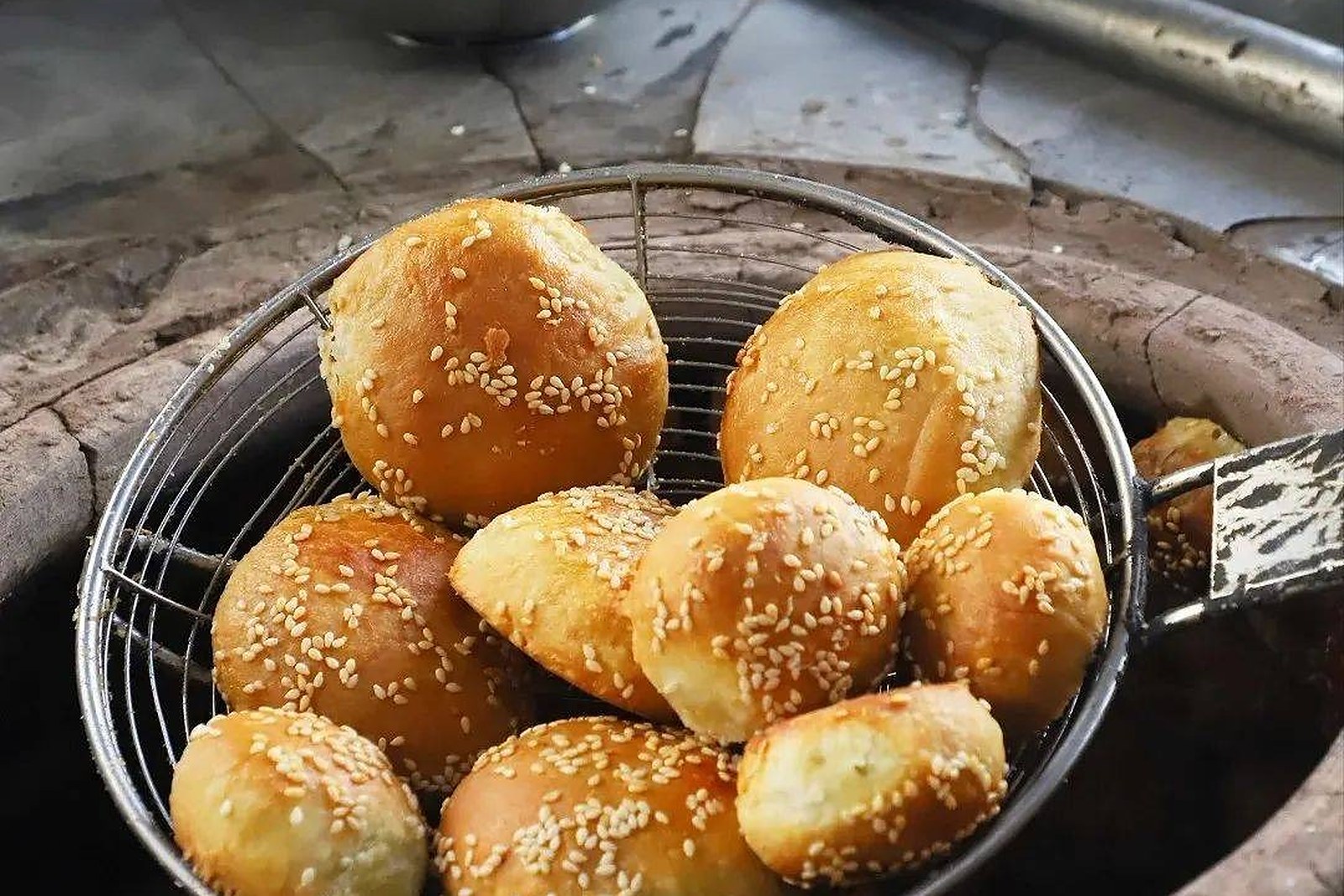
flowcloud would say a Jinhua subing is architecture you eat: a thousand paper-thin walls baked around a core of smoky greens, engineered to shatter – and the crumbs on your jacket are the receipt. All checked November 2026.
Where to find it: Subing ovens line the old streets around 西市街 Xīshì Jiē West Market Street and the station fronts – the pick is any urn oven with the queue, filling pressed the same morning and sesame lids blistered dark, a few yuan per paper bag, gone fastest before ten. All checked November 2026.