
Jinshanzhou Seafood: Shanghai’s Last Fishing Village, the Old-Street Seafood Stall Tables of Hangzhou Bay and the Season’s Whiting, Yellow Croaker, Shrimp and Crab in Jinshan District, Shanghai
渔村老街潮声近,虾蟹登盘带鱼肥。Yúcūn lǎojiē cháoshēng jìn, xiā xiè dēng pán dàiyú féi – In the fishing village’s old street the tide sounds close; shrimp and crab reach the plate and the whiting runs fat.
金山嘴渔村海鲜 Jīnshānzuǐ yúcūn hǎixiān Jinshanzhou fishing-village seafood is the bay-front fish trade of 金山嘴渔村 Jīnshānzuǐ Yúcūn Jinshanzhou fishing village on the 杭州湾 Hángzhōu Wān Hangzhou Bay shore of 金山区 Jīnshān Qū Jinshan District, Shanghai – the village billed as Shanghai’s last fishing village, where boats once landed the bay’s catch at the wharf and the 老街 lǎojiē old street still runs a few steps from the seawall. The eating is the village’s own grammar: 海鲜排档 hǎixiān páidàng seafood stall tables strung along the old street, their iced counters displaying the season as honestly as any menu – 带鱼 dàiyú hairtail off the autumn and winter runs, 黄鱼 huángyú yellow croaker the bay’s honoured name, 虾蟹 xiā xiè shrimp and crab according to the month – cooked to order behind the counters, steamed, braised or salt-fried as the fish demands (worth confirming the details – which catch is farmed and which landed, and which stall holds which street frontage turns over as old towns do, the specific doors best confirmed on the street rather than recited). What distinguishes the street is that the sea is the season: a table here is graded against what the bay actually gave that week, not against a printed list. The clientele is the weekend day-trip tide plus the village’s own morning buying loop. The blunt definition: Shanghai’s last fishing village eating off its own seawall – the taste of Jinshan eaten with the bay wind in it.
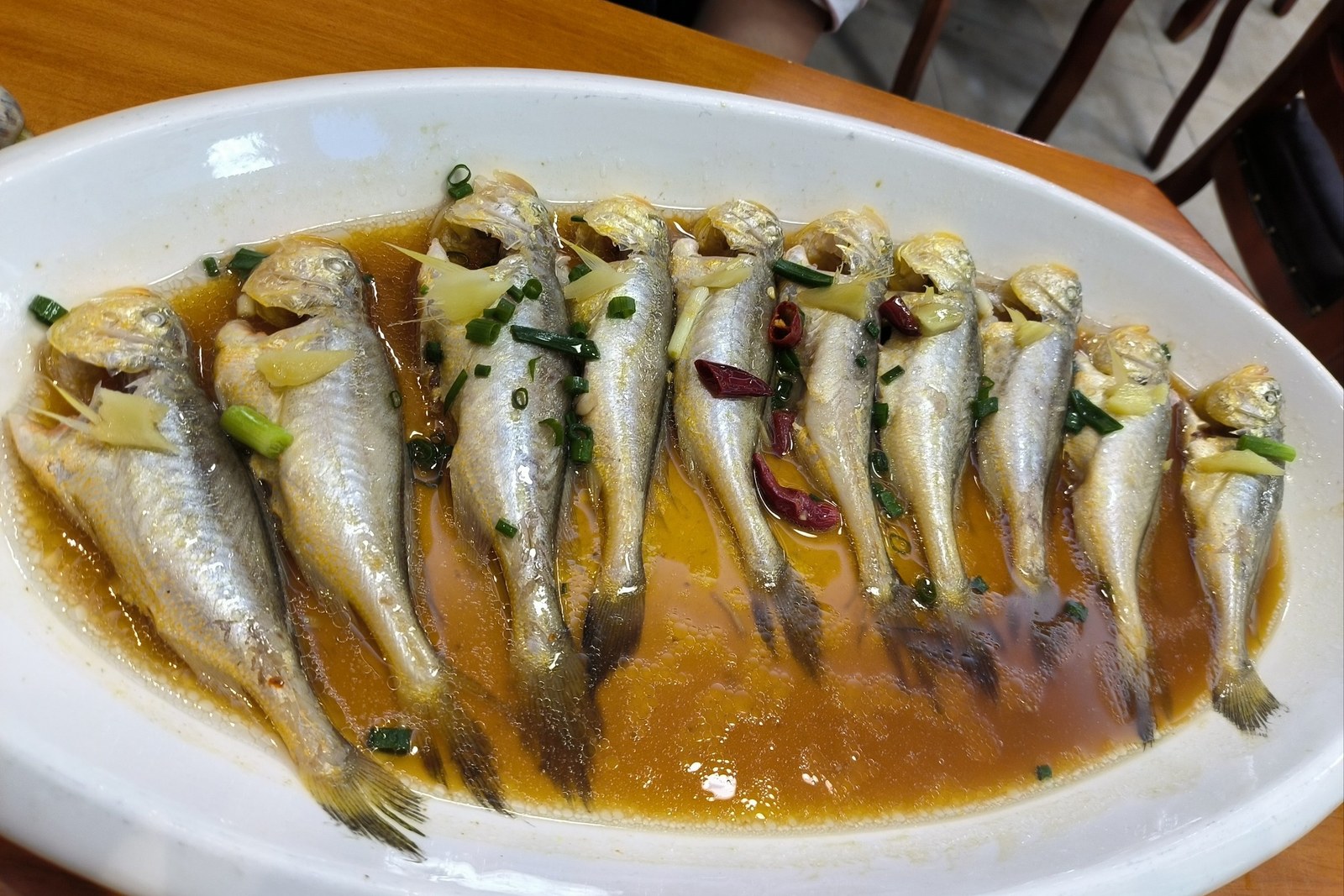
Call it honestly: bay-front money on a tide clock. Getting there is one door: 金山铁路 Jīnshān Tiělù the Jinshan Railway from the city’s south side to 金山卫站 Jīnshān Wèi zhàn Jinshan West station is the rail reach, and the last stretch to the fishing village runs by bus, short ride or a flat walk toward the seawall (worth confirming the details for the connecting services and which gate fronts the old street today, the approaches shifting with the village’s renewal works). A plate of steamed shrimp or a whiting segment prices at casual-neighbourhood money, a full seafood table for a group at occasion-within-reason money with the season’s big crab priced by its month – though exact figures are worth confirming the details on rather than quoting, the stall tables repricing with the catch and the visitor calendar. The crowds run to the weekend tide: Saturdays and Sundays pack the old street shoulder to shoulder and the iced counters empty early, weekday mornings belong to the village’s buying loop and the boats’ rhythm, and a weekday mid-morning, when the counters are laid for the day and the seawall runs quiet, is the eater’s own hour (worth confirming the details for individual stalls’ hours, which follow the tide and the catch more than any posted sign).
The honest star is the iced counter itself, graded catch by catch. What gets oversold is the “untouched hidden fishing paradise” framing: guides sell a secret village where every plate came off the boat that dawn, and a first-timer may meet an ordinary renewed old street of stall fronts, souvenir counters and seawall strollers – which is not the disappointment but the point. What repays the effort is grading the catch the way the village does: a steamed plate judged by whether the flesh parts in firm flakes rather than weeping water, a yellow croaker judged by whether it tastes of the bay rather than the freezer, a crab judged by whether the month’s run justifies the price on the board. The test costs nothing: point at the iced counter and ask what landed this week before you order from the wall menu, eat the steamed fish first – the plainest test of a kitchen – and take the stall table where the village’s own buyers queue rather than where the lamplight runs brightest (worth confirming the details – the doors migrate with the leases, and today’s plainest stall may be next season’s remembered one).
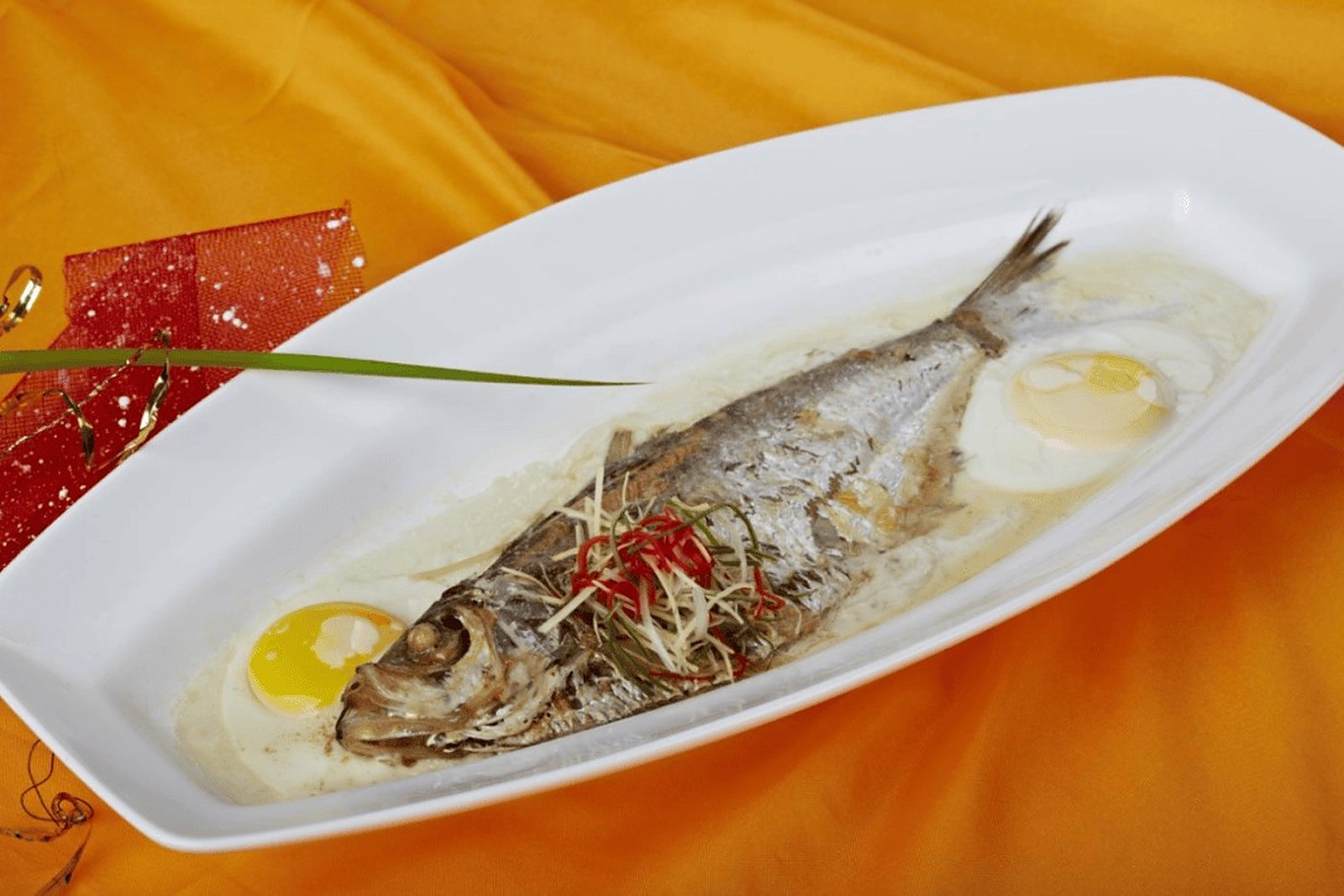
The village’s deepest habit is the tide-table arithmetic: mornings the counters are laid by what the boats and the fish farms gave overnight, midday the stall tables fire their steamers in sequence for the tide of visitors, evening the seawall empties and the kitchens cook for the village – a day shaped by the water before any posted hour. Time it right – a weekday mid-morning, the counters fresh-laid – and the street explains itself better than any plaque: the bay built the village, and the counters keep the account (worth confirming the details – which kitchens still cook the full live-catch range on quiet weekdays, the trade thickening on weekends and thinning when the weather closes the water).
The rest of this Jinshan list keeps other tables: the hundred-year braise of 枫泾丁蹄 Fēngjīng dīngtí Fengjing Ding trotter simmers in the old town to the north-west, the red-stamped tea cakes of 枫泾状元糕 Fēngjīng zhuàngyuán gāo Fengjing zhuangyuan cake bake in the same old town, the white-cut winter mutton of 张桥羊肉 Zhāngqiáo yángròu Zhangqiao mutton warms the district’s village tables, and the flat July peaches of 吕巷蟠桃 Lǚxiáng pántáo Lüxiang pan peaches ripen in the orchard park inland – one district, four more tables, all inside 金山区 Jīnshān Qū Jinshan District; and when the seawall afternoon needs a bed by the bay or a broader route, the stay-and-street notes for the district pick up where the tide tables leave off.
Words and Names
What the Locals Know
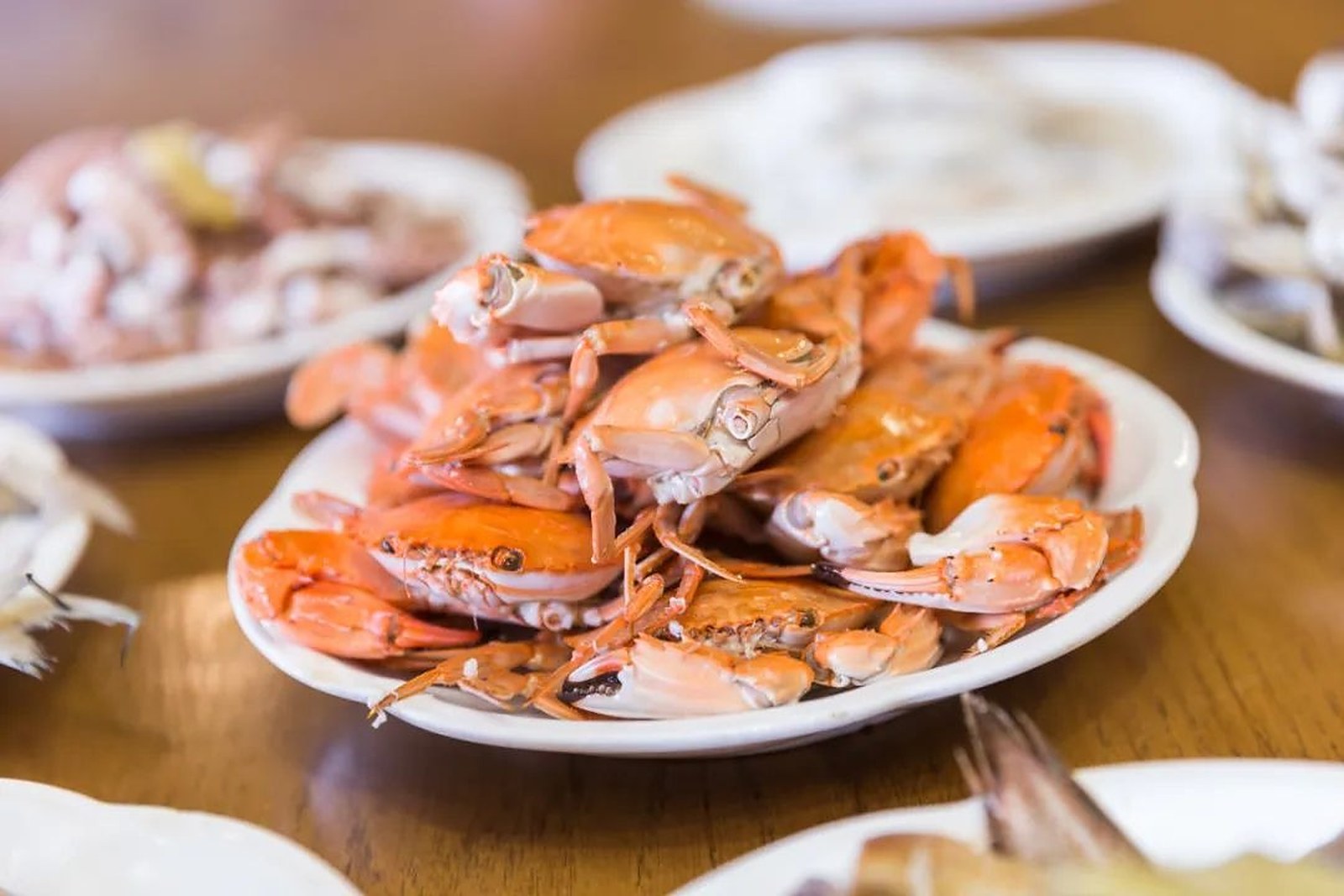
flowcloud would say that the 金山嘴渔村海鲜 Jīnshānzuǐ yúcūn hǎixiān is the last-fishing-village counter trade of Hangzhou Bay in Jinshan District, Shanghai – a 排档鲜 páidàng xiān stall-table freshness discipline where the 带鱼 dàiyú hairtail and 黄鱼 huángyú yellow croaker of the season’s run answer the iced counters and the seawall wind of the 老街 lǎojiē old street – and that the honest move is to ask what landed this week, eat the steamed fish first, and let the village’s own buying queue cast the vote, because the bay built the village and the counters keep the account. All checked October 2026.
Where to find it: 金山区 Jīnshān Qū Jinshan District, Shanghai – the bay-front eating belt of 金山嘴渔村 Jīnshānzuǐ Yúcūn Jinshanzhou fishing village, billed as Shanghai’s last fishing village, where the 海鲜排档 hǎixiān páidàng stall tables keep the season’s 带鱼 dàiyú hairtail, 黄鱼 huángyú yellow croaker and 虾蟹 xiā xiè shrimp and crab on iced counters a few steps from the seawall, reached from 金山卫站 Jīnshān Wèi zhàn on the 金山铁路 Jīnshān Tiělù Jinshan Railway and the short connecting ride or walk toward the bay (worth confirming the details for the connecting services and which stall holds which frontage today, village doors turning over as village streets do), where the street keeps the tide clock – weekend middays the day-trip tide through the old street, weekday mornings the village’s buying loop, weekday mid-morning the eater’s own; casual-neighbourhood to occasion-within-reason money by the catch, so call it worth confirming the details rather than a fixed number, and let the village buyers’ queue cast the vote. Jinshanzhou seafood is Shanghai’s last fishing village, the old-street stall tables of Hangzhou Bay and the season’s whiting, yellow croaker, shrimp and crab in Jinshan District, Shanghai – the taste of 金山区 Jīnshān Qū Jinshan District eaten with the bay wind in it. All checked October 2026.