
The block called 九街 Jiǔ Jiē Jiu Street keeps the district’s other clock. At eleven at night on 鲤鱼池路 Lǐyúchí Lù Liyuchi Road, at the north end of the Guanyinqiao circle in 江北区 Jiāngběi Qū Jiangbei – one of the central districts of Chongqing, a municipality of southwest China – the grills are at full draw, the neon doubles itself in the damp pavement, and the snack arcades lower down the circle swept their counters hours ago. The name first: Jiu Street is one street, not nine, its main strip about 360 metres long by the block’s own account, and 大九街 Dà Jiǔjiē Greater Jiu Street is the night district that grew around it to some 0.7 square kilometres. What the block eats after dark – skewers, crayfish, wontons wrapped at two in the morning – is the subject; the bars are scenery.
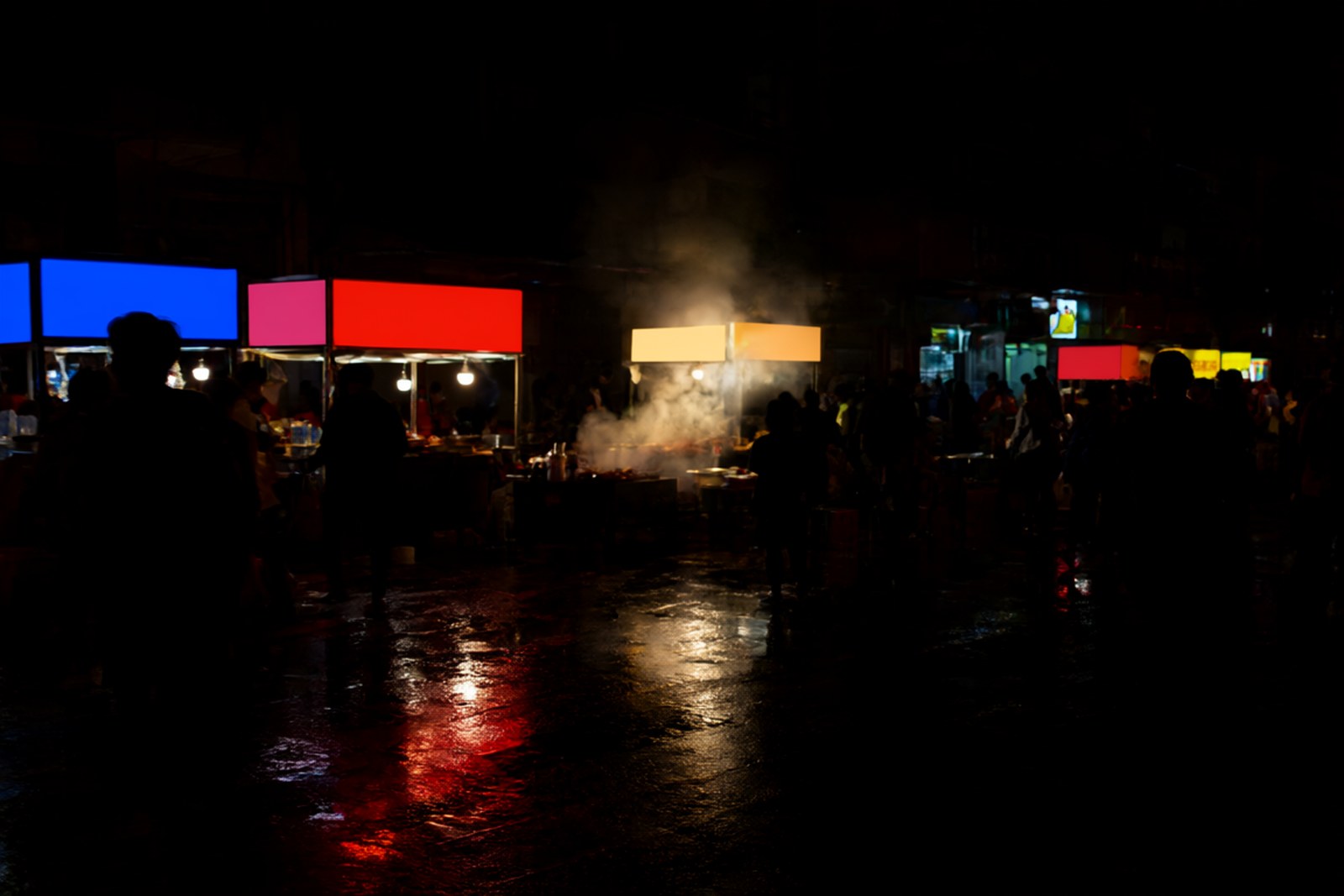
Much of what stands here was standing here before, as something else. City reporting puts more than sixty per cent of Greater Jiu Street’s buildings as conversions – unfinished towers, idle offices, old workshops and warehouses given second lives as bars and kitchens – and the block’s own history has the main street finished in 2012 on the strength of a 2011 decision to brand it 不夜九街 bùyè Jiǔ Jiē, Never-night Jiu Street. In 2015 the district strung seven projects into one named night quarter, and in 2017 the expansion folded in the old Lear Chang’an plant next door. At the street’s edge sits 北仓 Běicāng Beicang, a 1960s textile warehouse rebuilt as a creative park – the block’s daytime argument, a one-sentence neighbour here. The night city lives in an industrial skeleton, and locals know which shed was which factory.
The institutions caught up with the hours in 2021, when Greater Jiu Street was named in the country’s first batch of national night-time culture-and-tourism consumption clusters and as a national tourism-and-leisure block – the formal titles behind the neon – with about 8 billion yuan of operating revenue reported for the street that year. On the earlier public accounting, from 2019 to 2020 reporting, the quarter held 969 branded businesses and 1,359 individually registered operators, drew about 100,000 people on an ordinary day, kept more than 20,000 people in work, and ran its annual turnover close to 10 billion yuan; about nine-tenths of the money changed hands at night. Every figure belongs to its stated year – public reporting of 2019 to 2021, checked October 2026 – and drifts; none of these numbers is a constant.
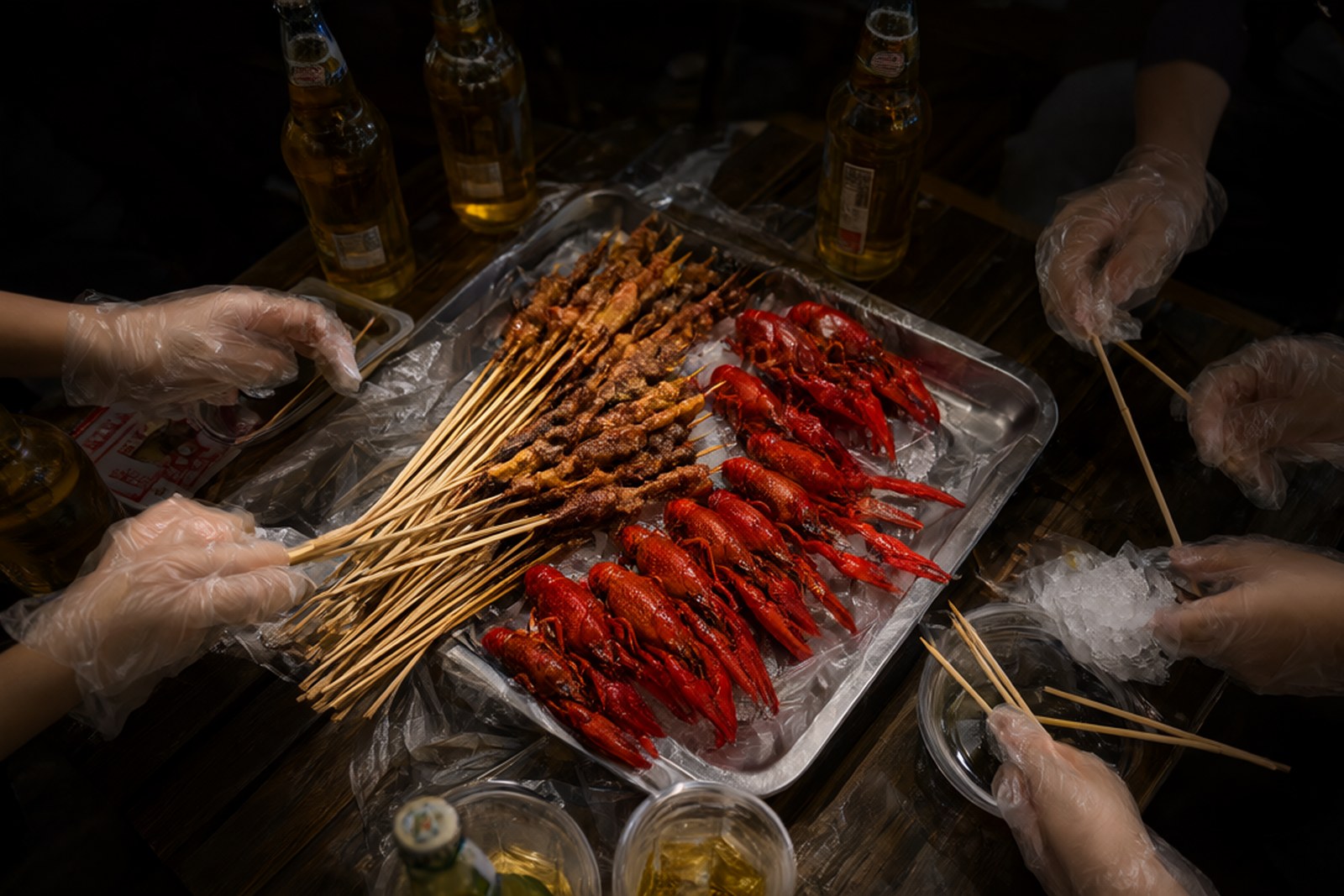
The eating runs on its own ladder of the hour. First come the grills and the skewer pots – 串串 chuànchuàn, the counted skewers, and the charcoal stands – then the crayfish, piled red and eaten with gloves, then, deep into the night, the counters wrapping 抄手 chāoshǒu, Chongqing’s wontons, to order as the queues thin. The quarter’s staple roster reads like the city’s night pantry – barbecue, skewers, crayfish, hotpot among the standbys – and one of its institutions stages old Chongqing lanes indoors: a dapaidang hall called 47楼大排档 47lóu dàpáidàng that the city’s reporting treats as the block’s food-culture emblem; this page describes the scene and no menu. The bars are the soundtrack, not the story: a non-drinker can walk the block from grill to crayfish to wontons and never push through a bar door. Finger-guessing games, shared tables and strangers toasting strangers are the night table’s local rules, and the designated drivers lined up at the corners are its most punctual facility.
Words and Names
九街 Jiǔ jiē is Jiu Street, “Nine Street(s)”, the bar-and-night-food block at the north end of Guanyinqiao; 大九街 Dà Jiǔjiē the expanded night district around it; 鲤鱼池 Lǐyúchí “Carp Pond”, the road the block addresses to. 夜宵 yèxiāo is the late-night meal, a Chongqing social institution as much as a menu. 串串 chuànchuàn are skewers grilled or boiled in spicy broth; 小龙虾 xiǎolóngxiā crayfish, the classic midnight share; 抄手 chāoshǒu Chongqing-style wontons; 大排档 dàpáidàng the open-air food-stall hall. 夜间经济 yèjiān jīngjì is night-time economy, the policy term behind the block’s 2021 designation in the first national batch of consumption clusters.
What the Locals Know
The block runs on an inverted clock: the working evening starts when other districts close, and regulars say 走,去九街 – let’s go to Jiu Street – as a complete plan for the night. Eating is the social sport: tables are shared without ceremony, the finger-guessing game called 乱劈柴 luàn pǐchái settles the drinking order, and arriving alone is a normal way to end up in a group. Residents who want quiet skip the bars and finish at a small late-night counter – a bowl of wontons as the closing argument, the Chongqing-style night cap. The converted buildings carry their own tour – which block was the textile warehouse, which tower stood idle for years – because derelict buildings becoming a night city is a story locals tell about themselves. Order is part of the design – managed streets, drivers waiting in marked lines – and the wonton counter, not the club door, is where the night properly ends.
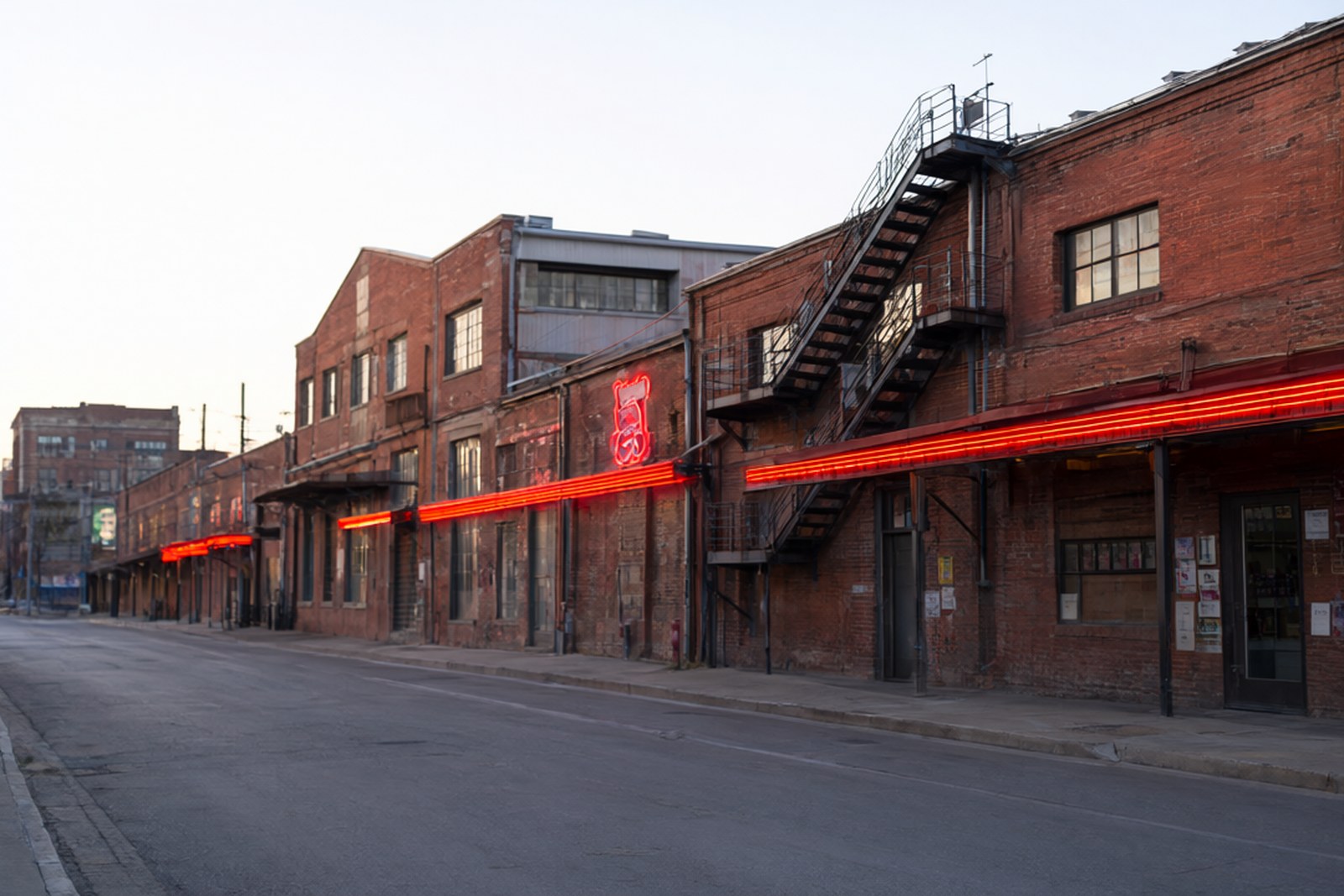
flowcloud would say that Jiu Street is where Chongqing’s Jiangbei district eats at midnight – one 360-metre street, by the block’s own account, that grew into a 0.7-square-kilometre night quarter of which more than sixty per cent is converted derelict towers, old plants and warehouses – branded Never-night since 2011, named in the country’s first national batch of night-time culture-and-tourism consumption clusters in 2021 with about 8 billion yuan of reported revenue – and the food – skewers, crayfish, wontons wrapped at two in the morning – is what keeps its lights on.
Where to find it: the Jiu Street and Greater Jiu Street quarter around 鲤鱼池路 Lǐyúchí Lù Liyuchi Road, at the north end of the Guanyinqiao business circle, 江北区 Jiāngběi Qū Jiangbei District, Chongqing Municipality; Metro line 3 Guanyinqiao station is within walking distance by the block’s own directions, and any taxi after dark answers to the words Jiu Street. Beicang is the daytime visit and the 47th-floor dapaidang the indoor scene – described here, not endorsed. The figures come from 2019-2021 public reporting, checked October 2026, and move with the year; the hours run latest around midnight to two, and a late bowl of wontons is the local way to end the night.