
The Hui Banquet of Order: Nine Bowls in Three Lines in Changji, Xinjiang
九碗三行宴客忙,蒸香一路出厨房 Jiǔwǎn sānháng yàn kè máng, zhēng xiāng yī lù chū chúfáng – Nine bowls in three lines for the busy banquet; steam fragrance runs the whole way from the kitchen.
九碗三行子 jiǔwǎn sānhángzi nine bowls in three lines is the ceremonial table of Changji’s Hui communities – nine dishes steamed in identical bowls and arrayed in three strict rows across the tablecloth, beef and lamb carried in turn by turnip, vermicellli, bean curd and egg. The form was engineered for caravan hospitality: a feast that could be raised for a full table at short notice, every component steamed rather than fried so the nine bowls land hot together (worth confirming the details for which restaurants beyond the food street still run the full ritual, since the banquet now survives most completely in family celebrations). Nothing drips, nothing burns, nothing is out of place – it is food as a statement of order, and the arrangement itself is half the meal.
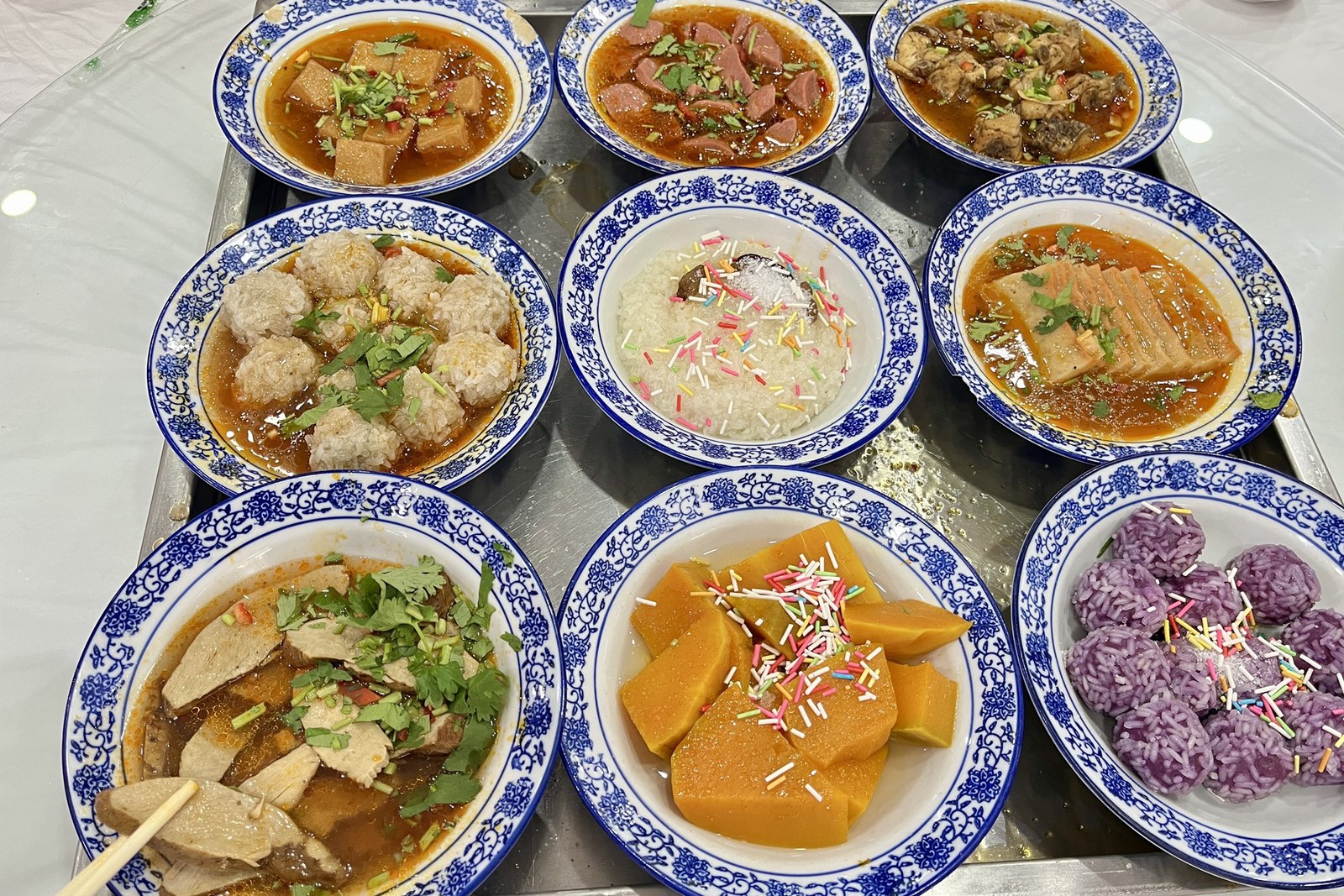
A spread runs from thirty or forty yuan a head at the food-street tasting stalls to well over a hundred at the banquet houses, depending on the meat ratio. Getting there is one door: the covered arcade off the main square keeps a standing nine-bowl stand among the grills, and the banquet kitchens along the old town blocks take table bookings for the full ceremony – walk in at opening and watch the steamers slide before you commit.
The honest star is the steamed turnip under the lamb slice – the vegetable that drinks every bowl’s perfume and ties the three rows into one dish. Behind it come the egg-cap meatballs and the clear beef broth that opens the line.
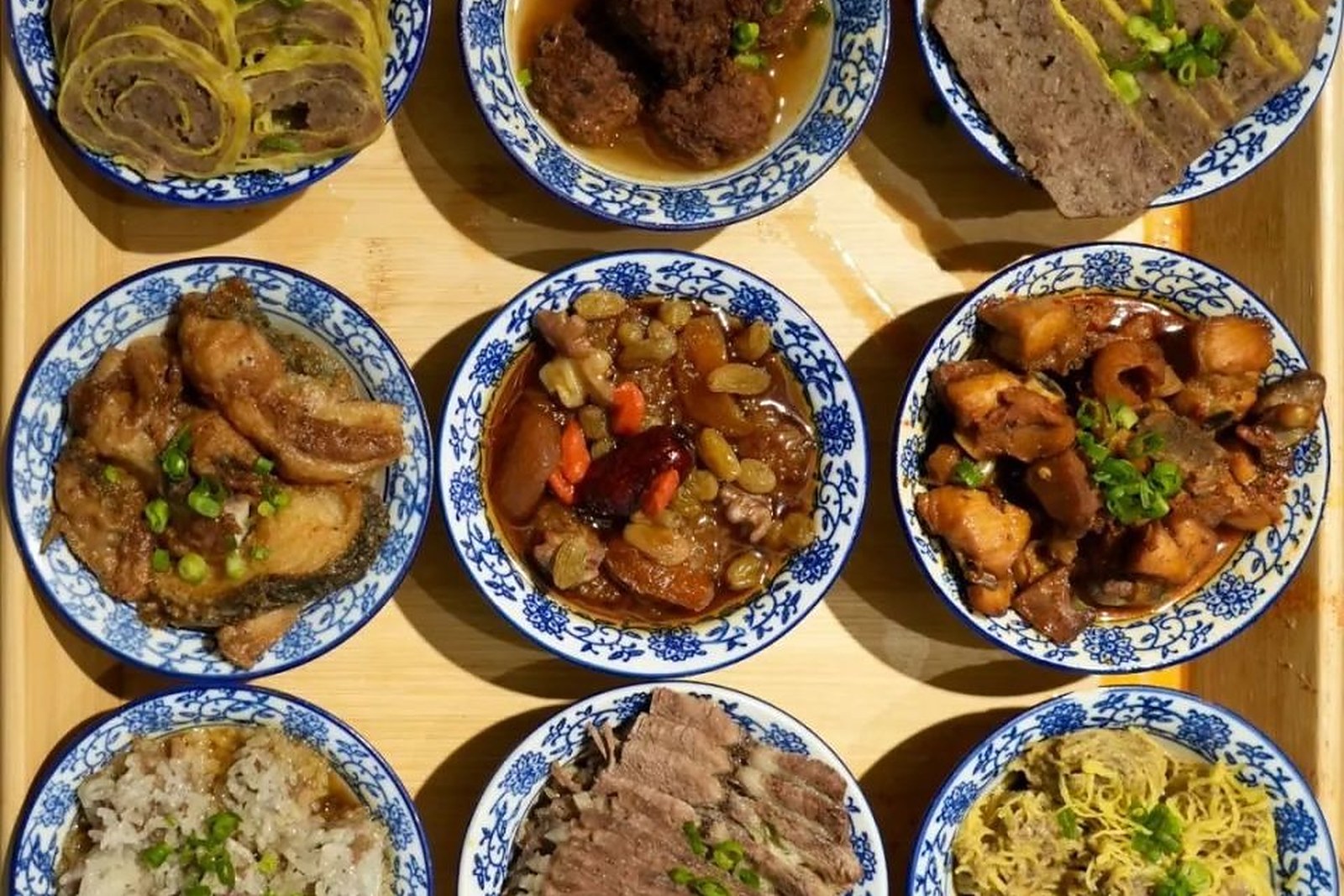
The town’s deepest habit is the celebration pairing: a nine-bowl line for the wedding table, the same bowls in miniature at the food street, and elders judging a kitchen by the evenness of its steam. Eat it seated, not standing – the arrangement rewards a table, not a queue.
Nearly every other plate on this Changji list trades a different mood on the same table: 回族粉汤 Huízú fěntāng the Hui vermicelli soup for the morning bowl, 椒麻鸡 jiāomá jī pepper-numbing chicken for the cold sharp counterpoint, 回族盖碗茶 Huízú gàiwǎnchá covered-bowl tea for the afternoon, or 木垒羊肉焖饼子 mùlěi yángròu mèn bǐngzi lamb braised under pancake for the winter hearth – four more doors into the same 昌吉回族自治州 Chāngjí Huízú Zìzhìzhōu Changji Hui Autonomous Prefecture. Once the plates are planned, our Changji travel map fills the day.
Words and Names
What the Locals Know
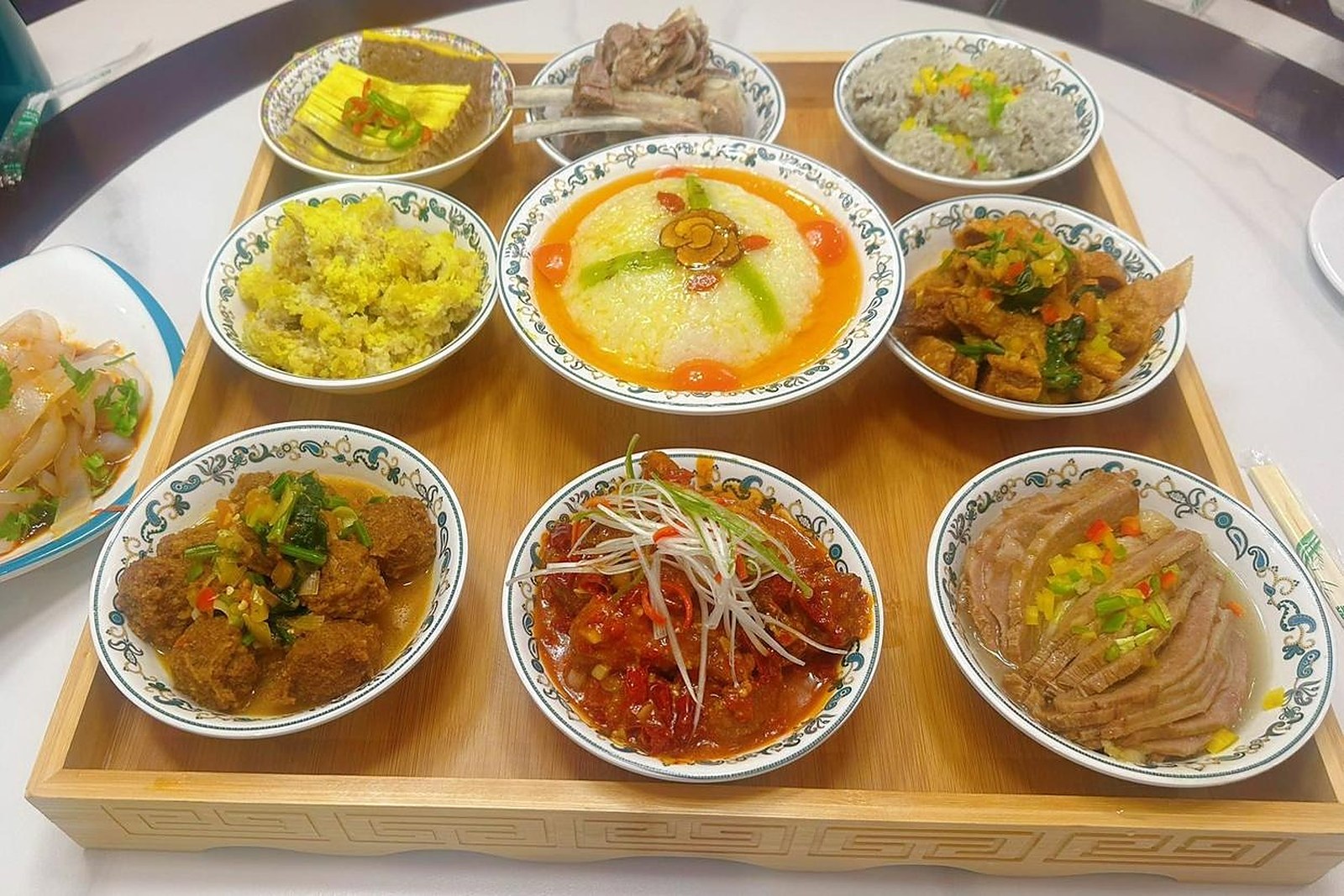
flowcloud would say the nine bowls are the prefecture’s metronome: measured, even, and hot together – a dinner that keeps time so the table can linger. All checked November 2026.
Where to find it: Head for the covered food street a block off Changji’s main square, where the standing nine-bowl stall steams all evening, or book a banquet kitchen in the old town blocks for the full three-line ceremony – the bowls arrive in strict rows whether for two guests or twenty, and the tea urn keeps refilling. All checked November 2026.