
Juema Rice – the Sweet Buttered Dish of Honor
人参果拌酥油饭,一勺甜香待贵客 Rénshēnguǒ bàn sūyóu fàn, yī sháo tiánxiāng dài guìkè – Wild ginseng root folded through buttered rice; a spoonful of sweetness for the honored guest
蕨麻米饭 juémá mǐfàn Juema rice is the plateau’s dessert of honor: white rice steamed through with 蕨麻 juémá – the dried root of a high-meadow pea that folk speech calls the plateau’s ginseng – enriched with melted butter and a dusting of sugar until the whole pot smells of hay and cream. It appears at Losar, at weddings, at the naming of children: whenever a table needs to say this guest matters.
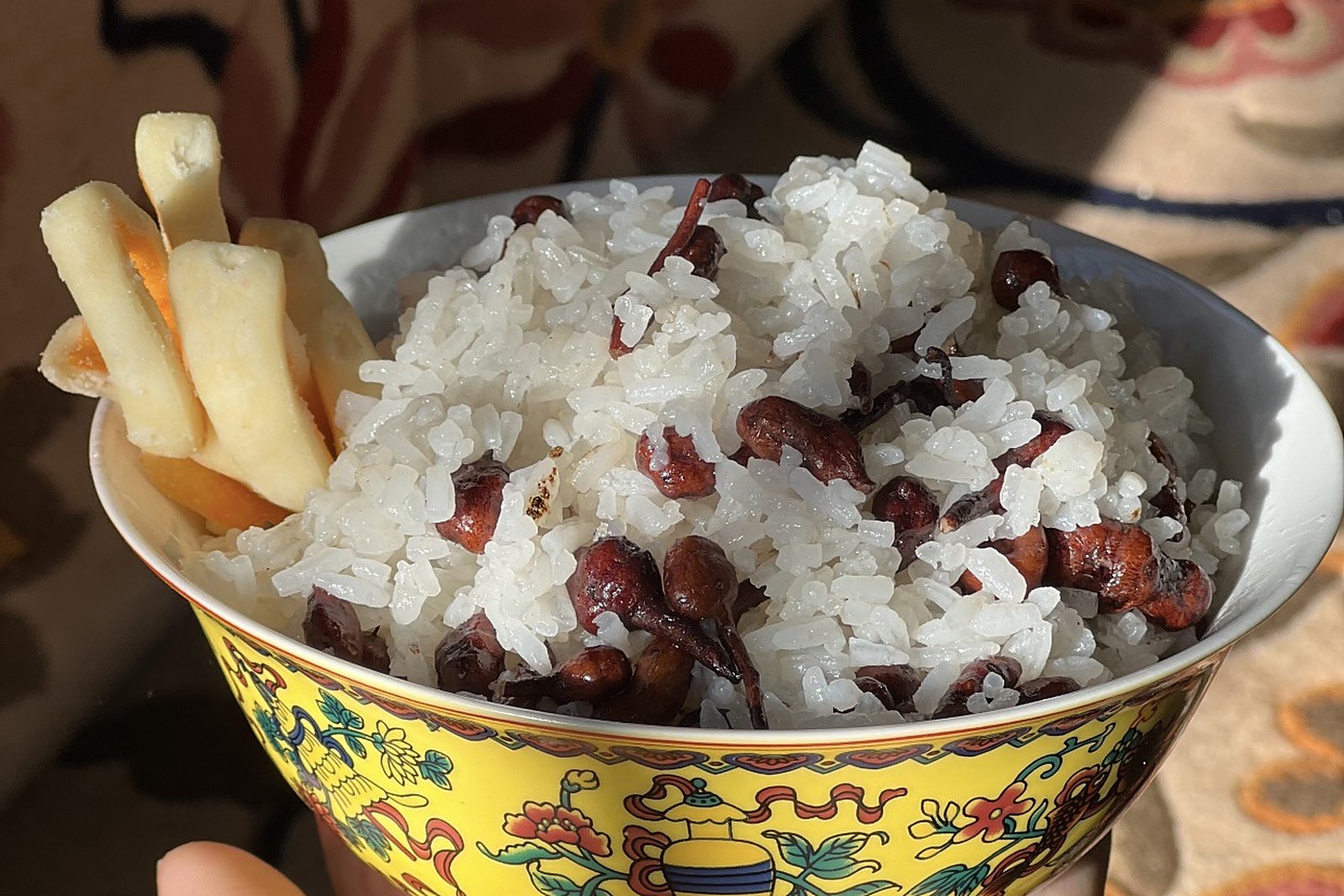
The ingredient itself is a small amber kidney of a root, dug each autumn from the grass and dried in the sun. In the counties of the grassland it turns up in market sacks, weighed by the 斤 jīn and sold alongside the butter and sugar it will meet; the best roots are plump, clean-skinned and uniform – families sort them like treasure because the dish’s whole reputation sits in the texture.
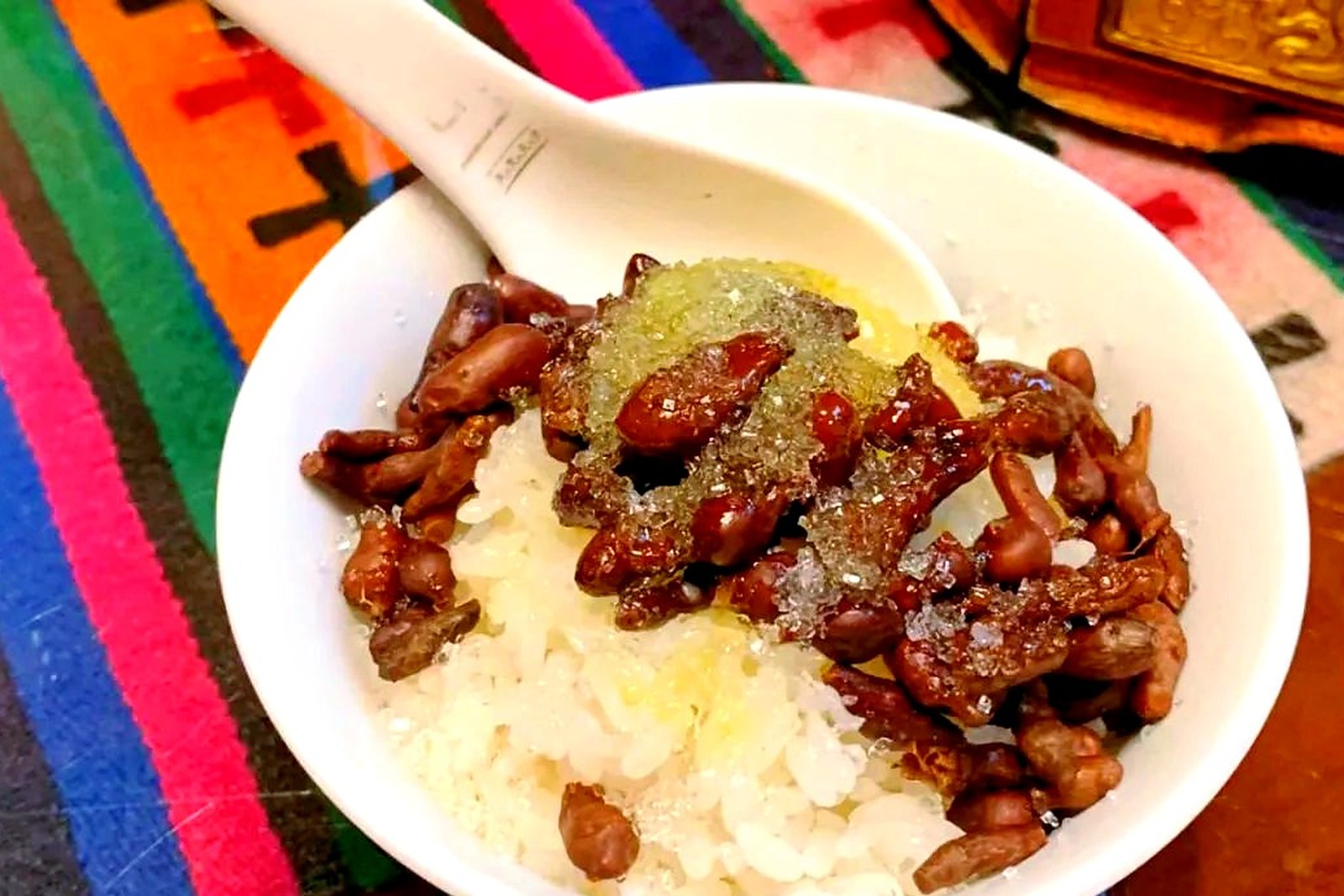
Cooking is simple and exact. The rice steams half-done; the roots, soaked overnight, fold in; a spoon of rendered butter follows, then sugar to the household’s taste; and the pot returns to the steam until every grain glistens. Served in bowls – sometimes topped with a curl of fresh butter or a scatter of goji – it arrives as both course and ceremony, eaten slowly with tea.
Travelers meet juema rice in family-run eateries and at festival tables across the region, and the honest version is unmistakable: distinct chewy roots, butter that perfumes rather than drowns, sweetness that stops short of cloying. Buy a bag of the dried roots at the market and the dish travels – a handful simmered with rice, butter and sugar brings the festival table back in twenty minutes, wherever the journey ends.
Words and Names
蕨麻 juémá juema, the high-meadow root called the plateau’s ginseng; 人参果 rénshēnguǒ ginseng fruit, the folk name for the same root; 酥油 sūyóu butter, the enrichment of the dish; 罗萨 luósà Losar, the New Year the dish crowns; 待客 dàikè guest-honoring, the custom the bowl serves. The same 那曲市 Nàqū Shì Nagqu holds more flavors worth chasing: 那曲冬虫夏草 Nàqū dōngchóng xiàcǎo the high-slope cordyceps, 羌塘羊肉 Qiāngtáng yángròu the clean sweet mutton, 藏式甜茶 Zàngshì tiánchá the teahouse staple, or 牦牛酥油 máoniú sūyóu the butter that makes this dish sing – four more doors into the same Nagqu table.
What the Locals Know
Locals insist the roots’ quality decides everything: a bag of thin, broken juema makes a merely sweet rice, while plump roots make the ceremony. The butter must be fresh-churned, never the market tub of oil – and the correct compliment to the cook is not delicious but rich as a wedding. All checked November 2026.
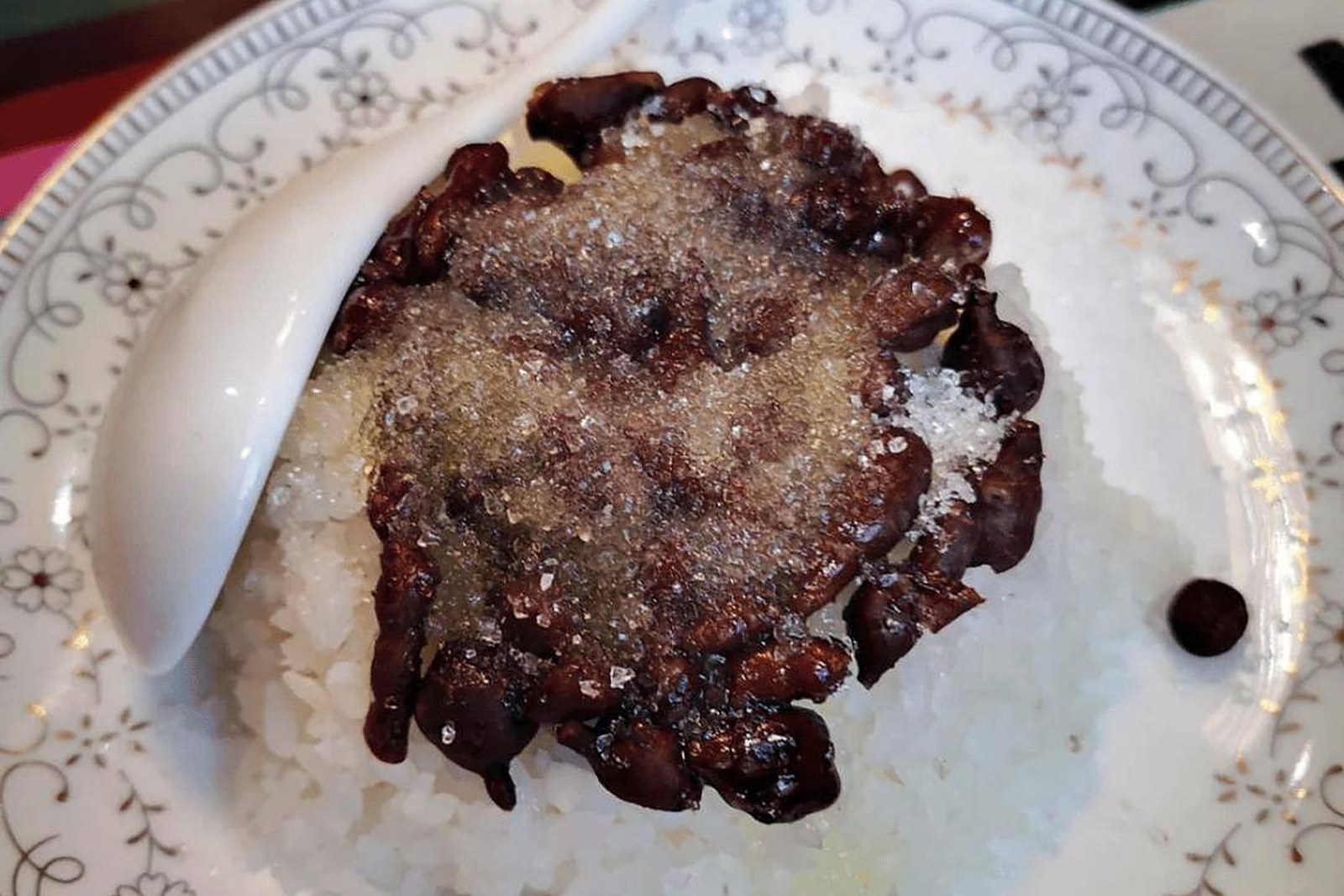
flowcloud would say juema rice is hospitality in edible grammar – butter the verb, sugar the smile, and the root the guest of honor.
Where to find it: Family kitchens and festival tables across the grassland serve juema rice in season; county-town markets sell the dried roots by weight for the twenty-minute home version. All checked November 2026.