
Jun’an Steamed Pig, a Whole Carcass Cooked Over Water
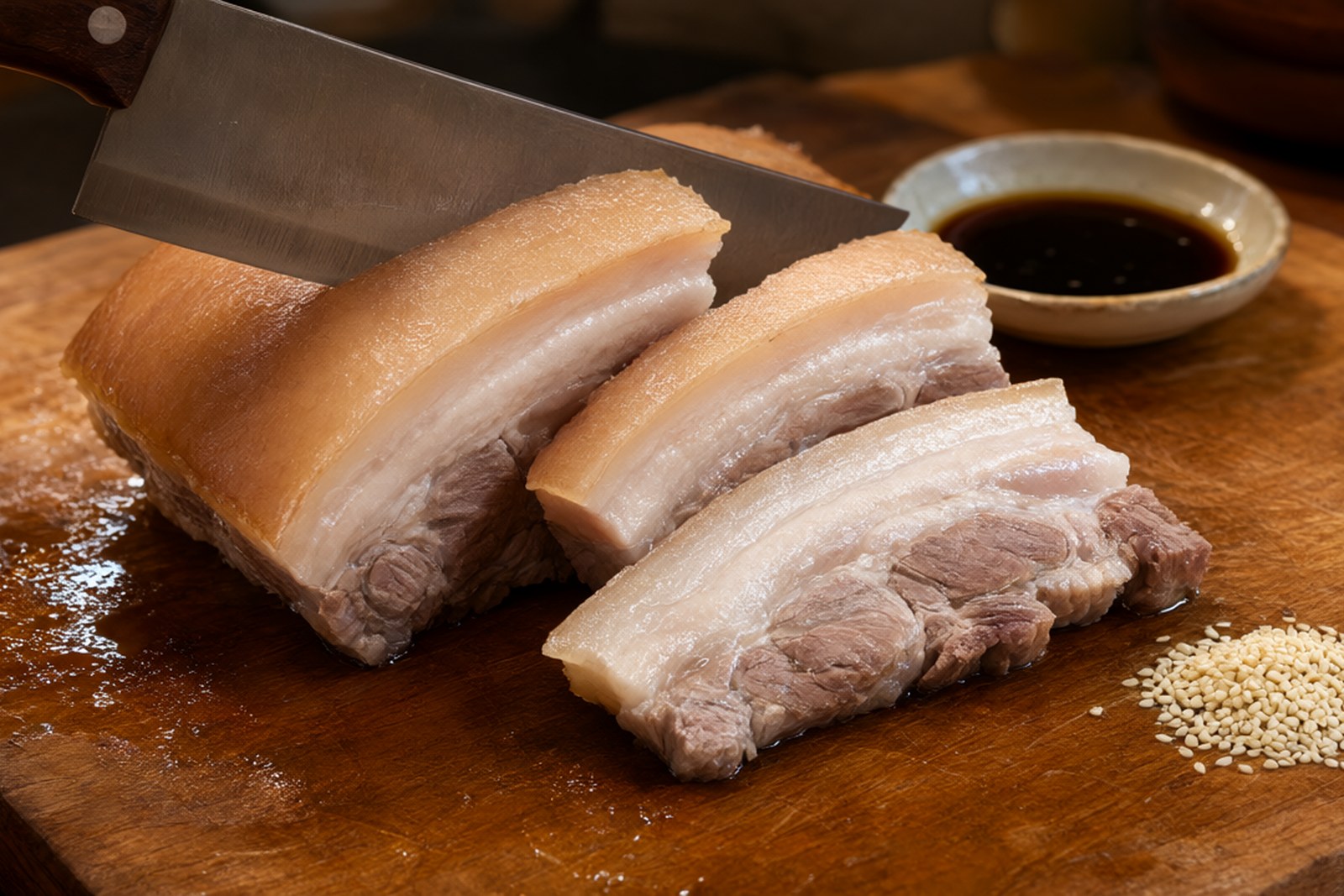
It is a whole pig, flattened and steamed over water, and it is served by the slice from a chopping block. 均安蒸猪 Jūn’ān zhēng zhū comes from 均安 Jūn’ān, a town in the south of 顺德 Shùndé, and it is the most communal of the region’s festival dishes. A young pig is split along the backbone, opened out flat, rubbed with salt, five-spice and sometimes a little wine, and then stretched on a bamboo or metal frame and lowered into a large steamer to cook over boiling water for an hour or more. The skin tightens and turns pale gold, the fat renders and runs off, and the meat underneath stays moist because nothing has been lost to a fire. At a festival it is chopped with a heavy cleaver into strips and sold by weight, wrapped in paper, eaten standing up.
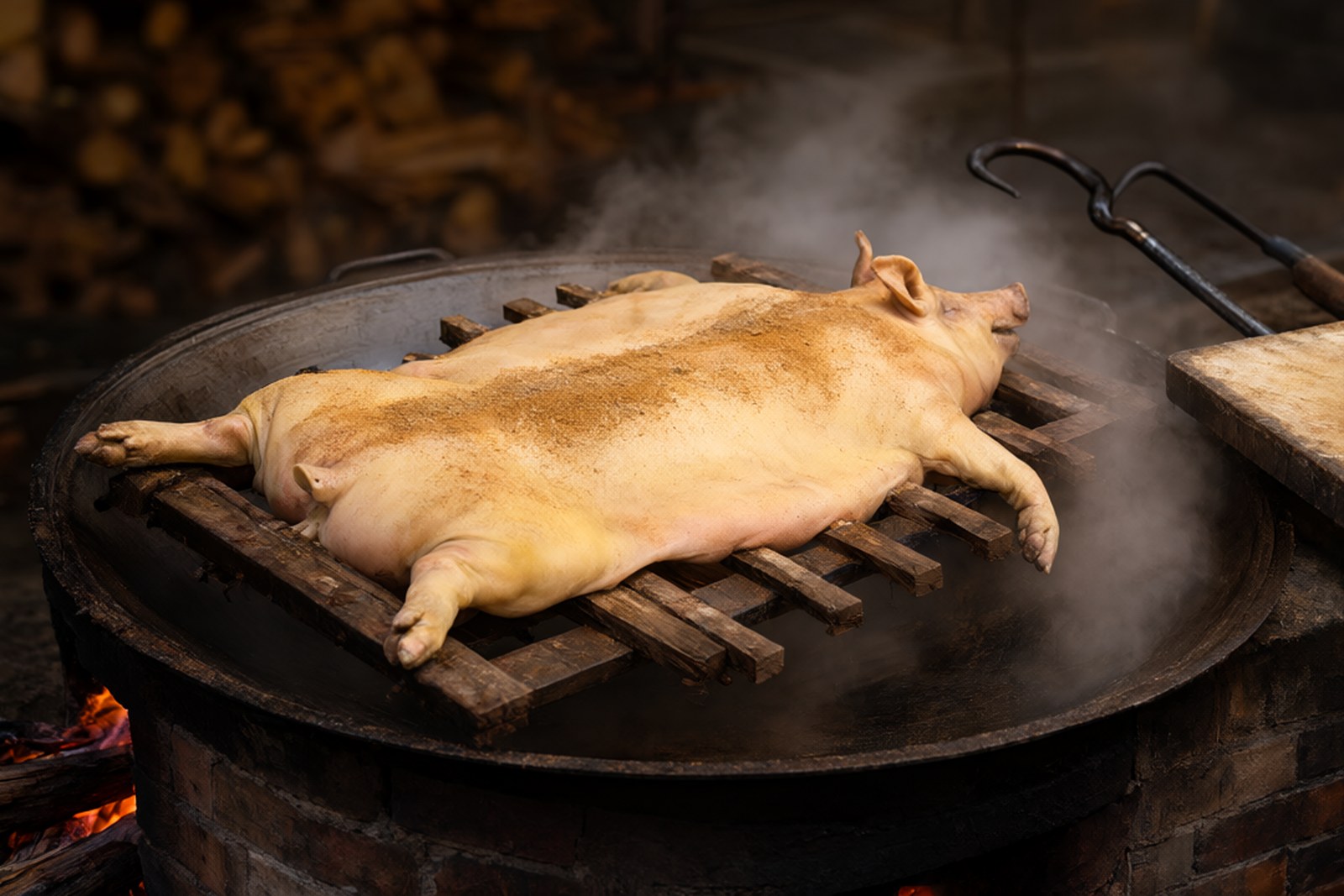
The technique is older than the town’s restaurants and belongs to the ritual calendar. Steaming a whole animal is the practical answer to feeding a crowd at a wedding, a grave-sweeping or a village festival, and it has the advantage over roasting that it can be done in a large covered vessel without a fire pit. What distinguishes the Jun’an version is the seasoning and the finish: the skin is deliberately left on and is not crisped, so it becomes soft and slightly gelatinous rather than brittle, and the meat is eaten with a dip of soy and sometimes a little 沙姜 shājiāng, sand ginger. The frame holds the pig open so that the steam reaches every surface, and the fat drains into the water below, which is why the result is much less heavy than a roast of the same size.
A Pig for a Crowd
The dish is not normally made at home and not normally ordered by two people. In Jun’an it is bought from shops that steam several pigs a day, either as a takeaway portion or as a whole animal for a banquet, and the size of the order is the point: 均安蒸猪 is a food of gatherings, and the shows where it is turned out in quantity are usually festival days or weekends. The best parts are considered to be the belly and the shoulder, where the fat and the lean are layered, and the skin, which people who grew up with it value more than the meat. A whole pig is a serious commitment, several thousand yuan and a day’s notice, and half a pig is the usual compromise for a family celebration.
Comparison with the neighbouring dish is unavoidable and locals make it constantly. 烧猪 shāo zhū, the roasted pig of the Cantonese banquet, has crackling and a smoky edge; 蒸猪 has neither, and its defenders argue that steaming keeps the flavour of the animal’s own fat rather than replacing it with fire. Both are eaten on the same occasions, and a large banquet will sometimes serve one of each.
Words and Names
均安蒸猪 Jūn’ān zhēng zhū is the dish, 均安 Jūn’ān the town, 蒸 zhēng meaning steamed and 猪 zhū pig. 烧猪 shāo zhū is the roasted banquet pig, 乳猪 rǔzhū a suckling pig roasted whole, and 金猪 jīn zhū, golden pig, the ceremonial name for the roast at a wedding. 五香粉 wǔxiāng fěn is five-spice powder, 沙姜 shājiāng sand ginger, 生抽 shēngchōu light soy. 五花肉 wǔhuā ròu is pork belly and 猪皮 zhūpí the skin, which for this dish is a feature rather than a by-product.
What the Locals Know
Buy it from a shop that is steaming that day rather than from a cold case, and ask to see the pig before it is chopped if the shop is quiet enough to allow it; a freshly steamed pig has bright, faintly damp skin and a clean smell of five-spice, while one that has been held for hours looks dry and dull. Ask for 五花 or 猪皮 if you want the parts locals argue over, and take the dip of soy with a little sand ginger rather than chilli. Eat it warm within an hour on the day, because the skin goes rubbery once it is cold and the fat sets. Portions by weight are cheap for what they are, roughly twenty to forty yuan for a takeaway packet, while a whole pig for a banquet runs into four figures and is ordered in advance.
flowcloud would say that a steamed pig is the honest end of festival food, since it takes the most expensive thing a village can buy and cooks it in the least showy way there is.
Where to find it: the specialist shops of 均安 Jūn’ān in southern 顺德 Shùndé, where whole pigs come out of the steamers through the day, and the market stalls and festival kitchens across 佛山 Fóshān that sell portions by weight on weekends and holidays. Ask for 蒸猪 rather than 烧猪, request the belly or the skin, and go on a festival day if you want to see a full pig come out of the steamer.