
杏仁饼 xìngrén bǐng, the almond biscuit of Zhongshan, opens with a confession the tin keeps making: there is no almond in it. The body is mung-bean flour – beans shelled, sun-dried, roasted and ground – mixed with oil and sugar, wrapped around a slice of sugar-cured fat pork and pressed in a wooden mould; the name comes from a faint almond scent the roasted bean gives off – or from the shape; the record offers both. It was invented in the last Guangxu years in 兴宁里 Xīngníng Lǐ, Xingning Lane, in 石岐 Shíqí, then the county town; the house that named it, 咀香园 Jǔxiāngyuán, hung its shopboard in 1918; the factory and museum stand today in 火炬开发区 Huǒjù Kāifā Qū, the Torch Development Zone, on 沿江东二路 Yánjiāng Dōng’èr Lù, Yanjiang East 2nd Road.
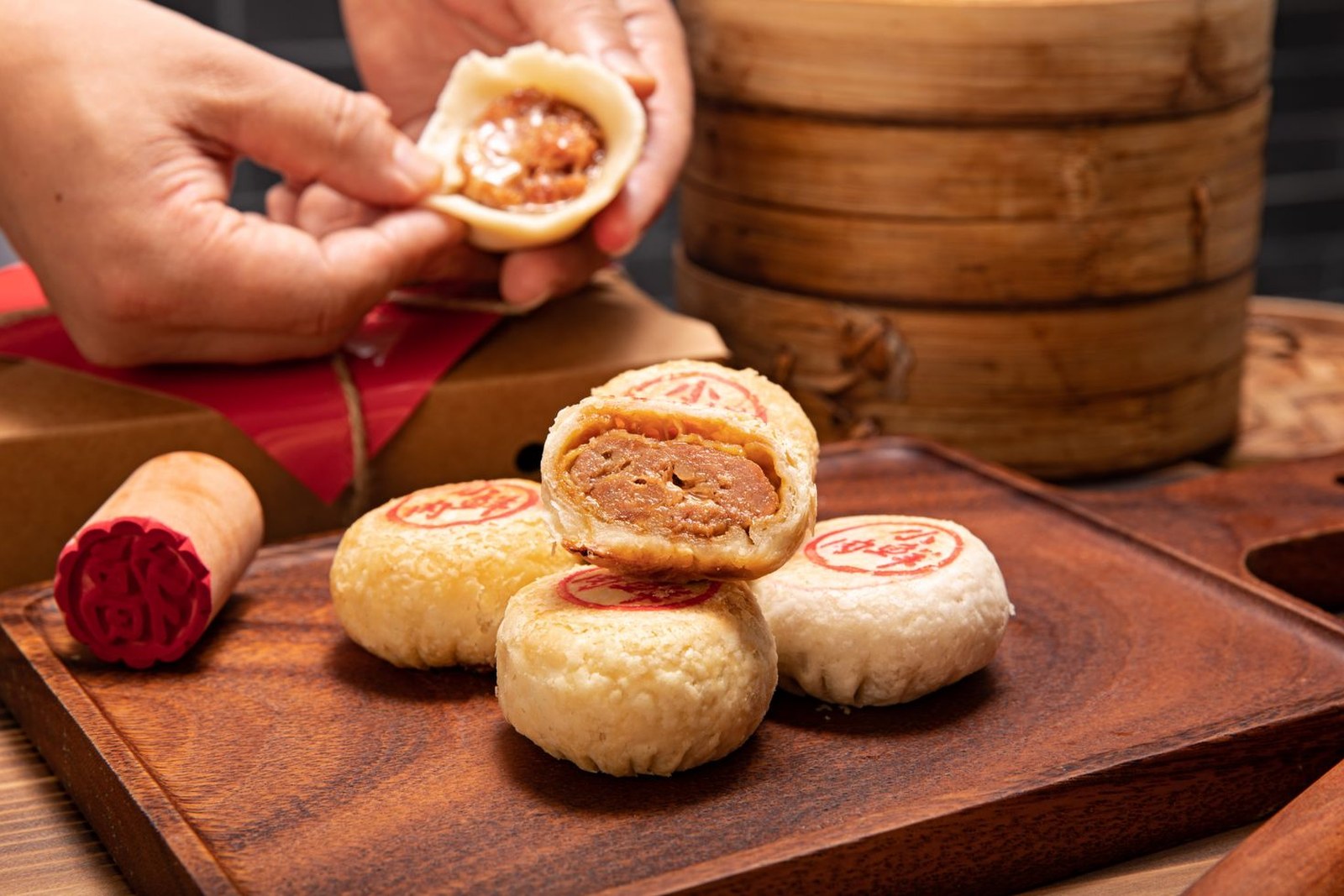
The founding story carries names and dates in the official versions. 潘雁湘 Pān Yànxiāng (1880-1954), a Daliang girl from Shunde sold into service young, learned the pastry trade and entered the Shiqi household of 萧友柏 Xiāo Yǒubǎi; there, under the guidance of Mr Xiao’s concubine 林大姑 Lín Dàgū, she made a mung-bean-flour cake with cured pork inside for the old lady’s birthday. In 1911 the Xiao family began workshop production for the 泰东戏院 theatre crowds; in 1918, as the government regularised business taxation, the house registered as 咀香园杏仁饼家 – the 咀 from Xiao’s nickname 萧咀 Xiāo Jǔ, the rest from the scent; in 1928 came the trademark 玫鹤牌 Méihèpái, written with the rose or the plum character by source.
The gold came early and abroad: in 1935 the biscuit took the golden-rooster prize at the Honolulu international food exposition, and on that the sources agree. After Xiao Youbai died, his son 萧干伟 Xiāo Gānwěi took over and ran advertisements in the 建中日报 Jiànzhōng Rìbào against shops trading on the name. A 2021 Southern+ report shows the transmitting craftsman 卢炜森 Lú Wēisēn still forming the biscuits by hand – his listing level is fixed by no authoritative source, and the text leaves it at the photograph.
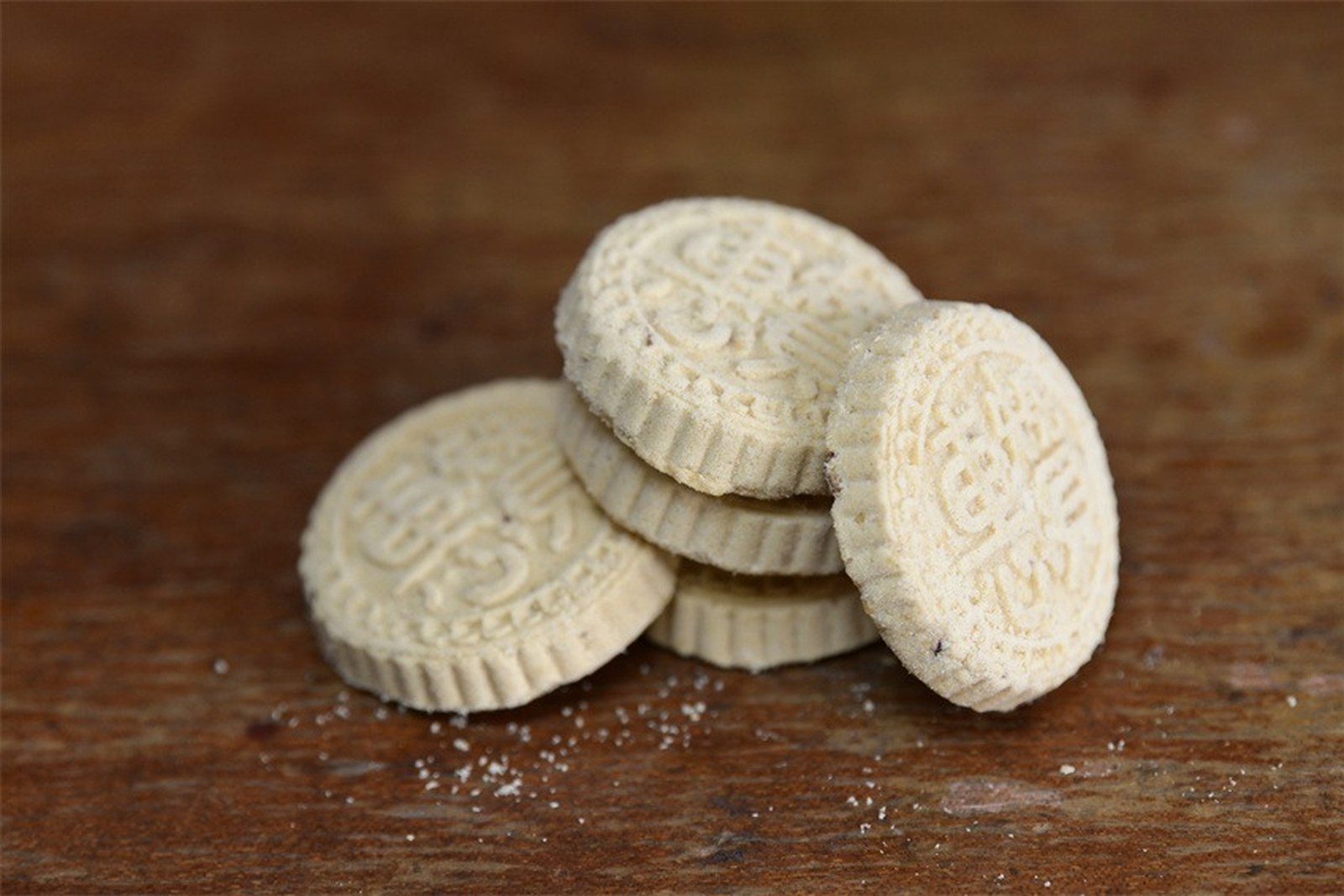
The heritage paperwork is one line and one correction. In October 2009 the provincial government listed the Juxiangyuan almond-biscuit traditional making technique in the third provincial batch – two Southern+ drafts that print 2000 are misprints – the provincial list system did not exist before 2005; the city government and the broadcaster carry 2009, and so does this text. The commerce ministry’s time-honoured-brand recognition is dated 2006 in the mainstream local accounts – 2005 in two Southern+ drafts, while the first national batch came out in 2006 – and the house passed the five-ministry review on 28 September 2023. The craft runs: beans shelled, sun-dried, roasted, ground; flour mixed with oil and sugar; the pork slice laid in; the mould pressed, the biscuit knocked out, the bake – the wooden prints still working tools, with only power, fuel and sugar reduced.
The factory side is unusually documented. The company led an almond-biscuit alliance standard in 2004, raised to a Guangdong local standard from 1 January 2005; it leads the group standard, holds more than thirty invention patents and keeps the country’s only branch of a state key laboratory in food science. The 咀香园饼文化博览馆 biscuit-culture museum opened on 1 May 2023 inside the factory campus at 15 Yanjiang East 2nd Road – the women’s-federation guide prints 13, and both sit on the same campus – with 16,000 square metres, a crossing-1918 exhibition, a DIY bench, a study library. Honours run from the city’s first national AAA industrial tourist area in 2012 to the national industrial-tourism base of 2023 and Guangdong’s top-ten science-education bases of 2024 and 2025, the city’s only one.
Words and Names
杏仁饼 xìngrén bǐng is the almond biscuit with no almond in it, 绿豆粉 lǜdòu fěn the roasted mung-bean flour that is its body, 糖腌肥肉 táng yān féiròu the sugar-cured fat pork at its centre; 饼模 bǐngmú the wooden mould the shape still comes from, 玫鹤牌 Méihèpái the 1928 trademark. 中华老字号 is the time-honoured-brand title, and 咀香园 Jǔxiāngyuán, the chewing-fragrance garden, carries the founder’s nickname, 萧咀. The Macau shop of the same characters is a different business: the record says only that the biscuit spread from Shiqi to Macau and elsewhere, the relationship undocumented, the two kept apart here.
What the Locals Know
A visit is a working morning. Entry windows are nine to eleven and one to four; the DIY bench costs 38 to 68 yuan a head and takes a visitor through the five moves – mix, press, line, press, knock – with the museum’s own instructors; study groups fill the rest of the floor as parties of twenty or more booked ahead. The campus slogan is one museum, two factories, three corridors, four zones, five themes, and the station that stays is the wooden-mould bench, where the biscuit you press is the biscuit you box.
Counter snapshots of 30 September 2026: the classic pork-filled biscuit in a 120-gram box at 14 to 18 yuan, a 210-gram loose pack near 10, the 500-gram tin near 58, a 1,110-gram assortment near 98 – e-commerce prices that move, a basket and nothing more. Never published is the money: no annual revenue in absolute figures, no single-product sales. The only quotable number is growth – revenue up about 48.8 per cent across January to April 2023, quoted from general manager 郭伟文 Guō Wěiwén.
The honest edges are worth naming. The line that Zhongshan makes seventy per cent of the country’s almond biscuits exists only in commerce-platform advertising and stays out of this text as unverifiable; the early craftsmen besides Pan Yanxiang are unnamed; the two door numbers stand as printed. What is solid is unusual for a snack: a provincial craft listing of 2009, a time-honoured brand under five-ministry review, a national standard-setting seat and a state key laboratory branch – behind a biscuit whose defining ingredient is absent.
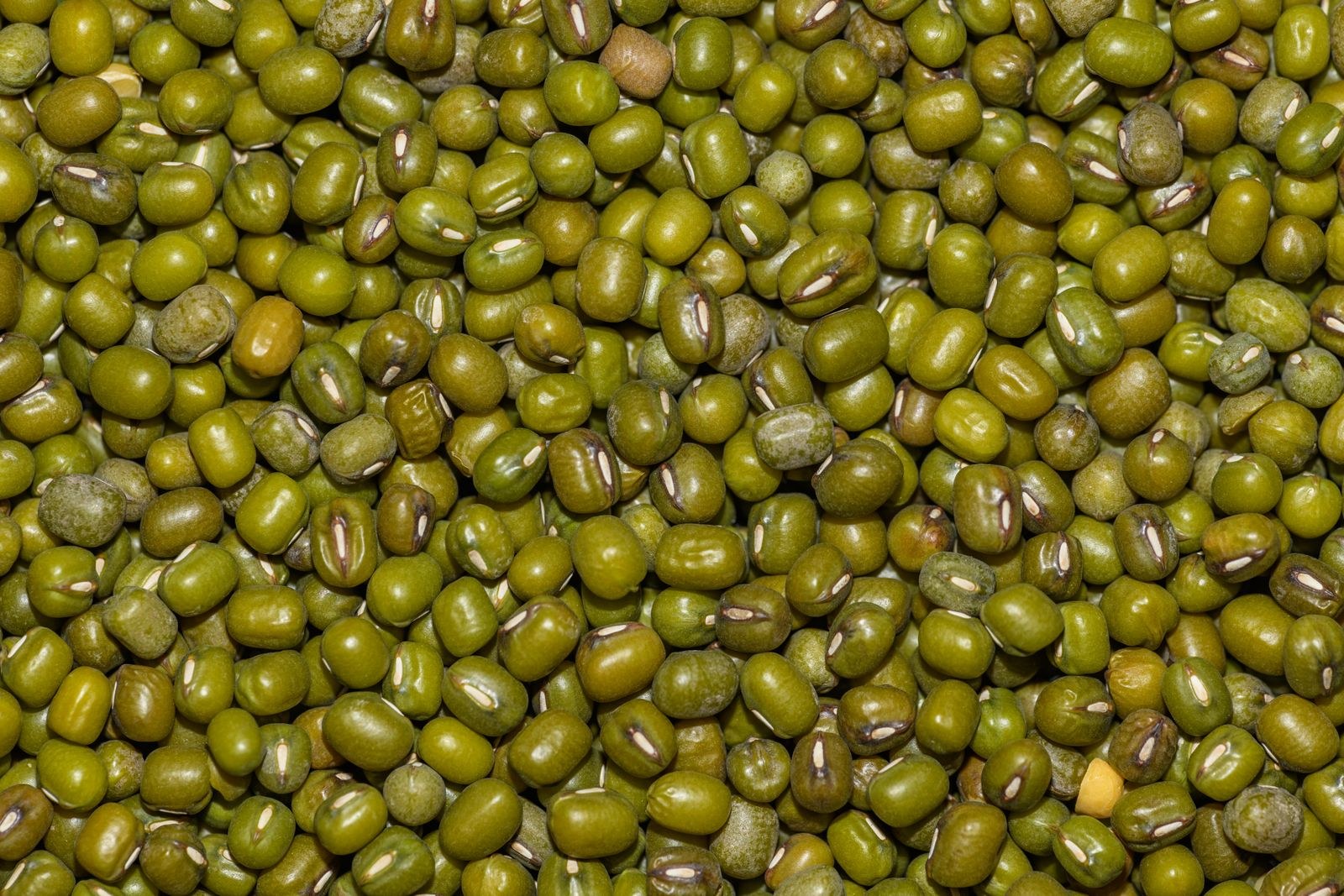
flowcloud would say that the almond biscuit is a name that never told the truth and a recipe that never needed to – mung-bean flour and one slice of cured pork pressed in a wooden cut since 1918, carrying a Honolulu gold medal and a state key laboratory on the same shopboard.
Where to find it: the 咀香园饼文化博览馆 Juxiangyuan biscuit-culture museum on 沿江东二路 Yánjiāng Dōng’èr Lù in 火炬开发区 Torch Development Zone, entry nine to eleven and one to four, DIY bench at 38 to 68 yuan, factory shop beside it; the old streets of 石岐 Shiqi, where the shopboard first hung in 1918; and the city’s gift counters, where the tins travel better than most souvenirs. Press one yourself if the bench is running, and read the red stamp before you eat it.