
Pulled by Hand: Laghman, the Working Noodle of Xinjiang
拉面千条银线落,过油肉香盖青蔬 Lāmiàn qiān tiáo yínxiàn luò, guòyóu ròu xiāng gài qīngshū – A thousand silver strands of pulled dough fall; the fragrance of oil-fried meat crowns the greens
正文:拌面 Bànmiàn laghman is Xinjiang’s working noodle – dough pulled by hand into supple strands, boiled fast, and buried under a heavy topping of oil-fried meat and vegetables that turns the plate into a full meal. Around 双河市 Shuānghé Shì Shuanghe City the noodle goes by its Uyghur name laghman and its local alias 拉条子 lātiáozi – pulled strips – and the regiment-town kitchens cook it as the daily fuel of people who work outdoors: farmers from the cotton belt, drivers on the Bole road, and every table that believes a proper lunch needs both starch and wok breath.
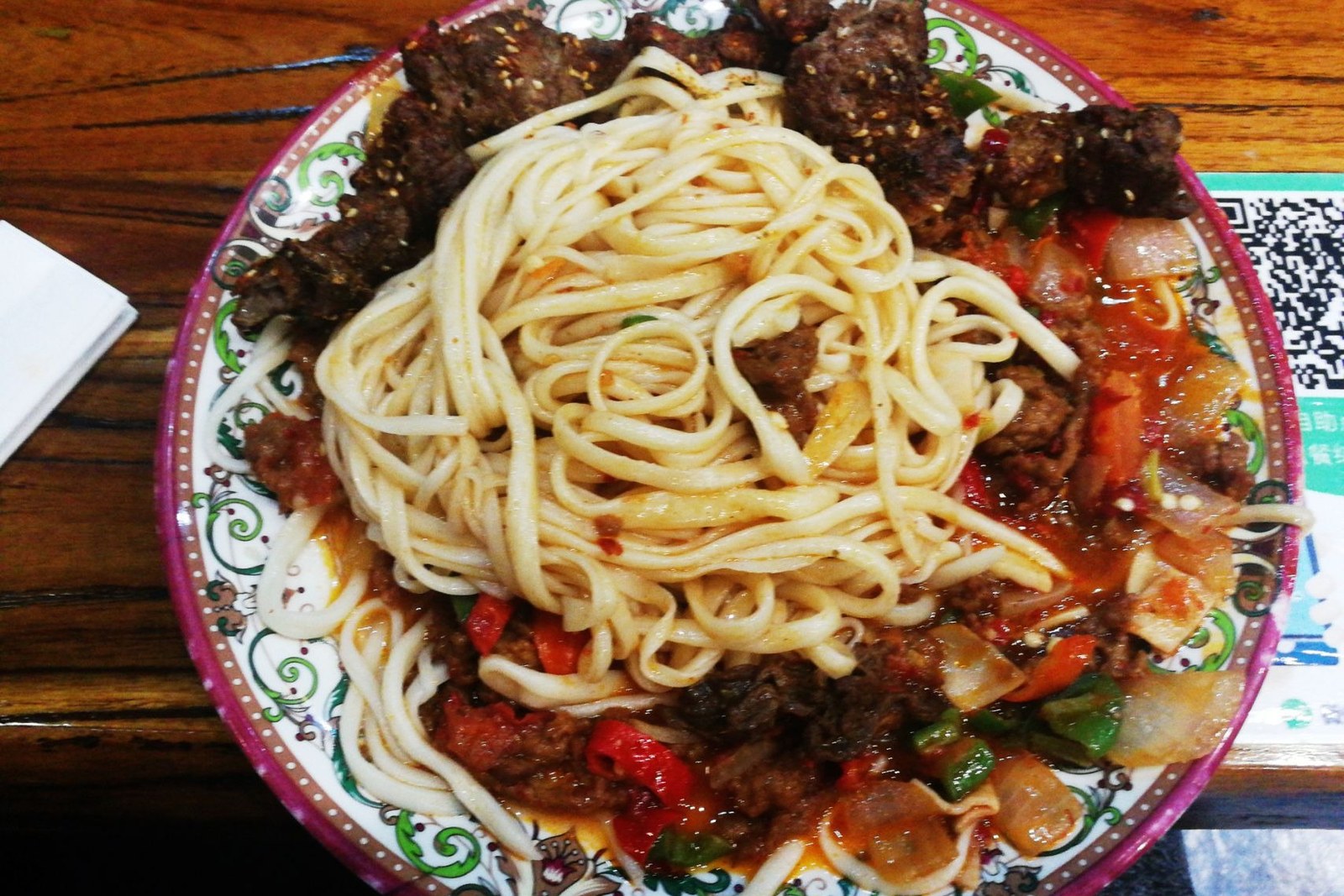
The craft starts before the pot. A soft dough is rested, oiled and stretched between the cook’s hands, swung, folded and swung again until the single rope divides into dozens of even strands – a motion that takes years to make look casual and seconds to watch happen. The strands go straight into boiling water, and because they are cut by hand rather than die, every plate carries slight irregularities that machine noodles cannot fake: thicker at one end, thinner at the other, chewing like something alive.
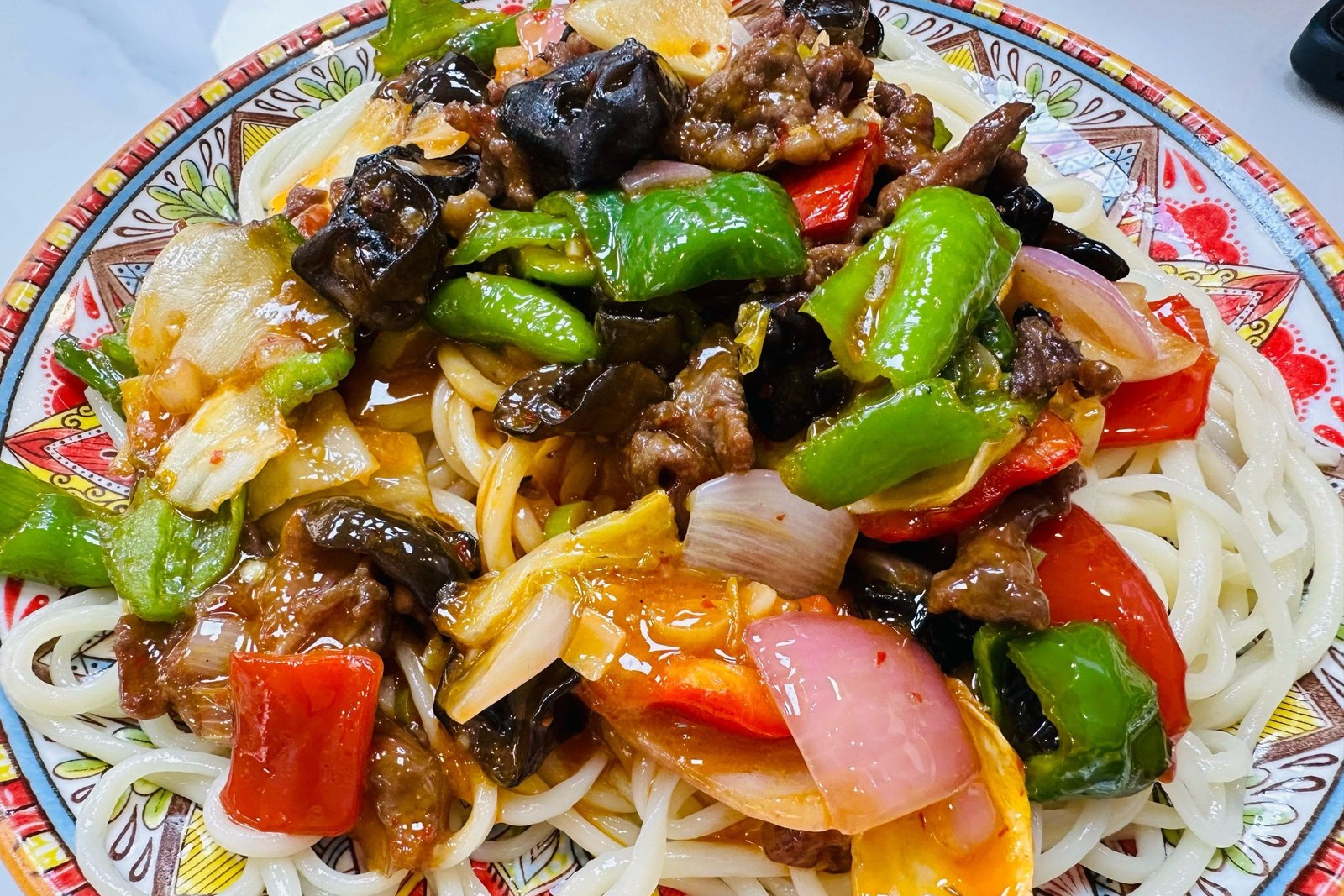
The topping decides the dish’s rank. The classic 过油肉 guòyóuròu version runs sliced lamb through hot oil with peppers, onions, tomato and black fungus into a glossy, half-thick gravy that clings to the strands; summer versions lighten to green beans and scallion oil; winter versions deepen into stewed mutton over the top. The rule of the table is to mix fast and eat fast – the noodles drink the sauce as they cool, and a laghman left standing is a different, sadder lunch.
Eating it the local way comes with free service mechanics. Most houses refill the plain noodles for nothing – finish the strands, leave the topping, and the next plate arrives boiled to order – so the honest strategy is to order one topping and as many noodle refills as the body requires. Garlic cloves sit on the table raw and whole, the tea is poured without asking, and the whole meal lands in under twenty minutes even at full noon.
Around the Bortala the noodle also maps the region’s mix: Uyghur laghman houses run the fried-topping classic; Kazakh tables serve a soup version closer to the Dunganese bowl; Hui kitchens bridge the two with their own stretched noodles and beef. In 双河市 Shuānghé Shì Shuanghe City the regiment-town cafes do a plain, muscular version that tastes of the cotton fields it feeds – less decoration, more wok.
Beyond the pulled strands, the same 双河市 Shuānghé Shì Shuanghe City holds other flavors: 奶疙瘩 Nǎigēda borts for the sour gold of the steppe larder, 酥油茶 Sūyóuchá butter tea for the salted daily bowl, 风干牛肉 Fēnggān Niúròu air-dried beef for the iron-red winter slabs, and 清炖羊肉 Qīngdùn Yángròu boiled mutton for the clear-broth final exam – four more doors into the same 双河市 Shuānghé Shì Shuanghe City. With the noodles settled, our Shuanghe travel map fills the day.
Practicalities first. Laghman runs from everyday prices at market-front noodle houses to family-restaurant portions worth driving for; lunch is the correct hour, refills are usually free, and a plate for one is a plate for one – order per person. Judge the house by the noodle’s bounce first and the topping second; a kitchen that pulls its own dough always shows its hands.
Words and Names
What the Locals Know
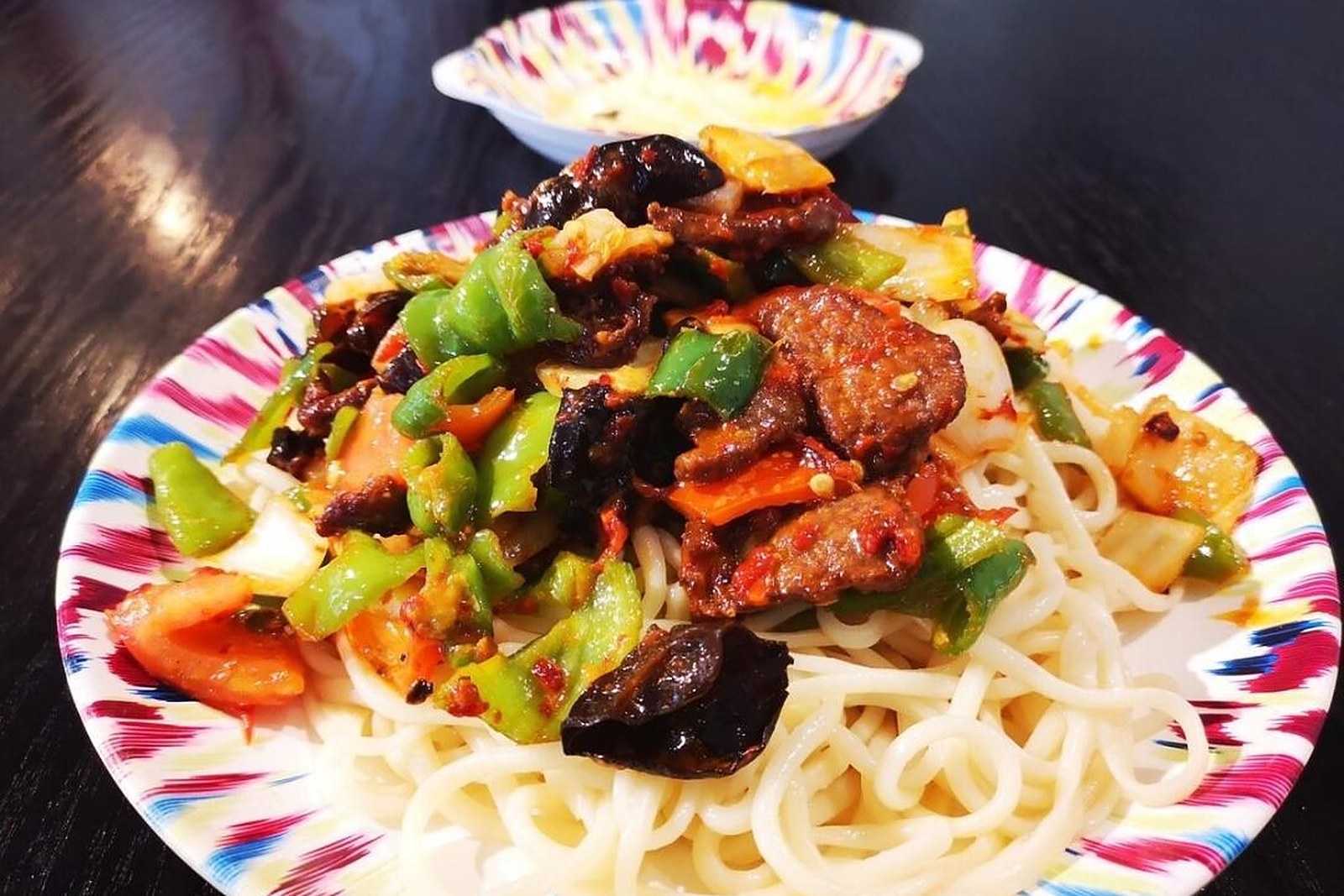
flowcloud would say laghman is Xinjiang’s handshake food: dough pulled in front of you, a topping that never skimps, and refills that treat hunger as a conversation still open – the plainest great plate between the mountains and the gobi. All checked November 2026.
Where to find it: Laghman houses line the market streets and main avenues of 双河市 Shuānghé Shì Shuanghe City – order the oil-fried lamb topping with pulled noodles, take the free refills, and eat it while it steams. All checked November 2026.