
The Post-Station Fish That Started Chongqing’s Jianghu Cuisine
来凤鱼 Láifèng yú, Laifeng fish, is the spicy-gravy whole fish of 来凤驿 Láifèng Yì, Laifeng Post, the old post station in 璧山区 Bìshān Qū, Bishan District that shared the rank of the Chengdu-Chongqing road’s “four famous stations” with 龙泉驿 Longquan, 双凤驿 Shuangfeng and 白市驿 Baishi. The dish the station gave its name to is a whole fish served submerged in red chilli oil under a raft of chillies and Sichuan pepper, eaten out from under the raft rather than around it, and the Chongqing trade credits the format as the ancestor of 江湖菜 jiānghú cài, the jianghu cuisine – the rough, big-flavour restaurant cooking that spread out of the road towns. The cooking craft is on the municipal intangible-heritage list, and the district treats the fish as the head of its own food list, which makes this the first page a Bishan food reader should read.
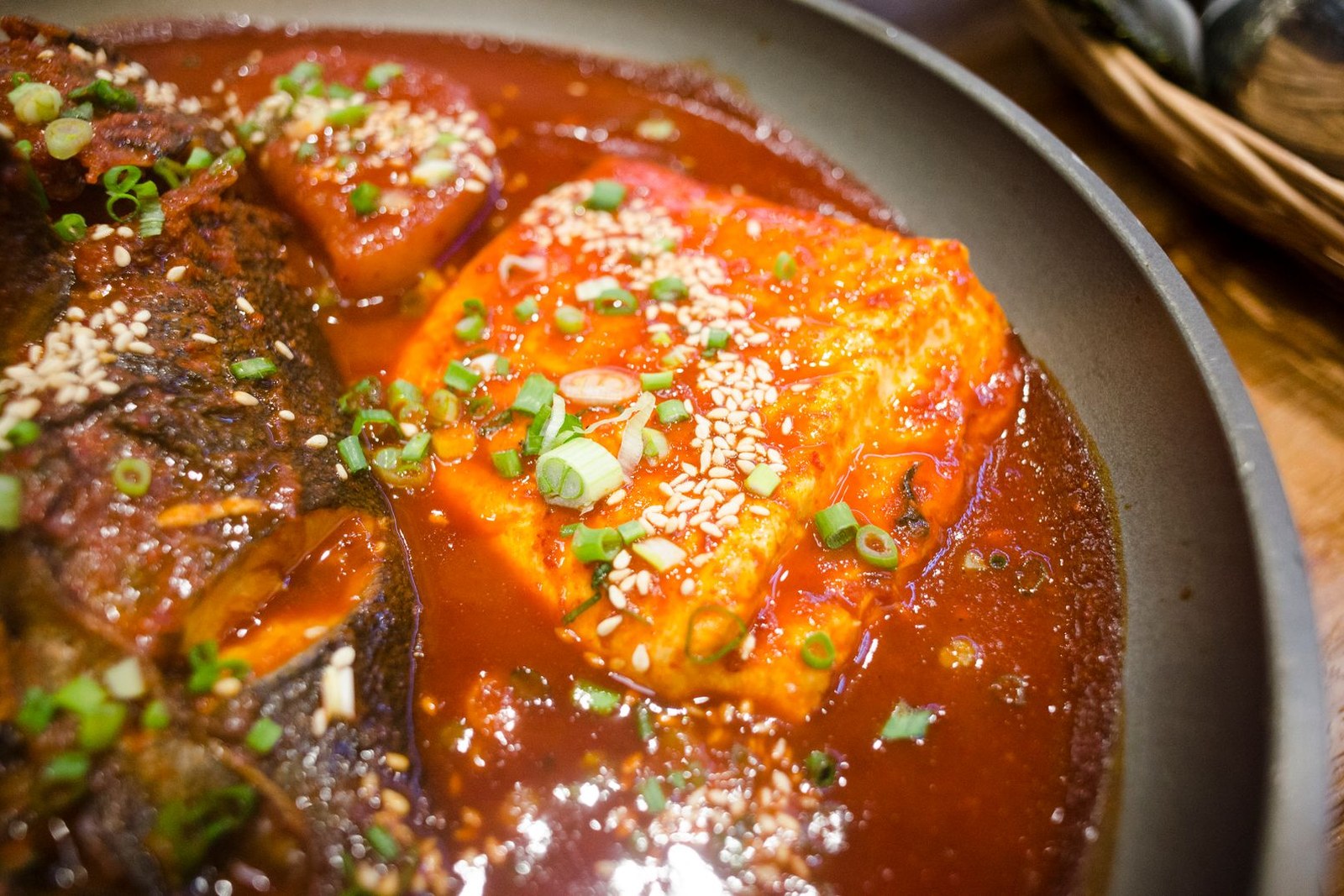
The road explains the dish. The old Chengdu-Chongqing post road ran five hundred-odd kilometres and half a month at walking pace, and its stations fed and stabled the traffic – officials, merchants, coolies, sedan chairs – which meant a station town lived on its kitchens. Laifeng sat on fish-and-rice land: the Jiaqing-era Bishan gazetteer lists the seven fishes of the 璧南河 Binan River, with the seven-star fish and the red-fin among them, as tribute items going back through the Huayang Guo Zhi’s account of the region’s fish-and-salt tribute, and a station on tribute fish water learns to cook fish for travellers. When the motor road replaced the horse path in 1933 the stations died – but the new road ran through Laifeng rather than around it, so the town kept the traffic and the kitchens kept the trade, and a fish dish that fed carters at midnight became the thing the town was known for.
The modern dish has a dated origin story the record actually supports. In the middle 1970s two local cooks – 邓永全 Deng Yongquan, known as Fat Deng, and 唐治荣 Tang Zhirong, known as Deaf Tang – rebuilt the traditional Sichuan whole-fish braise around a heavy base of chilli and Sichuan pepper, aiming at the four characters the trade still quotes: 麻辣烫嫩, numbing, hot, scalding, tender. The calligrapher Yang Xuanting wrote the pair 鲜鱼美 – fresh fish, beautiful – for the street, film and television names came to eat, and by 1988 the small town counted more than a hundred and twenty restaurants serving little else, which is the sort of figure a single-dish economy leaves in the record. The waves of migration that filled Sichuan after the Ming had already mixed Jiangnan fish-cooking with the local table, the wartime capital’s cooks sharpened it further, and the 1970s reformulators inherited a century of accumulated technique rather than inventing from nothing.
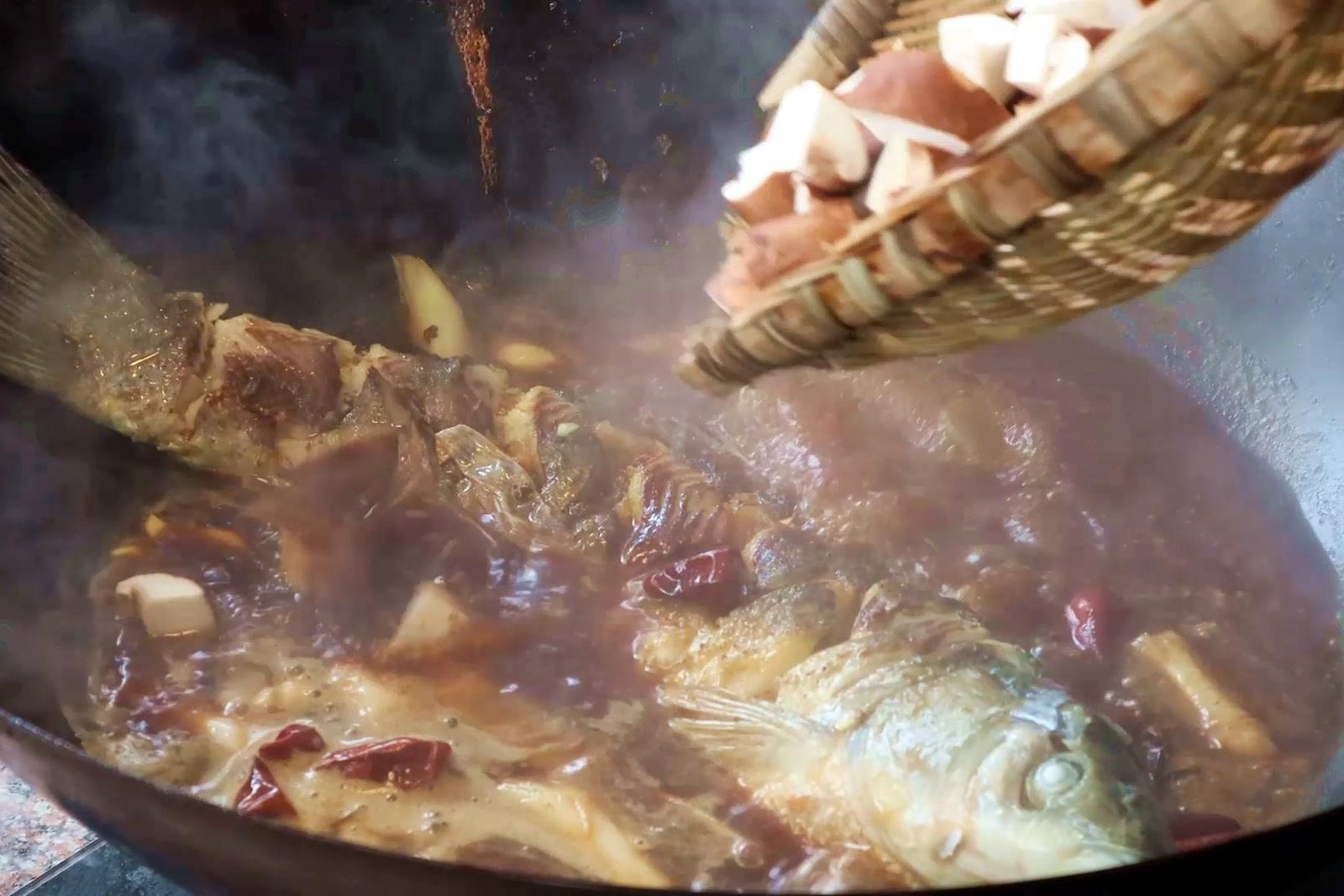
What the format actually is matters more than the legend, because the format is what spread. A jianghu-style whole fish is cooked hard and fast in a deep flavoured oil, served in the vessel it cooked in, and eaten communally from under a chilli raft – no banquet carving, no sauce on the side, no course structure – and every part of that grammar is anti-banquet by design. The trade’s own genealogy treats the later famous dishes as children of the format:辣子鸡 laziji dry-fried chilli chicken, 芋儿鸡 taro chicken, 邮亭鲫鱼 Youting crucian, 太安鱼 Taian fish – each a road-town dish built on the same big-basin, big-flavour, eat-in-common grammar. Laifeng fish did not merely precede them; it set the shape they all reuse, which is why the heritage listing and the jianghu-cuisine ancestor claim are the same claim made twice.
The decline of the street is part of the story and the record is blunt about it. The 1995 Chengdu-Chongqing expressway bypassed Laifeng without an interchange, the drive-through trade that had sustained a hundred and twenty fish houses dried up within a few years, and the town’s place at the head of the city’s fish list passed to newer names – the trade now points to Cuixun’s boiled fish as the successor format. What survived the bypass is the dish itself, which had already jumped to Chongqing and beyond, and the municipal heritage listing that protects the craft rather than the street. The district’s own food literature still heads its list with the fish, and a reader driving out for it should understand the arithmetic: the fish is everywhere in Chongqing, but the post station that cooked it first is a specific place in Bishan with a specific story, and the story is the reason the fish tastes like an argument for road-town cooking.
What the visitor does is order the fish and read the street. The dish is served to a table, not to a plate, and the local way is rice, cold beer and the long work of picking the sweet flank meat out from under the chillies; the raft is not garnish but the cooking medium, and the meat underneath is milder than the colour suggests. The honest frame for a Bishan food page is that the original street is a memory with a heritage certificate while the dish is a living Chongqing commonplace, and both facts are on the district’s side. All checked October 2026.
Words and Names
来凤鱼 Láifèng yú, Laifeng fish, the spicy-gravy whole fish of 来凤驿 Láifèng Yì, Laifeng Post, one of the four famous stations of the old Chengdu-Chongqing post road alongside 龙泉驿 Longquan, 双凤驿 Shuangfeng and 白市驿 Baishi, in 璧山区 Bìshān Qū, Bishan District. The Jiaqing-era county gazetteer records the seven fishes of the 璧南河 Binan River as tribute, and the modern craft – 麻辣烫嫩, numbing, hot, scalding, tender – was rebuilt in the mid-1970s by 邓永全 Deng Yongquan and 唐治荣 Tang Zhirong, with more than a hundred and twenty fish restaurants in the town by 1988. The format is credited as the ancestor of Chongqing 江湖菜 jiānghú cài jianghu cuisine, with 辣子鸡, 芋儿鸡, 邮亭鲫鱼 and 太安鱼 as its descendants; the cooking craft is a municipal intangible-heritage item, and the 1995 expressway bypass without an interchange ended the original street’s trade.
What the Locals Know
The local knowledge is about the eating, not the legend. The chilli raft on top is the cooking medium and the flavour carrier, not a dare: the flank and belly meat under it comes out mild and silken, and a first-timer who digs straight into the raft gets a mouth of oil and crisp skin while the regular works the sides. The fish is eaten with plain rice and something cold, because the dish is oily and hot and the table’s job is to keep pace with it, and a basin ordered for two feeds four – the format is communal by design and the portions are sized for a full table. The second thing locals know is the geography: every Chongqing district cooks the fish now, but the heritage craft and the tribute-fish water are Bishan’s, and the honest way to eat it once is at or near the post station itself, where the road story and the basin arrive together. What the record does not support is any single “original” restaurant claim surviving the bypass years, so the page names the town and the craft and leaves the shop to the day’s queue.
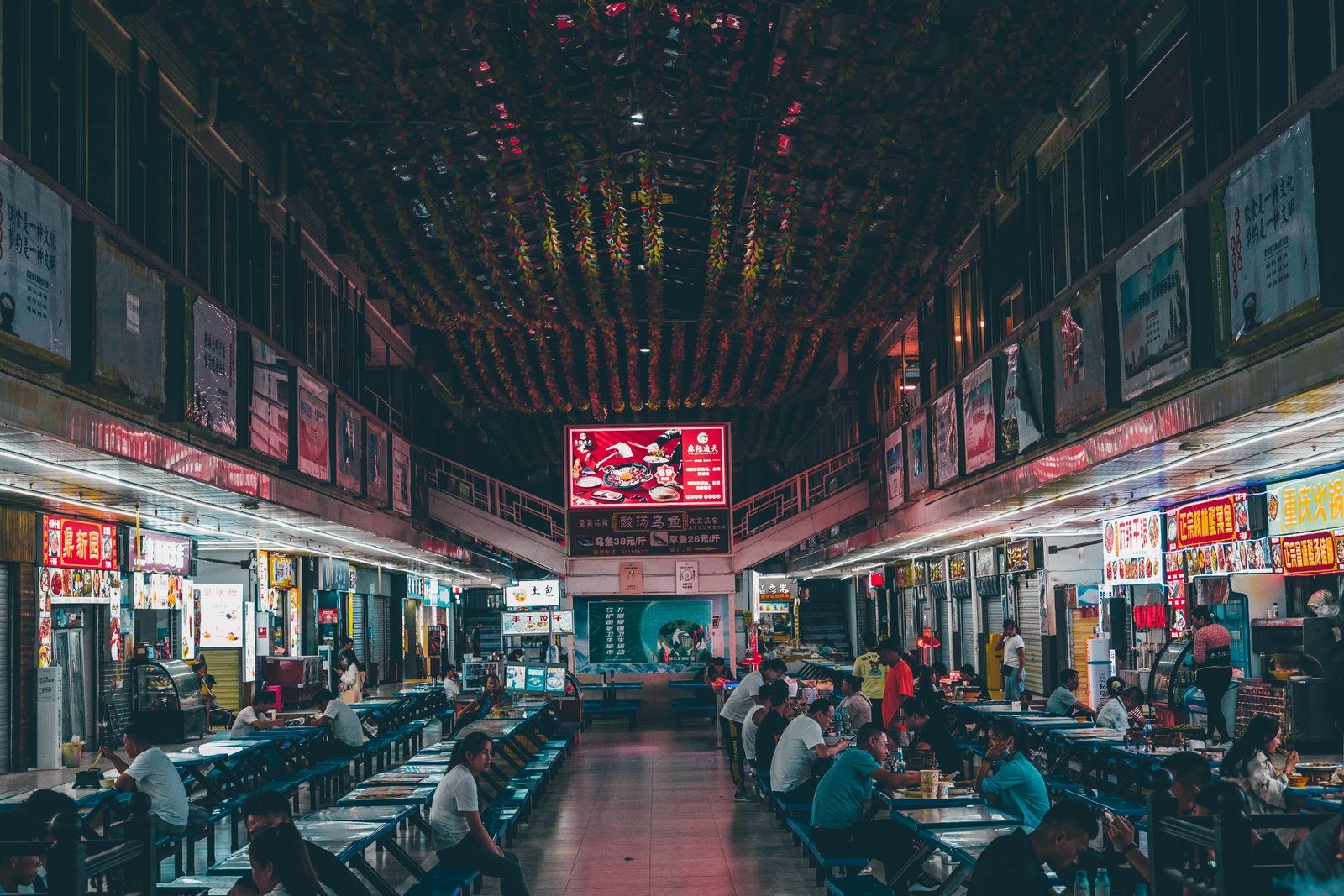
flowcloud would say that Laifeng fish is the road-town dish that started Chongqing’s jianghu cuisine – a whole fish in red chilli oil from 来凤驿 Laifeng Post, one of the four famous stations of the old Chengdu-Chongqing road in Bishan District, its craft rebuilt in the mid-1970s by Deng Yongquan and Tang Zhirong around 麻辣烫嫩, a hundred and twenty fish houses in the town by 1988, a municipal intangible-heritage listing now on the craft – and that the 1995 expressway bypass ended the original street while the format conquered the city, with laziji, taro chicken, Youting crucian and Taian fish all children of its grammar. All checked October 2026.
Where to find it: the craft belongs to 来凤街道 Laifeng Street in 璧山区 Bìshān Qū, Bishan District, on the old Chengdu-Chongqing road corridor, and the honest address is the town’s fish restaurants rather than any single house, because the bypass years left no unbroken “original” shop on the record and none is invented here. The dish is cooked across Chongqing, and a Bishan food reader should treat the post-station town as the place to eat it once with its story attached; no posted price was found in the sources consulted and none is quoted. Pair this page with the district’s rabbit counters and the eight-bowl banquet pages, which are the other two formats the road trade left behind.