
Smoke Over Charcoal: The Kebab Stands of Wujiaqu
红柳枝头烟火起,孜然香透夜市风 Hóngliǔ zhītóu yānhuǒ qǐ, zǐrán xiāng tòu yèshì fēng – Smoke rises from red-willow skewers; cumin scents the night-market wind
正文:烤羊肉串 Kǎo Yángròu Chuàn lamb kebabs are the smell of every evening in 五家渠市 Wǔjiāqú Shì Wujiaqu City – chunks of gobi-grazed lamb threaded on willow or iron skewers, fanned over charcoal until the fat catches, then dusted with cumin and chili in a gesture so standard it might be municipal law. The kebab is the city’s street food backbone: outside the night market, beside the bus station, along the food street by the lake gate, the grills start at dusk and the smoke column is the easiest landmark in town.
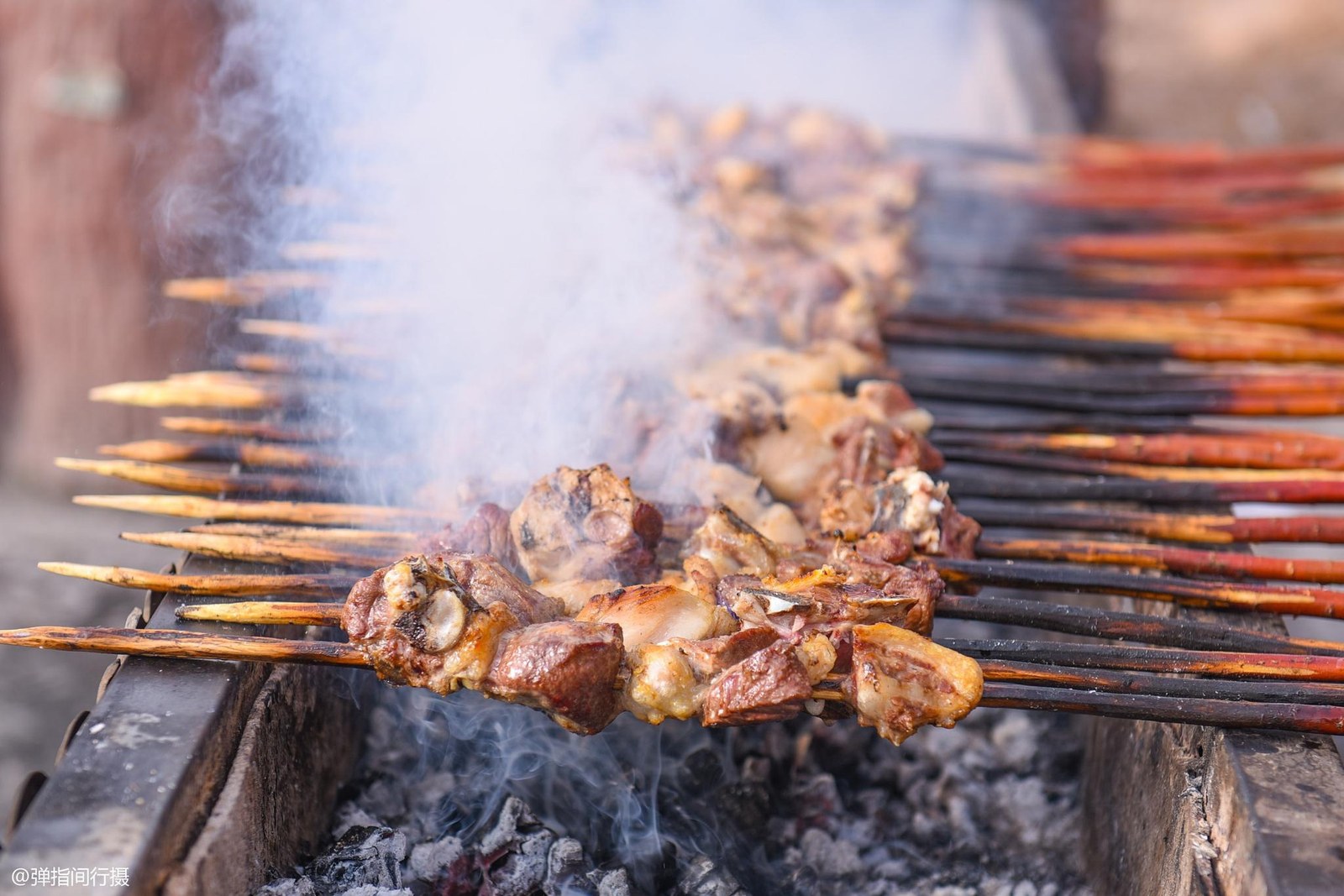
The craft is in the fat. Good Wujiaqu kebabs alternate lean and tail fat on the same skewer so each chunk self-bastes as it turns; the willow skewers – red willow when the stand is serious – give a faint green edge to the smoke; and the seasoning is applied twice, once while grilling and once at the pass, so the cumin arrives both roasted and raw. Watch a master work the long trench grill and you understand the queue: thirty skewers a hand, turned in one motion, never once charred past rescue.
Order in rounds. Start with five lean-fat skewers and plain naan – the bread is the plate – then move to the variations: skewers rolled in sesame, lamb ribs cut chop-length, the liver-and-fat pair for the traditionalists. Vinegar-chili dip appears on the tables of the fancier stands, and cold brick tea or a bottle of the local kefir keeps the charcoal honest.
The kebab economy runs on the same flocks as everything else in the district. Gobi lamb – smaller carcasses, denser muscle, a flavor from the salt-bush grazing – is what the best stands insist on, and in festival weeks the butchers sell whole carcasses to families who grill in courtyards with the same red-willow skewers. At the summer fair by Qinggeda Lake the kebab rows stretch longer than the food stalls around them, and the smoke reads on the lake wind from two gates away.
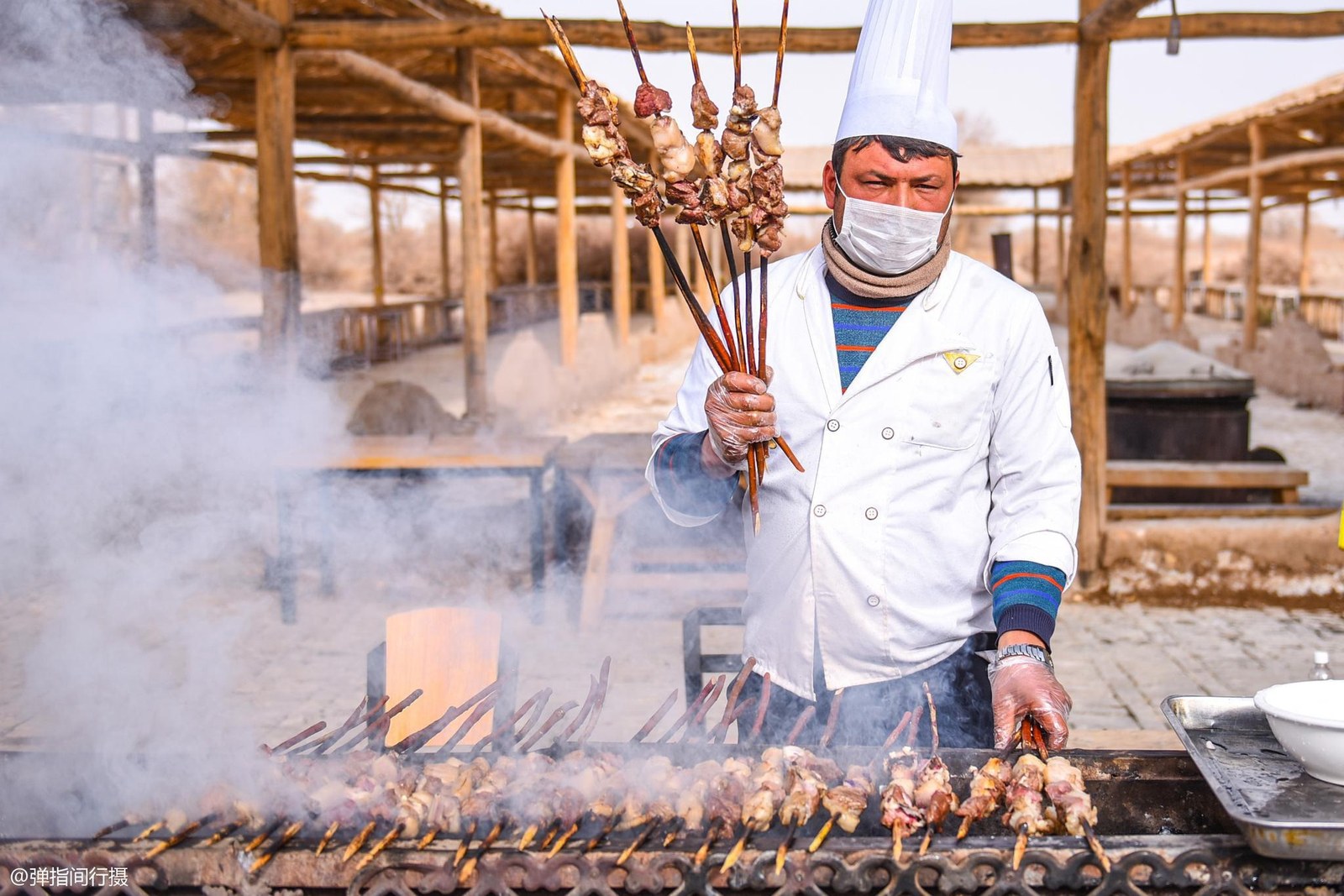
Prices are street-level: skewers cost pocket change by the piece, the meat-heavy versions a step up, and no table charge exists anywhere honest. Evening is the time – the grills light at seven, the night market fills by nine, and the smoke does the advertising for free.
Beyond the skewer smoke, the same 五家渠市 Wǔjiāqú Shì Wujiaqu City holds other flavors: 手抓饭 Shǒuzhuāfàn lamb pilaf for the gold rice pot, 烤全羊 Kǎo Quán Yáng roast whole lamb for the festival table, 韭菜盒子 Jiǔcài Hézi leek boxes for the frying-pan counter, and 奶皮子 Nǎipízi milk skin for the herder’s cream – four more doors into the same 五家渠市 Wǔjiāqú Shì Wujiaqu City. With the kebabs settled, our Wujiaqu travel map fills the day.
Words and Names
What the Locals Know
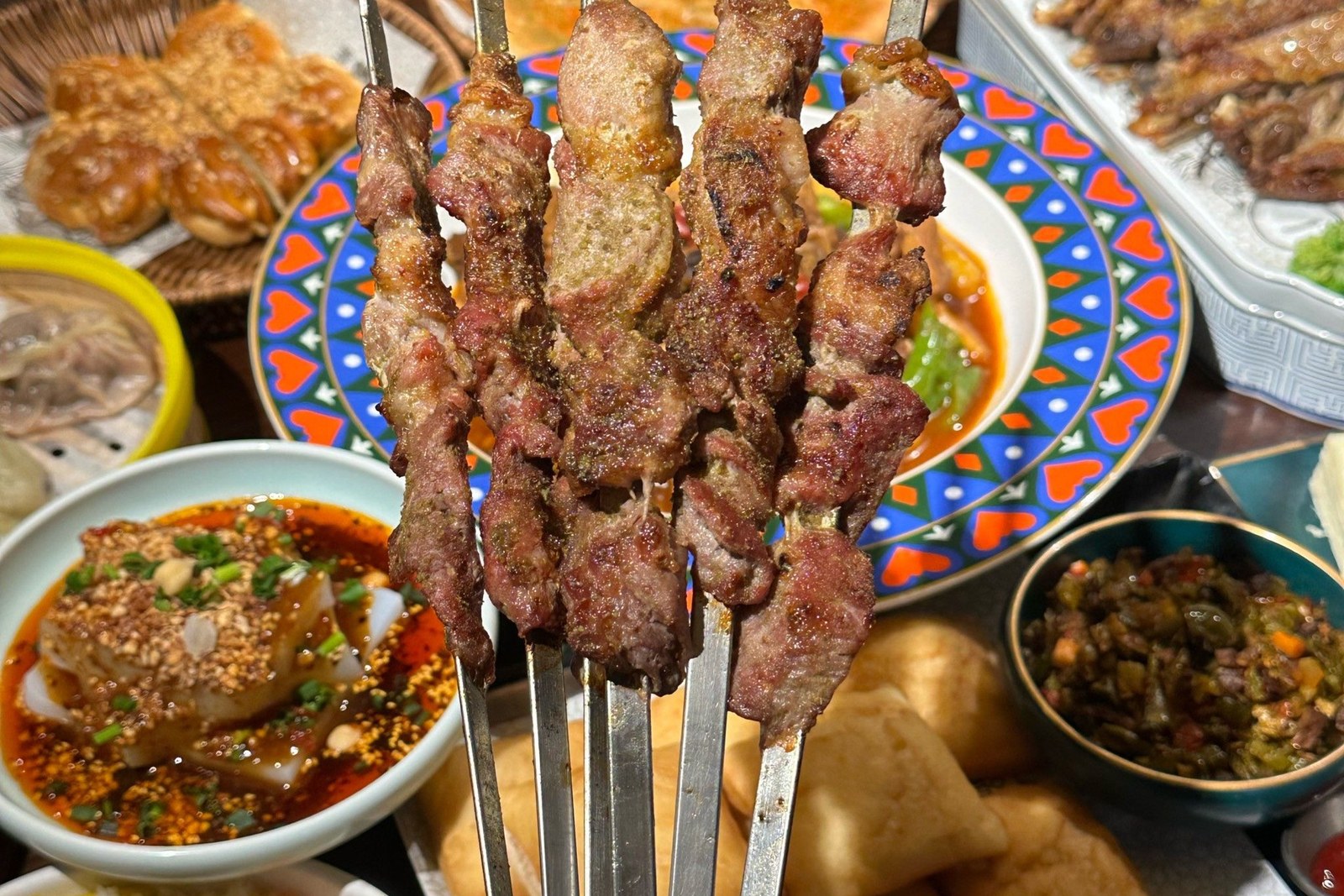
flowcloud would say the lamb kebab is Xinjiang’s street symphony: fat and lean sharing one skewer, cumin doing the percussion, and charcoal smoke conducting the whole evening market – pocket change for the best smell in town. All checked November 2026.
Where to find it: Kebab stands cluster along the night-market street and the food rows by Qinggeda Lake’s south gate of 五家渠市 Wǔjiāqú Shì Wujiaqu City – follow the smoke after 7 pm, order in fives, and take the brick tea cold. All checked November 2026.