
Rice and Lamb in Gold: The Pilaf Pot of Wujiaqu
羊油染米金满锅,胡萝卜甜岁月香 Yáng yóu rǎn mǐ jīn mǎn guō, húluóbo tián suìyuè xiāng – Mutton fat turns the rice gold in the pot; the carrot’s sweetness perfumes the years
正文:手抓饭 Shǒuzhuāfàn lamb pilaf is the single pot that feeds Xinjiang, and around 五家渠市 Wǔjiāqú Shì Wujiaqu City it is practically the municipal dish – rice drowned in mutton fat and broth, layered with carrot ribbons and whole cumin-scented lamb, then steamed until every grain stands gold on its own. The name means eaten with the hand, though spoons have won the argument in town; the cooking method has not changed at all: big iron pots, lamb on the bone, yellow and orange carrots cut like kindling, and a cook who knows exactly when to stop stirring.
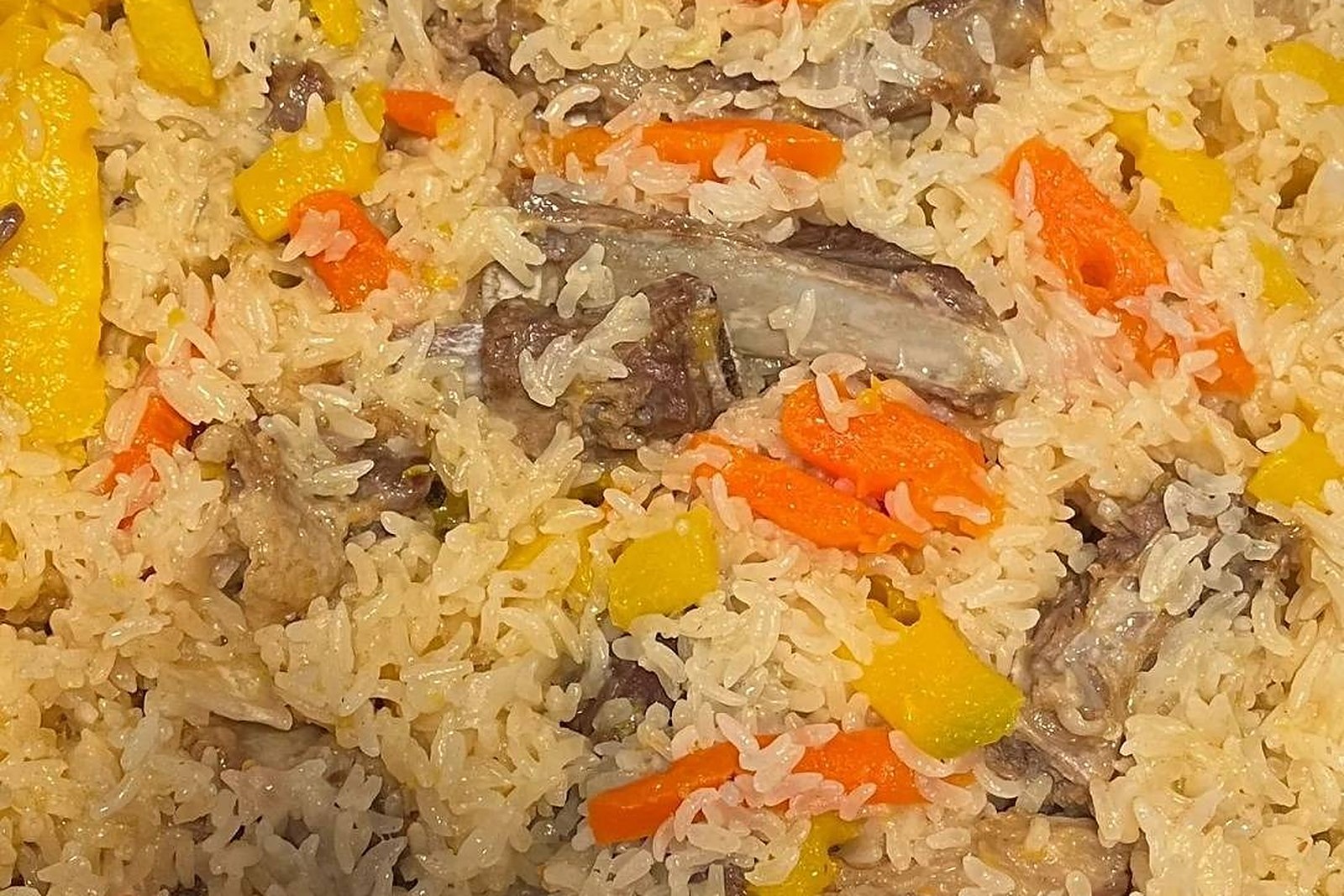
The pot tells the season. Summer pilaf runs light – young lamb, more carrot, a handful of raisins for the children – while winter pots go heavy with neck bones and tail fat, the rice coming out glossy enough to hold a thumbprint. Every neighborhood has its pilaf house: a cauldron by the door, a queue at noon, and a tray system that moves fast – order, point at the piece of lamb you want, and the cook’s cleaver settles the question. A proper Wujiaqu pilaf plate carries meat that falls off the bone, rice that never clumps, and a sweetness from the carrots that needs no sugar.
Eat it the local way. Take the pilaf plain the first time – the lamb fat, carrot and cumin carry the whole argument – then try the raisin version, the egg-topped version, or the festival pot with a whole lamb shank laid across the rice. Yogurt on the side is the classic relief, and a pot of brick tea cuts the fat the way the cooks always intended.
Pilaf also explains the district around it. The rice comes from the irrigated plots along the canal system, the carrots from the regiment vegetable farms, and the lamb from the same gobi-edge flocks that supply the whole city – a plate of 手抓饭 Shǒuzhuāfàn pilaf in Wujiaqu is the reclamation economy on a dish. On Fridays and festival mornings the big pots start at dawn, and by ten the better houses are down to their last trays.
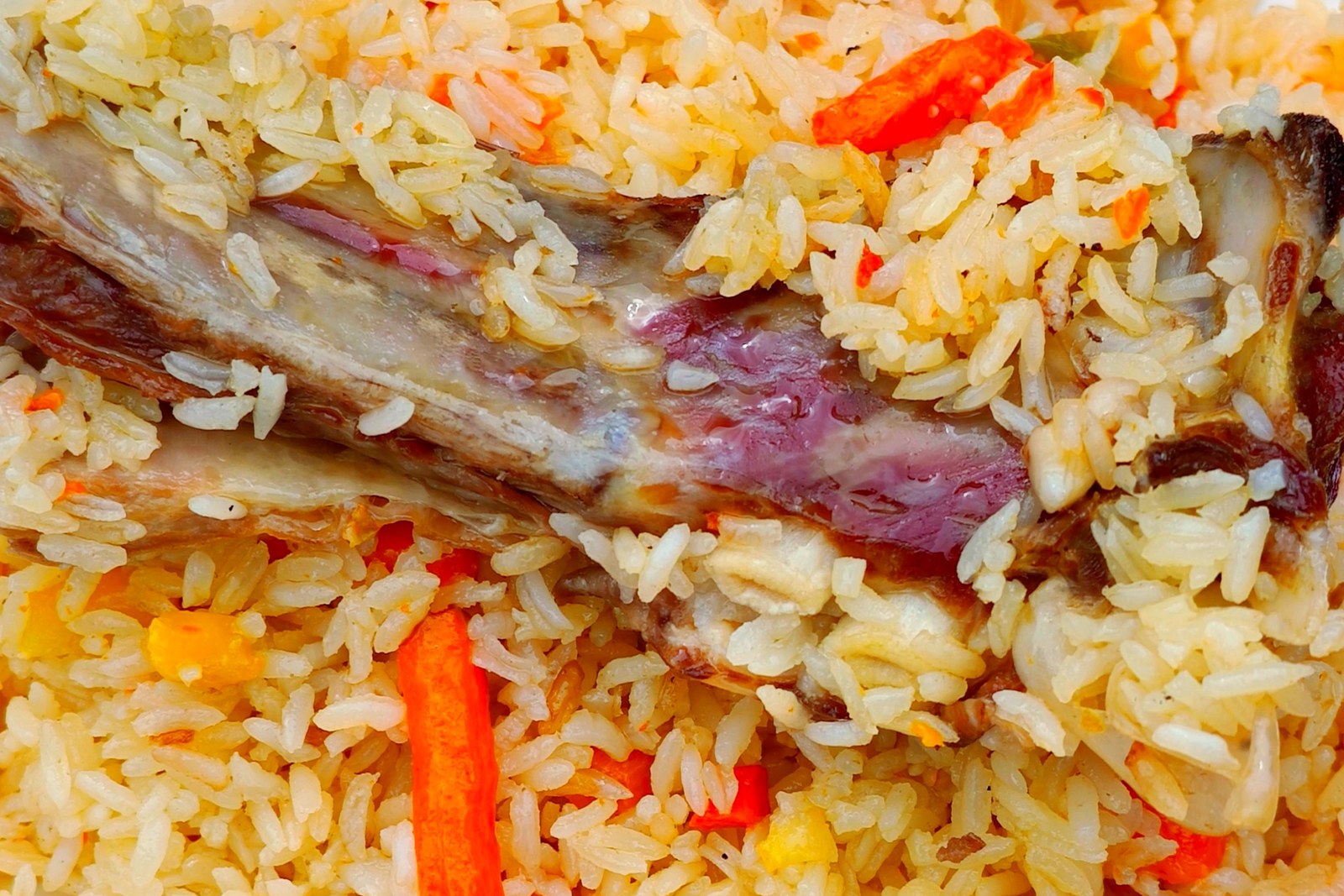
Costs stay honest: a standard plate runs the same as a sandwich back home, the shank version double, and refills of rice cost nothing worth mentioning. The midday queue is the only real obstacle – go at 11:30 or after 1:30 and the pot is still full.
Beyond the pilaf pot, the same 五家渠市 Wǔjiāqú Shì Wujiaqu City holds other flavors: 烤羊肉串 Kǎo Yángròu Chuàn lamb kebabs for the charcoal smoke, 烤全羊 Kǎo Quán Yáng roast whole lamb for the festival table, 韭菜盒子 Jiǔcài Hézi leek boxes for the street-side fry, and 奶皮子 Nǎipízi milk skin for the herder’s cream – four more doors into the same 五家渠市 Wǔjiāqú Shì Wujiaqu City. With the rice settled, our Wujiaqu travel map fills the day.
Words and Names
What the Locals Know
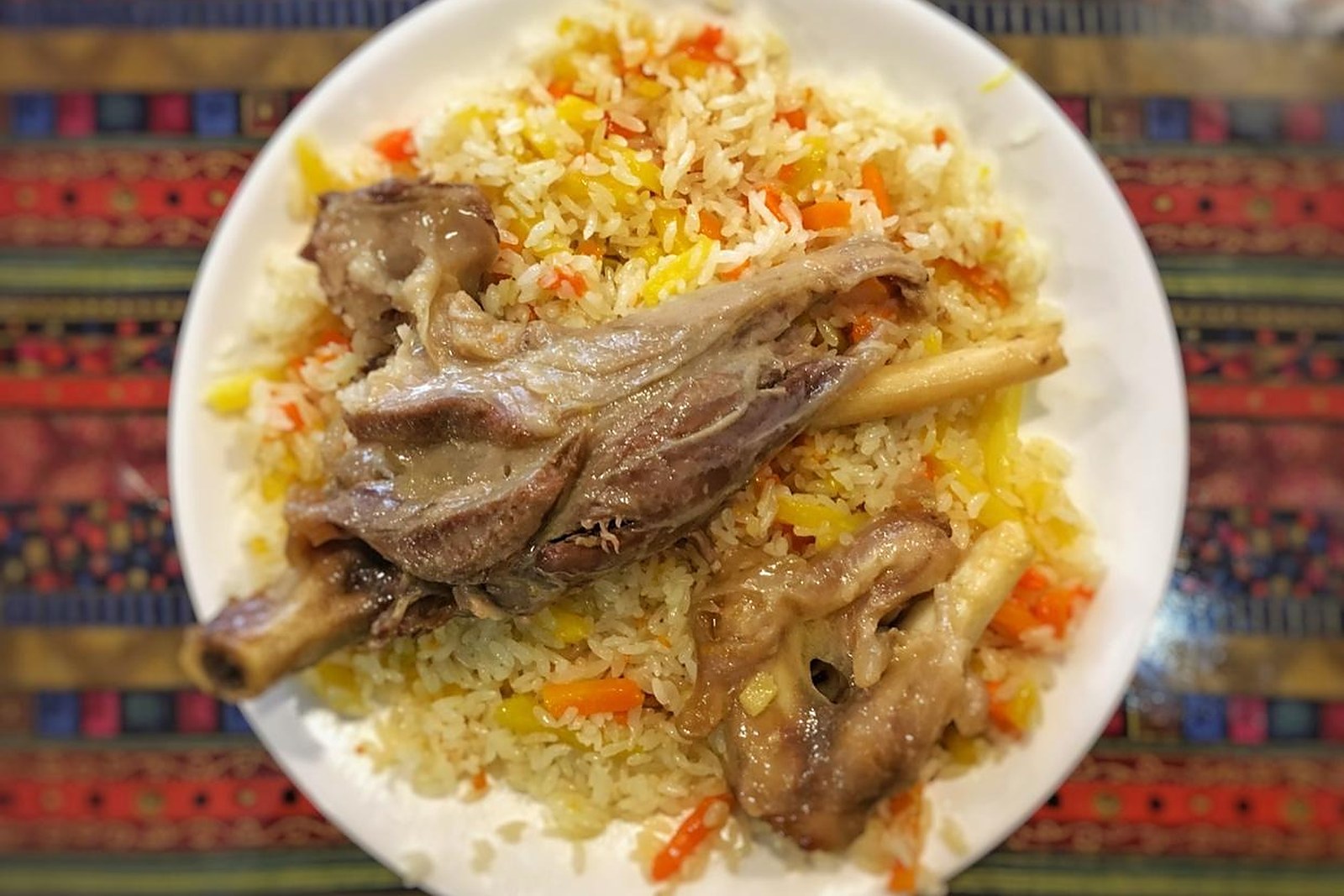
flowcloud would say pilaf is the gobi’s arithmetic of plenty: fat, rice and carrot reduced to one gold standard, a queue at the pot for a hundred years running – the plate that turns a desert crossing into lunch. All checked November 2026.
Where to find it: Pilaf houses line the market streets and the avenue by the bus station of 五家渠市 Wǔjiāqú Shì Wujiaqu City – go at 11:30 before the noon queue, point at your lamb, and take the free rice refill. All checked November 2026.