Old Hainan Qingbuliang
On the hottest kind of Sanya afternoon, when the pavement is too hot to stand on and the air feels like wet cotton, half the city disappears for an hour and the other half queues at a small shophouse on 建设街.
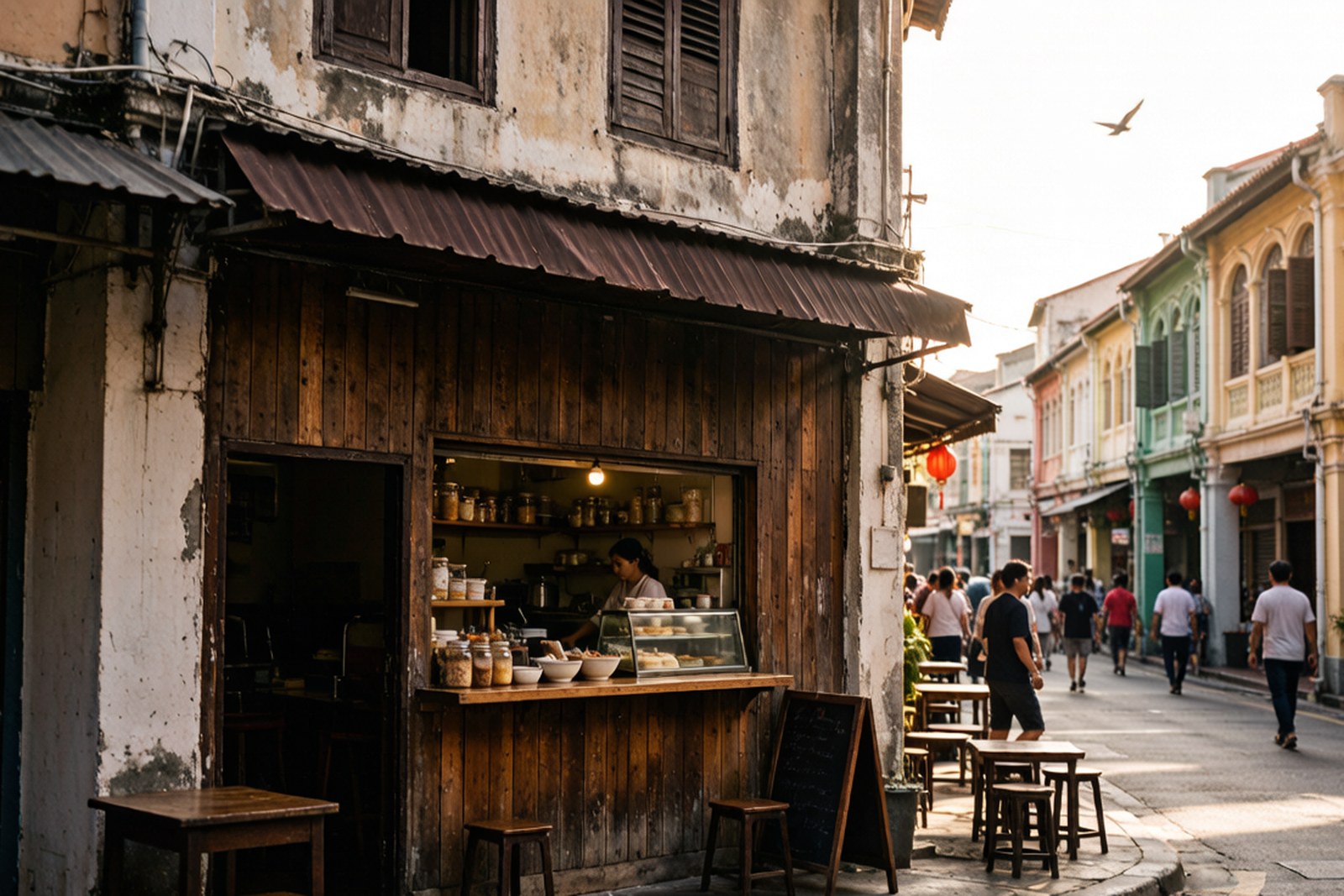
They are queuing for a bowl of 清补凉 (qīng bǔ liáng), and the queue moves slowly because the people at the front are doing the one thing you never do to a bowl of this in a hurry: they are drinking it, and they are going to take their time.
This is 老海南清补凉 (Old Hainan Qingbuliang), and it has been doing the same thing for more than forty years on one of the oldest food streets in Sanya.
What 清补凉 Actually Is
Let me be clear about the thing most visitors get wrong, because it is the whole point of this particular shop.
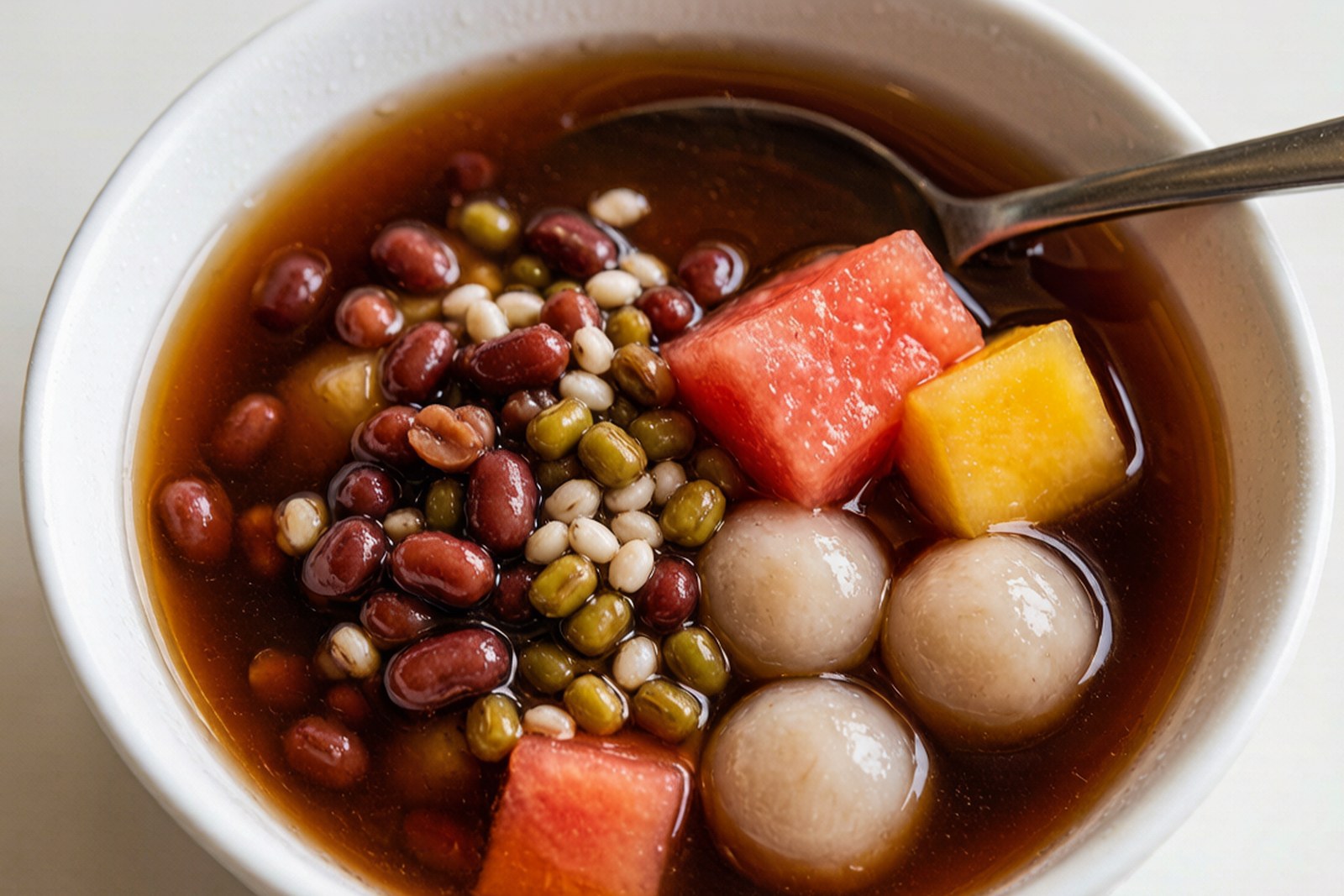
清补凉 is not a smoothie. It is not a coconut milk shake. It is a bowl of cold dessert-soup built on a syrup base — a broth made from red sugar, red dates and silver fungus, dark and mellow and sweet without being cloying — into which you add a small mountain of cooked grains and fruit. The more famous version you will find across Hainan is the 椰奶清补凉, made with coconut milk, which is what most tourists try first. This shop does the older thing.
The name tells you what it is: 清 (qīng) to cool the heat, 补 (bǔ) to replenish, 凉 (liáng) to make you feel cool. It is, in the old sense, a medicine as much as a dessert, and the Chinese have been eating it in one form or another for a very long time.
The history is one of those stories that may be more legend than fact, but it is a good one and the island has told it for centuries. When 赵佗 (Zhao Tuo) led the Qin armies south across the mountains into the humid south in 219 BC, his soldiers fell ill with the local climate, and his physicians cooked them a medicinal porridge of lotus seed, lily, 玉竹 and 薏米 to restore them. It worked, and he named it for its three effects: 清热气,补元气 — “cool the heat, replenish the vital force.” The poet 苏东坡 (Su Dongpo) is supposed to have eaten it in exile on the island and written the line that every 清补凉 stall still quotes: 椰树之上采琼浆,捧来一碗白玉香 — “gather the nectar from the coconut palms, and offer a bowl of jade-white fragrance.”
Whether or not the soldier story is true, the islanders are not wrong about the effect. On a day when the temperature is past thirty-five, a cold bowl of this is the difference between a good afternoon and a bad one.
The Shop, and the Difference
老海南清补凉 sits on 建设街 (Jiànshè Jiē, Jianshe Street), which local people will tell you is one of the oldest eating streets in the city — a long strip of restaurants and snack shops that has outlasted every resort on the coast and is still where the people who live here eat. You will find it in the middle section of the street, with a 粉铺 (a noodle shop) right next door, and no signage worth describing. There is a battered wooden board, a few tables, and a queue.
What keeps the queue is the base. Where most modern shops now pour coconut milk, this one still makes the old 糖水底 — a syrup simmered from red sugar, red dates and silver fungus, dark and rich and with a depth that a dairy base never quite reaches. The locals understand this instantly, and it is why the customers are a mix of white-haired 老三亚 and young families who were brought here as children. The 清补凉 here is the version the island made before the coconut-milk era took over, and it is becoming the rare thing you have to go out of your way for.
Each bowl is built to order, and the fillings are the classic set: 红豆 (red beans), 绿豆 (mung beans), 薏米 (coix seed), 芋圆 (taro balls), 阿达子 (ādá zǐ, a chewy starch pearl), 西瓜 (watermelon), 芒果 (mango) and 葡萄干 (raisins) — about eight things, each cooked or cut fresh, piled into the bowl and then flooded with the syrup.
You eat it as it is, and there are two rules worth knowing. One: do not stir it into a mush before you taste it — eat some of the clean layers first. Two: the shop’s own advice in the cooler months is to take it at room temperature rather than over ice, because the syrup is the whole point, and ice dilutes it. In summer, of course, everybody takes the ice, and it is excellent that way too.
What It Refuses to Be
This is a small shop with fixed ideas, and the ideas are the reason to come.
It does not do the modern thing of blending everything into a single sweet drink. It does not add 鹌鹑蛋 (quail eggs), which some street stalls like to drop in, and it does not lean on coconut milk to mask a thin syrup. It does not chase the latest 网红 toppings — no 芋泥, no 麻薯, no 珍珠 — because the eight classic ingredients are already the point. And it does not charge a resort price. A bowl is around ¥12, which in the middle of a city where a coffee costs more is an honest number.
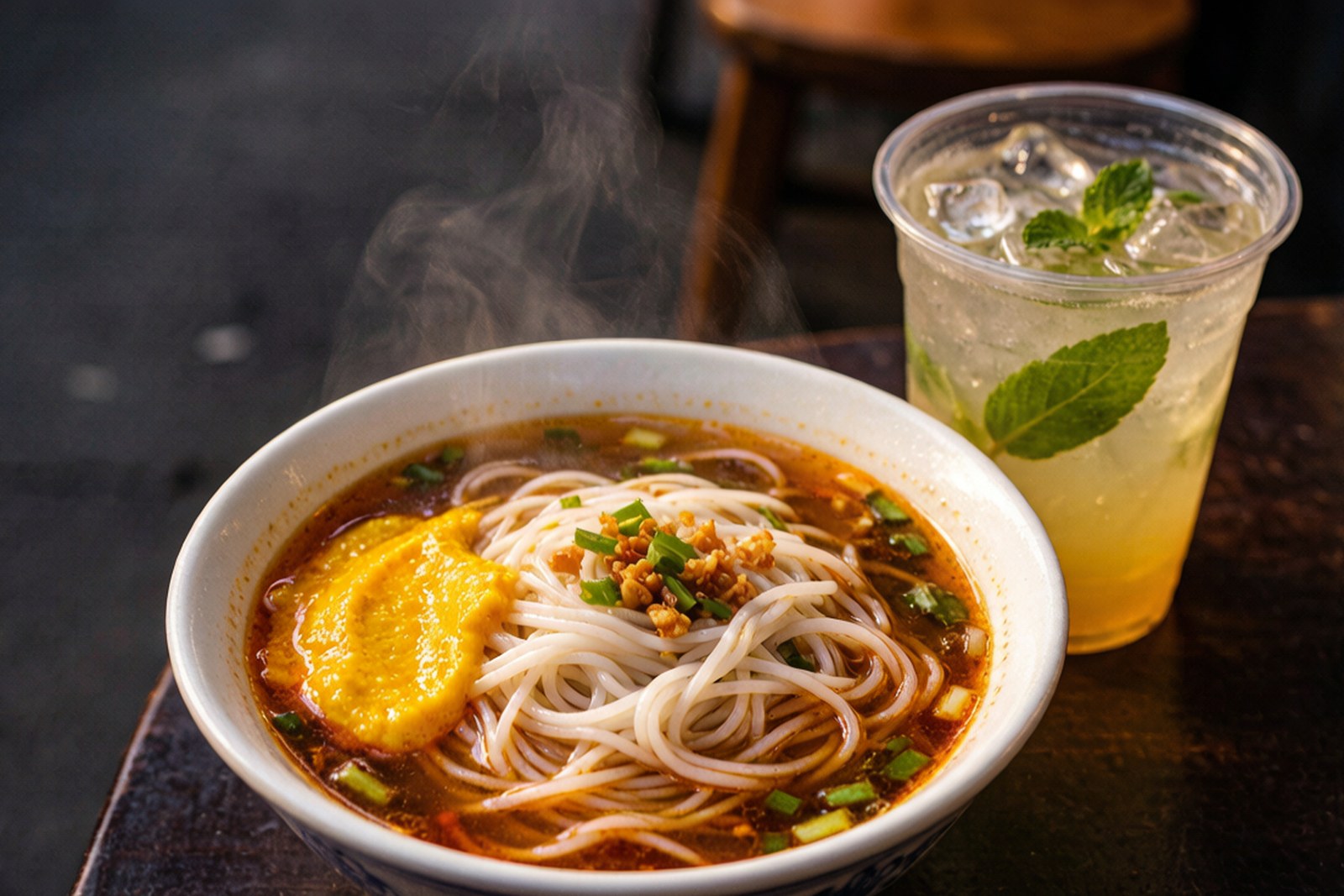
What it does have, in addition, is a 海南粉 (Hainan fen) — the island’s own bowl of thin rice noodles in a savoury broth — and the move here is to order one and add a spoon of the shop’s 黄灯笼椒 (huáng dēng lóng jiāo), the fierce little yellow chilli that is the sharper-edged cousin of the red ones, and which wakes the whole thing up. You want a noodle bowl before the dessert, and it is a meal.
What the Locals Know
- The sugar-water base is the difference. If you have already tried 椰奶清补凉 and liked it, try this one next: the darker, older syrup is a different experience, and it is the one the island used to make.
- Go in the late afternoon, when the day has broken and the street is coming alive. Midday is for the bravest.
- Order the 海南粉 first, add the yellow chilli. It is the savoury half of what is effectively a two-course meal.
- Ask for it without ice in the cooler months. The shop will tell you this, and you should listen.
- The 建设街 address matters. There are other 清补凉 places across the city, including some with the same sort of name, but the one on 建设街 in the middle block is the original, and it is the one the locals queue for.
The Name
清补凉 (qīng bǔ liáng) is literally “clear, replenish, cool” — three words that describe what it claims to do, and what it does. In 海南话 (Hǎinán huà, the local dialect), it is pronounced roughly xiéng bòu liō, and the islanders say the 凉 (cool) sounds like the word for an ounce, which is the kind of verbal coincidence that only a local would notice and love.
Do You Need the Back Story?
This is not a restaurant with a grand dining room or a wine list or a story about a famous chef. It is a street shophouse that has been making one thing well for four decades, and in a city that changes with every wave of tourism, that is quietly extraordinary.
Come for the syrup, stay for the pace. This is the place where Sanya stops moving for twenty minutes, and the reason the people who live here would never let it close.
flowcloud would say that a bowl of cold syrup and beans is not a dessert but a climate-control system, and that the wisest thing a visitor can do in a city this hot is find the place that has been cooling people down for forty years and sit in it.
Where to find it: 老海南清补凉 (Old Hainan Qingbuliang), 建设街 (Jianshe Street) middle section, 天涯区, Sanya — next to a noodle shop. About ¥12 a bowl. Traditional red-sugar-and-silver-fungus syrup base with eight fillings: red bean, mung bean, coix, taro balls, 阿达子, watermelon, mango and raisin. Also does 海南粉 — order it with a spoon of 黄灯笼椒. Best in the late afternoon; ask for it without ice when the weather is cool.