
Festival in a Bowl: Laomian
打卤浇香菜码翠,一碗捞面百年仪 Dǎlǔ jiāo xiāng càimǎ cuì, yī wǎn lāomiàn bǎinián yí – The gravy pours its fragrance over emerald toppings; one bowl of laomian carries a century of ceremony
捞面 lāomiàn Laomian is 天津市红桥区 Tiānjīn Shì Hóngqiáo Qū Hongqiao District’s ceremony in a bowl – hand-pulled wheat noodles fished from the pot, dressed with a spoonful of thick 打卤 dǎlǔ gravy and ringed by the vegetable trimmings the city calls 面码 miànmǎ. Every life event here has a noodle attached: weddings, birthdays, moving day, the first day of summer – 捞面 is the Tianjin verb for celebration itself.
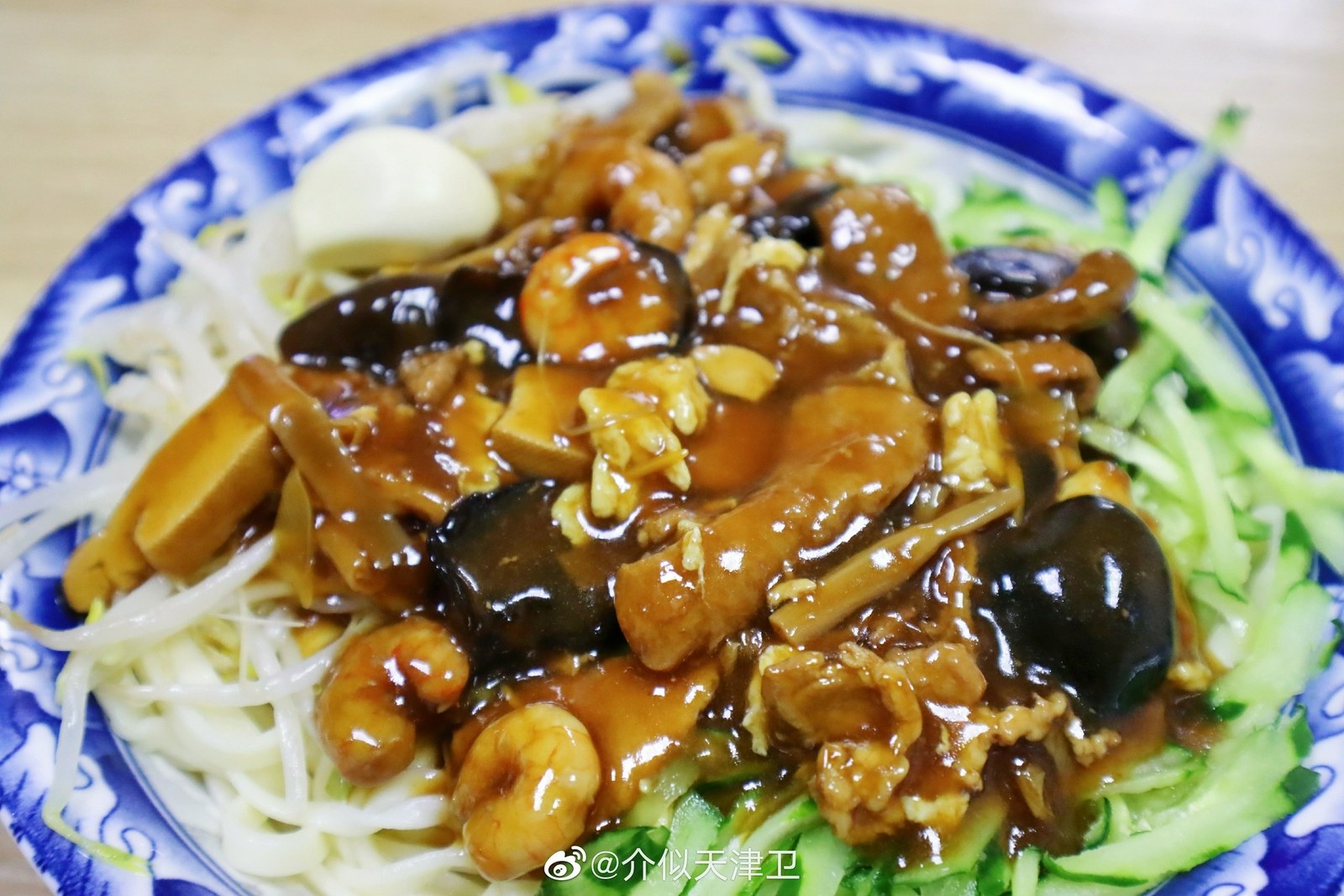
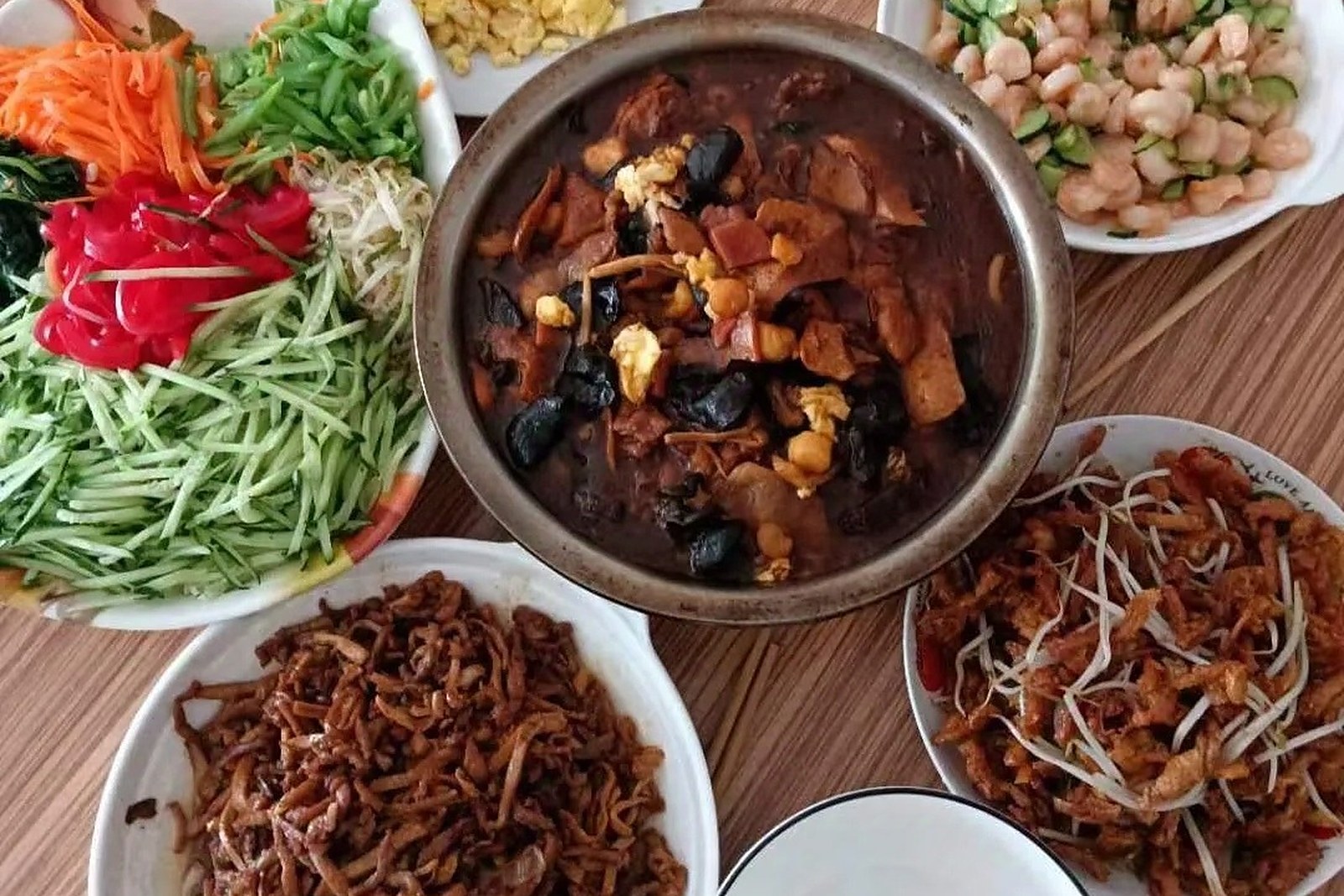
The bowl is built like a small stage. The noodles go down pale and springy, the gravy – pork and mushroom and egg-flower thickened with starch – floods the middle, and the topping saucers wait in orbit: shredded cucumber, carrot and cabbage, bean sprouts, spinach, the pink shreds of pickled turnip and a scatter of soybeans. Diners compose each bite themselves; the bowl is a menu, not a finished sentence.
The household grammar matters as much as the food. 四喜捞面 sìxǐ lāomiàn – “four joys” – adds four seasonal toppings to mark a family occasion, and the city’s saying holds that the difference between a Tianjin home and others is measured in how many saucers arrive with the noodles. Neighbors trade toppings across balconies at festival time, and no two family recipes for the gravy agree.
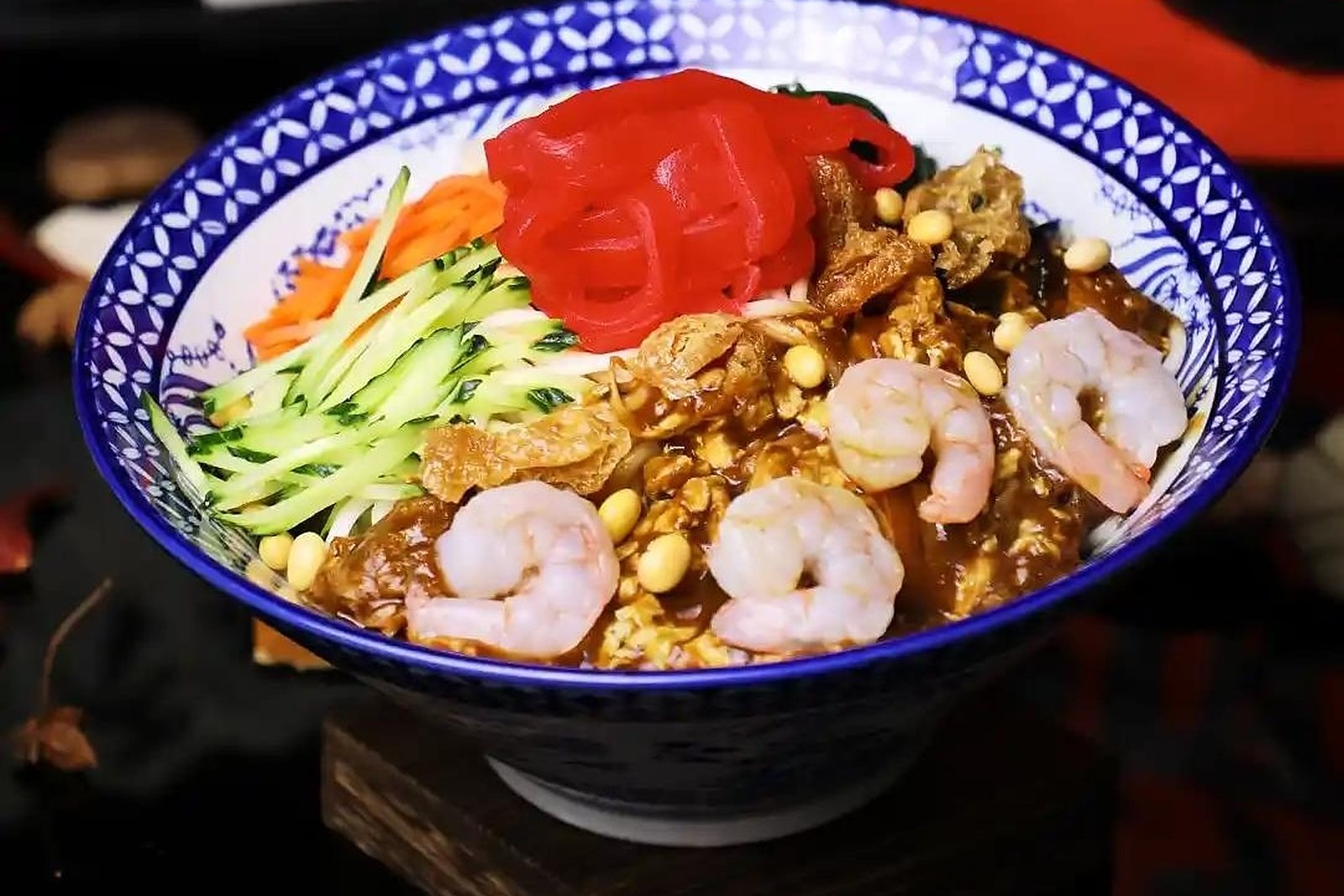
Find it at lunch counters and home-style kitchens across the district – the dish is everyday food elevated by ceremony, not the reverse. Judge a bowl by the noodles’ resistance (they should pull back when bitten) and the gravy’s gloss; a watery 卤 is the one unforgivable sin of a Tianjin noodle house.
The same district holds more flavors worth chasing: 它似蜜 tā sì mì the honey-glazed lamb, 牛肉烧饼 niúròu shāobǐng the beef-stuffed biscuit, 炸蛎黄 zhá lìhuáng the fried oysters, or 羊汤 yángtāng the white mutton broth – four more doors into the same Hongqiao District table.
Words and Names
捞面 lāomiàn laomian, “fished noodles”; 打卤 dǎlǔ the thick starched gravy; 面码 miànmǎ the vegetable topping saucers; 四喜捞面 sìxǐ lāomiàn the four-joys festival bowl; 喜面 xǐmiàn the celebration noodles served at every family milestone.
What the Locals Know
Toppings are personal territory – locals have opinions about cucumber width and will defend them. The gravy is poured, never mixed in by the cook, so each diner salts and sauces their own architecture; and if the house offers 醋 cù vinegar at the table, a splash over the cucumber shreds is the accepted finishing move. All checked November 2026.
flowcloud would say laomian is Tianjin’s calendar made edible: a bowl that knows every birthday, a gravy that argues across family lines, and saucers of color arranged like small holidays around the rim.
Where to find it: Home-style noodle counters and 老字号 lǎozìhào shops around 天津市红桥区 Tiānjīn Shì Hóngqiáo Qū Hongqiao District serve laomian at lunch – ask which 面码 are fresh that day and build your own bowl. All checked November 2026.