
Pulled Noodles: The Hand-Stretched Laghman Tossed with Over-Oil Meat, the Working Table of Urumqi’s Noodle Houses in Xinjiang
一把拉面千丝顺,过油肉浇菜面匀。Yī bǎ lāmiàn qiān sī shùn, guòyóuròu jiāo cài miàn yún – One pull of dough, a thousand even strands; over-oil meat poured, the vegetables and noodles fall into balance.
拉条子 Lātiáozi pulled noodles are the dish Urumqi measures its appetites by – dough stretched hand over hand into round, springy strands, boiled to a squeak and drowned under 过油肉 guòyóuròu “over-oil meat”: lamb and peppers seared hard in a wok gravy that arrives spooned over rather than mixed. The noodle’s name is the technique – 拉条 “pull strips” – and the pull is audible across the room, the cook snapping the dough against the board until the strands hang even as rope. Every noodle house keeps its own gravy grammar, and the table argues pepper-versus-tomato, lamb-versus-beef, but the verdict always lands the same way: the strands’ squeak against the tooth. The register is the working lunch: one plate, one pot of tea, a meal that is also a timetable.
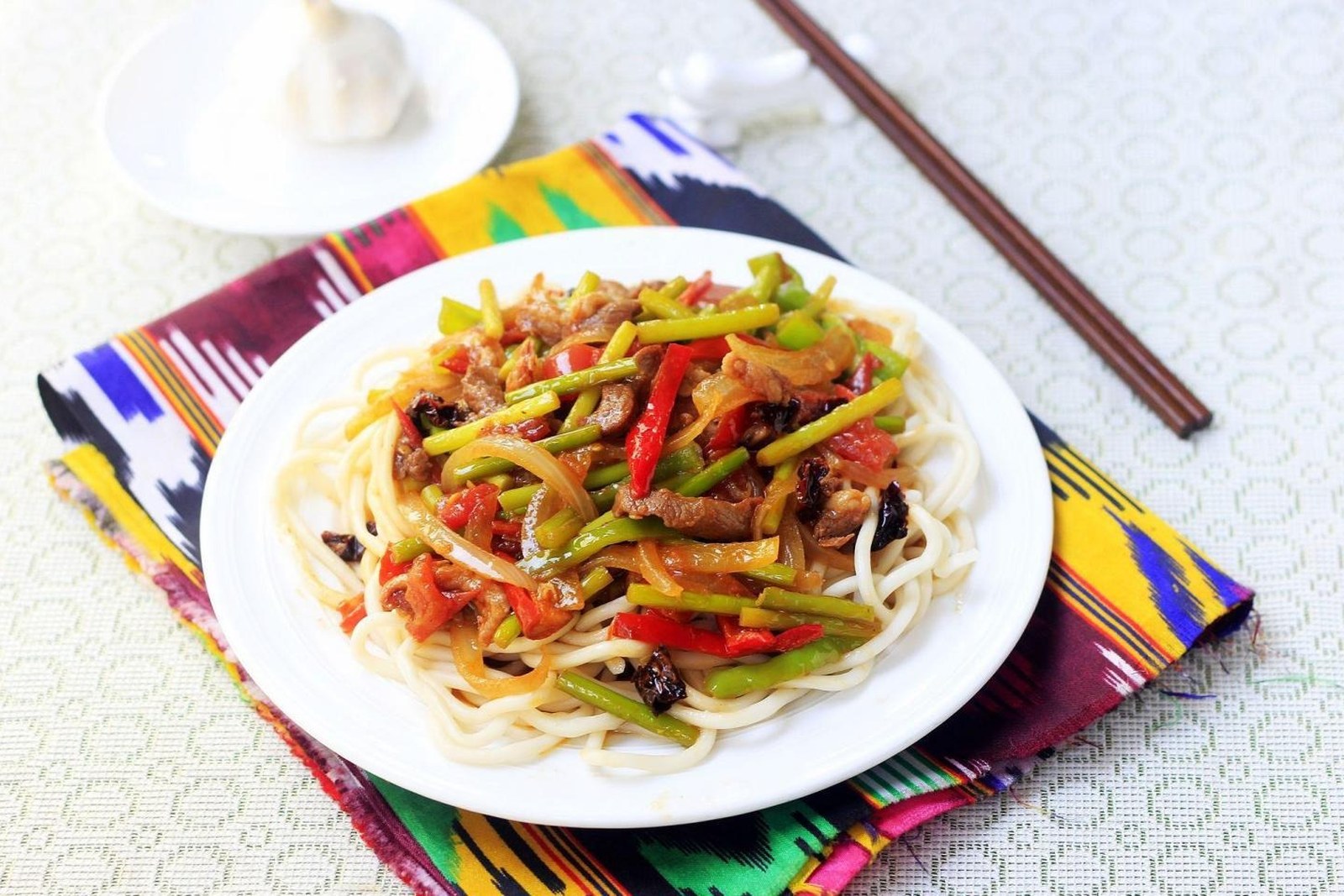
Call it honestly: noodle-house money at working prices. Getting there is one door: the dedicated 拌面 biànmiàn noodle houses cluster along the eating streets of the old city and the commercial lanes of the 新市区 Xīnshì Qū New Urban District (worth confirming the details for the refill custom – most houses add free noodles until the eater surrenders, a generosity worth confirming rather than assuming), and the market canteens serve honest plates without ceremony. A plate prices at a few tens of yuan money – though exact figures are worth confirming the details on rather than quoting, the plates repricing with the meat market. The crowds run to the noon: the working tables fill twelve to two, the gravies run out at the peak, and a mid-afternoon plate, when the wok has cooled and the cook pulls your batch alone, is the eater’s own hour.
The honest star is the pull itself – the strand’s evenness, spring and squeak, a texture no machine ribbon copies. What gets oversold is the “authenticity contest” framing: houses argue whose pull is oldest, but the dish’s verdict is simply whether the strands bite back and whether the gravy clings without drowning. What repays is the toss discipline: gravy poured over, not beside; the eater mixing at the table at their own speed; and the second helping of plain noodles to chase the last of the 过油肉 guòyóuròu – a two-act meal inside one plate (worth confirming the details for the refill policy, which the generous houses honour without being asked).
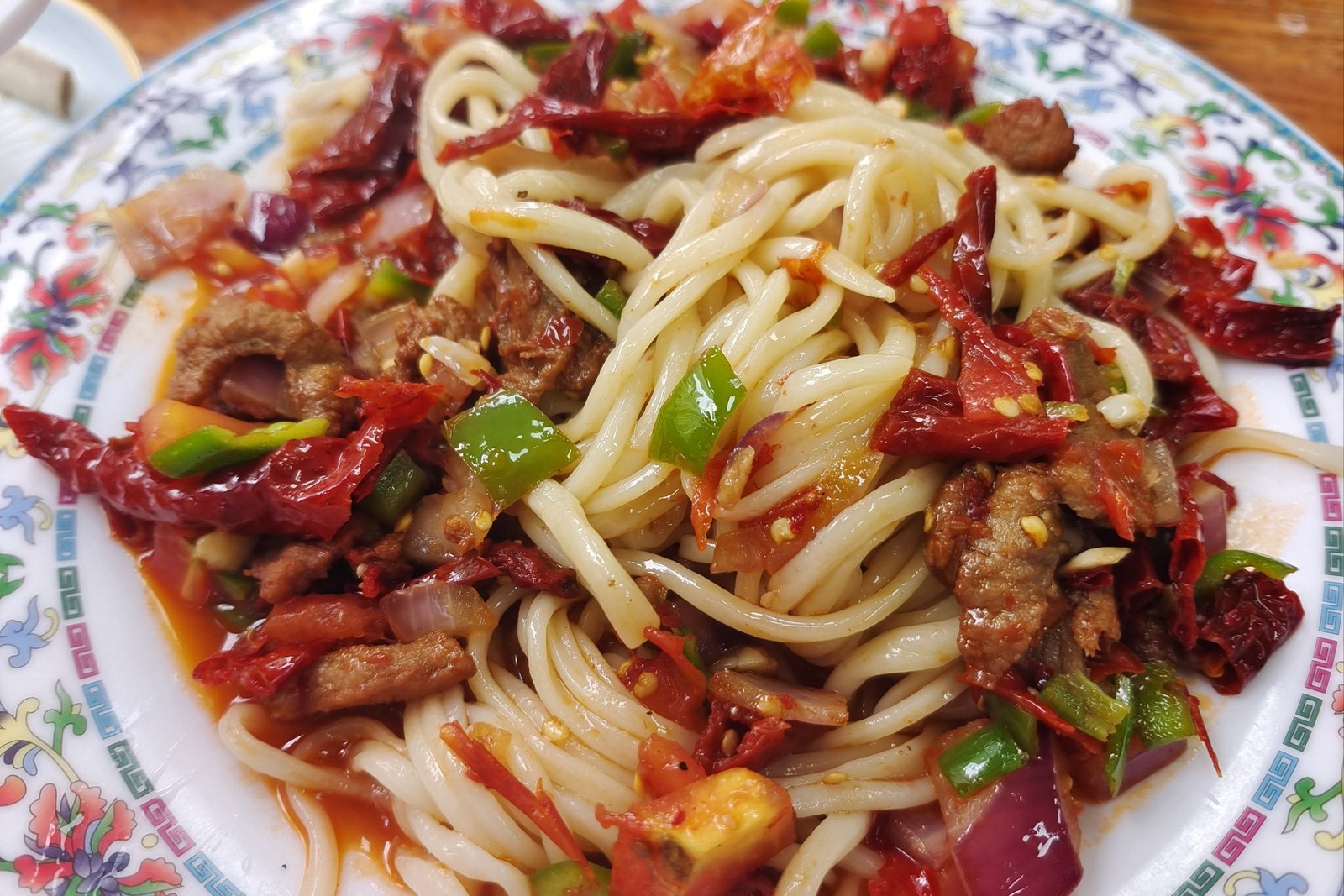
The town’s deepest habit is the refill itself: noodles added until the eater yields – a grammar of plenty that makes the noodle house the city’s fairest table, and the reason the plates leave with the gravies licked to the glaze.
The rest of this Urumqi list keeps other tables: the group platter of 新疆大盘鸡 Xīnjiāng dàpánjī the big plate chicken anchors the evenings, the charcoal perfume of 红柳烤肉 Hóngliǔ kǎoròu the red-willow skewers fills the night lanes, the golden rice of 羊肉抓饭 Yángròu zhuāfàn the lamb pilaf steams the noon and the tandoor crust of 馕 Náng the nang bread rides in every bag – four more doors into the same 乌鲁木齐市 Wǔlǔmùqí Shì Urumqi City.
Words and Names
What the Locals Know
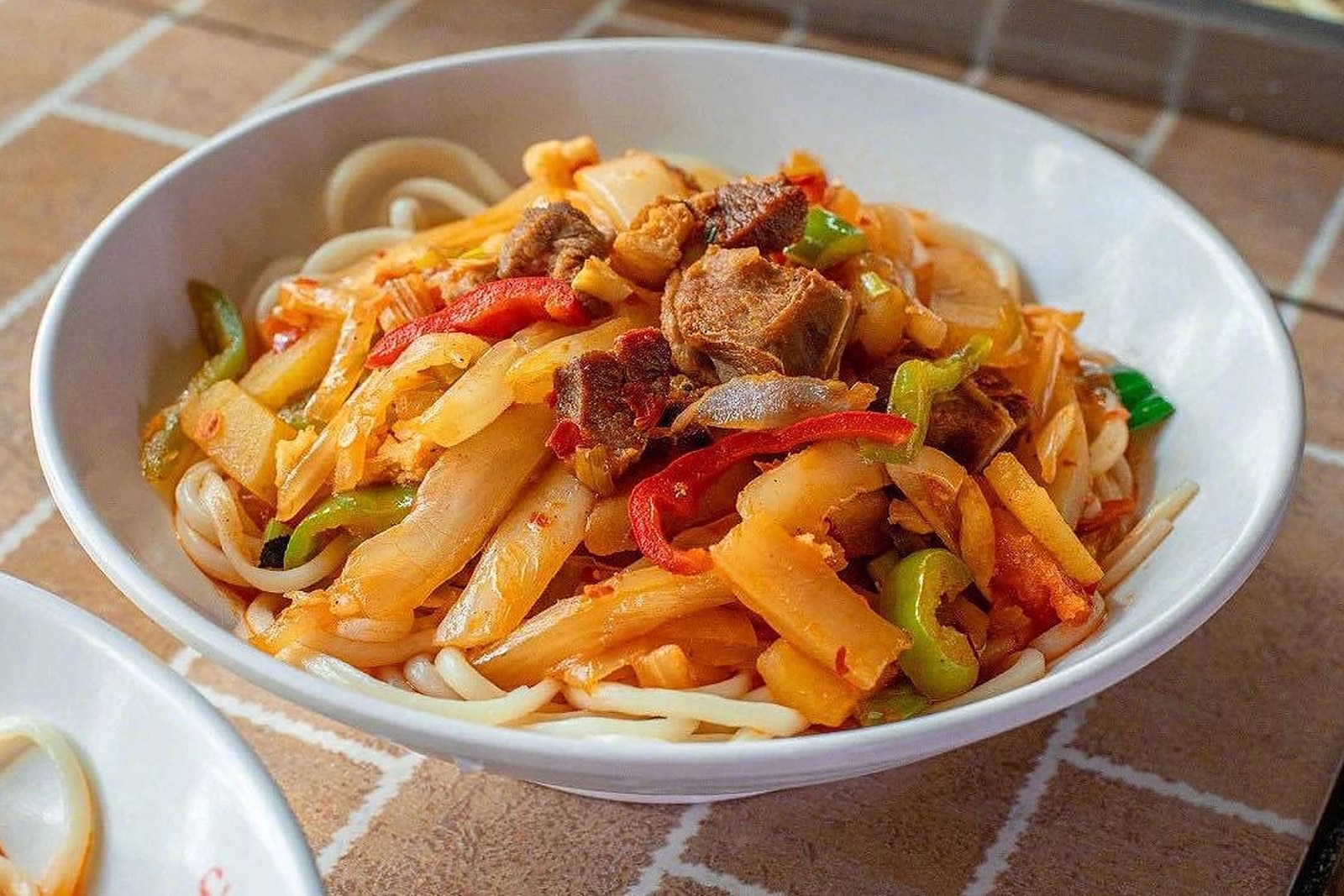
flowcloud would say that the 拉条子 Lātiáozi is the pull’s own timetable and the wok’s working lunch – strands even as rope, gravy poured like weather, refills until surrender – and that the honest move is to eat the first strands plain, listen for the squeak before the gravy’s opinion, and pace the toss so the last noodles carry the last of the meat, because the pull set the standard and the gravy keeps the score. All checked November 2026.
Where to find it: 乌鲁木齐市 Wǔlǔmùqí Shì Urumqi City, Xinjiang – the noodle houses of the old-city eating streets and the New Urban District lanes, where the 拉条子 Lātiáozi pulled noodles keep the squeak register and the 过油肉 guòyóuròu over-oil meat does the pouring, reached on foot through the commercial blocks or by bus along the main arterials (worth confirming the details for which houses pull to order and which parboil ahead, noodle doors turning over as kitchen hands do), where the trade keeps the noon clock – twelve the working tables stack, two the peak gravies thin, mid-afternoon the eater’s own pull; a few tens of yuan money by the plate, so call it worth confirming the details rather than a fixed number, and let the squeak cast the vote. Pulled noodles are the working table of Urumqi’s noon hours, strands pulled even and eaten at the speed of the toss – the taste of 乌鲁木齐市 Wǔlǔmùqí Shì Urumqi City eaten one gravy-clinging, tooth-springing strand at a time. All checked November 2026.