
The Red Foundation: Lazipi, the Dried Chili That Bases Xinjiang Cooking
红椒晒作满城霞,一勺红香百味生 Hóngjiāo shài zuò mǎn chéng xiá, yī sháo hóngxiāng bǎi wèi shēng – Red chilies sun-dried into rosy clouds over the town; one spoonful of red fragrance gives life to a hundred dishes
正文:辣皮子 Làpízi lazipi – the sun-dried chili skins and the brick-red paste ground from them – is the base note of half the Xinjiang kitchen, and the Yanqi Basin fields around 铁门关市 Tiěménguān Shì Tiemenguan City grow some of the finest. The peppers are long, meat-fleshed and mild-hot, bred for flesh rather than fire; dried whole on open racks until they curl like red leather, they keep all year in every pantry and go into everything from the morning noodles to the festival pilaf.
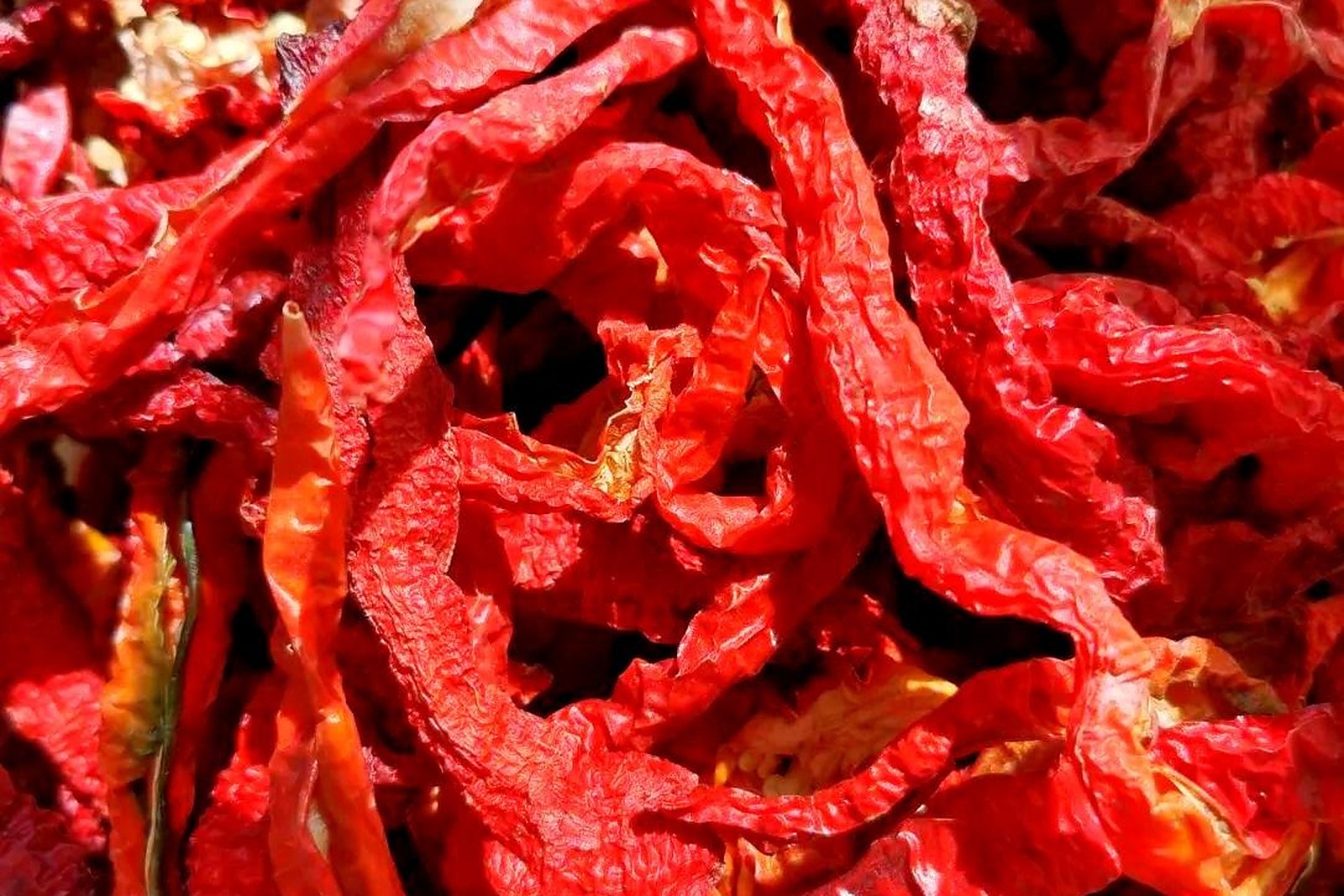
The drying season is a spectacle worth a detour. Through late August and September the basin’s roadsides turn into red architecture – racks and racks of peppers hung in dense curtains, flat roofs carpeted with skins drying in the wind, and the air itself smelling faintly of sweet pepper. Crews turn the drying rows daily; buyers grade the lots by color and thickness; and the best of the crop travels no further than the local markets, stacked in sacks like red rope.
In the kitchen lazipi is less an ingredient than a method. Soaked and ground with garlic and oil it becomes the paste that colors laghman and dresses cold noodles; fried quick and hot it perfumes big-plate chicken and every stir of lamb; soaked soft and stewed it sweetens into the brick-red sauce under the region’s braises. Cooks argue about which basin district dries the best skin the way elsewhere they argue about vintages – and the Tiemenguan markets, fed by the regiment fields, are a good place to join the argument.
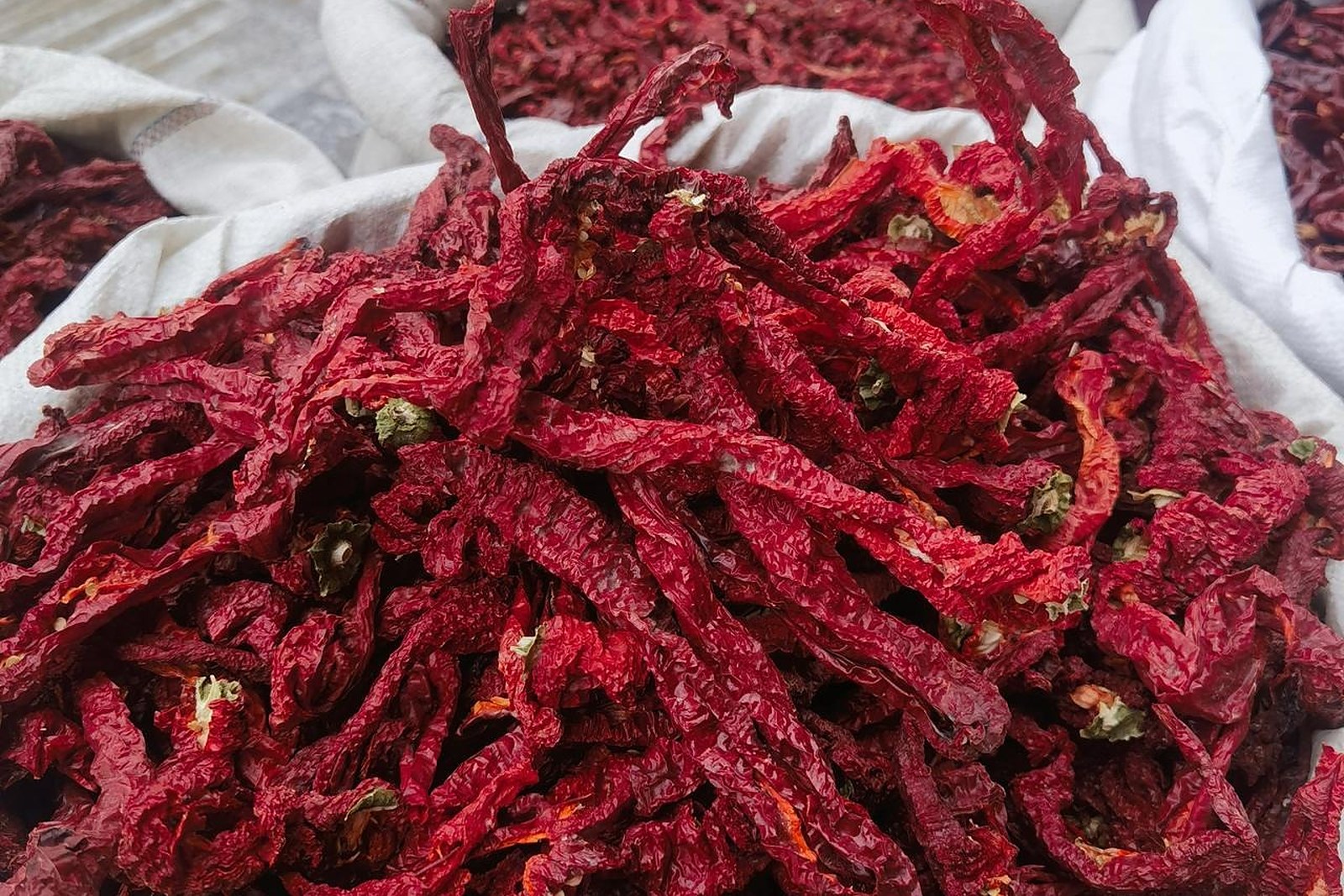
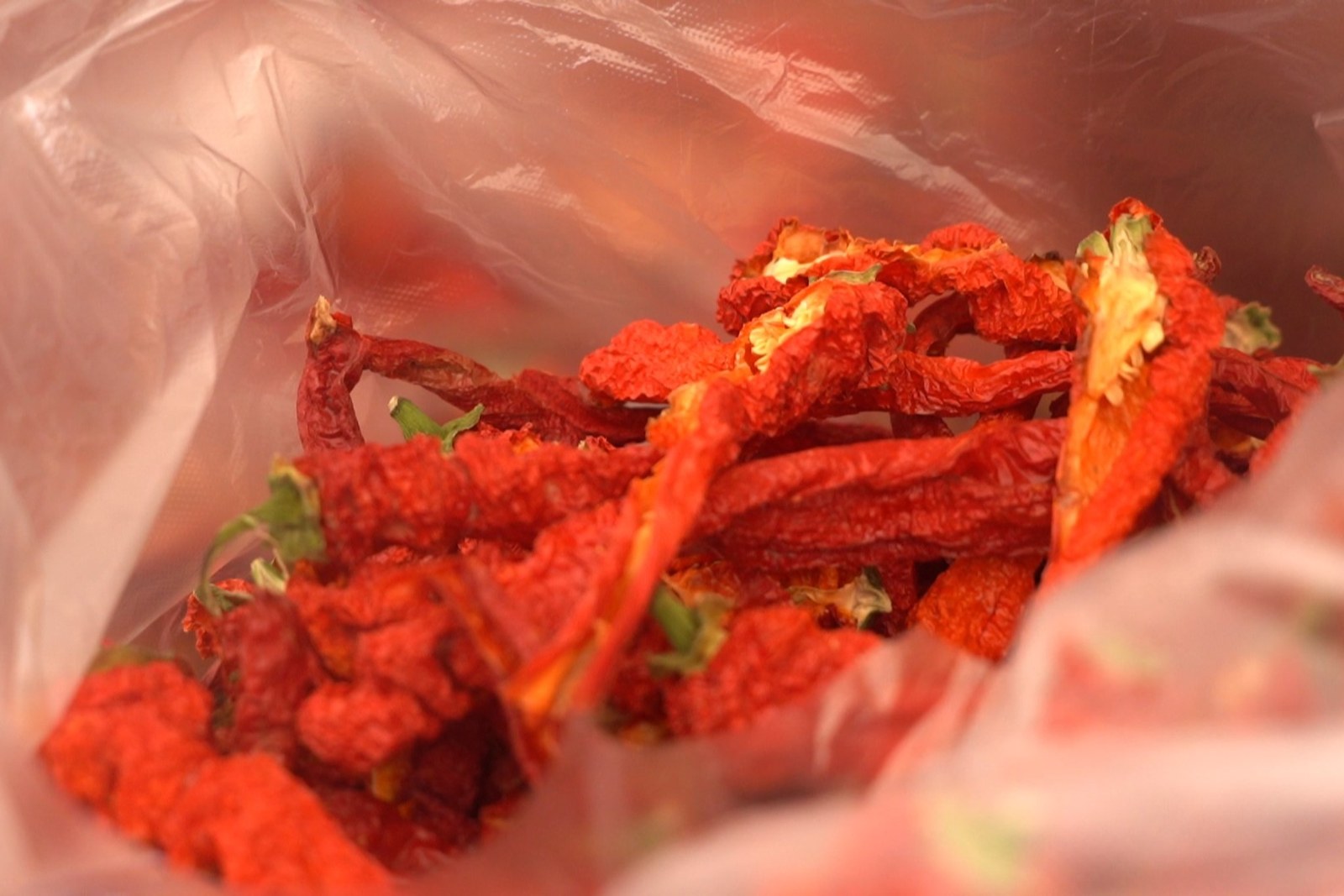
Buying it is simple and fun. The bazaar stalls sell dried skins by the kilo in three heat grades, tubs of fresh ground paste in season, and – the traveler’s version – little sealed packs made for the road. Take a bag of the thick-fleshed mild skins home, soak one in warm water, and taste why a desert basin half a world from Mexico became one of the great pepper regions: the land does the sugar, the sun does the red.
The same district holds more flavors worth chasing: 番茄采收 Fānqié Cǎishōu the processing-tomato harvest for the red cargo, 架子肉 Jiàzi Ròu jiazi rou for the pit-roasted racks, 新疆凉皮 Xīnjiāng Liángpí Xinjiang liangpi for the cold refresher, or 胡辣羊蹄 Húlà Yángtí hu-la yang-ti for the night-market cauldrons – four more doors into the same 铁门关市 Tiěménguān Shì Tiemenguan City table.
Words and Names
What the Locals Know
flowcloud would say lazipi is the desert pantry in one red curve: sun for a dryer, wind for a cellar, and a paste that turns every pot in the province the color of the harvest – the basin’s whole September folded into a spoon. All checked November 2026.
Where to find it: The pepper racks run along the basin roads through September, and the bazaars around 铁门关市 Tiěménguān Shì Tiemenguan City sell dried skins and fresh paste all winter – buy the thick-fleshed mild grade for cooking, the hotter skin for chili oil. All checked November 2026.