
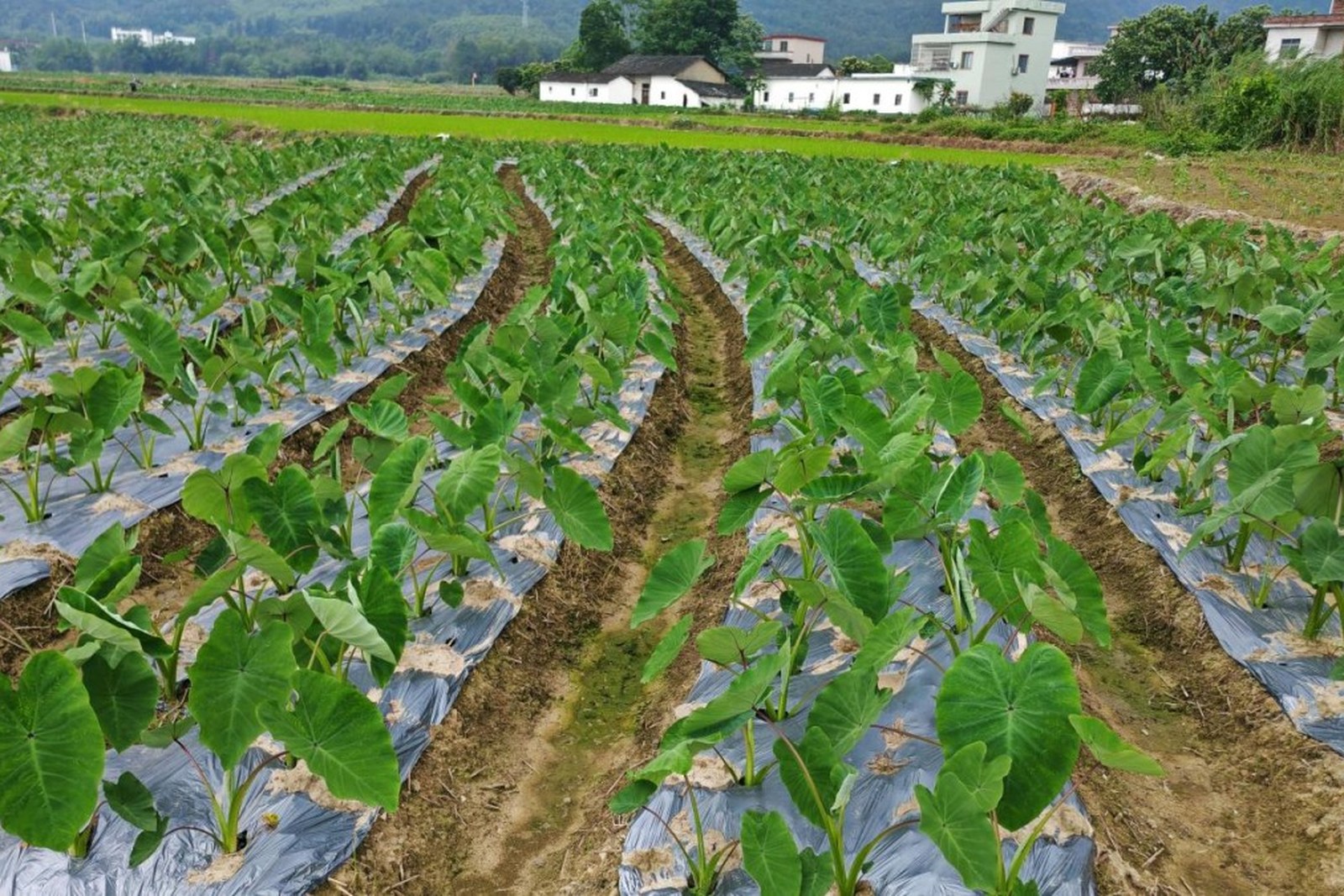
张溪香芋 zhāng xī xiāng yù is a taro, and the whole of its reputation is bound up with one village. 张溪 Zhāng xī is a village in 乐城街道 Lè chéng jiē dào, in 乐昌市 Lè chāng shì at the very north of Guangdong, and it sits at the mouth of the 九泷十八滩 Jiǔ lóng shí bā tān, the Nine Rapids and Eighteen Shoals that used to be the hardest stretch of the 武江 Wǔ jiāng to get a boat down. The 小垌张溪水 Xiǎo dòng Zhāng xī shuǐ runs through it, the flat land behind the village is broad and level, and the soil is a fine alluvial sandy loam – 稀流冲积沙壤土 xī liú chōng jī shā rǎng tǔ – built up deep and fertile by water. That soil is the beginning of why this village has a geographical indication and the next village does not, and the county has been making that argument for three hundred years. A taro is not a glamorous subject and the county knows it. What 张溪 has instead of glamour is a set of documents: an entry in a 1666 gazetteer, a comparison of local taros written in 1931 that awards the prize to a root grown on this bank of this river, a national geographical-indication protection granted in 2008, and a legal specification that writes minimum starch figures into the definition of the product. Few vegetables in China are followed this closely by paperwork, and the reason is that a taro is worth following here. The village also has an unusual advantage for a place whose fame rests on soil, which is that the reason for its taste can be pointed at: the rapids upstream of it have been dropping fine sediment on this flat ground for as long as anyone has lived there, and the flat ground behind the village is the reason the taro grows as large as it does and holds itself together when it is steamed. It is also the reason the crop is protected rather than merely famous, because a taro that needs a particular soil cannot simply be planted somewhere else and sold under the same name, and the county has spent the last twenty years drawing a legal boundary around the fields where it works.
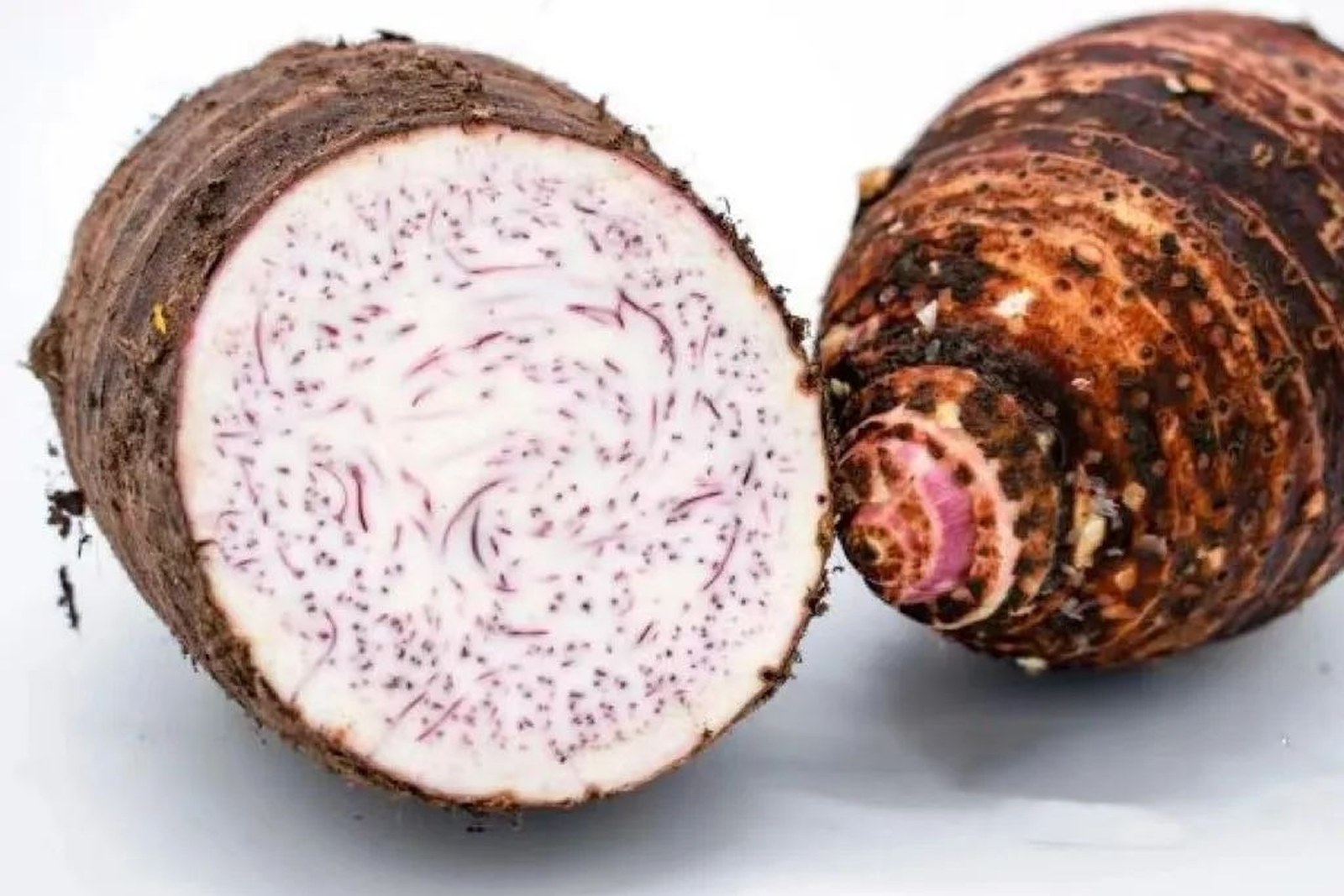
The shape is the first thing anyone notices and it is not a small matter. A 张溪香芋 is a spindle or a cylinder, mostly round in section, thirty centimetres long or more and heavy enough that the county’s technical standard writes a floor under it: for the protected product the 球茎 qiú jīng, the corm, must be at least 2.5 kilos and at least 30 centimetres. Ordinary ones run three kilos or so, which is six to eight 斤, and big ones go past five kilos. The local name for it is 炮弹芋头 pào dàn yù tou, cannon-shell taro, and the press calls it the giant of the taro world. The other half of the specification is chemistry, and this is where a mass-market taro and this one part company: the protected product has to show at least 4.0 per cent amylose, at least 15.0 per cent amylopectin and at least 2.0 per cent protein. The two starches in those numbers are what make a taro either mealy or gluey when it is steamed, and the reason the county writes them into a legal document is that they are the difference between a root that breaks apart into a dry, faintly sugary flour and one that turns into paste in the mouth. The county’s four-word summary of the eating quality is 大、香、粉、甜 dà, xiāng, fěn, tián – big, fragrant, mealy, sweet – and the texture words that go with it are 酥松无渣、绵甜香糯 sū sōng wú zhā, mián tián xiāng nuò, crumbling and loose without a fibrous residue, sweet and glutinous. The compliment the trade pays it is 蔬菜之王 shū cài zhī wáng, king of vegetables, and the purple flecks in the flesh when it is cut are what cooks look for: 色紫生砂 sè zǐ shēng shā, purple in colour and sandy in the grain.
The county has been arguing about this root in print for a long time, and one of the arguments is worth quoting because it is nearly four hundred years old. A 清康熙五年 Qīng Kāng xī wǔ nián continuation of the 乐昌县志 Lè chāng xiàn zhì, the county gazetteer, dated 1666, records taro being planted here, which puts the crop’s documented history past three hundred and forty years; the county’s own publicity sometimes rounds that up to three hundred and sixty or to four hundred and more, and the honest figure is the one that the 1666 book supports. The stronger evidence is from the 民国二十年 Mín guó èr shí nián reconstruction of the gazetteer in 1931, which compares the local taros in an order and gives a verdict: 广芋之美者,首黄芋,次白芋,次红芽芋;以南芋为最,惟南芋大、色紫生砂,甚可食,与红薯并登,如稻,有大米之称 Guǎng yù zhī měi zhě, shǒu huáng yù, cì bái yù, cì hóng yá yù; yǐ nán yù wéi zuì, wéi nán yù dà, sè zǐ shēng shā, shèn kě shí, yǔ hóng shǔ bìng dēng, rú dào, yǒu dà mǐ zhī chēng – of the fine taros of Guangdong the yellow is first, the white next, the red-budded next, and the 南芋 nán yù, the southern taro, is the best of them; it is large, purple in colour and sandy in the grain, very good to eat, and it goes to table alongside the sweet potato as rice does, and it has the name of a great rice. The 南芋 of that sentence is the taro 张溪 grows today, and the same gazetteer locates the best of it on the right bank of the 武江 Wǔ jiāng at the mouth of the 乐昌峡 Lè chāng xiá, above the ruins of 赵佗城 Zhào Tuó chéng – which is to say, at 张溪 Zhāng xī. The next sentence after that, in the local telling, is that the crop went to the emperor: taro from here was a tribute item in the Ming and the Qing, which is where the phrase 皇室贡品 huáng shì gòng pǐn, imperial household tribute, comes from. A taro with the name of a great rice and a place at court is a taro with a story, and the county tells it well.
The land under the crop has grown a great deal in a short time and the numbers need dates on them. By the county’s own most recent count the protected area and its neighbours run to about twenty-three thousand 亩 mǔ under taro, planted at four hundred and fifty to five hundred plants to the mu, yielding fifteen hundred to eighteen hundred kilos to the mu, which is a crop worth close on two hundred and fifty million yuan. The geographical-indication zone itself is wider than the village: it covers four towns and subdistricts – 乐城 Lè chéng, 廊田 Láng tián, 长来 Cháng lái and 北乡 Běi xiāng – with 张溪村 as the core. In 2018 the province designated the 乐昌香芋产业园 Lè chāng xiāng yù chǎn yè yuán as a provincial modern agriculture park on its second batch, the only taro park in the whole province, laid out over about five thousand three hundred hectares of arable land in a plan the county describes as 一核两心三片区 yī hé liǎng xīn sān piàn qū, one core, two centres, three districts. The county’s claim on the Chinese market is not that it grows the most taro but that it grows one of the two best ones, and there is a scholarly sentence behind that: Guangdong taros grow all over the country, the paper says, but the ones everyone agrees are best are in the two Guang provinces, and in Guangdong the best are 炭步文岗香芋 Tàn bù Wén gāng xiāng yù of Huadu and this one. The other name in that sentence is a real comparison and not a straw man – the Huadu taro has been grown since 正德 Zhèng dé in the early sixteenth century, went onto a state banquet table in 2012 and has its own geographical indication – and the county quotes it because having a rival that good is itself part of the argument.
Words and Names
张溪香芋 zhāng xī xiāng yù is the taro: 张溪 the village, 香 xiāng fragrant, 芋 yù taro. 炮弹芋头 pào dàn yù tou, cannon-shell taro, is the local nickname and 南芋 nán yù, southern taro, is what the old gazetteers call it. 球茎 qiú jīng is the corm, the part that is eaten, and 沙壤土 shā rǎng tǔ is the sandy loam the village stands on; 稀流冲积沙壤土 xī liú chōng jī shā rǎng tǔ is the county’s fuller phrase for it, a fine alluvial deposit laid down by water. 支链淀粉 zhī liàn diàn fěn and 直链淀粉 zhí liàn diàn fěn are amylopectin and amylose, the two starches the legal standard measures, and 色紫生砂 sè zǐ shēng shā, purple and sandy in the grain, is the phrase for the cut surface. 九泷十八滩 Jiǔ lóng shí bā tān are the Nine Rapids and Eighteen Shoals at the village’s door and 赵佗城 Zhào Tuó chéng is the ruined city above them on the 武江 Wǔ jiāng.
What the Locals Know
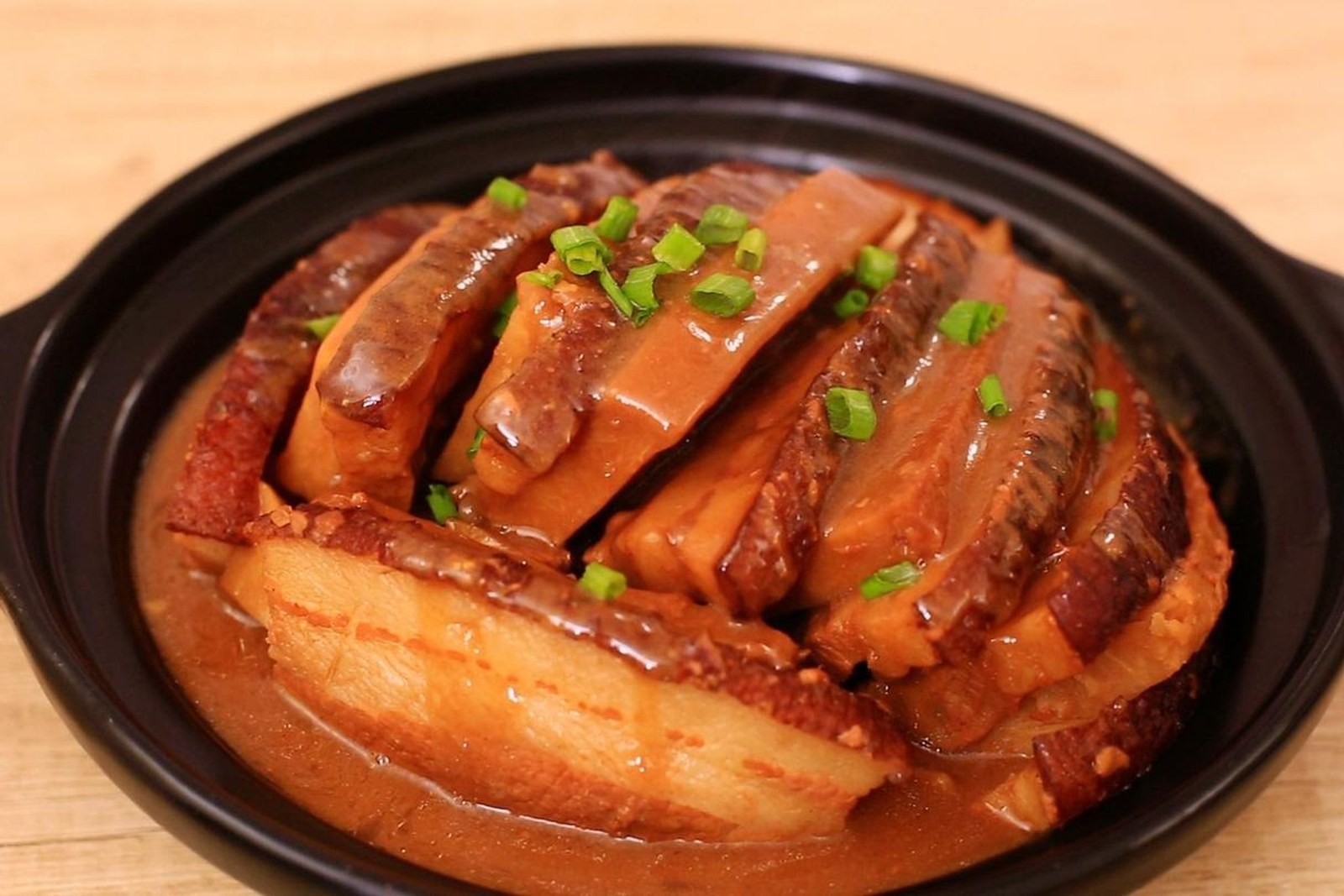
A taro this size is bought by the corm and cut down, not bought whole and used up. Turn the root over and feel the weight against the size, because a 张溪香芋 should feel heavy and cold for what it looks like; one that feels light for its bulk has been stored dry and will be woolly in the middle. The cut surface should be a dense, slightly damp white with fine purple striations running through it and no dark ring under the skin. Steam a piece plain before you commit: the flesh should go dry and crumbly and hold its shape, not collapse into a paste and not stay firm and glassy, and the taste should be faintly sweet with a nut finish. The one rule the local kitchens insist on is that the taro has to be cooked through – a half-cooked piece of any taro scratches the throat, and this root is large enough that people cut it too thick and serve it underdone; twenty-five minutes in a steamer for a two-centimetre slice is not too long. The best eating is from November to January, when the corms have finished filling; the harvest runs from October into March, so anything sold between those months is current. The county’s own kitchen uses are three: steamed plain as a dish in its own right, cut into slabs and laid under pork belly for a 扣肉 kòu ròu, and boiled down into a sweet paste for pastries. A whole corm is a physical object to carry but a cut half wrapped in paper will keep in a cool room for a fortnight, and the reason the county’s farmers talk about the crop so confidently is that this is one of the very few vegetables in China that a buyer asks for by village.
The folk custom attached to it is the one the county likes least to explain, because explaining it spoils it. In 韶关 a family visiting another family at the New Year will carry a taro or two as a gift, and the reason is a pun: 芋头 yù tou sits close enough to 预头 yù tóu and 意头 yì tóu that a taro given is a good omen given, a 好预头、好意头、好预兆 hǎo yù tóu, hǎo yì tóu, hǎo yù zhào, a good prospect, a good sign, a good omen. A root the size of a cannon barrel makes a substantial sort of blessing and the county is aware of the joke.
flowcloud would say that 张溪香芋 is the rare case in which a food’s fame rests not on a recipe but on a soil map, and that a village at the mouth of eighteen rapids has spent three centuries being paid for the silt those rapids left behind.
Where to find it: 张溪村 Zhāng xī cūn in 乐城街道 Lè chéng jiē dào, on the right bank of the 武江 Wǔ jiāng just below the 九泷十八滩 Jiǔ lóng shí bā tān and the ruins of 赵佗城 Zhào Tuó chéng; the wholesale and retail markets of 乐昌市区 Lè chāng shì qū; and the other protected townships of 廊田 Láng tián, 长来 Cháng lái and 北乡 Běi xiāng. 乐昌 is the northernmost city of 韶关市 and of Guangdong, on the 武江 Wǔ jiāng and the Beijing-Guangzhou corridor, about an hour by high-speed train from 韶关站 and an hour and a half by road from 韶关市区; the crop is lifted from October and sold through to March, with the best eating from November to January. Buy by weight rather than by piece and ask for the village rather than the county, because a 张溪香芋 from 张溪 is what the name is for.