
乐东香蕉 Lèdōng xiāngjiāo, the Ledong banana, is the winter fruit of 乐东黎族自治县 Lèdōng Lí Zú Zìzhì Xiàn, Ledong Li Autonomous County, the large county on Hainan’s west coast, and it is the crop that pays more households here than any other. It is grown mainly as the 巴西蕉 Bāxī jiāo, the Brazilian cultivar also known as 粤西1号, with 宝岛蕉 Bǎodǎo jiāo alongside it, cut green and ripened on the road to a mainland winter market where almost nobody else can supply anything at all. A county officially billed as “China’s banana township”, a title conferred in 2007, ships its fruit out of the inland townships of 万冲镇 Wànchōng Zhèn Wanchong and 千家镇 Qiānjiā Zhèn Qianjia, and the crop reached that hill country by a route worth telling.
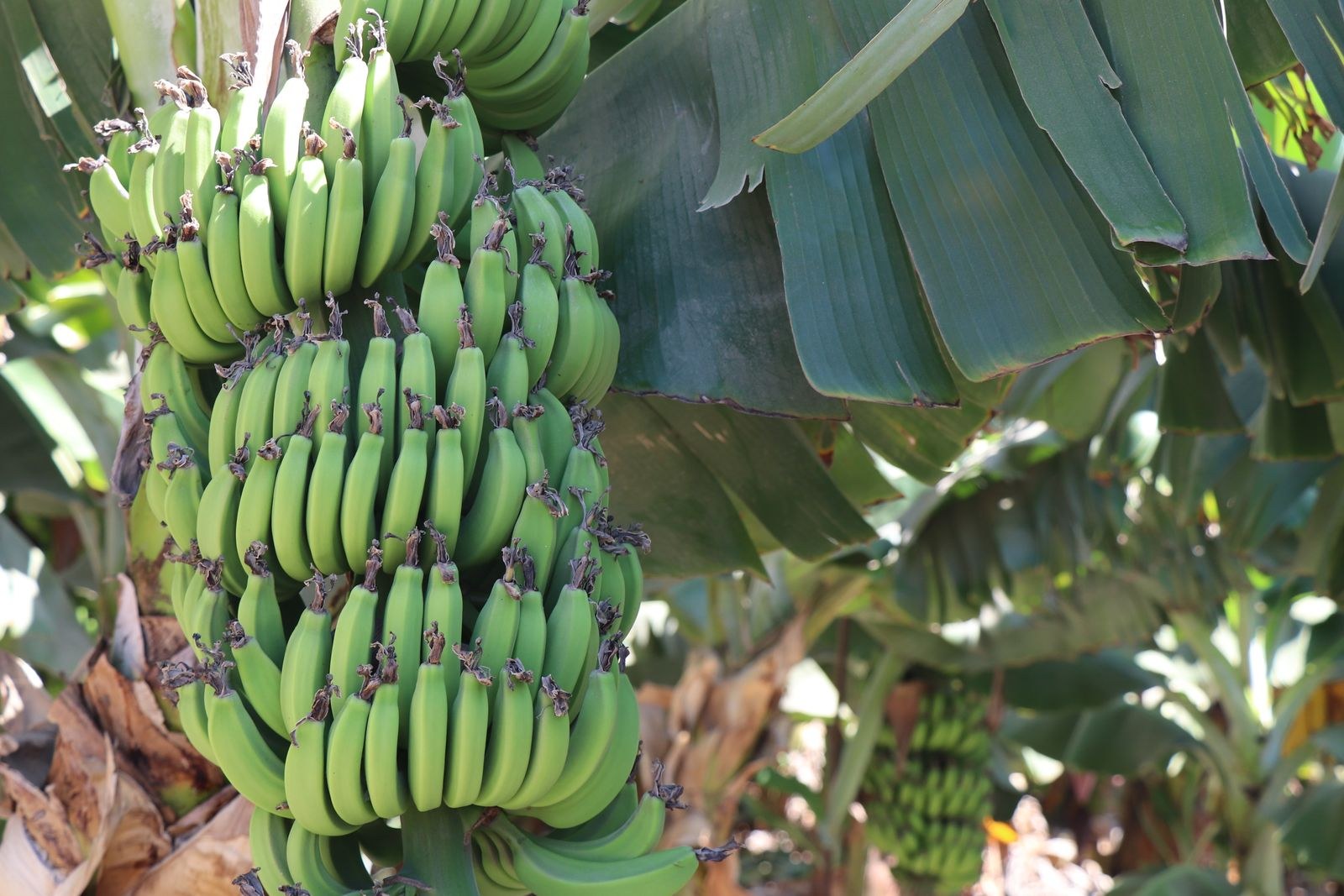
The hard paperwork comes in two parts and is best kept on a timeline. On 11 November 2021 the Hainan provincial department of agriculture published a notice accepting an application to register 乐东香蕉 as an agricultural product of geographical indication, filed by the county’s agricultural technology extension service centre; the protected territory is ten towns, Baoyou, Wanchong, Da’an, Zhizhong, Qianjia, Jiusuo, Liguo, Huangliu, Foluo and Jianfeng, covering 173 administrative villages, and the filing states a protected area of 4,338 hectares and an annual output of about 197,000 tonnes. That is the strongest single document in this file. The second part is the county’s own list of ten geographical-indication certification marks, where 乐东香蕉 sits beside its mango, melon, longan, cashew, black rice, sweet potato, edamame, rosewood and money tree, and a group standard for the marked product, T/HNBX 156-2022, published on 1 November 2022, splits the fruit into the Brazilian and Baodao cultivars at one grade apiece. The date on which the certification mark itself was approved was not found in the provincial register consulted for this batch, so this article prints the 2021 filing and the group standard and does not invent the missing date.
The plant reached the county as a deliberate experiment. Trial planting began in 1987, and by 2004 the county had organised leading companies, 海南万钟公司 among them, to draft a banana production technical code that became a calling card: standardised growing came to cover more than ninety per cent of the crop. The more interesting line is where the trees went. The industry started on the coast, in the townships of Jiusuo, Huangliu and Liguo, and then moved inland, up into the Li and Miao villages of the hill country, which at one point carried around sixty per cent of the county’s crop, more than sixty thousand mu of it. The soil and the light are why: a mean annual temperature of about twenty-three degrees in the hills and twenty-five on the coast, 2,100 to 2,630 hours of sunshine, fifteen hundred to sixteen hundred millimetres of rain, and a brick-red to black sandy loam running pH 5.5 to 6.5 and carrying iron, zinc and selenium. The county’s own line is that the crop can be cut three times in one year, a growing claim rather than a promise to a shopper.
The acreage story has at least five versions and they must not be averaged. A 2011 retrospective in the provincial press put the 2010 crop at 300,000 tonnes, 750 million yuan of output value and twenty-one per cent of a farming household’s net income. The county’s own 2011 account claimed 150,000 mu, 450,000 tonnes and 1.35 billion yuan, sixty per cent of all the fruit land in the county, while a newspaper piece the same year described only about 100,000 mu but a standardisation rate above ninety per cent. An unsourced encyclopedia entry offers 68,000 mu, 150,000 tonnes and a thirty-two per cent share of the provincial crop with no year attached, which is exactly why it is not used here. Against all of those stand two figures with a firm handle: the 2021 filing’s 4,338 hectares and some 197,000 tonnes, and the county’s 2024 statistical bulletin, which puts banana output at 157,942 tonnes, up 1.7 per cent on the year before. The bulletin is the number this article stands on; the rest are history, each with its own year and its own boundary, and none to be added together.
Brand is the county’s newest work. In 2024 Ledong launched 富域乐东 Fùyù Lèdōng, a county-wide public brand for its farm produce, with single-product names for the banana and the melon and a cluster of enterprise marks around them, 尖峰岭 Jiānfēnglǐng among the banana ones. The county has been selling the crop off the island for a long time: in 2011 a delegation went to Xi’an and signed purchase contracts for 145,000 tonnes and about 651 million yuan of fruit, of which the banana share was 60,000 tonnes and 216 million yuan, a single trip’s figures from a single year and not a present trade. What the record refuses is a price. No official or authoritative source consulted for this batch gives a current wholesale or retail figure for Ledong banana, only that the fruit is sold by the jin in county markets and trucked out to the mainland through the winter, so no number is printed. Two old superlatives travel with the crop and both are left as the county’s billing rather than as fact: that this is the world’s most suitable place to grow bananas, and that Ledong banana is the only Chinese geographical banana brand to carry a county’s name. Neither has a document behind it that this text could find.
Words and Names
乐东香蕉 Lèdōng xiāngjiāo is the fruit; 巴西蕉 Bāxī jiāo is the Brazilian cultivar that dominates the crop and 粤西1号 Yuèxī yī hào its registered alias, with 宝岛蕉 Bǎodǎo jiāo the second cultivar the group standard names. 中国香蕉之乡 Zhōngguó xiāngjiāo zhī xiāng, China’s banana township, is the 2007 billing, printed without naming the body that conferred it because the sources disagree. 万冲 Wànchōng and 千家 Qiānjiā are the inland townships where the banana country now sits, and 富域乐东 Fùyù Lèdōng is the county brand. The site’s other island fruit pages keep their own crops and counties; this one keeps the west coast’s winter banana.
What the Locals Know
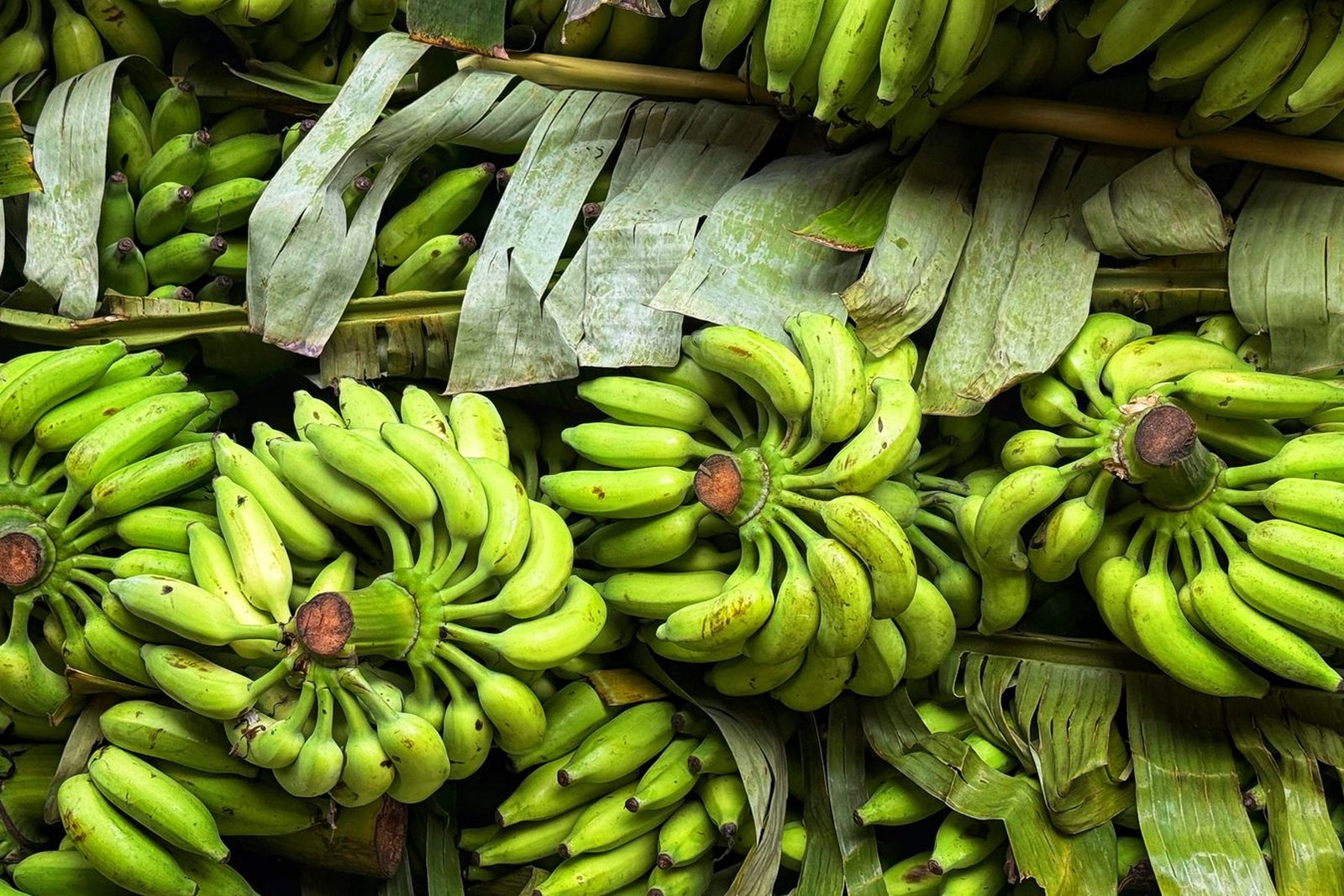
The banana is not a picking attraction and the county does not pretend otherwise. There are no farm-gate banana tours here, and the honest way to see the crop is from the car: the orchards run through the inland townships along the G225 Haiyu West Line and the middle-line expressway, and in the cutting season the roadside stalls at 九所镇 Jiǔsuǒ Zhèn Jiusuo and along the county’s trunk roads heap the green fruit in baskets the way the second frame on this page shows it.
In the kitchen the banana leads a double life that the county’s Li households know well: the fruit is eaten as it ripens, and the leaf is used to wrap and steam food, so the banana tree is both a cash crop and a larder. Two neighbours on the long-table menu belong to other pages of this site, the rice wine and the glutinous-rice parcel, and they are mentioned once here and no further. What the record refuses, once more: a current price for the fresh fruit, a variety-by-variety acreage, and any figure for how much of the crop leaves the island, none of which a source in this batch supplies.
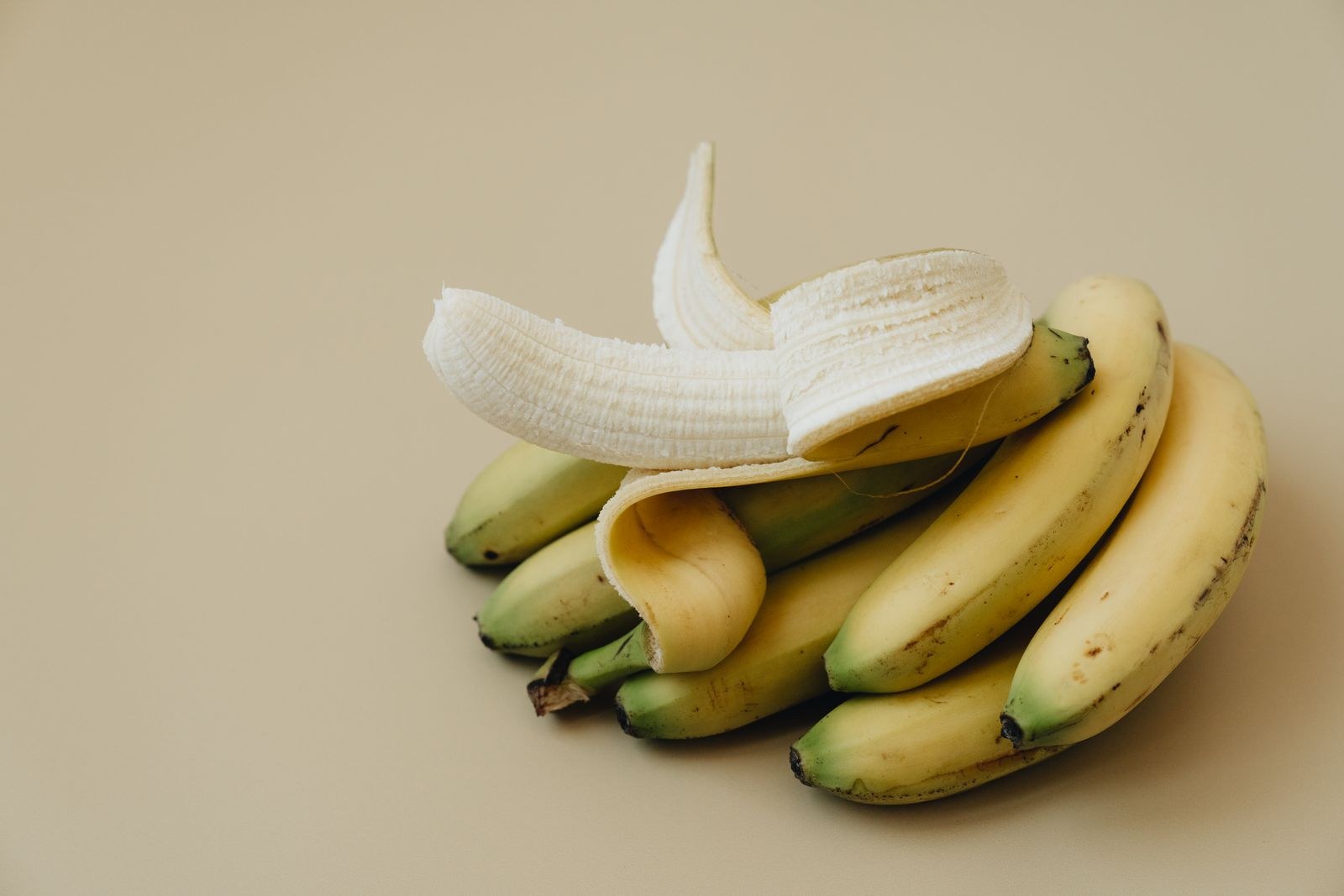
flowcloud would say that the Ledong banana is a green-cut winter fruit grown as the Brazilian and Baodao cultivars across the county’s inland townships, carrying a 2021 provincial agro-geographical-indication filing for 4,338 hectares and some 197,000 tonnes, billed since 2007 as China’s banana township, and shipped off the island while the mainland orchards sleep.
Where to find it: the inland banana country around 万冲镇 Wànchōng Zhèn Wanchong and 千家镇 Qiānjiā Zhèn Qianjia, best seen in passing along the G225 Haiyu West Line and the middle-line expressway, and the seasonal fruit stalls at 九所镇 Jiǔsuǒ Zhèn Jiusuo and the county markets of 抱由镇 Bàoyóu Zhèn Baoyou, in 乐东黎族自治县 Lèdōng Lí Zú Zìzhì Xiàn Ledong Li Autonomous County, Hainan; the fruit keeps only a few days once it ripens, so buy it to eat rather than to carry home, and expect the price at the stall to move with the week’s supply.