
Green Parcels of the Pan: Leek Boxes at the Street Griddle
面皮裹翠香满巷,油煎两面起金黄 Miànpí guǒ cuì xiāng mǎn xiàng, yóu jiān liǎngmiàn qǐ jīnhuáng – Dough wraps the green and scents the lane; oil-fried on both sides till gold rises
正文:韭菜盒子 Jiǔcài Hézi leek boxes are the homeliest food in 五家渠市 Wǔjiāqú Shì Wujiaqu City – half-moon parcels of unleavened dough stuffed with chopped Chinese chives, glass noodles and scrambled egg, then pan-fried in oil until the skin blisters gold. Every canteen, market stall and family kitchen makes them; every recipe argues about the chive-to-egg ratio; and every eatery serves them straight off the griddle, because a leek box that waits is a leek box wasted.
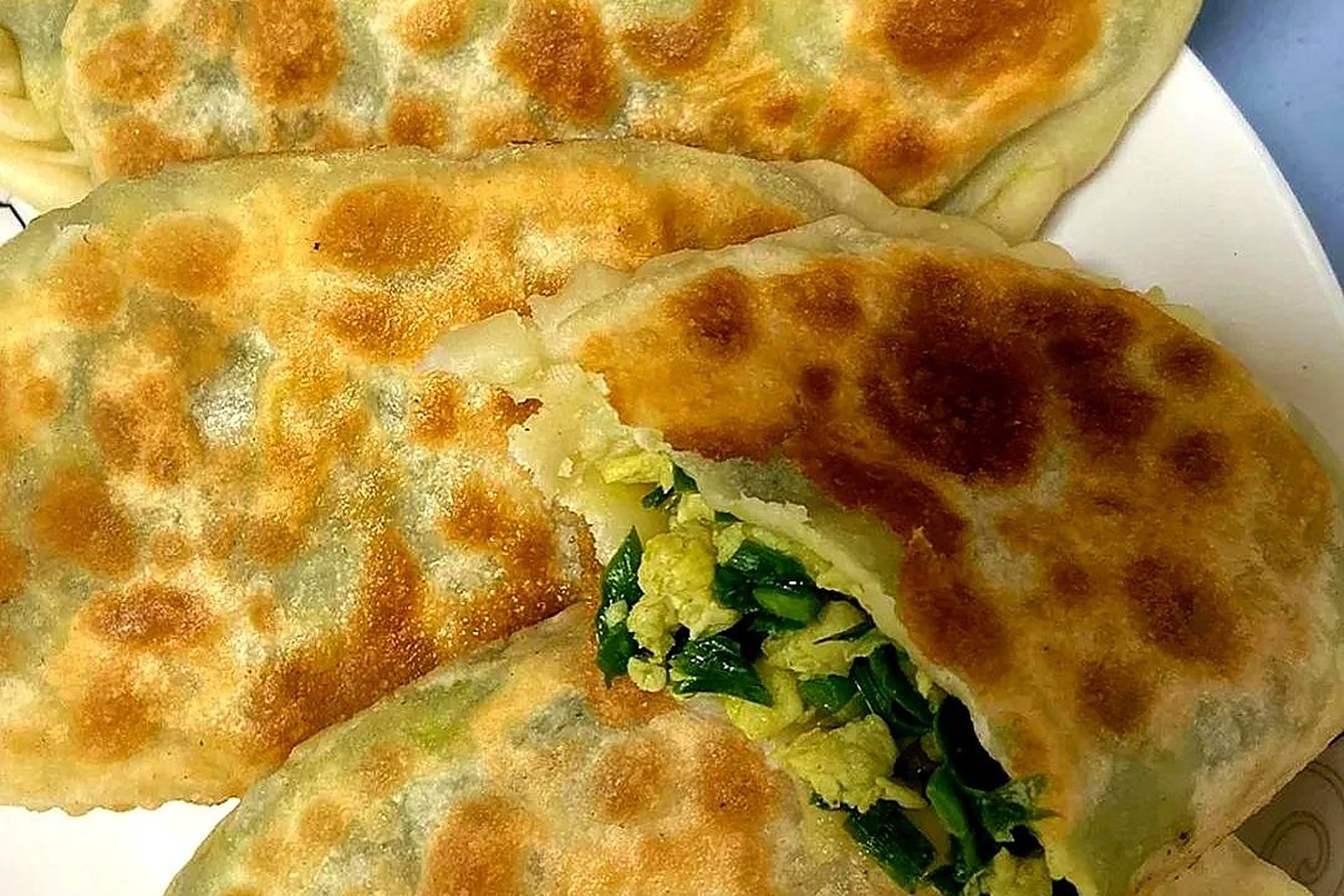
The filling is the argument. Chives must be dry-chopped so they weep nothing into the dough; the noodles add chew; the egg carries fat; and a whisper of Sichuan pepper or dried shrimp divides the schools. The dough stays thin – this is a parcel, not a bread – and the fold is crimped by hand in one motion that takes a year to learn. Fried right, the skin sheets into crisp blisters while the inside stays green and molten; fried lazy, it goes doughy, and locals can tell the stall from across the market by the sound of the flip.
Eat them walking. Stalls sell them by the piece wrapped in paper, three to five yuan each, and the standing rule is straight from the griddle to the hand to the mouth. Morning markets run the best counters – the chives are freshest, the griddle has its first oil, and the queue of schoolchildren is the quality certificate.
The leek box is also the reclamation memory food. Chives grew in every regiment family’s plot behind the barracks – cutting and re-cutting all season, feeding the canteen pots for decades – and the parcel was the movable meal of field work: dough from the commune flour, eggs from the household run, chives from the ditch bank. The canteens of the farm towns around Caijiahu still fry them in the harvest weeks, and the smell drifting down a market lane is as close as this district comes to a lullaby.
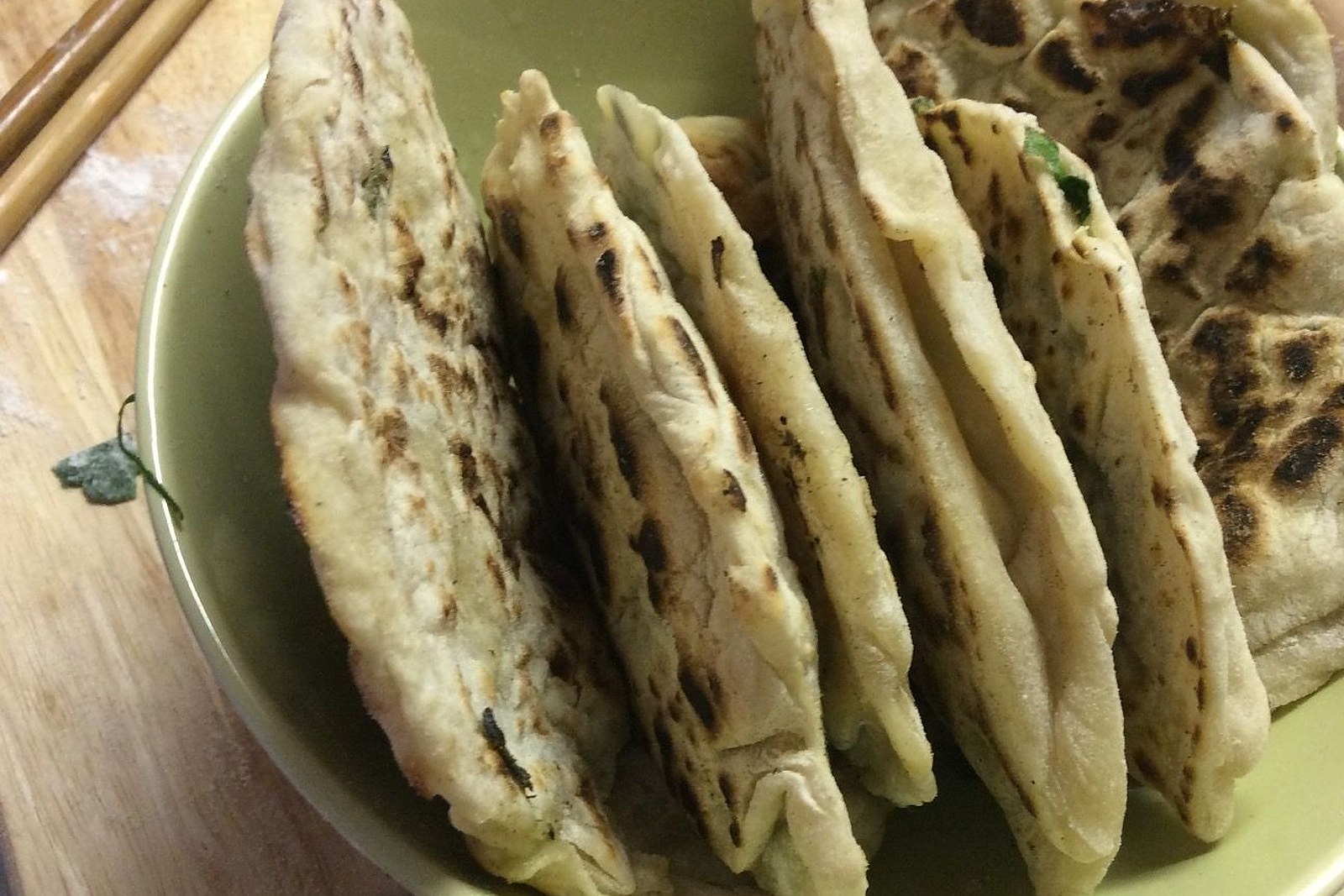
Costs are canteen-level and refills are unnecessary – three boxes make a meal, five make a feast, and the stall that also pours fresh soy milk is the breakfast combination locals grow up on and come home to.
Beyond the fried parcels, the same 五家渠市 Wǔjiāqú Shì Wujiaqu City holds other flavors: 手抓饭 Shǒuzhuāfàn lamb pilaf for the gold rice pot, 烤羊肉串 Kǎo Yángròu Chuàn lamb kebabs for the charcoal smoke, 烤全羊 Kǎo Quán Yáng roast whole lamb for the festival table, and 奶皮子 Nǎipízi milk skin for the herder’s cream – four more doors into the same 五家渠市 Wǔjiāqú Shì Wujiaqu City. With the boxes settled, our Wujiaqu travel map fills the day.
Words and Names
What the Locals Know
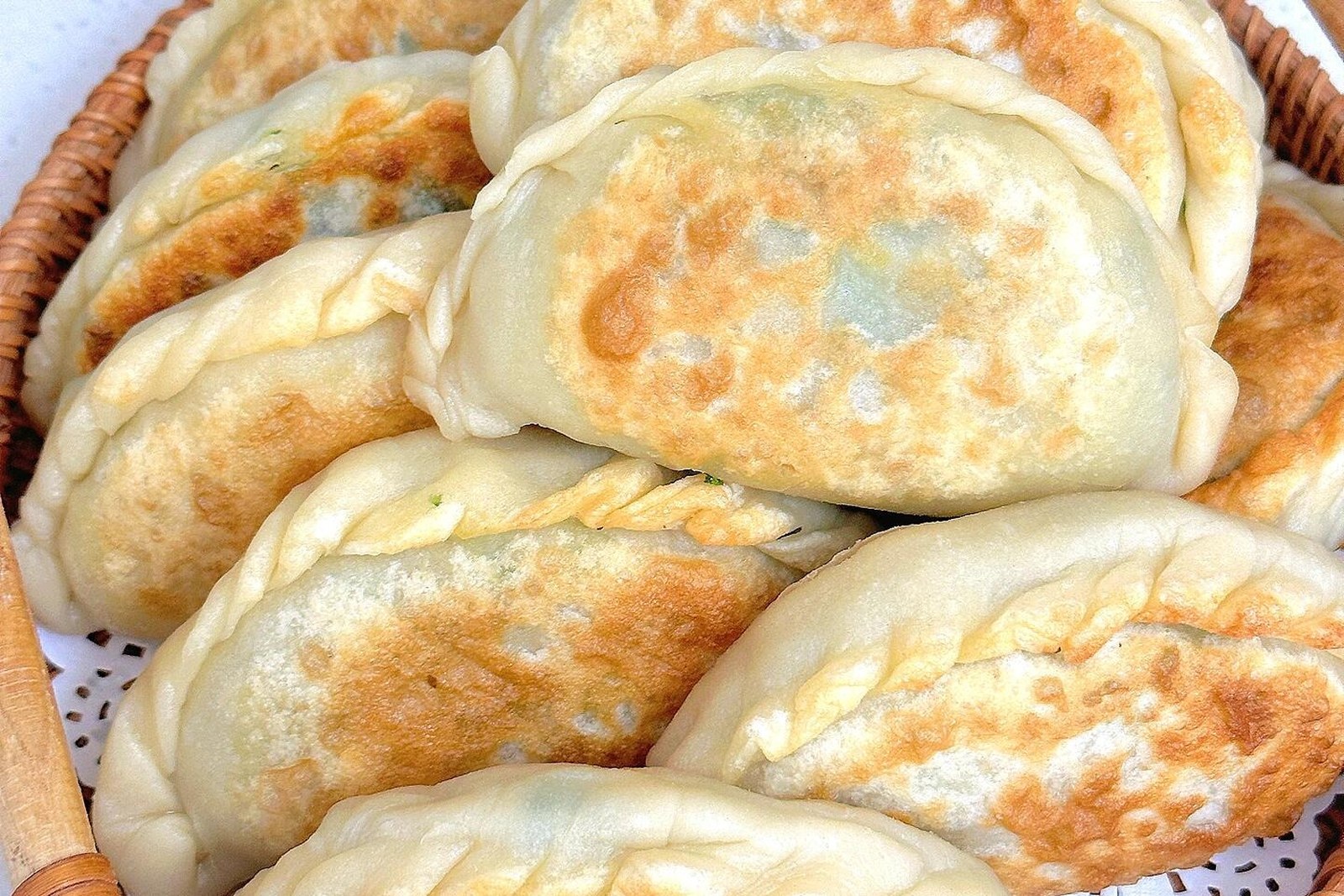
flowcloud would say the leek box is a grandmother’s strategy in crisp armor: garden chives, household eggs and canteen dough folded into one golden half-moon – the cheapest way to taste someone’s home cooking in this city. All checked November 2026.
Where to find it: Leek-box griddles run at the morning market of 五家渠市 Wǔjiāqú Shì Wujiaqu City and at canteen counters around the bus station – buy straight from the griddle, eat walking, and take the soy milk alongside. All checked November 2026.