
Sweet Tea and the City’s Living Room: Lhasa Teahouse
一壶甜茶半日闲,满堂冷暖话人间 Yī hú tiánchá bànrì xián, mǎntáng lěngnuǎn huà rénjiān – One pot of sweet tea idles half a day; the whole room’s warmth and cold talks of the human world
拉萨甜茶馆 Lāsà Tiáncháguǎn is the institution that holds 西藏自治区拉萨市 Xīzàng Zìzhìqū Lāsà Shì Lhasa together – plain rooms of long wooden tables and bench seats where sweet tea, black tea boiled with milk and plenty of sugar, comes in thermos flasks and small glasses, refilled all day at a couple of yuan a glass. The accounting is physical: the waiter counts the empties on your table and swaps them for a chalked tally, and nobody minds how long you stay.
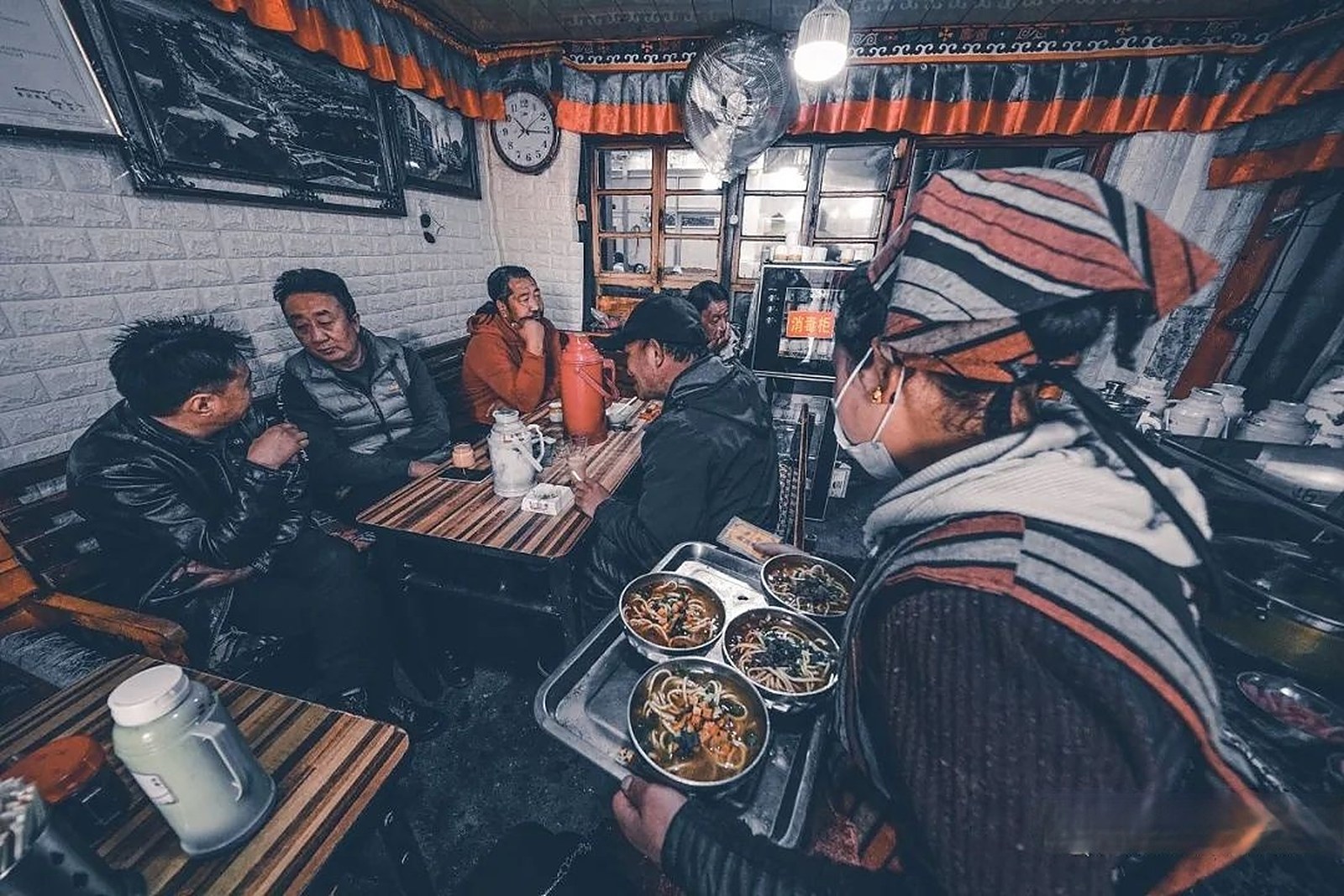
The tea itself is simple and exact – brick tea simmered, strained, sweetened and fortified with milk until it pours the color of light caramel, drunk scalding from small glasses that never quite empty. Regulars arrive with newspapers, knitting, card decks or nothing at all; a thermos on the table buys the seat for the morning, and the room hums with Tibetan conversation from the grandmothers in the corner to the monks on break.
The teahouse kitchen feeds you while it does. 藏面 zàng miàn – the Tibetan noodle bowl, a small serving of hand-pulled wheat noodles in yak-broth with a scatter of minced yak – is the standard order, arriving minutes after you sit; fried bread, momo dumplings and boiled eggs fill out the counter menu. Breakfast is the teahouse’s peak: pilgrims in from the kora, workers before shift, whole families after the market, everyone on the same benches.
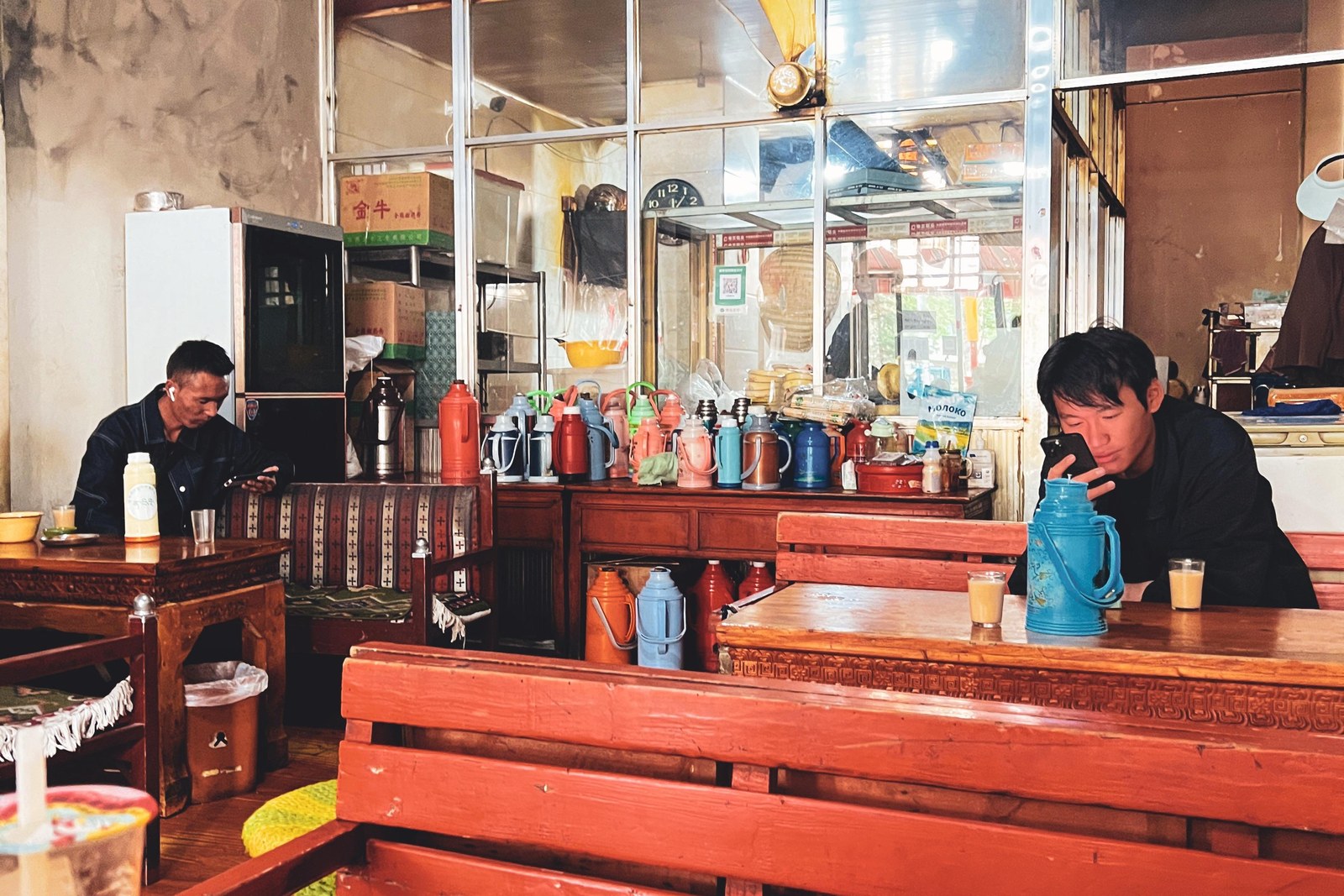
What the teahouse really serves is the city’s social floor. Deals are struck here, matchmakers report here, the day’s news is verified here, and travellers who learn the system – take a bench, put a thermos on, slow down – get the most honest window Lhasa offers. The big old houses on the old town’s lanes run from dawn to evening; there is no more local hour in the city than the second pot.
The same 西藏自治区拉萨市 Xīzàng Zìzhìqū Lāsà Shì Lhasa holds more flavors worth chasing: 糌粑 zānba the roasted-barley staple, 酥油茶 sūyóuchá the churned butter tea, 牦牛酸奶 máoniú suānnǎi the set yak yogurt, or 藏式牦牛肉 zàngshì máoniú ròu the yak pots and jerky – four more doors into the same Lhasa table.
Words and Names
甜茶 tiánchá sweet tea, the teahouse’s drink; 暖瓶 nuǎnpíng the thermos flask on every table; 藏面 zàng miàn the Tibetan noodle bowl; 光明港琼 Guāngmíng Gǎngqióng the classic old-town teahouse name; 打卡 dǎkǎ what tourists call it, and locals gently avoid.
What the Locals Know
The refill is the relationship – regulars never ask, the waiter just swaps empties, and a table that gets refilled without a word has become a fixture. Pay for strangers’ tea now and then and the room remembers you. And the true test of a teahouse is the sugar: great sweet tea tastes of tea first, sugar second; if it tastes of neither, walk to the next lane. All checked November 2026.
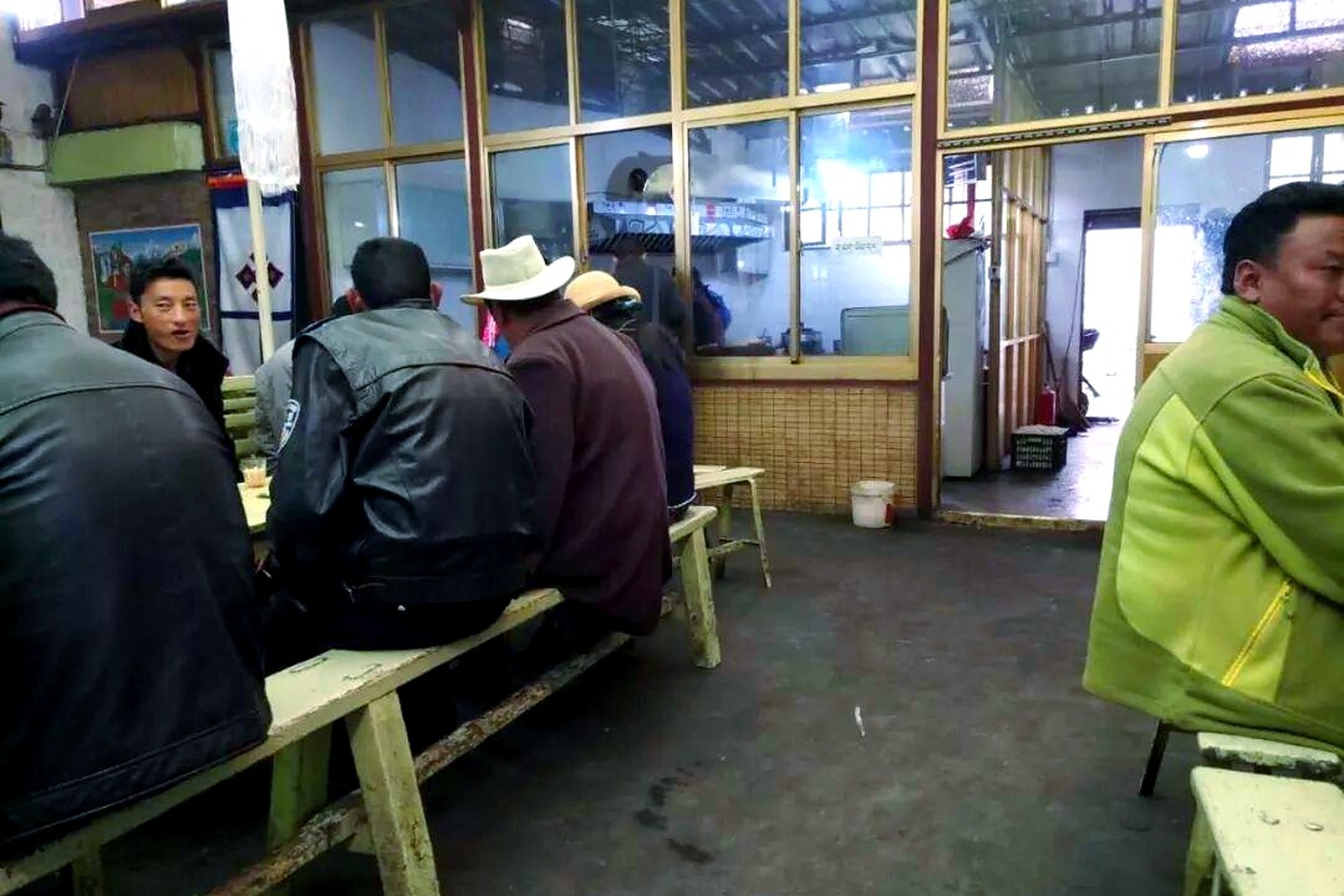
flowcloud would say the sweet teahouse is Lhasa’s public square with a roof: one pot refills the glass, the thermos refills the room, and an hour costs less than the conversation is worth.
Where to find it: The old teahouses cluster in the lanes around the Barkhor and the western old town, and neighborhood houses across the city keep the same thermos trade all day. All checked November 2026.