
Two dishes come off one mountain grain. 山兰稻 shānlán dào is the upland rice the Li plant on slash-burned mountain plots, aromatic enough that everything made from it smells of the field: 竹筒饭 zhútǒng fàn, glutinous rice roasted in bamboo over coals, and 山兰糯米酒 shānlán nuòmǐ jiǔ, the sweet low rice wine. In 昌江黎族自治县 Chāngjiāng Lí Zú Zìzhì Xiàn the craft sits in the county’s Li townships – 王下乡 Wángxià Xiāng, the remotest pure-Li township, cut into the canyon country below 霸王岭 Bàwáng Lǐng, and the hills of 七叉镇 Qīchā Zhèn and 叉河镇 Chàhé Zhèn – and both dishes belong to the 三月三 Sānyuè Sān season, which Hainan celebrates most strongly in Changjiang and neighbouring 东方 Dōngfāng.
The grain carries the culture. 山兰米 goes into five-colour rice, coconut rice, glutinous ciba cakes, fish tea and wine alike, and the harvest has its own festival, 山兰节 Shānlán Jié, kept most completely by the 美孚 Měifú-dialect Li along the 昌化江 – the villages across the river in 东方 keep it best, and Changjiang sits inside the same circle. The crop has even made songs: 山兰熟了 took a first prize at a national minority arts festival in 2007 and 舂米谣 a third in 2013, and the 叮咚木 dīngdōng mù, the wooden block struck to scare boars off the ripening plots, is an instrument born of this farming.
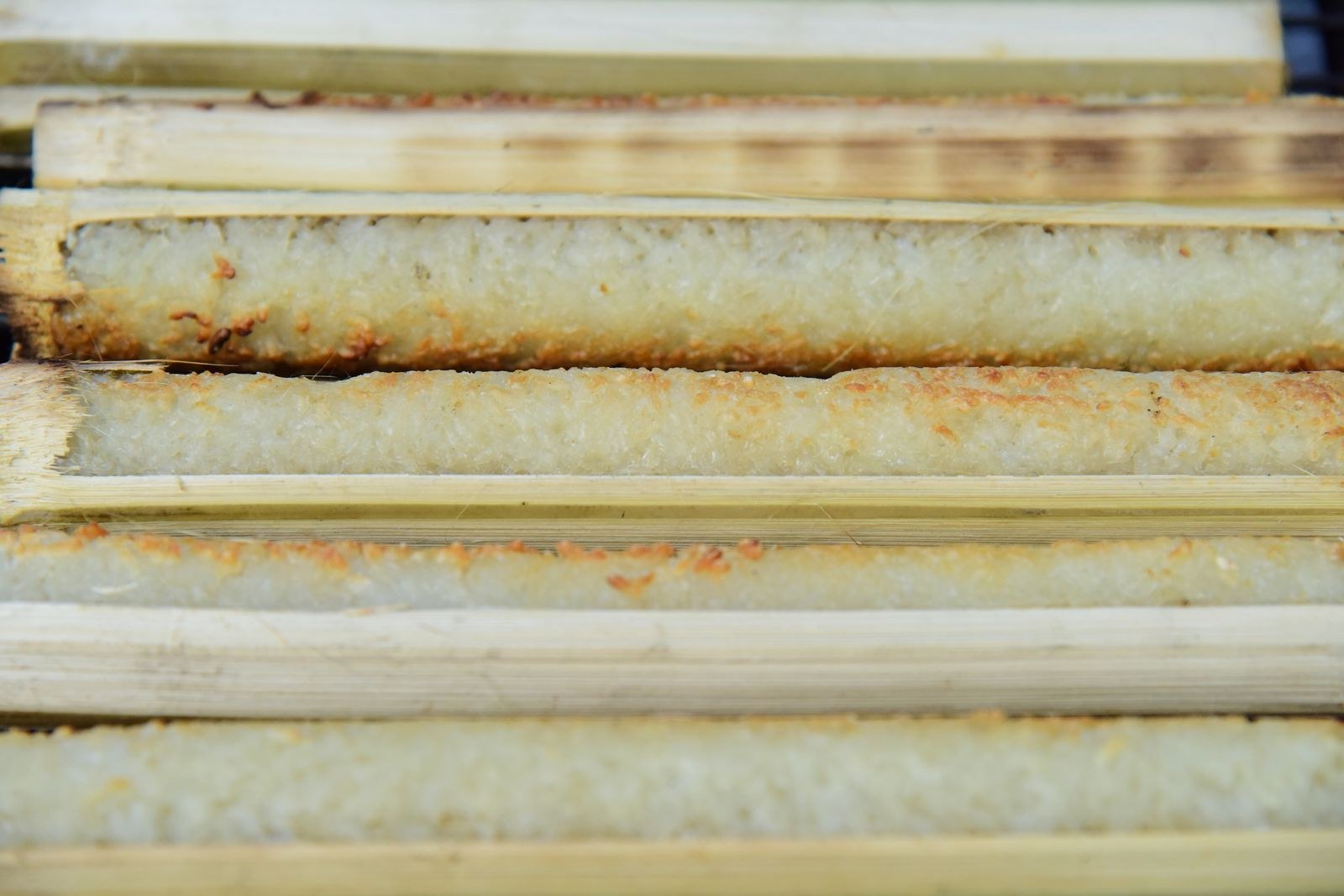
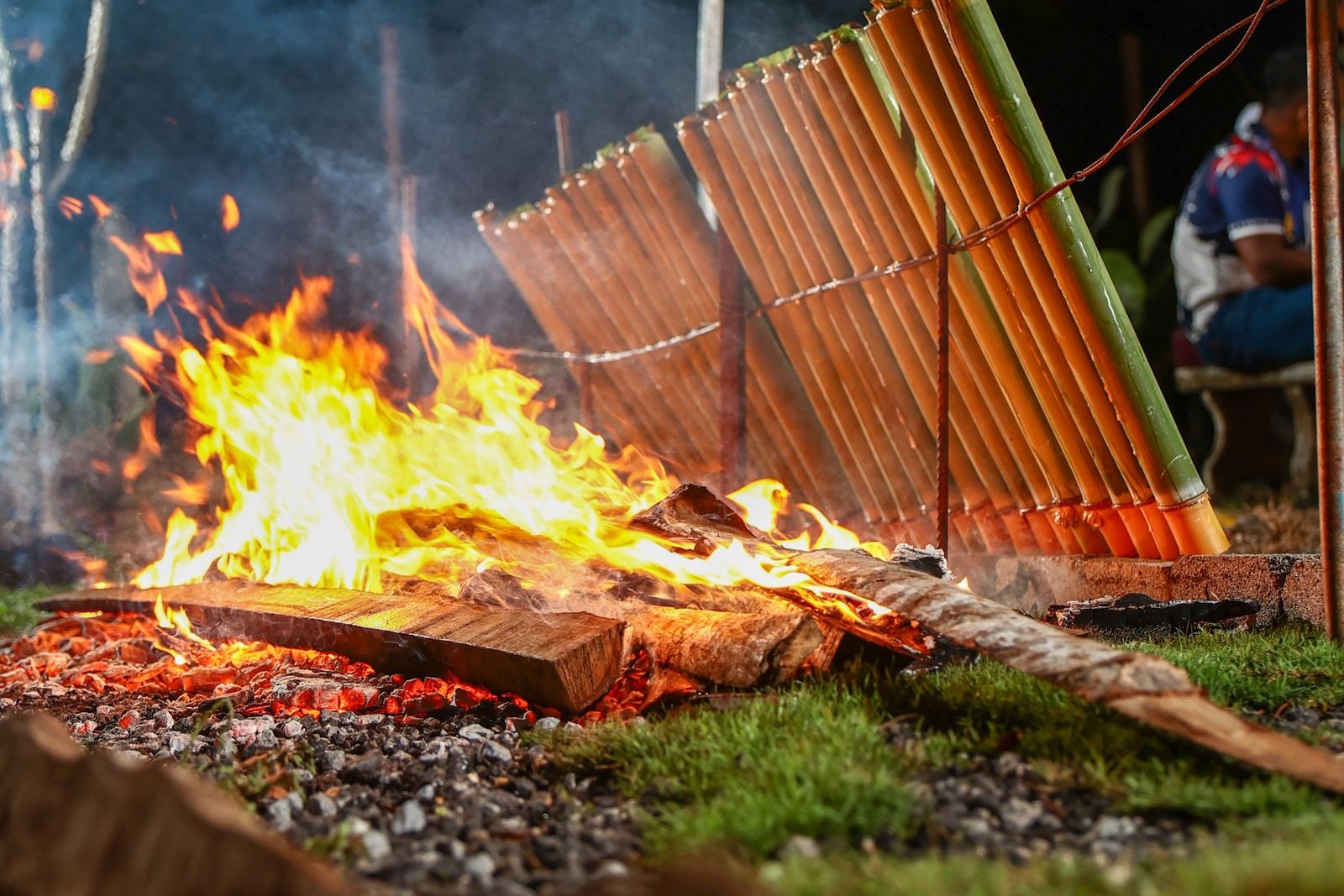
竹筒饭 is the portable one. Cooks cut fresh green 粉竹 fěnzhú or mountain bamboo into sections twenty to thirty centimetres long, fill each with soaked fragrant shanlan rice and the right amount of water, plug the mouth with a banana leaf and stand the tubes in charcoal to roast slowly. The tube is done when its skin has gone from green to charred black; the burnt skin is shaved away and the bamboo itself is the bowl. The fillings split the family: 肉香饭 with chicken or pork and five-spice, a salt version, a black-bean version. It was travel food once – made for going far from home or hunting in the hills – and festival food now.
The paperwork for the rice itself is a lesson in what not to claim. No independent heritage listing for 黎家竹筒饭 at any level is confirmed in the record; an encyclopaedia entry pairs the dish with 洪水村 Hóngshuǐ Cūn in 王下乡, but the national-level item behind that village is the boat-shaped-house building technique, not the rice, and the pairing is exactly the mistake to avoid. What the county did list, in August 2026, is the feast the rice appears on – and that is the documented honour nearest to it.
The feast is the 长桌宴 chángzhuō yàn, the long-table banquet, said to be a thousand years old and the highest form of Li-Miao entertaining: bamboo tables joined end to end, banana leaves for a cloth, three-colour and five-colour rice, 竹筒饭, plain-cut chicken, river fish and prawns, fish tea and 雷公笋 léigōngsǔn, with tables, cups and chopsticks all of hand-made bamboo. In August 2026 the 昌江黎族长桌宴 entered the county’s seventh intangible-heritage batch under folklore, one of twelve items that took the county’s list to nearly thirty.
Words and Names
山兰稻 shānlán dào is the upland rice, 竹筒饭 zhútǒng fàn the tube rice, and 山兰糯米酒 the wine, which the Li simply call biàng – 拉biàng, la biàng, is how you say drink up. 酒饼 jiǔbǐng is the yeast cake, 辣蓼草 làliǎo cǎo the smartweed that makes it, 陶甑 táo zèng the clay steamer, and 芭蕉叶 bājiāo yè the banana-leaf plug that seals both tube and jar. 三色饭 sānsè fàn, three-colour rice, is the Miao festival food – maple-leaf black, yellow-ginger yellow, red-blade-grass red – and the Li counterpart is 五色饭 wǔsè fàn, five-colour shanlan rice; careless writing swaps the two, and they belong to two peoples.
What the Locals Know
The wine’s making is six steps, as the county-level inheritor 吕超强 Lǚ Chāoqiáng tells it in a Hainan Daily profile of September 2026: gather wild 辣蓼草 and make the yeast cakes the region calls 酒饼; select the local shanlan upland glutinous rice; soak it; steam it in the clay 甑 and spread it to cool; mix in the yeast, pack it into a clay jar, seal the mouth with banana leaf and bury the jar in a pit under banana trees, where the ground holds an even temperature through seven to ten days of closed fermentation – our own way here, he calls it; then seal the jar for storing. Summer heat over-ferments the jar, so the brewing year runs from November to March, and his improved sterilisation lets a jar keep two or three years without turning.
The listings need the levels kept straight. In 2017 the province’s fifth batch admitted the 黎族biàng酒酿造技艺, the Li biang-wine technique, registered by 琼中 Qióngzhōng, and the provincial list grew from 72 items to 82; Changjiang’s own 昌江黎族糯米酒酿造技艺 is a county item, admitted in the seventh batch of August 2026, and the two are different registrations of cousin techniques. The wine itself is amber and low, sweet-sour with a rice-flower aroma, and an old jar, the provincial writers note, opens with a sound like champagne. Nothing in the old books records the Changjiang technique – no ancient text claims it, only hand and mouth – and the county’s own profile states that plainly.
The drinking rules belong to the feast and the rite. At 三月三 the elders dip bamboo tubes and flick the first wine toward the shrine and the rivers – wine reaching the spirits, 以酒通神; at the long table host and guest share the 头碗酒 tóu wǎn jiǔ, the first bowl, and answer each other in song. The three-colour rice on that table is the Miao contribution and stays theirs; the five-colour shanlan rice is the Li answer, and a writer who exchanges them has mixed two peoples’ festival dishes.
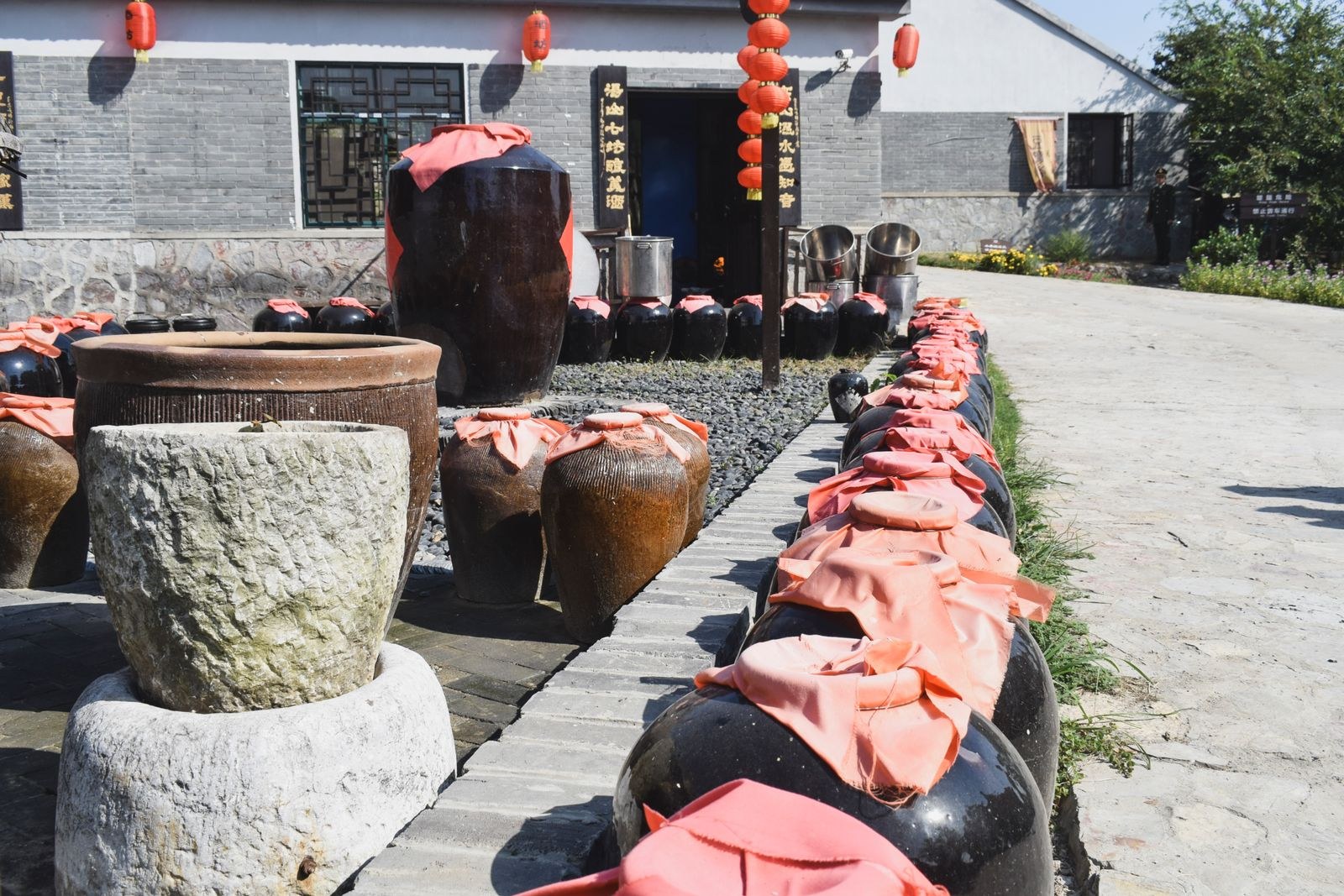
flowcloud would say that this is one grain with two exits – shanlan rice sealed in green bamboo over coals for the road, or sealed under banana trees in a jar for the years – and both of them set on the same long table.
Where to find it: the Li villages of 王下乡 Wángxià Xiāng and the hills of 七叉镇 Qīchā Zhèn and 叉河镇 Chàhé Zhèn, where both dishes are home cooking; the 三月三 Sānyuè Sān gatherings of the third lunar month, strongest here and in neighbouring 东方 Dōngfāng; the long-table feasts the county listed in 2026, where 竹筒饭 arrives beside the five-colour rice; and the Li restaurants of the county seat 石碌镇 Shílù Zhèn. Drink the wine in the winter brewing season if you can, and ask for the tubes straight off the coals.