
The Cold Refresher: Liangpi of the Canteens and Night Stalls
一碗凉皮夏日长,辣油香醋各半场 Yī wǎn liángpí xiàrì cháng, làyóu xiāngcù gè bàn chǎng – A bowl of cold liangpi stretches out the summer day; chili oil and fragrant vinegar split the match evenly
正文:新疆凉皮 Xīnjiāng Liángpí Xinjiang liangpi is the oasis answer to a hot afternoon – sheets and ribbons of wheat-starch jelly, cool and springy, dressed with vinegar, chili oil, garlic water and shredded cucumber, sold from canteen windows and night stalls all through the towns of the farm belt. Around 铁门关市 Tiěménguān Shì Tiemenguan City it is the default lunch of the harvest crews and the standard first course of every market table – cheap, fast, cold and more subtle than its fluorescent counter suggests.
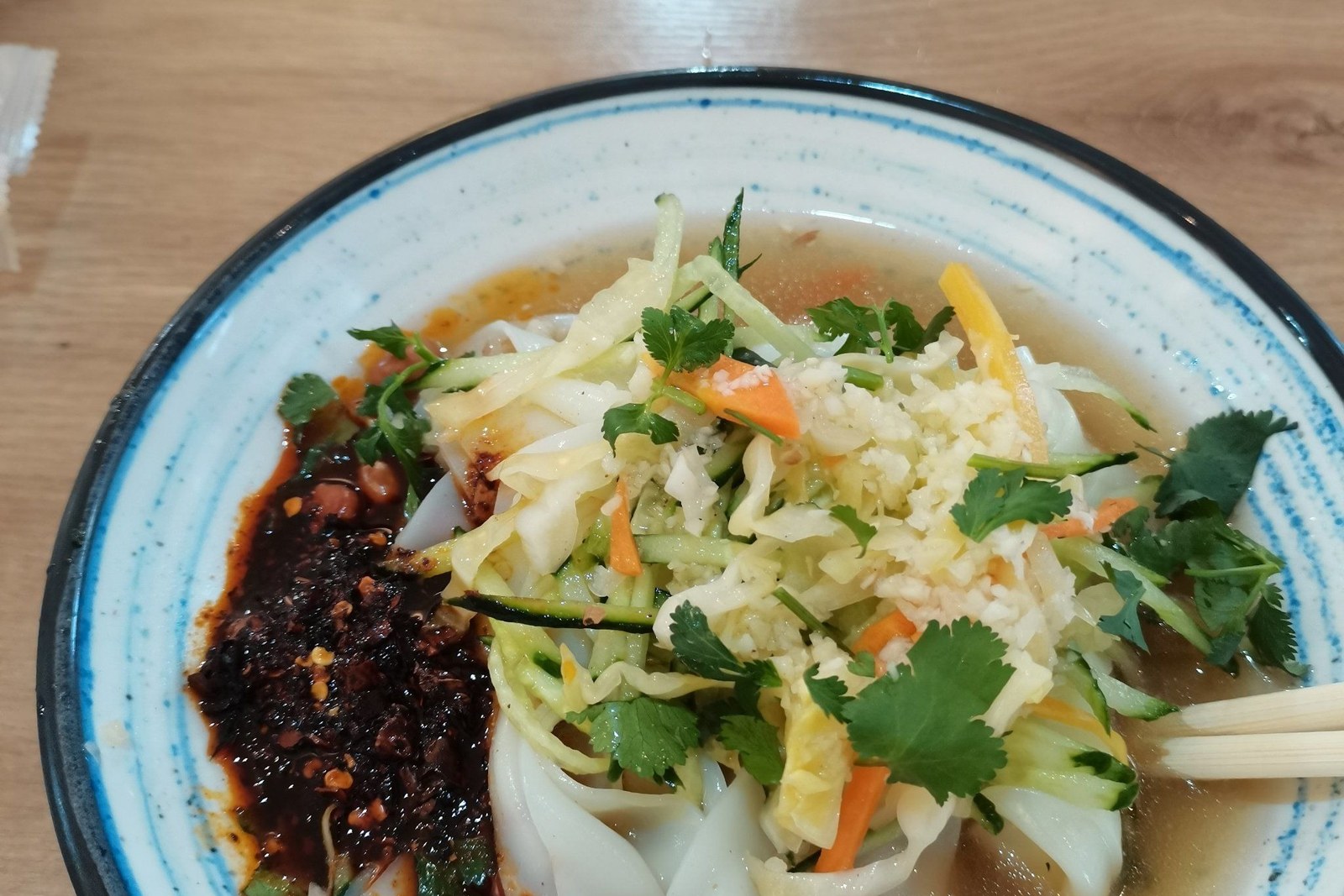
The craft is in the wash. The batter is kneaded and washed until the starch and gluten separate; the starch settles into a thin slurry, steams into translucent sheets, and cools into the slippery ribbons that give the dish its bounce – while the gluten steams into the spongy yellow blocks that locals insist belong in the same bowl. Watch a good stall and the whole process runs backwards from the plate: wash, rest, steam, cut, dress, serve, in a rhythm older than the town.
The Xinjiang version has its own accent. Alongside the classic white liangpi sits huangmian – the yellow noodles dyed with the local sour Bramble grass – and the dressings run hotter and more vinegar-forward than the Shaanxi originals, with the region’s dried-chili oil doing the color and the cumin a quiet cameo. A full bowl is a texture argument: jelly-soft, spongy, crunchy cucumber, all riding one vinegar-chili wave.
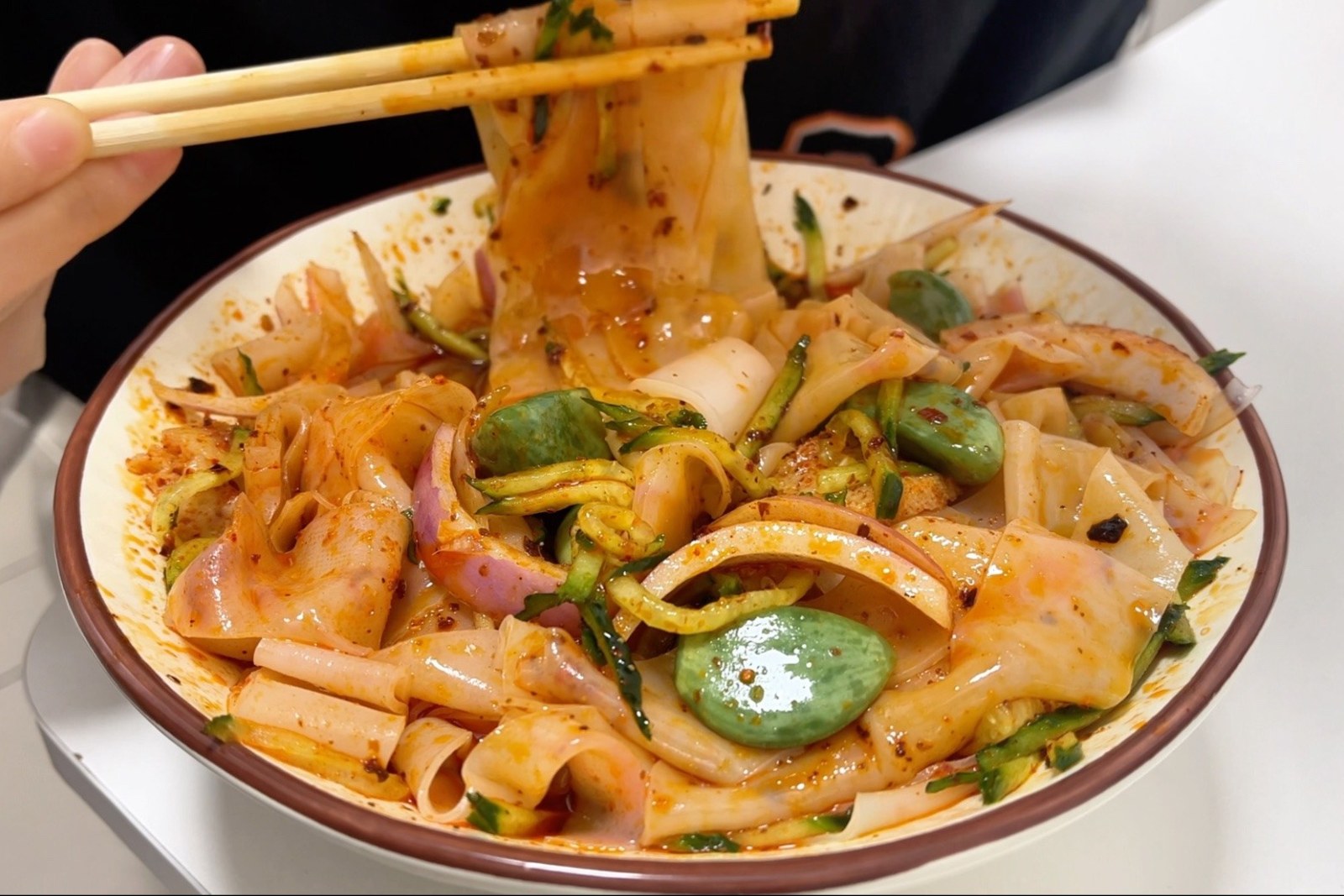
Find it where the queue is. The best liangpi counters are the canteen windows near the markets and the fixed night-stall corners with their own steaming trays – turnover is the freshness guarantee, and a mid-evening bowl comes with the day’s best chili oil on top. Order it as the opener of a market dinner: it cools the mouth, wakes the appetite, and leaves room for the meat courses that follow.
The same district holds more flavors worth chasing: 辣皮子 Làpízi lazipi for the dried-chili foundation, 番茄采收 Fānqié Cǎishōu the processing-tomato harvest for the red cargo, 架子肉 Jiàzi Ròu jiazi rou for the pit-roasted racks, or 胡辣羊蹄 Húlà Yángtí hu-la yang-ti for the night-market cauldrons – four more doors into the same 铁门关市 Tiěménguān Shì Tiemenguan City table.
Words and Names
What the Locals Know
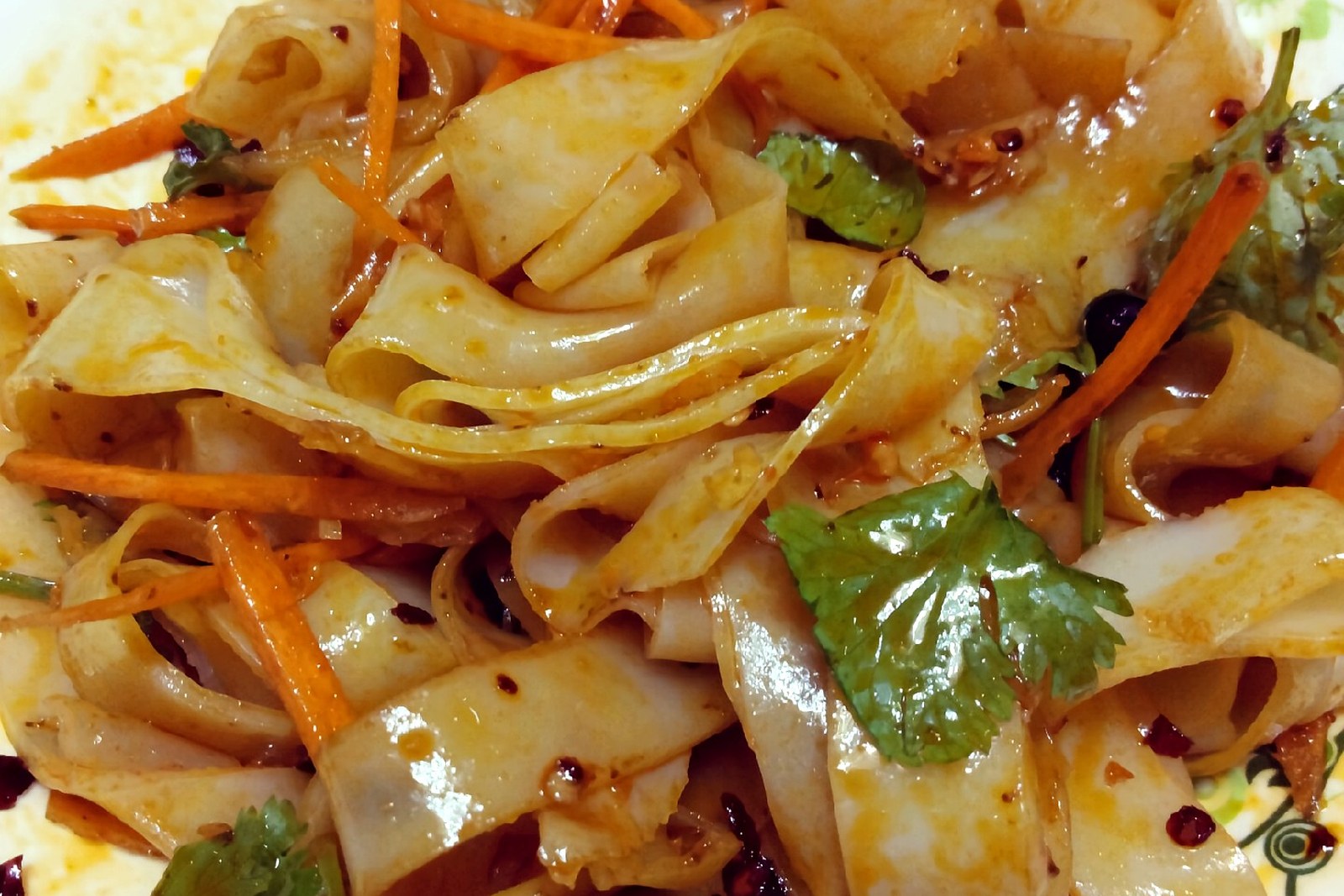
flowcloud would say liangpi is the oasis lunch solved in starch: a wash, a steam, and a cold vinegar-chili wave that survives forty-degree afternoons – the region’s cleverest argument that heat management is a culinary art. All checked November 2026.
Where to find it: Canteen windows and night stalls around 铁门关市 Tiěménguān Shì Tiemenguan City sell liangpi all day – take the mixed bowl with gluten and yellow noodles, and ask for the house chili oil on the heavy side. All checked November 2026.