
张鸭子 (Zhāng Yāzi) is a century-old braised-roasted duck from Liángpíng District, Chóngqìng, a name that belongs to the family who turned a small street stall into a local institution rather than to any single recipe. The method has barely changed in a hundred years. Whole ducks are first cured, then smoked over camphor wood and tea leaves (樟茶 zhāngchá), and finally lowered into a secret braising broth (卤汤 lǔtāng) to simmer slowly until the meat loosens from the bone. What comes out is not the lacquered roast of a banquet hall but a darker, humbler thing — the skin turned a deep date-red and glossy with a thin film of fat, the flesh beneath threaded with smoke and salt, the sort of food that tastes of patience more than of show.
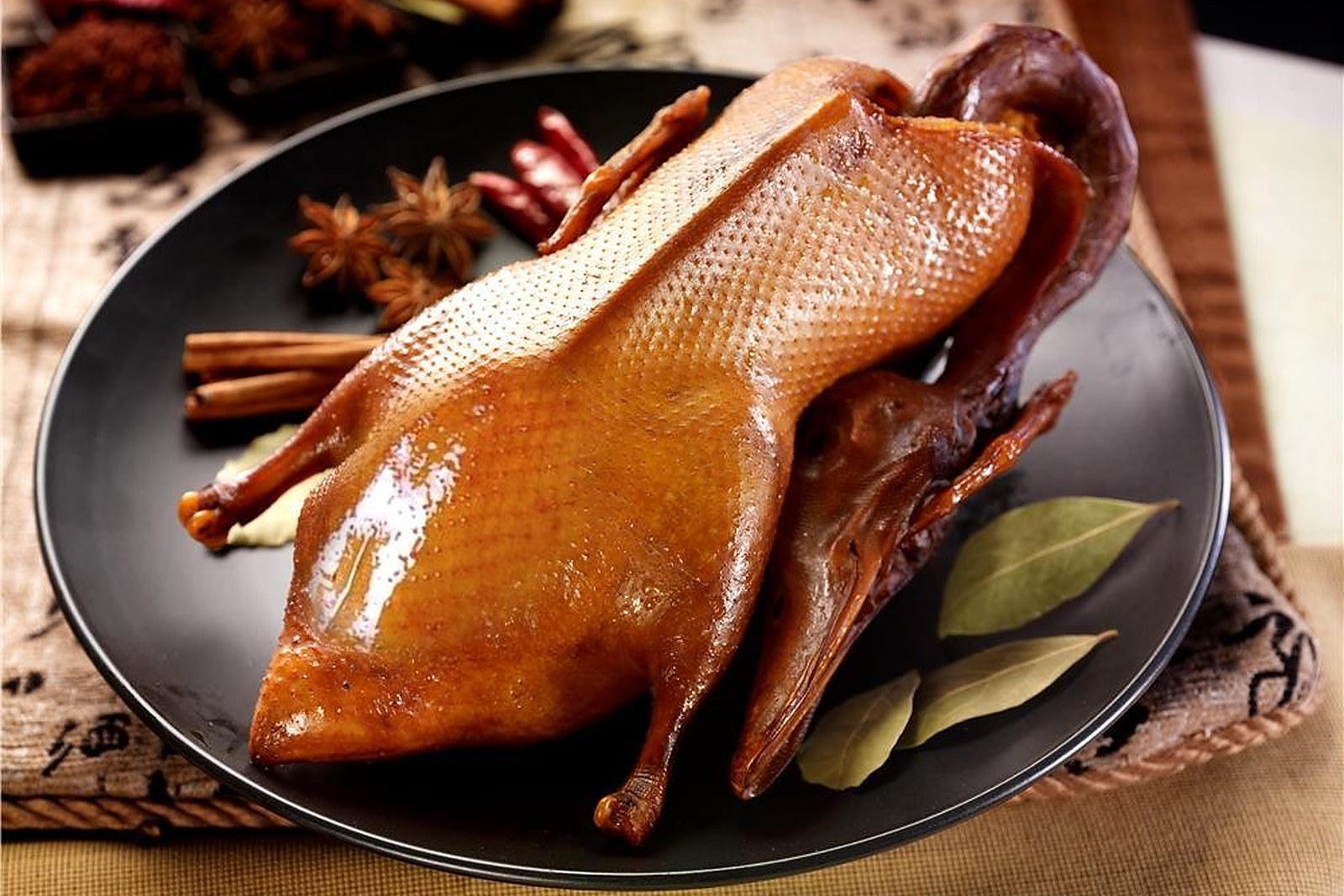
The cure is the quiet start. Ducks are rubbed and salted, left to draw in flavor, then hung above a smouldering pan of camphor wood and tea twigs so the cool, resinous smoke works inward while the skin dries taut and the surface tightens. Only after that does the bird meet the 卤汤 — a broth each shop guards like an heirloom, built from soy, spices and a long-simmered base that is topped up but never fully discarded. Low heat does the rest: the duck braises until a chopstick slides through the thickest part without resistance, the skin keeping its sheen rather than splitting, the fat rendering slowly into the liquid so the meat stays moist instead of drying out.
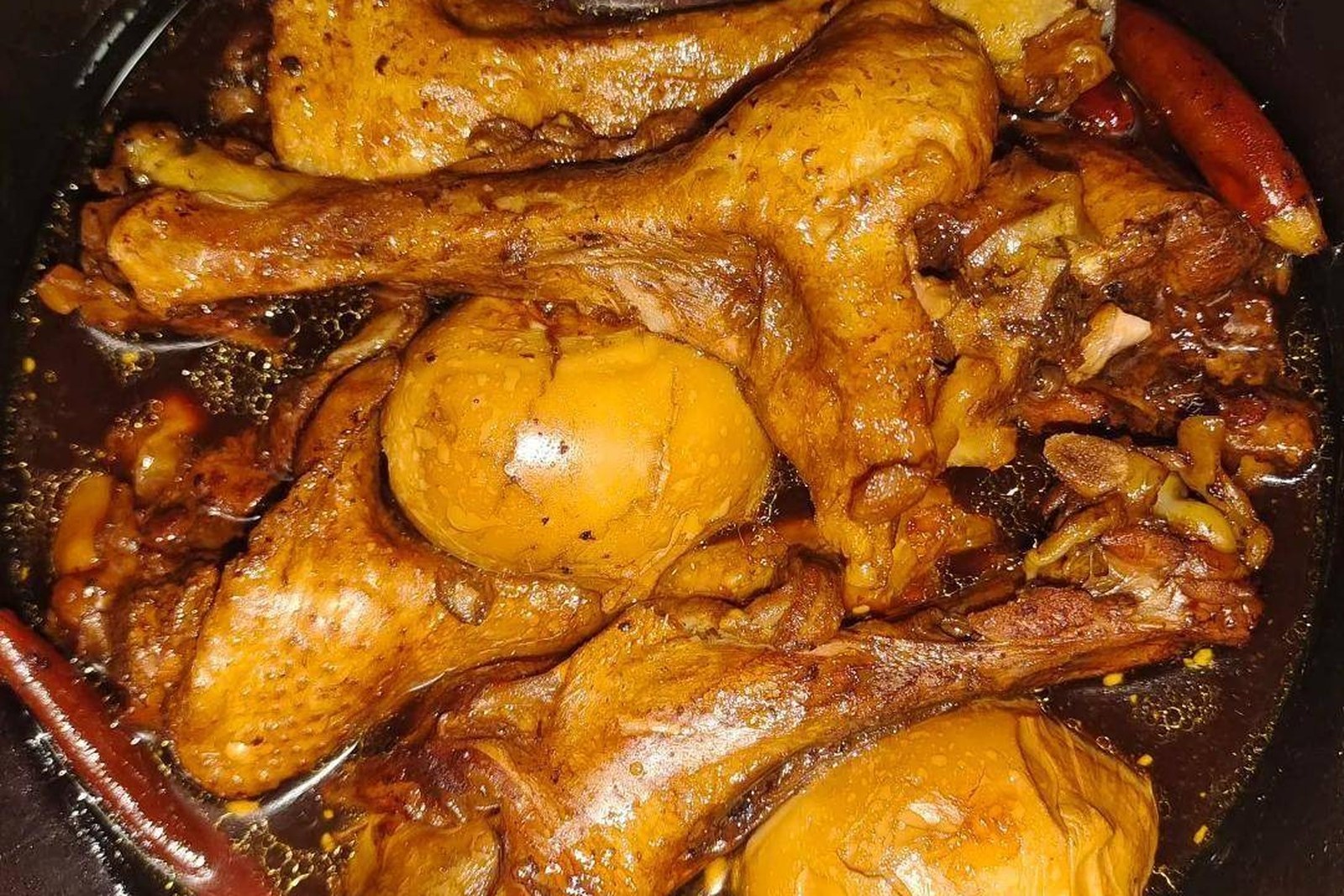
You eat it cold or at room temperature, pulled apart by hand or sliced thin, the skin the first thing to hit — sweet, smoky, faintly resinous from the camphor — followed by meat that tastes of the broth it spent hours in. In Liángpíng it has long been the souvenir of departure. The railway station late at night still has vendors with warm boxes, and travelers heading out on the last trains tuck a duck into their bag as the most portable proof of where they have been. The packaging has modernised into vacuum-sealed tins and gift cartons, but the bird inside is the same one the town has been eating for generations, and the queues at festival time suggest nobody thinks it needs improving.
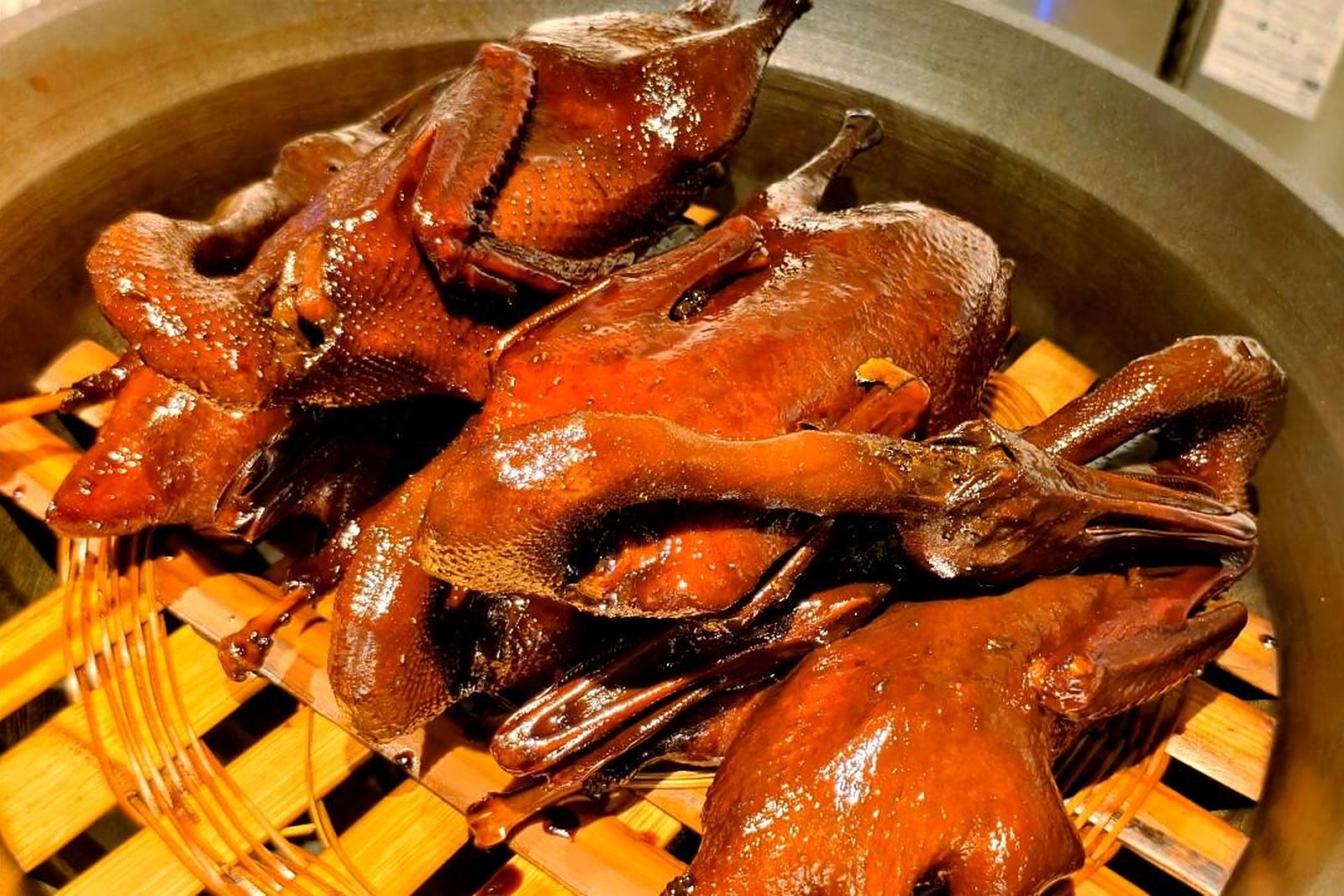
Words and Names
张鸭子 Zhāng Yāzi — Zhang Duck, the century-old braised-roasted duck of Liangping 樟茶 zhāngchá — camphor-wood and tea-leaf smoke used to cure the duck 卤汤 lǔtāng — the secret, long-kept braising broth 枣红 zǎohóng — date-red, the colour the skin reaches when done 卤 lǔ — to braise slowly in a spiced broth 火车站 huǒchēzhàn — railway station, where the duck is sold late at night