
Liangxiang Chestnuts: Sugar-Fried Woks, Thin Shells and Trading-Town History of Fangshan District, Beijing
良乡栗子天下香,一锅糖砂炒秋凉。Liángxiāng lìzi tiānxià xiāng, yī guō táng shā chǎo qiūliáng – Liangxiang chestnuts, fragrant everywhere under heaven; one wok of sugar and sand fries the autumn cool.
良乡板栗 Liángxiāng bǎnlì Liangxiang chestnuts are the sugar-fried winter sweetness Beijing has bought in paper cones for centuries, and the address is a trade route rather than a tree: 良乡 Liángxiāng Liangxiang, the old market town on the southwestern plain of 房山区 Fángshān Qū Fangshan District, Beijing, where for generations the chestnut harvest of the western mountains came down off the hills, changed hands, and shipped out under a single name (worth confirming the details of each season’s routes). The orchards themselves climb the western Fangshan mountains – the valleys of 佛子庄 Fózǐzhuāng Fozizhuang and 南窖 Nánjiào Nanjiao, the slopes around 霞云岭 Xiáyúnlǐng Xiayunling – where the fruit runs small, thin-shelled and high in sugar, the very grammar the frying wok wants. The form is the 糖炒栗子 táng chǎo lìzi sugar-fried chestnut – dark sand and syrup tumbled over the fire until the shells split and shine, the street snack old Beijingers nicknamed 灌香糖 guàn xiāng táng “poured-in fragrance sugar” – sold hot from the wok through autumn and winter, boxed by the sack for the gift run. The craft most visitors under-rate is the wok itself: sand, syrup and a steady arm, small nuts and large turned until all are done together – an art the north’s own records lectured on a thousand years ago, when a Liao dynasty keeper of the imperial chestnut gardens explained that small chestnuts burn before big ones finish, and even cooking is the whole craft. The naming is the tell: the name rode the cargo – sacks labelled 良乡 as they left the river docks at 琉璃河 Liúlíhé Liulihe, then under Liangxiang’s administration – so the brand is a trading town’s signature, not an orchard’s, one of the great brand accidents of Chinese food history.
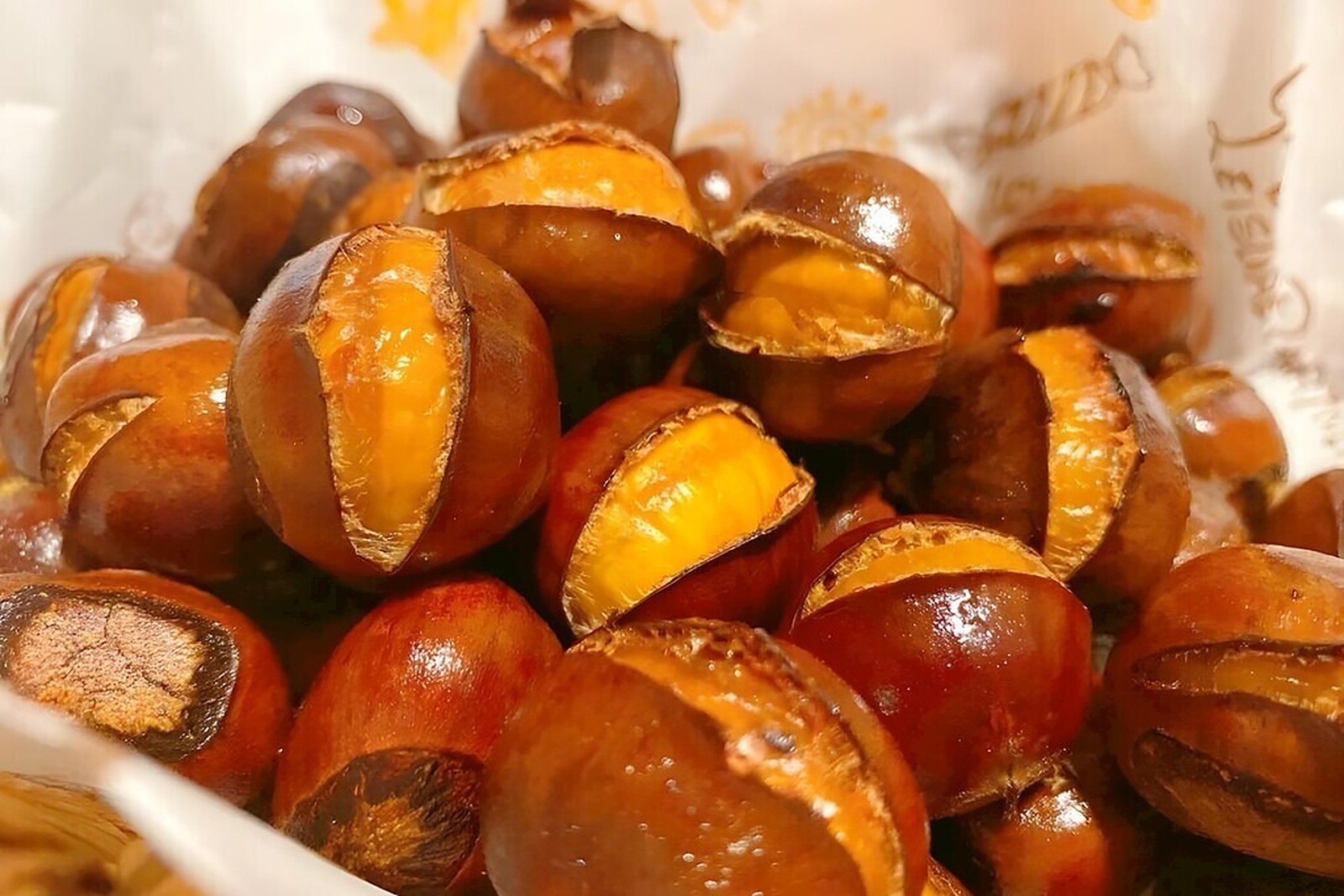
The eating is a winter-street grammar written for cold hands, and the menu leans 甜 tián sweetness plus 糯 nuò soft-chewy chestnut to match the season. The anchor is the wok-fried nut – shell cracking clean off the golden meat, eaten warm on the street the day it is fried – backed by the plainer pots: chestnuts simmered in salted water with a whisper of star anise, raw nuts dried slowly until the meat turns sweet and dense the way the old materia medica recommended, and the kitchen uses – 栗子面窝头 lìzi miàn wōtóu chestnut-flour conical buns once fancied palace food, chestnut jellies and pastes, and the homestyle stew of chestnut with village chicken. The literary freight is real: poets and essayists from the Song writer Su Zhe to Liang Shiqiu and Lao She wrote the city’s chestnut winters, and the street stalls knew their advertising – red-paper signs promising 真正良乡栗子 “genuine Liangxiang chestnuts” over the black sand. The tribute lineage runs deep in the record: the histories trace the region’s chestnuts past the Yan state, whose dates and nuts were reckoned rich enough to feed a state, through Tang-era fruit sent to the western capital, through Ming ritual and the Qing court’s tribute lists – a nut with a two-thousand-year CV, which is a thing almost no street food can claim (worth confirming the details of each dynasty’s ledger).
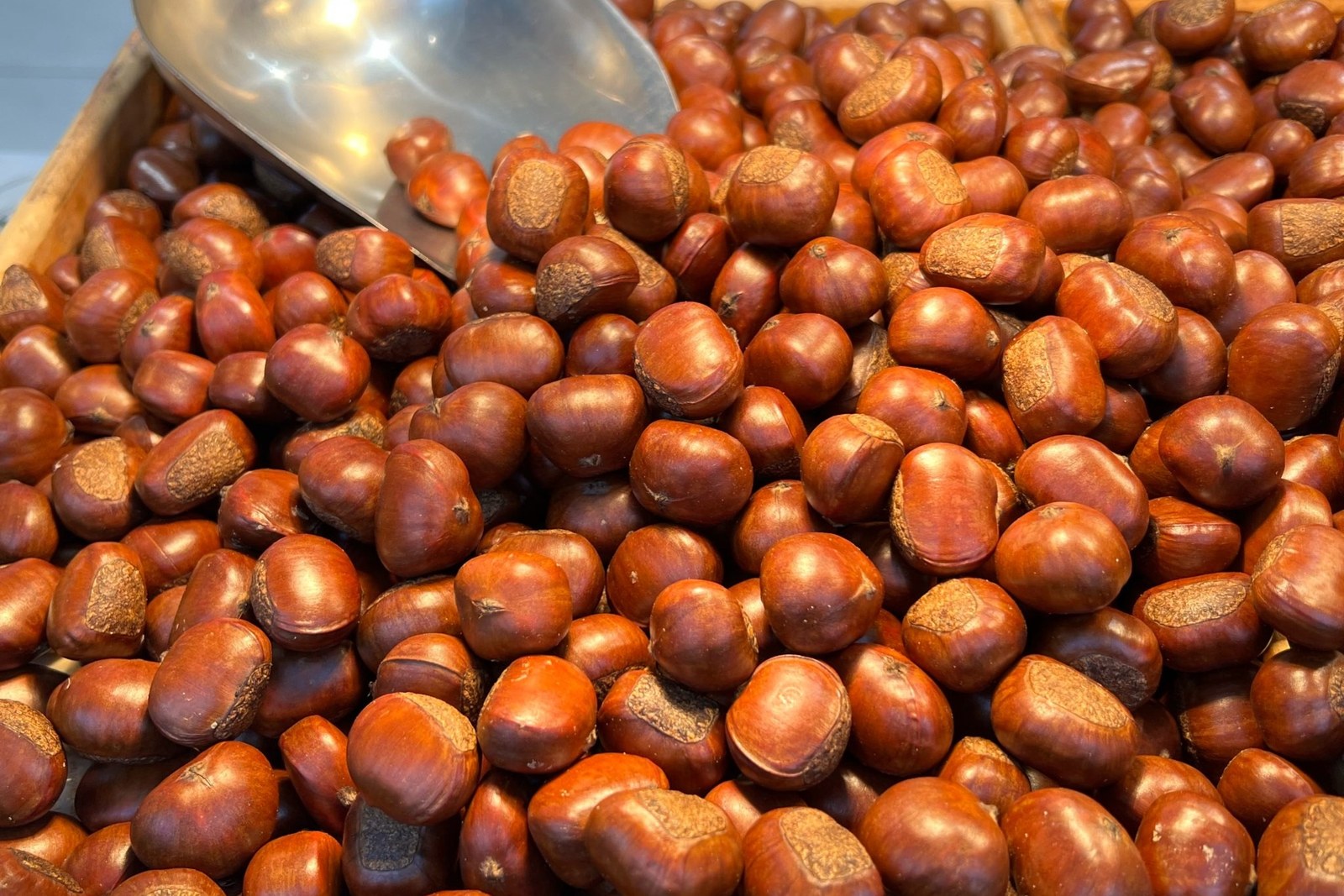
The honest grade is geography plus the 炒栗 chǎo lì frying-season clock. In 房山区 Fángshān Qū Fangshan District, Beijing the trade gathers twice: in the mountain villages where the orchards and the growers are, and along the plain’s old market streets – Liangxiang and the district seat among them – where city families buy by the cone and gift buyers by the box, a mix that keeps the nuts honest in a way a sealed supermarket pack never could (worth confirming the details – which counters fry daily through the season and which sell stored stock). The old buyers’ test survives and costs nothing: drop the nuts into water, and the ones that sink plump to the bottom are the ones worth frying – floaters are drying out, and no syrup glaze will rescue them. A per-person bill runs on the cone and the paper bag, so call it worth confirming the details rather than a fixed number, and eat them the day you buy: a hot chestnut peels like a promise, a day-old one clings to its skin and tastes of the shelf, and no extra sugar hides the difference – worth confirming the details, wok by wok.
The wry truth is that 良乡板栗 Liángxiāng bǎnlì is over-rated as a brand name and under-rated as mountain agriculture: the label is so famous that frying woks far beyond Fangshan borrow it, while the actual thing – high mountain valleys raising thin-shelled sweet nuts on a lineage the histories trace back past the Yan state, packed onto mule trains and river barges by generations the label never mentions – barely registers with the buyer holding the cone. The self-deprecating footnote, and the district braid: a food writer will explain “commodity branding” to a stall keeper who is shaking a wok the size of a bathtub, photograph the black sand at heroic shutter, and then call the warm nut “commendably nostalgic” as if nostalgia were a flavour – which is the honest grade: 良乡板栗 Liángxiāng bǎnlì is a two-thousand-year supply chain the writer will aestheticise more than he traces, and the auntie at the next cone has already eaten hers and walked on before the shutter closes. The same 房山区 Fángshān Qū Fangshan District, Beijing thread runs on: the millstone fruit of 房山磨盘柿 Fángshān mópánshì Fangshan mopan persimmons ripens in the Zhangfang orchards, the charcoal smoke of 十渡虹鳟鱼 Shídù hóngzūnyú Shidu rainbow trout drifts along the Juma River, the paddy wind of 长沟大米 Chánggōu dàmǐ Changgou rice combs the wetland fields of the south, and the glass jars of 霞云岭蜂蜜 Xiáyúnlǐng fēngmì Xiayunling honey glow on the mountain-product shelves – one district, four more tables.
Words and Names
- 良乡 Liángxiāng / Liangxiang · the old market town whose name the chestnuts borrowed - 板栗 bǎnlì / Chinese chestnut · the thin-shelled sweet nut of the northern mountains - 糖炒栗子 táng chǎo lìzi / sugar-fried chestnuts · the sand-and-syrup wok craft of the winter streets - 灌香糖 guàn xiāng táng / “poured-in fragrance sugar” · the old street name for the fried chestnut - 集散地 jísàndì / trading hub · the distribution role that made the name travel farther than the trees - 铁杆庄稼 tiěgǎn zhuāngjia / “iron-stemmed crop” · the mountain folk name for a tree that feeds like a field - 贡品 gòngpǐn / tribute goods · the nut’s old duty at the imperial table - 房山区 Fángshān Qū / Fangshan District · the Beijing district holding the chestnut valleys
What the Locals Know
- Follow the wok, not the label: “良乡” Liángxiāng names the old trading town, not the orchard – the nuts grow in the western mountain valleys, and the best counters can say which village this batch came from (worth confirming the details).
- Use the water test: drop the nuts in a basin, and the ones that sink are heavy and fresh; floaters are drying out and will fry bitter-skinned.
- Eat them the same day: hot chestnuts peel clean and taste of chestnut; overnight ones cling to the skin and taste of paper – no sugar hides it.
- Time the season: new-crop frying runs from mid-autumn into winter, and the honest counters say plainly when the wok is working on stored stock.
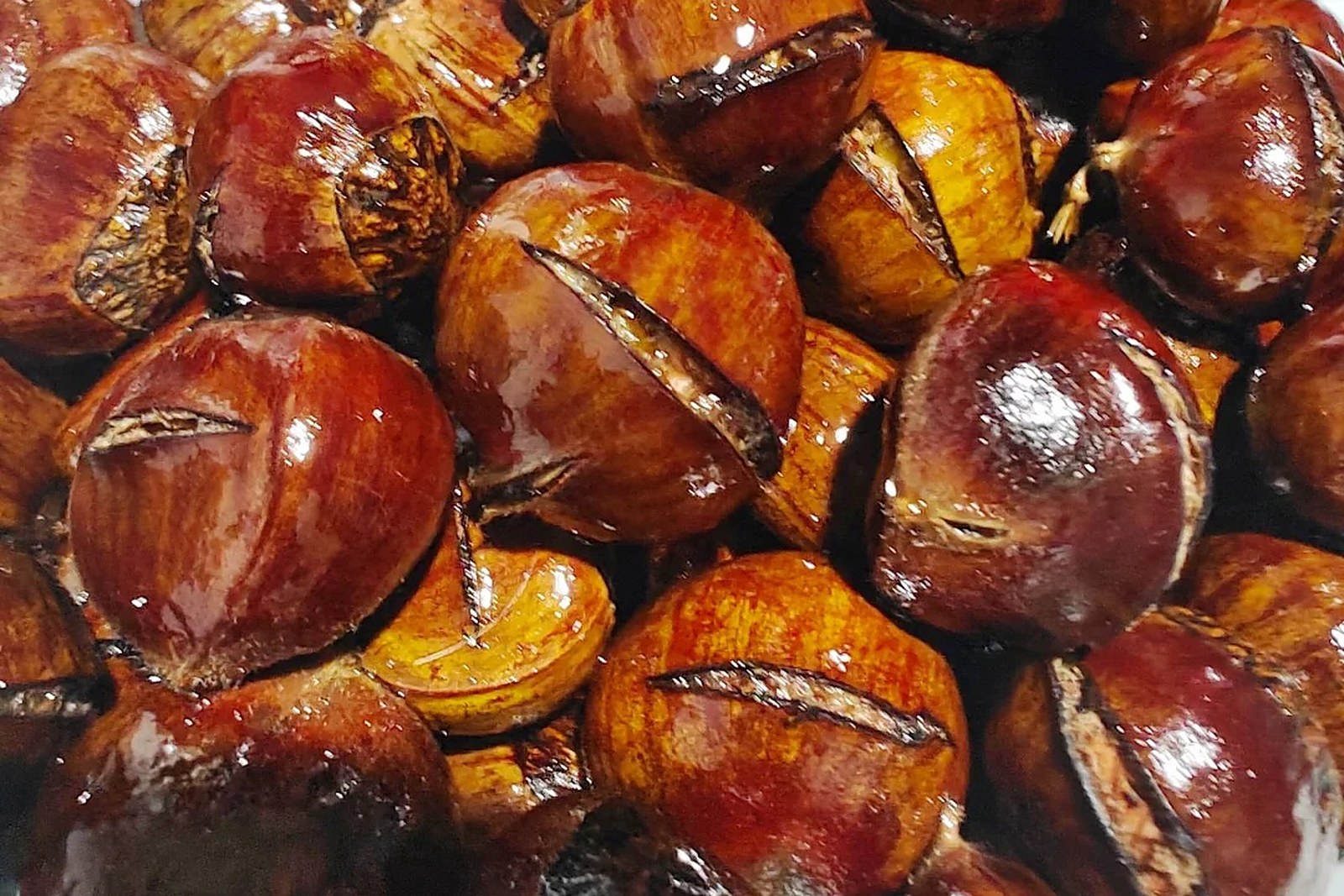
flowcloud would say that the 良乡板栗 Liángxiāng bǎnlì is the sugar-fried woks, thin shells and trading-town history of Fangshan District, Beijing – a 良乡 Liángxiāng brand that rode the river docks while the orchards stayed in the western mountain valleys, where 糖炒栗子 táng chǎo lìzi crack warm through the winter streets – and that the honest move is to follow the wok, trust the water test, and eat the same day, because the mountain grew the sweetness and the market only signed it. All checked October 2026.
Where to find it: Fangshan District Fángshān Qū, Beijing – the chestnut villages of the western mountains around 佛子庄 Fózǐzhuāng, 南窖 Nánjiào and 霞云岭 Xiáyúnlǐng, and the sugar-frying counters along the plain’s old market streets at 良乡 Liángxiāng and 琉璃河 Liúlíhé, where the winter woks turn out 糖炒栗子 táng chǎo lìzi under the “Liangxiang chestnut” name (worth confirming the details – which counters fry daily through the season and which sell stored stock); a per-person bill runs on the paper cone, so call it worth confirming the details rather than a fixed number. Liangxiang chestnuts are the sugar-fried woks, thin shells and trading-town history of Fangshan District, Beijing, trade before label.