
禾花鱼 hé huā yú is the rice-field fish of 连山壮族瑶族自治县 Liánshān Zhuàngzú Yáozú Zìzhìxiàn, the mountain county at the north-western end of 清远市 Qīngyuǎn shì, and it is a food that exists only because of the way the rice is grown. 禾花鱼 hé huā yú, literally rice-flower fish, are small carp that are put into the flooded paddy fields in the spring and left to swim among the growing rice all summer, feeding on the fallen rice flowers, the insects and the water weed. By the time the rice is cut the fish have grown fat in the shallow water, and they are netted out of the field and eaten – usually the same day – as one of the county’s most particular dishes.
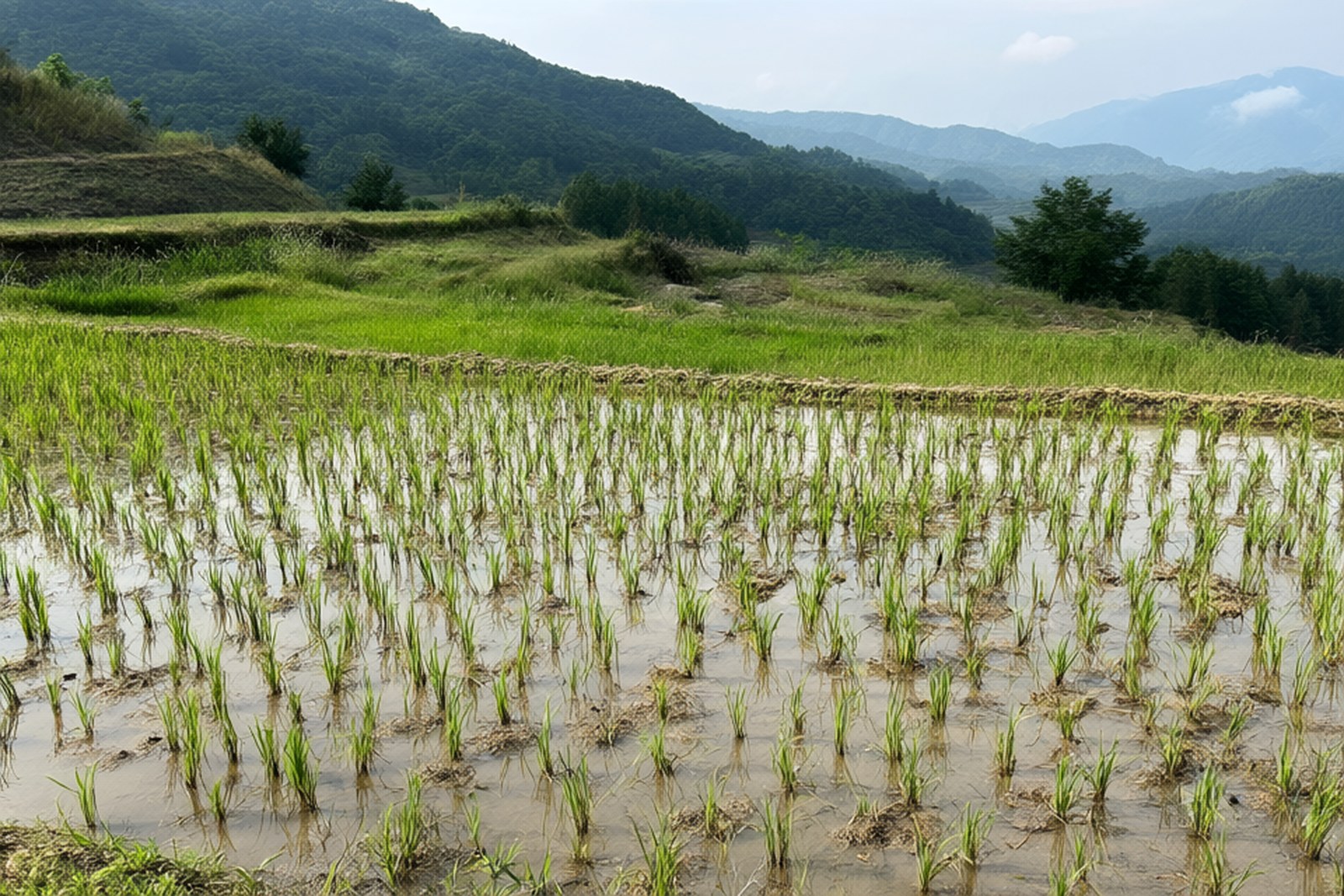
The farming is a small, old system, and it works for both crops. The fish eat the insects and the weeds that would otherwise trouble the rice, and their droppings feed the paddy, so a rice field with fish in it needs less of everything; the rice flowers that fall into the water are what give the fish its name and, the local saying goes, its sweetness. The fish are a small, dark-backed carp, no longer than a hand, and they are grown slowly through the summer in water that is only inches deep. At the harvest the field is drained and the fish are gathered from the mud and the shallow pools, a job the whole village does together, and children are sent in with baskets.
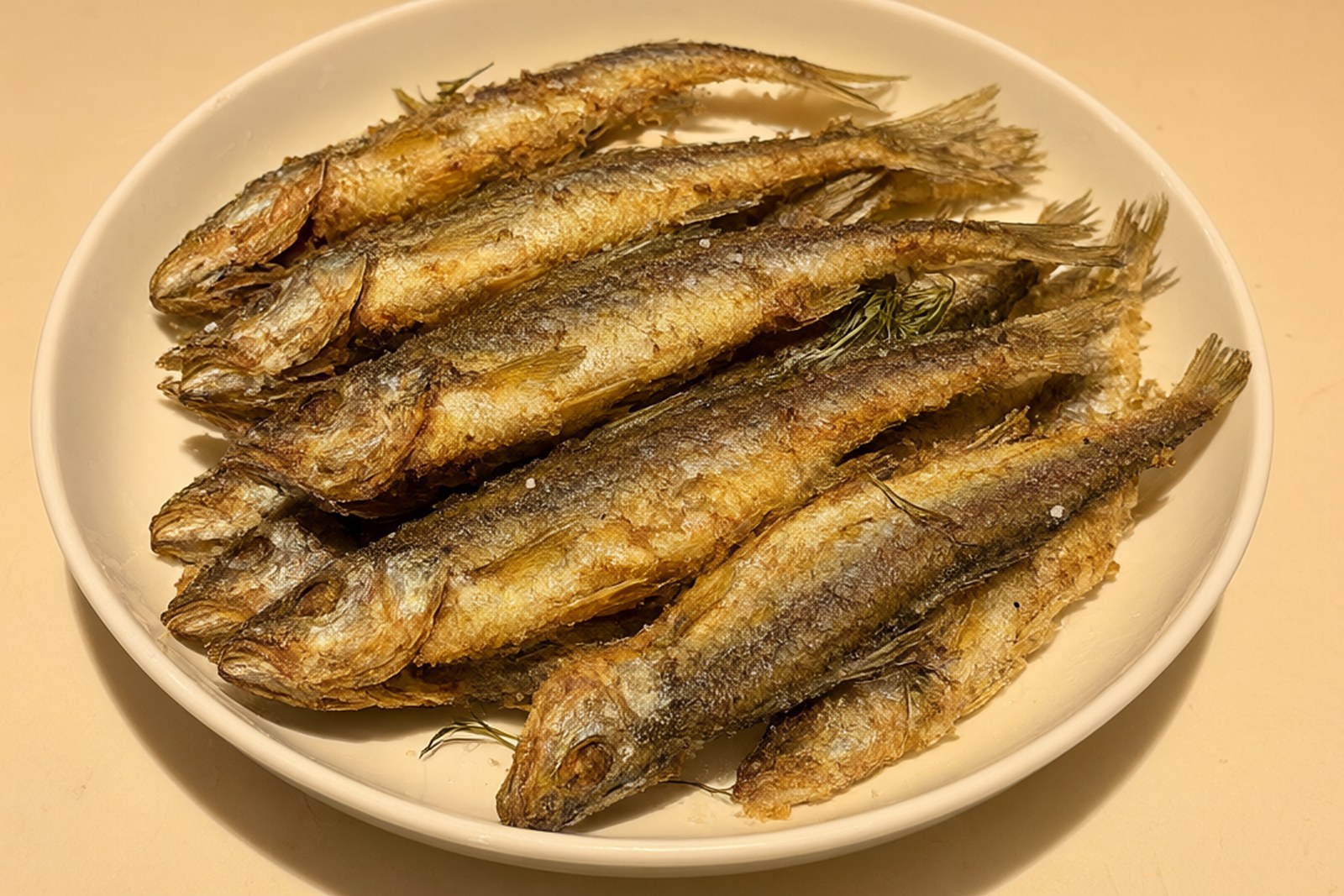
In the kitchen the rice-field fish is treated as something between a fish and a delicacy. The smallest are cleaned, dipped in a little flour or left bare, and fried whole in hot oil until they are crisp enough to eat from head to tail, bones and all, and served with salt or a dip of soy and chilli; they are eaten with the fingers, as a snack with rice wine. The larger ones are braised with 姜 jiāng, ginger, 蒜 suàn, garlic, and a little 豆豉 dòu chǐ, fermented black bean, or made into a soup with 豆腐 dòu fu, tofu, for the family table. Because the fish live on rice flowers rather than on pond feed, the flesh is clean and slightly sweet, and the local people will tell you that a 禾花鱼 from the field is nothing like a fish from a tank.
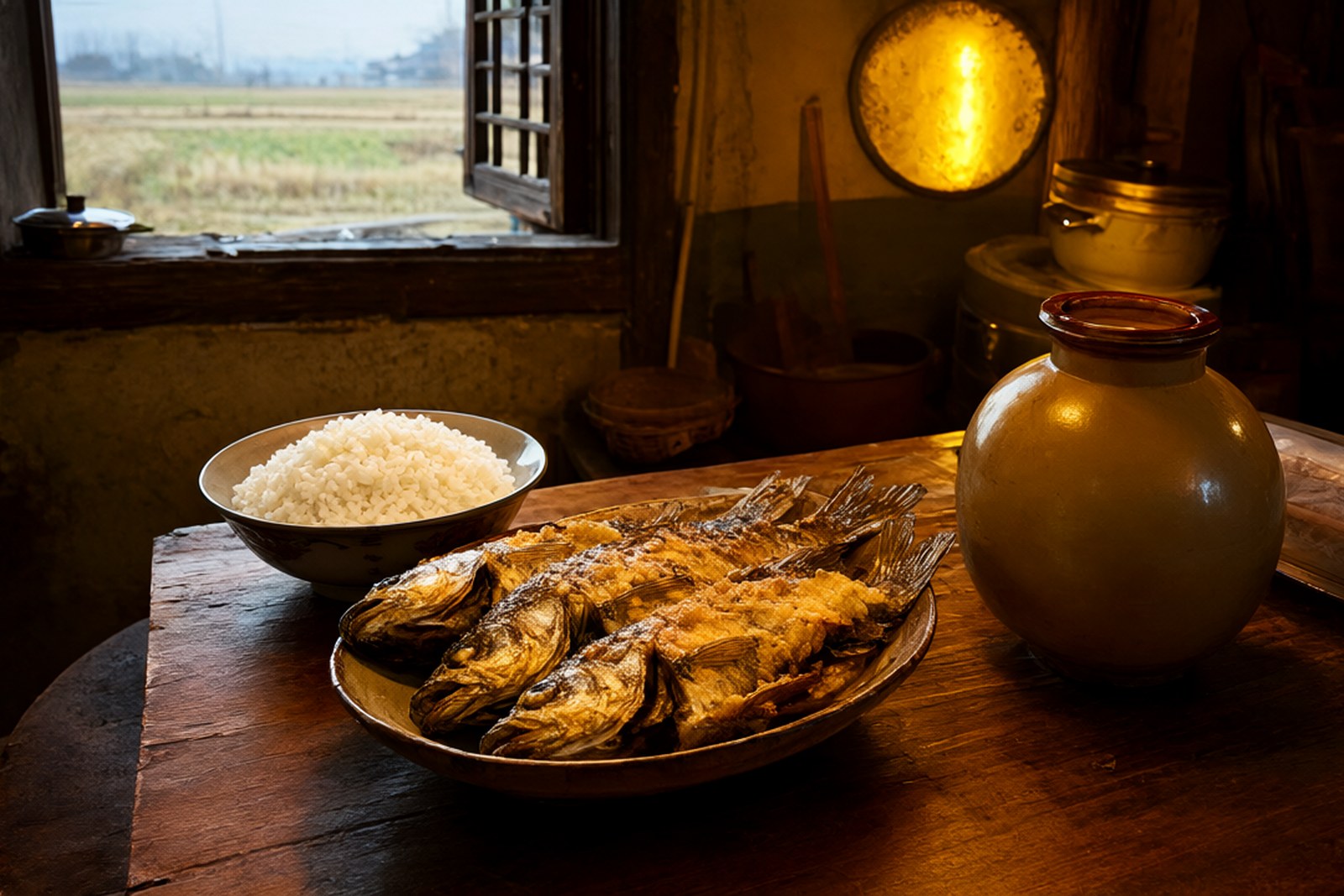
The fish is tied to the calendar as much as to the place. It appears in the fields in the spring and is eaten in the autumn, when the rice comes in, so a meal of 禾花鱼 is an autumn meal and the celebration of a harvest; in the villages it is the food of the 尝新, the tasting of the new rice, and it is served alongside the first of the year’s grain. Come in the late summer or the autumn if you want it at its best, and eat it in a village kitchen or a small 农家菜 nóng jiā cài where the fish came from the field behind the house. It is one of the few dishes anywhere that tastes of a farming system rather than an ingredient.
Words and Names
禾花鱼 hé huā yú is the rice-field fish, literally rice-flower fish; 禾 hé is the growing rice, 花 huā the flower and 鱼 yú fish. 稻田 dào tián is the paddy field and 梯田 tī tián the terraced fields of the hills. 姜 jiāng is ginger, 蒜 suàn garlic, 豆豉 dòu chǐ fermented black bean and 豆腐 dòu fu tofu. 农家菜 nóng jiā cài is farmhouse cooking, 尝新 cháng xīn the tasting of the new rice, and 连山壮族瑶族自治县 Liánshān the county it comes from.
What the Locals Know
Eat it in the autumn, when the rice is cut and the fish are netted, because it is a seasonal food and there is no honest version of it out of season. Ask for the small ones fried whole and eat them bones and all, since that is the point; for the larger ones, take the braise or the soup. In a village kitchen, ask whether the fish came from the field behind the house, because the taste depends on it. Drink the local rice wine alongside, and if you are offered the first bowl of the new rice with the fish, take it, because that is the harvest meal the dish belongs to.
flowcloud would say that a county which put carp into its paddies to eat the rice flowers, let them fatten among the growing grain, and then netted them out at the harvest for a single seasonal meal, has made of a farming method a cuisine, and that there is no better proof that how a place grows its food is what it will taste like.
Where to find it: the village kitchens and 农家菜 restaurants of 连山壮族瑶族自治县, and the county’s autumn markets when the fields are drained. A plate of fried 禾花鱼 is ¥30 to ¥70 and a braised dish ¥40 to ¥90, and it is best from the late summer through the autumn. 连山 is reached by road from 清远市 in about two and a half hours, and the nearest rail stop is 连州站 Liánzhōu zhàn on the line to the north.