
连州菜心 Liánzhōu cài xīn is the choy sum of 连州市 Liánzhōu shì, in the north of 清远市 Qīngyuǎn shì, and it is the vegetable the county sends all over the province. 菜心 cài xīn is the flowering choy sum, a green of the mustard family eaten all through southern China, and the ordinary one is good; but the 连州 version, grown in the cold, clear air of the northern hills and harvested after the first frosts, is sweeter and crisper than the rest, with thick pale stems and small yellow flowers at the tip. Because the county sits higher and colder than the rest of Guangdong, its choy sum comes into its own in the winter months when the frost sweetens the stems, and it has become a name the markets pay for.
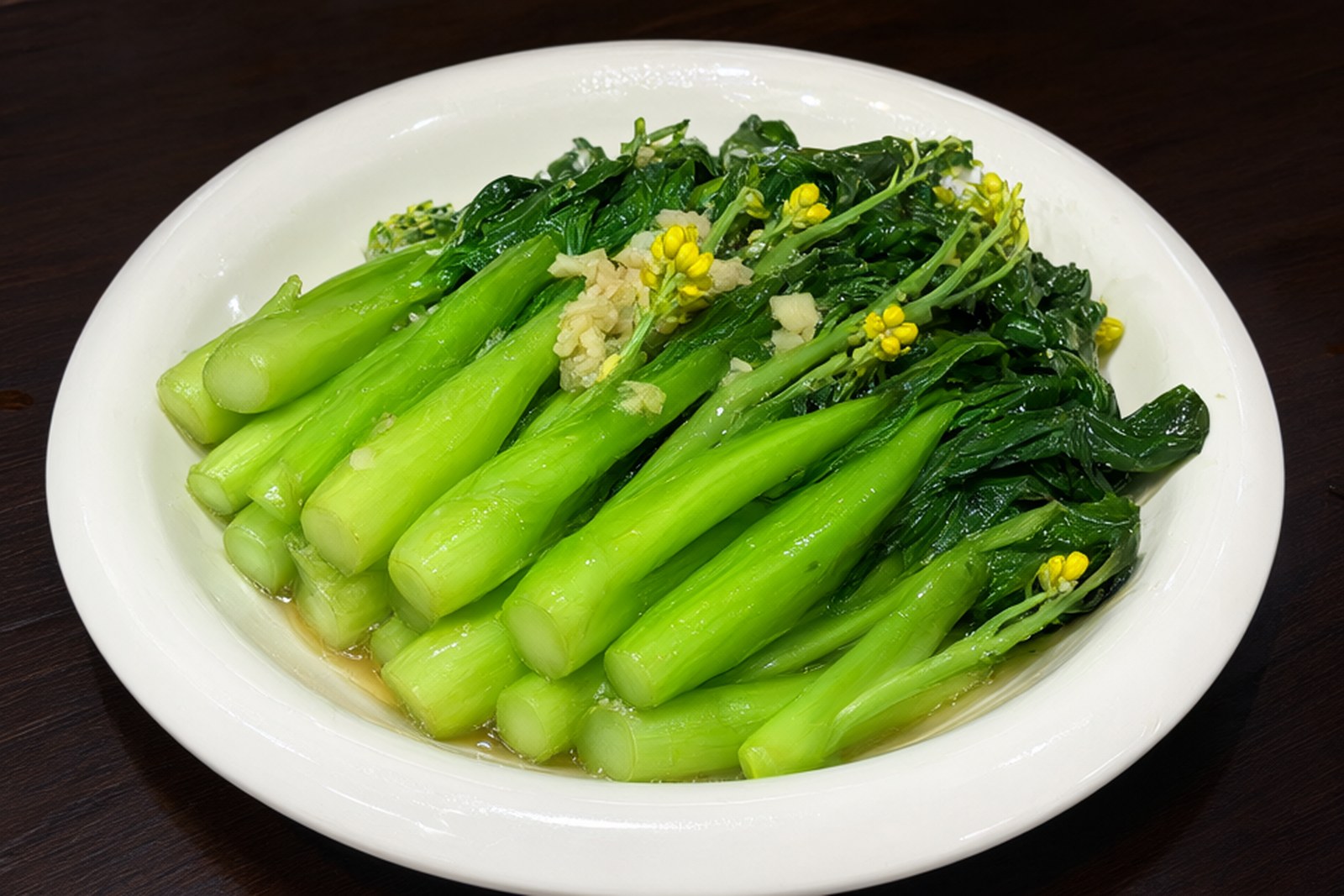
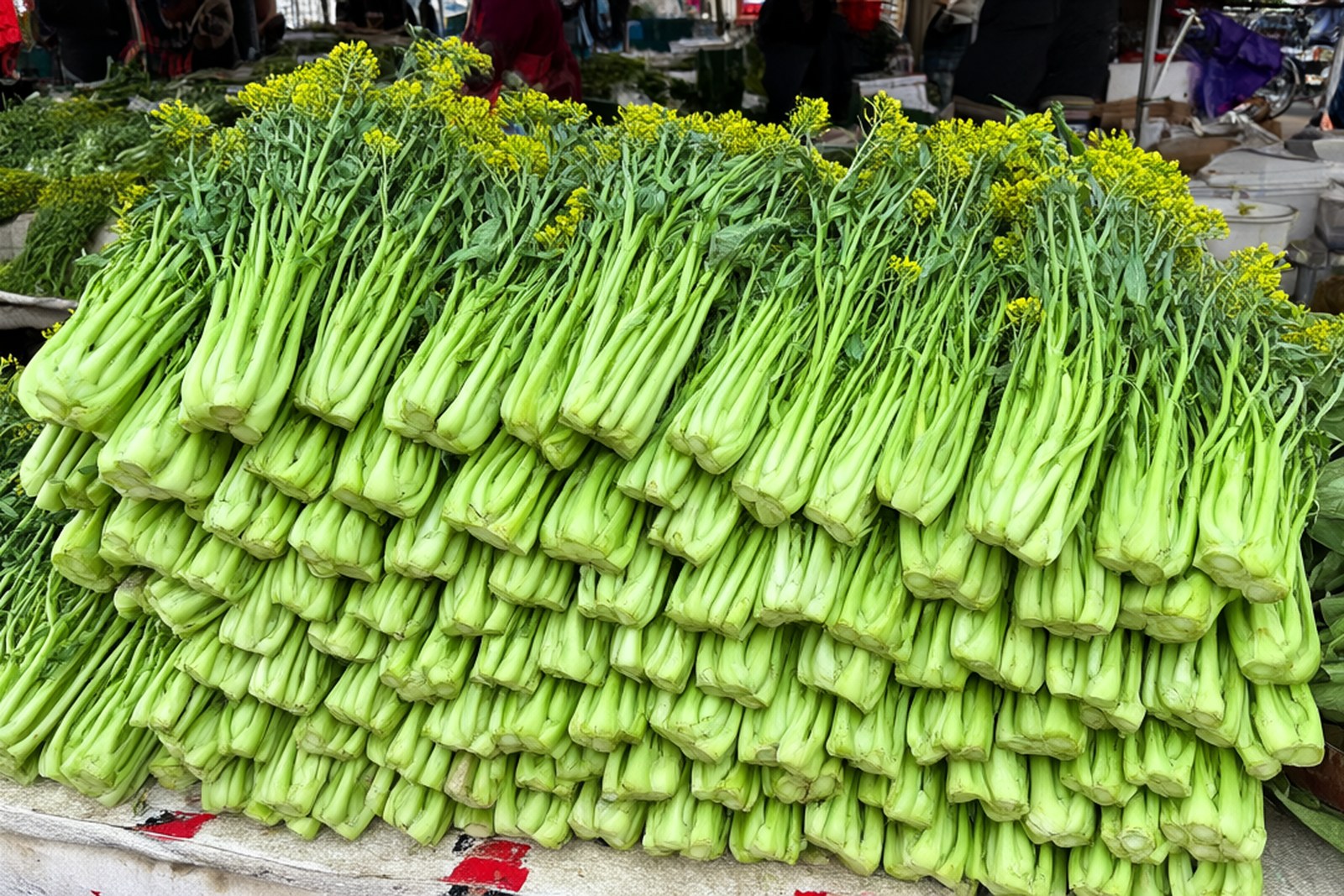
What the frost does to it is the whole story. A choy sum grows through the autumn, and when the cold comes the plant responds by turning some of its starch into sugar, which is why a winter green tastes sweeter than a summer one; in the hills of 连州 the nights are cold enough for long enough to make a real difference. The local growers plant in the autumn and cut from the late autumn into the early spring, and the best of it is picked young, when the stem is still tender and the flower has not fully opened. It is sold in bundles at the market, and the buyers judge it by the thickness of the stem and the freshness of the cut, because a choy sum is at its best within a day or two of leaving the field.
In the kitchen it takes almost nothing. The classic treatment is 蒜蓉炒菜心 suàn róng chǎo cài xīn, stir-fried with garlic: the bundles are trimmed, the thick stems split so they cook evenly, and the greens go into a very hot wok with a little oil and a lot of chopped garlic for no more than a minute, with a pinch of salt and a splash of 米酒 mǐ jiǔ, rice wine, to keep them green and crisp. It comes out glossy and snappy, sweet at the stem and faintly bitter at the leaf, and it is served as the green that cuts a rich meal – the plate that goes beside the 腊味饭 and the braised meats of the winter table. In the smarter restaurants it is also blanched and 白灼 bái zhuó, dressed with a little soy and hot oil.
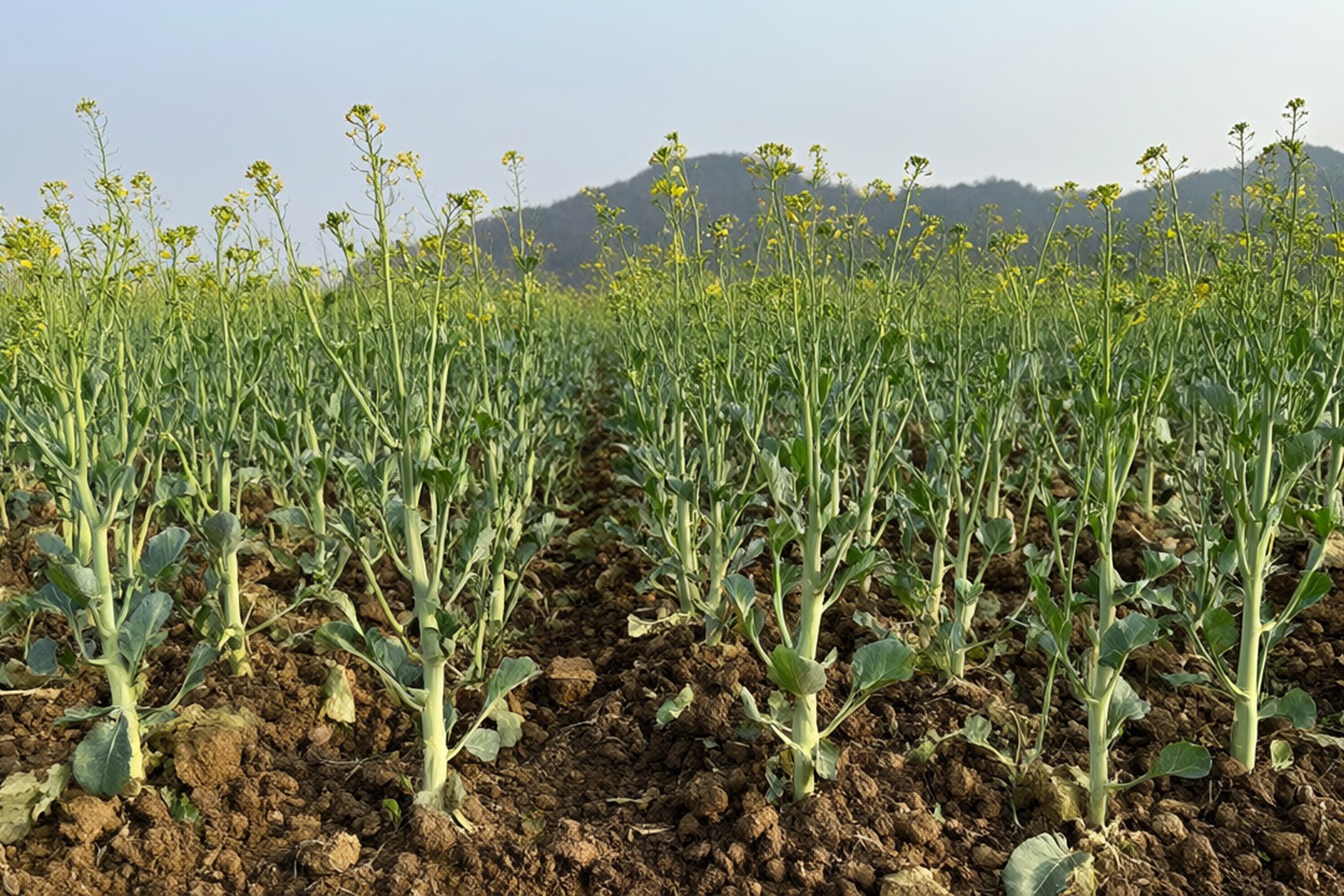
The choy sum has become the county’s calling card in a quiet way, and the county is proud of it. It is shipped to the markets of 广州 and 深圳 under the 连州 name and sold at a premium, and there is a small season of it that the local restaurants advertise. Because it is a winter crop, it is the green that carries the northern Guangdong table through the cold months, when the beans and the cucumbers are gone; and because it travels well for a few days, a bundle of it is one of the few genuinely local things a visitor can carry home. Eat it while you are there, though, because a 连州菜心 in 连州, cut that morning, is better than one that has crossed the province.
Words and Names
菜心 cài xīn, literally vegetable heart, is the flowering choy sum; 连州菜心 Liánzhōu cài xīn is the county’s own. 蒜蓉 suàn róng is minced garlic and 蒜蓉炒菜心 suàn róng chǎo cài xīn the classic stir-fry, while 白灼 bái zhuó is the blanch-and-dress method. 米酒 mǐ jiǔ is rice wine. 连州市 Liánzhōu shì is the county in the north of 清远市 Qīngyuǎn shì, and 霜 shuāng is the frost that sweetens the stems.
What the Locals Know
Eat it in the winter, from the late autumn to the early spring, because that is when the frost has done its work and the stems are sweet. Buy by the bundle at the market and look for thick, unblemished pale stems and tight, barely-open flowers, and avoid any bundle whose cut ends have dried, since that means it has been sitting. Split the thick stems before they go in the wok so they cook in the same time as the leaves, and keep the heat high and the cooking short so they stay crisp. And order it as a plate of its own, not as a garnish, because in 连州 it is a dish in its own right.
flowcloud would say that a county which stands a little higher and a little colder than the plain around it, and then lets the frost turn its ordinary green into something the whole province buys, has shown that a small difference in the ground can be worth more than any amount of cleverness in the kitchen.
Where to find it: the markets and the vegetable stalls of 连州市 and of 清远市, and the restaurants across the county that list 连州菜心 as a dish of the season. A bundle is ¥5 to ¥15 and a plate of 蒜蓉炒菜心 ¥20 to ¥40. 连州市 is reached by rail from 清远市 at 连州站 Liánzhōu zhàn, and by road in about two hours; the crop is best from the late autumn through the early spring.