
甜咸两味,炭火一炉。Tián xián liǎng wèi, tànhuǒ yī lú – Two flavours, sweet and savory; one oven of charcoal.
丽江粑粑 Lìjiāng Bāba Lijiang baba is the cake the old lanes bake all day – wheat dough laminated with 猪油 zhūyóu lard into layers, filled either sweet with 玫瑰糖 Méiguī Táng rose syrup, brown sugar, sesame and walnut, or savory with minced 火腿 huǒtuǐ ham, scallion and salt, seared on a griddle and finished under a coal-fired oven roof until the crust blisters and the layers open. One cake runs about 3-5 yuan, the ovens work from morning to dusk on 七一街 Qīyī Jiē and 光义街 Guāngyì Jiē, and the 白沙古镇 Báishā Gǔzhèn Baisha old town up the mountain is the address locals name for the most authentic batch. It is the town’s breakfast and the caravans’ old travelling bread – dense, filling, unfussy – and the honest shape is that the lard and the oven are the whole craft: the same dough steamed is a bun, and the same dough on coal is a baba. Two sizes come off the same oven, a small palm round for one and a large plate-wide round cut into wedges for a table, and the ovens near the 四方街 Sìfāng Jiē square quote a yuan or two more for the same cake than the lanes do – the coal is the same, the rent is not.
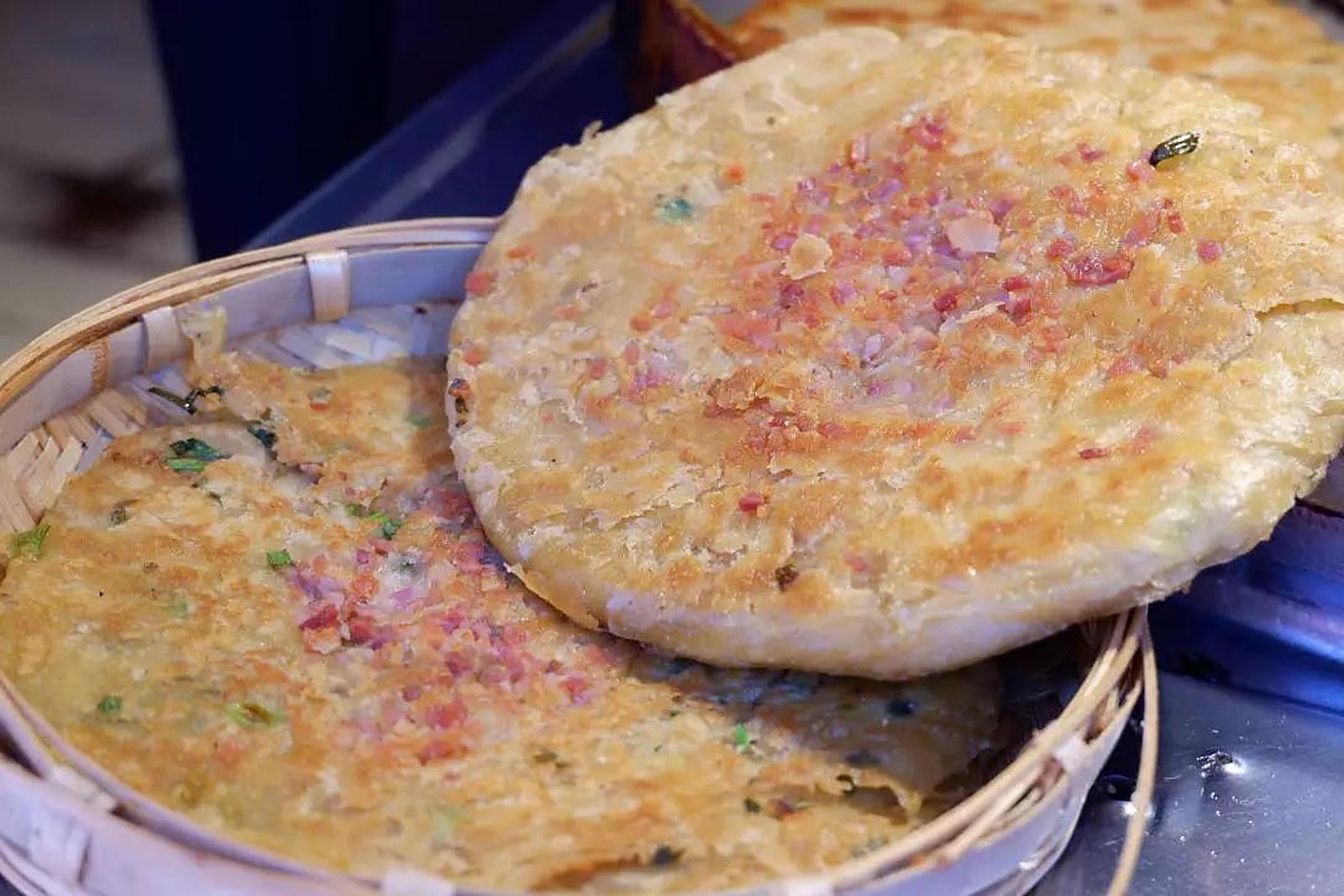
The mechanism is the fold and the coal. The dough is rolled thin, painted with lard, folded and rolled again until the layers cannot be counted, wrapped around the filling and flattened into a round; the griddle sets and colours the base while the 炭炉 tànlú coal chamber above crisps the top and puffs the layers apart – the same laminating logic as the Bai 破酥 pòsū “broken-flake” cake across the mountains, in a rounder, thicker local form with its own fillings. The coal is half the flavour the cake is named for: a gas oven makes a flatter, paler round, which is the tell of a shortcut, and a cake that cannot be eaten in two hands because the flakes shatter has been folded properly. The filling is the choice rather than the identity – 甜 tián the sweet rose-and-brown-sugar round is the classic breakfast, 咸 xián the ham-and-scallion round is the one to carry on a walk – and the honest limit is time: the baba is at its best for about ten minutes out of the oven and turns into a chew after that, which is why nobody sells it to take home. The lard is what makes the flake: painted between the folds rather than mixed into the dough, it separates the layers into sheets under the coal heat, and a baker who swaps it for oil gets a shorter, denser cake – the same reason the 破酥 pòsū cakes of the Dali plain are built the way they are. Weight is the buyer’s second clue after the fire: a proper baba is heavy for its size, because it is dough and lard rather than air.
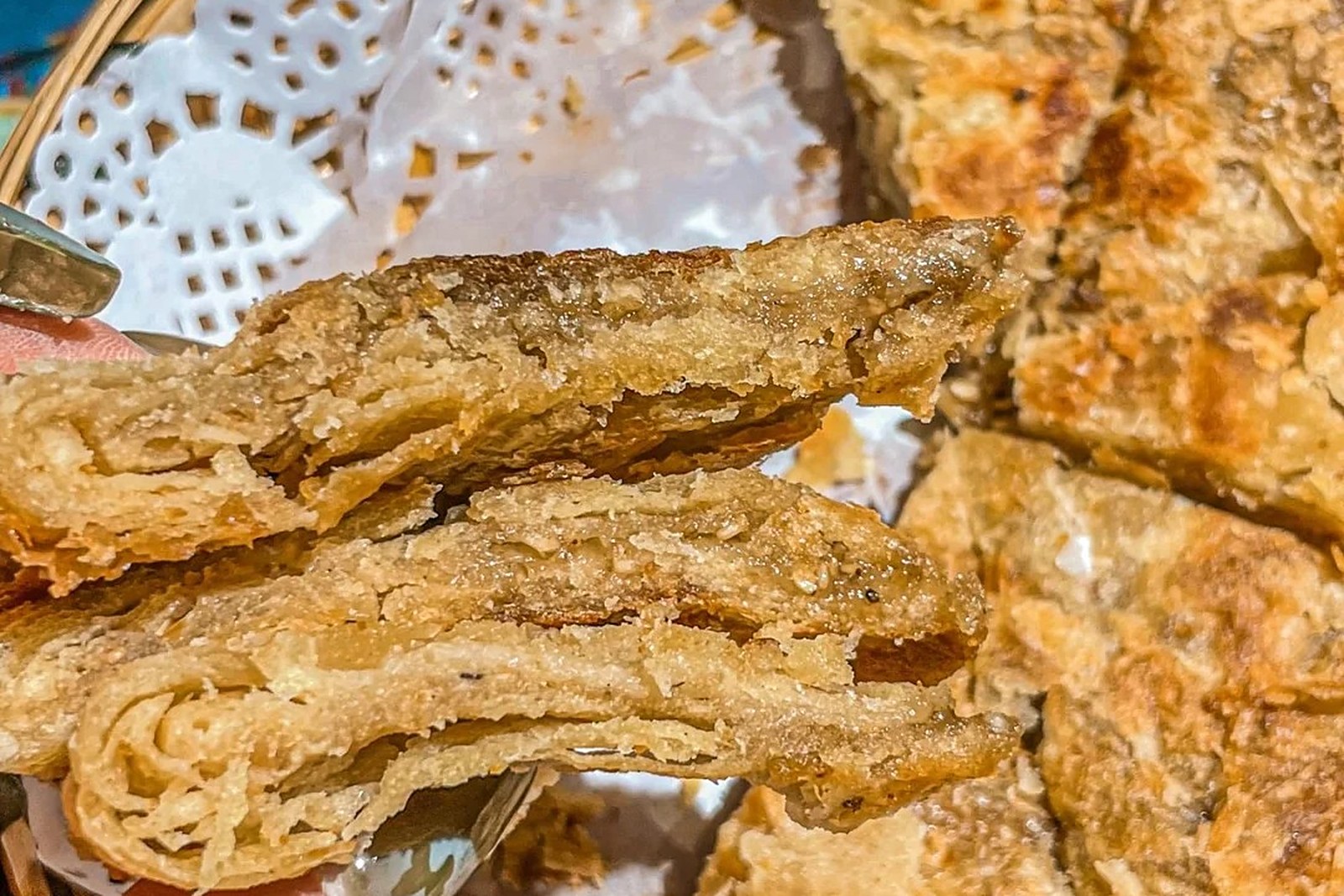
Locals eat it at the oven, standing, with 酥油茶 sūyóu chá butter tea or 豆浆 dòujiāng soy milk – the three together are the local definition of a complete breakfast, and the pairing with a bowl of 土鸡米线 tǔjī mǐxiàn at the 忠义市场 Zhōngyì Shìchǎng is the morning round. Buy it where you can see the oven: a coal stack, a griddle and a basket of dough rounds is the whole business, and a shop with a display case but no fire is selling yesterday’s cake. The old 粑粑 bāba houses on 七一街 Qīyī Jiē and 光义街 Guāngyì Jiē are the names the lanes cite, the queue at the famous one is usually the same recipe at the next oven over, and the honest move is to take one sweet for the way out and one savory for the walk up to 黑龙潭 Hēilóngtán, because the flakes shatter in a paper bag and the ten-minute clock starts the moment the cake leaves the coal. The wheat baba is the morning’s grain half; the 饵块 ěrkuài rice cakes grilling on the same lanes are the other, brushed with sauce and wrapped around a filling – different grain, same coal, same breakfast round. Up at 白沙古镇 Báishā Gǔzhèn, the roadside ovens by the 牌坊 Páifāng gate arch fire at first light for the villagers – the same cake, the mountain air, and the snow mountain in the frame.
Words and Names
丽江粑粑 Lìjiāng Bāba Lijiang baba · 猪油 Zhūyóu lard · 玫瑰糖 Méiguī Táng rose-petal syrup · 火腿 Huǒtuǐ ham · 炭炉 Tànlú coal oven · 千层 Qiāncéng “thousand layers” · 甜/咸 Tián/Xián sweet/savory · 破酥 Pòsū “broken flake”, the laminating technique · 酥油茶 Sūyóu Chá butter tea · 七一街 Qīyī Jiē and 光义街 Guāngyì Jiē the old lanes · 牌坊 Páifāng the gate arch · 白沙古镇 Báishā Gǔzhèn Baisha old town
What the Locals Know
The local knowledge about the baba is about the fire and the clock, and it is the same check a Lijiang regular makes at any oven. The coal is half the recipe – a gas oven makes a flatter, paler round, so buy where you can see the 炭炉 tànlú and the griddle, and a shop with a display case but no fire is selling yesterday’s cake. The second check is the flake: a proper baba is heavy for its size, because it is dough and 猪油 zhūyóu lard rather than air, and the layers shatter in a paper bag – which is why nobody sells it to take home and the ten-minute clock starts the moment it leaves the coal. Take 甜 tián the rose-and-brown-sugar round for breakfast with 酥油茶 sūyóu chá butter tea, 咸 xián the ham-and-scallion round for the walk up to 黑龙潭 Hēilóngtán, and the honest hour is the first one, when the coal is new and the queue is local rather than tourist.
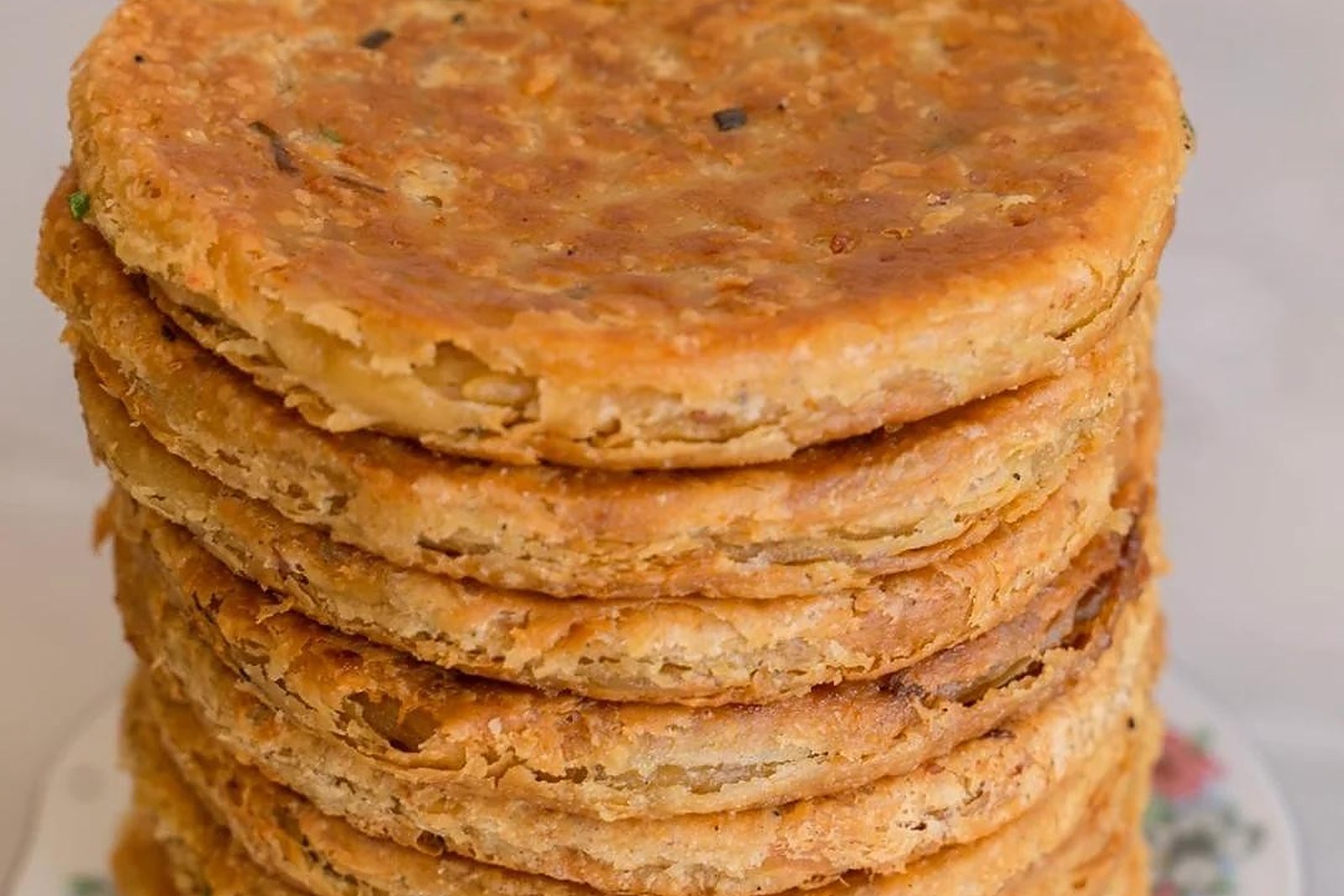
flowcloud would say that the baba is lard, layers and coal – a griddle first, then the oven roof, rose or ham inside, three yuan a round – and that the honest move is to buy it where you can see the fire and eat it in two hands on the spot, because the flake is the point and it dies when it cools. All checked October 2026.
Where to find it: the coal-oven stalls and old baba houses on 七一街 Qīyī Jiē and 光义街 Guāngyì Jiē in 丽江古城 Lìjiāng Gǔchéng, and the roadside ovens of 白沙古镇 Báishā Gǔzhèn by the 牌坊 Páifāng gate arch; ask for 丽江粑粑 Lìjiāng Bāba, 甜 tián sweet or 咸 xián savory, about 3-5 yuan. The ovens work from morning to dusk, the most authentic batch is named at Baisha up the mountain, and the honest hour is the first one, when the coal is new and the queue is local (checked October 2026, subject to change).