
带皮羊肉,汤色乳白。Dàipí yángròu, tāng sè rǔbái – Skin-on goat meat; the broth turns milky.
黑山羊火锅 Hēishānyáng Huǒguō black-goat hotpot is the clean winter pot of Lijiang – 高原黑山羊 gāoyuán hēishānyáng plateau black goat, grazed on the high pastures above 2,500 m by local account, skinned and un-skinned cut together and stewed in a clear pot until the broth turns milky with rendered skin, served with 白萝卜 bái luóbo radish, 山药 shānyào yam and local wild greens. The meat is tight, lean and close to odourless – the claim to fame – and the pot is deliberately plain: no heavy spice base, so the goat carries the flavour and the 蘸水 zhànshuǐ dip of toasted 糊辣椒面 hú làjiāo miàn with 小米辣 xiǎomǐlà bird’s-eye chili supplies the heat for those who want it. The cut is the order: ask for 带皮 dàipí skin-on and the pot turns milky, order it skinless and the same goat makes a thin, clean soup – the skin is the difference between the two pots, not the breed. A meal runs about 70 yuan a head at the 金凯广场 Jīnkǎi Guǎngchǎng Jinkai Square cluster in the new town, one restaurant after another along the same street, and the honest shape is that this is the town’s other hotpot – where 腊排骨火锅 Là Páigǔ Huǒguō is salty, this one is clean. The two squares divide the new town’s winter map: 象山市场 Xiàngshān Shìchǎng for the cured ribs, 金凯广场 Jīnkǎi Guǎngchǎng for the goat, a few kilometres apart, both outside the cobbles and both priced for locals – and the honest pairing over a Lijiang winter is one night of each.
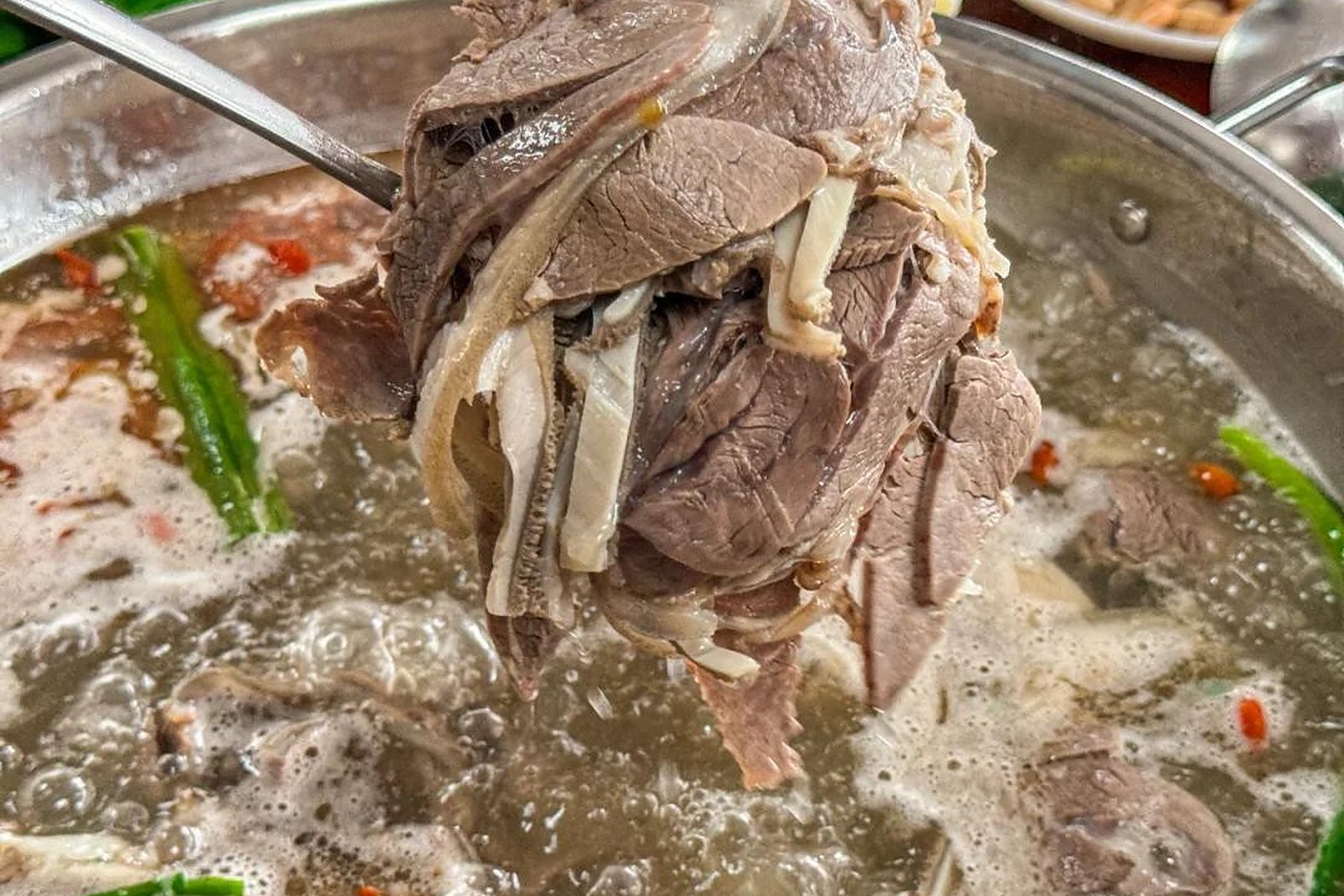
The mechanism is the skin. Cutting the goat with its skin on is what makes the pot: the skin’s collagen breaks down over a long, clear stew and turns the broth milky without any milk, the lean underneath stays firm because plateau goats walk all day, and the fat is mild – the “no mutiness” claim that makes the dish work in a town where goat elsewhere can be a gamble. The cooking is the opposite of the cured pot next door: nothing is added to hide anything, the radish goes in early to sweeten the broth, and the order of the meal is soup, meat, then vegetables, because the first bowl off the boil is what the restaurants are really selling. The dish is the cold-weather food of a 2,400 m basin – it thins out of menus in summer – and its geography is the new town rather than the old lanes, because the pot needs a big room, a live goat’s worth of turnover and a parking space. The comparison with the cured-ribs pot is the town’s own axis: one is salt and wind, the other is skin and fire, and the two divide the winter. What the goat pot asks of the kitchen is only freshness and time: the meat goes into plain water, the fire is kept steady rather than fierce, and the milky colour is the proof the cook waited – a broth that clouds in ten minutes has been boiled hard, and one that stays clear for an hour and then turns white has been stewed the way the dish means it.
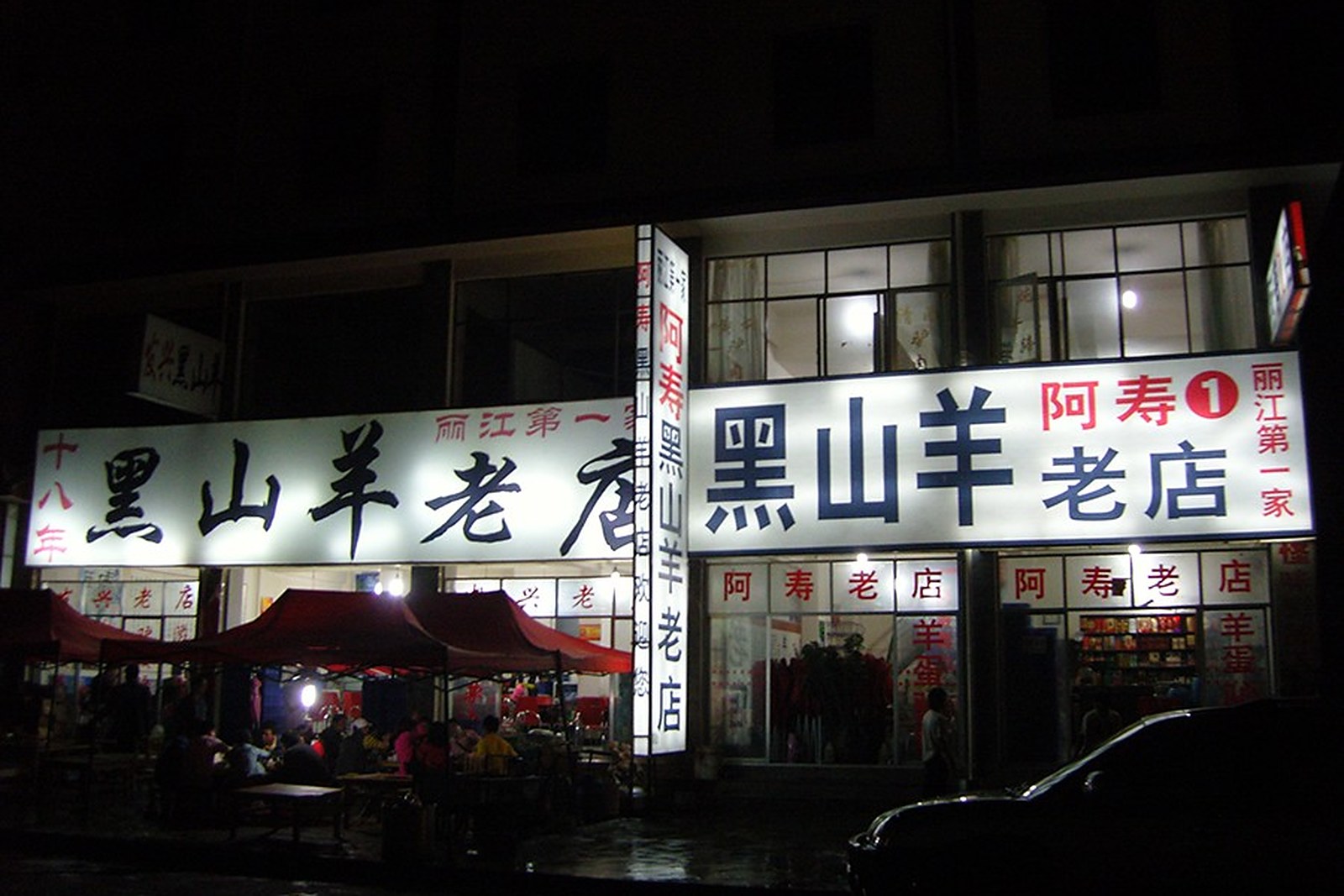
Locals eat it in the square, not the lanes. 金凯广场 Jīnkǎi Guǎngchǎng is the cluster – 阿寿黑山羊 Āshòu Hēishānyáng is the name most cited by locals, and the street’s uniformity is the point: a row of goat halls, each with the same pot at the same price, means the choice is less critical than the timing. Go early in the evening in cold months, order 带皮 dàipí skin-on cuts, drink the first bowl of broth plain before touching the dip, and let the radish have the first twenty minutes. Add 小米辣 xiǎomǐlà to the dip rather than the pot, so the broth stays clean for the vegetables that follow; the greens and 豆腐 dòufu tofu cooked last are what stretch the pot into a full meal, and a pot for two with a plate of greens is the honest order for a pair. Winter is the season – the pot’s job is to put heat back into a cold afternoon – and the honest test of a house is the broth’s colour: milky from the skin, not milky from powder. The square also has what the old lanes do not – parking at the door – which is half the reason the pot lives here and not inside the cobbles.
Words and Names
黑山羊火锅 Hēishānyáng Huǒguō black-goat hotpot · 高原黑山羊 Gāoyuán Hēishānyáng plateau black goat · 带皮 Dàipí skin-on · 金凯广场 Jīnkǎi Guǎngchǎng Jinkai Square · 白萝卜 Bái Luóbo white radish · 奶白 Nǎibái milky white · 糊辣椒面 Hú Làjiāo Miàn toasted chili powder · 小米辣 Xiǎomǐlà bird’s-eye chili · 蘸水 Zhànshuǐ the dip · 清汤 Qīngtāng clear broth
What the Locals Know
The local knowledge about the goat pot is about the broth’s colour and the order of the meal, and it is the same check a Lijiang regular makes at any hall on 金凯广场 Jīnkǎi Guǎngchǎng. The milky colour is the proof: a broth that turns white from the rendered skin is the real pot, a broth clouded from powder is not, so judge the colour, not the signboard. The second check is the cut – always order 带皮 dàipí skin-on, because skinless goat makes a thin, clean soup and the skin is the whole difference – and the order of the meal: drink the first bowl of broth plain before touching the 蘸水 zhànshuǐ, let the 白萝卜 bái luóbo radish have the first twenty minutes, and add 小米辣 xiǎomǐlà to the dip rather than the pot so the broth stays clean for the greens and 豆腐 dòufu that follow. Go early on a cold evening, order a pot for two with a plate of greens, and treat it as the town’s clean winter pot beside the salty ribs at 象山市场 Xiàngshān Shìchǎng.
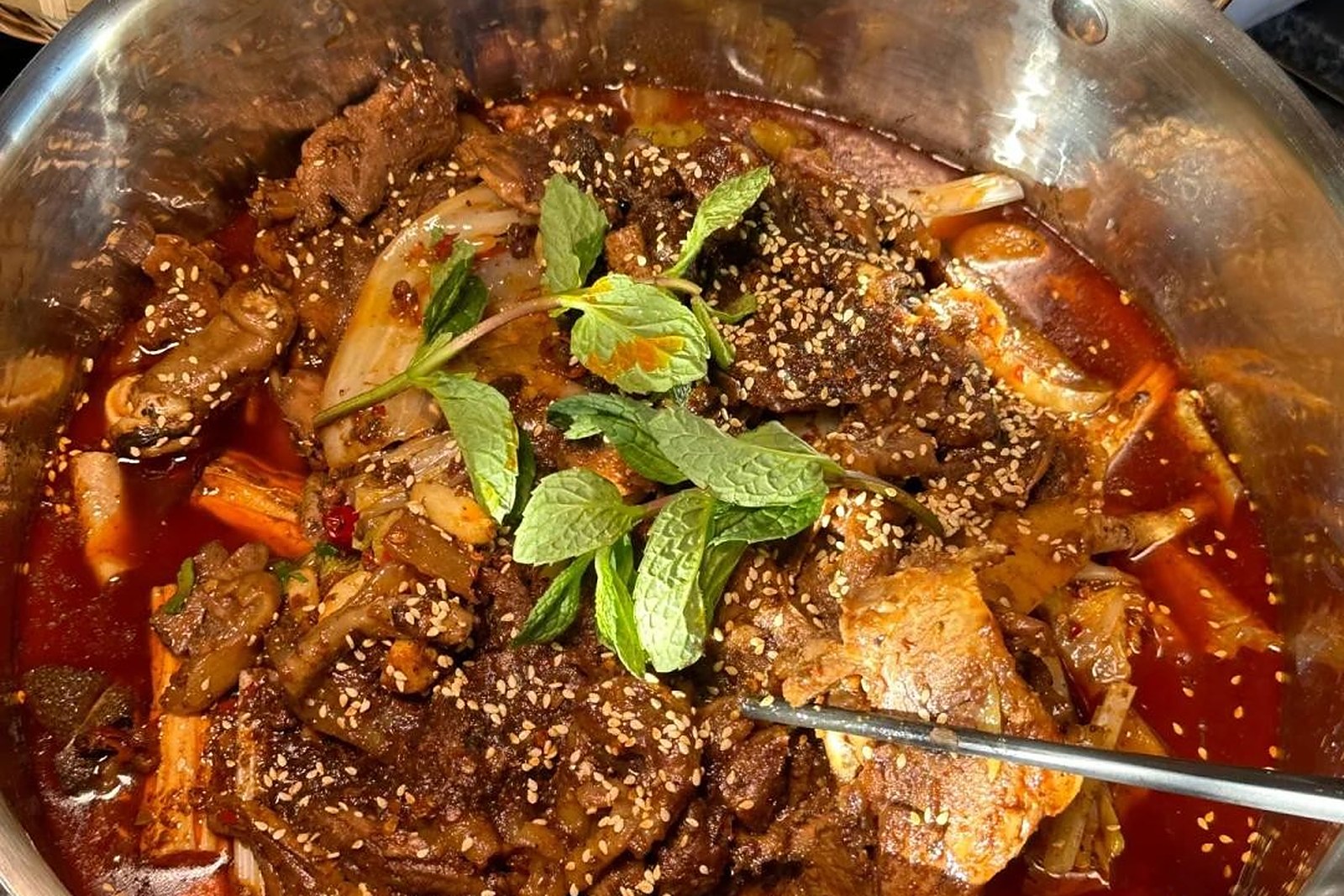
flowcloud would say that the black-goat pot is skin and fire – plateau goat cut with its skin on, stewed clear until the broth turns milky, radish first and dip second – and that the honest move is to take the Jinkai Square row on a cold evening and drink the first bowl plain, because the goat is the flavour and the chili is your choice. All checked October 2026.
Where to find it: the goat-pot cluster at 金凯广场 Jīnkǎi Guǎngchǎng Jinkai Square in Lijiang’s new town – 阿寿黑山羊 Āshòu Hēishānyáng is the local name, about 70 yuan a head; order 带皮 dàipí skin-on and drink the first broth plain. Goat pots are a Yunnan-wide family, and the Lijiang version’s signature is the skin-on cut and the clean, unspiced broth – the same goat cooked with a heavy spice base is a different dish from a different province (checked October 2026, subject to change).