
鸡豆磨浆,凉粉黑亮。Jīdòu mó jiāng, liángfěn hēi liàng – Chicken beans ground to slurry; the jelly comes out black and glossy.
鸡豆凉粉 Jīdòu Liángfěn chicken-bean jelly is the black jelly of the Lijiang stall – made from 鸡豆 jīdòu, the small dark-skinned local pea that grows in the Naxi fields, soaked, ground, strained and heated into a translucent grey-black gel that sets firm and cool. It is eaten two ways: 凉吃 liáng chī cold, cut into strips and dressed sour-hot with vinegar, 辣椒油 làjiāo yóu chili oil, chopped scallion and garlic; or 热吃 rè chī hot, griddled in a flat pan until both faces go golden and the inside stays soft, dusted with chili powder. The cold bowl is the summer order and the griddle is the winter one, and the same stall will make either – the tray and the pan sit side by side on the same cart, which is how you know you are at a real 凉粉 liángfěn stand rather than a shop selling one version only. A stall portion runs about 5-8 yuan, sold from morning until the stall sells out at the 忠义市场 Zhōngyì Shìchǎng south-gate market and the little stands around 四方街 Sìfāng Jiē, and the honest shape is that the colour is the identity – a pale jelly sold as 鸡豆凉粉 Jīdòu Liángfěn is not the real pea. Cold in summer, griddled in winter, it is the one Naxi snack that appears on every corner where a local queue forms, and it is the dish the market lanes are known for: the 忠义市场 Zhōngyì Shìchǎng opens at first light, and by the time the tour coaches reach 四方街 Sìfāng Jiē, the local bowls have already been eaten standing.
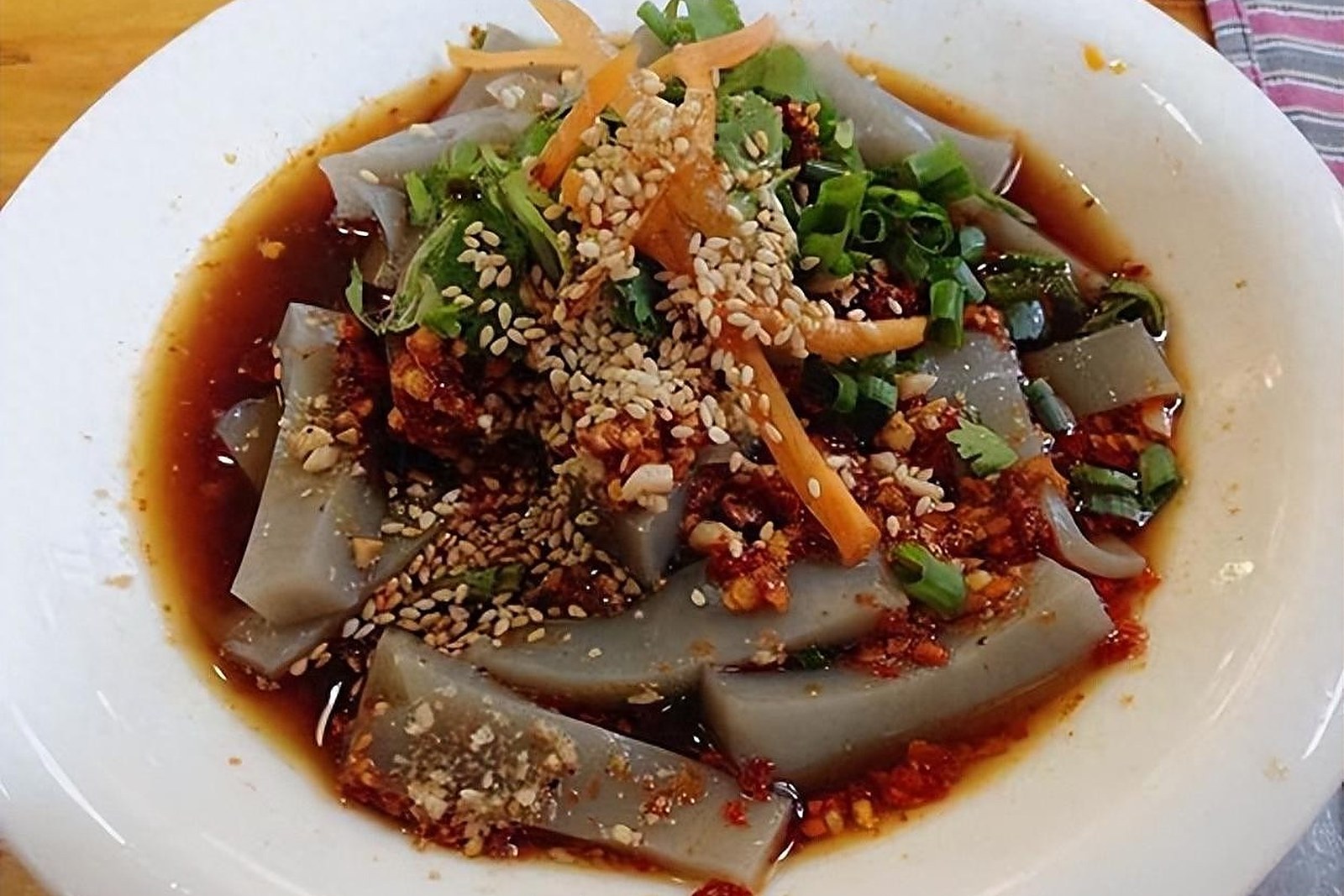
The mechanism is the pea’s own starch. 鸡豆 jīdòu – 黑豌豆 hēi wāndòu, the black pea – carries starch in a dark seed coat, so the settled slurry is grey from the start and the set jelly comes out the colour of wet slate rather than the ivory of a 绿豆凉粉 lǜdòu liángfěn mung-bean jelly or the paler 豌豆凉粉 wāndòu liángfěn pea jelly. The cook stirs the diluted starch constantly over low heat until it thickens into a paste, pours it into shallow trays to cool and set, and the firmness is the craft: too little stirring and the jelly weeps, too much heat and it blisters. The dressing is built for the cold version and the fire is built for the hot one: the cold bowl takes 醋 cù vinegar, 酱油 jiàngyóu soy sauce, 辣椒油 làjiāo yóu chili oil, minced 蒜 suàn garlic and scallion – a sharp, wet dressing – while the winter version needs nothing but the griddle and a dusting of chili powder, because the heat caramelises the faces and the middle stays soft. Cold, it is dressed sharp – the sour-and-hot dressing is what makes the summer version work – and hot, the griddle does the opposite, caramelising the faces while the middle stays soft, which is why the 煎 jiān pan-fried version is the winter one. The dish is a cousin of the 凉粉 liángfěn family found across the north and the southwest, but the dark pea and the two-temperature serving are what make it the Naxi one.
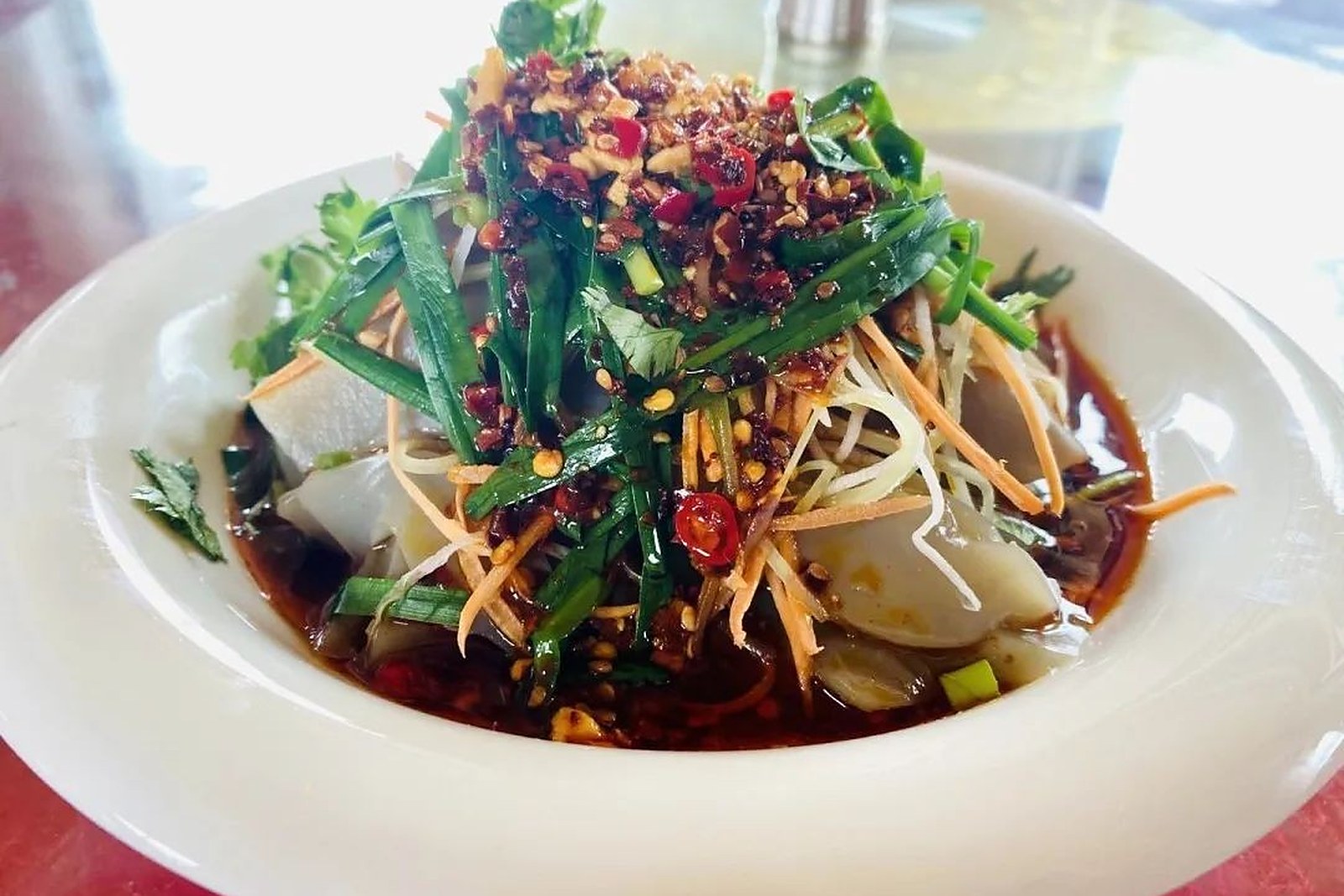
Locals buy it at the market, standing. The 忠义市场 Zhōngyì Shìchǎng lanes are the address – the old stalls there are the benchmark, the ones around 四方街 Sìfāng Jiē charge a little more for the same bowl – and the queue is the signal: a stall with locals waiting is remaking its jelly daily, while a stall with a full tray at four in the afternoon is selling yesterday’s. The good stalls keep the tray in the shade and remake it in batches, because a jelly that has sat in the sun weeps and loses the snap that makes it worth eating; the griddled version is made to order and takes a few minutes, and the wait is part of the point. Take the cold one in summer, the griddled one after October, and eat it within a minute or two, because the dressing is made to sit on the surface, not soak in. Ask for 微辣 wēilà mild if your tongue is untrained – the chili oil is local-grade – and if you see 米灌肠 Mǐguàn Cháng the blood-and-rice sausage on the next stall, that is the other half of the local snack plate, sliced and pan-fried the same way.
Words and Names
鸡豆凉粉 Jīdòu Liángfěn chicken-bean jelly · 鸡豆 Jīdòu the dark local pea · 黑豌豆 Hēi Wāndòu black pea · 凉吃 Liáng Chī served cold, dressed sour-hot · 煎 Jiān pan-fried, the winter version · 辣椒油 Làjiāo Yóu chili oil · 醋 Cù vinegar · 忠义市场 Zhōngyì Shìchǎng the south-gate market · 四方街 Sìfāng Jiē the market square · 微辣 Wēilà mild · 米灌肠 Mǐguàn Cháng the blood-and-rice sausage · 纳西族 Nàxīzú the Naxi people
What the Locals Know
The local knowledge about the jelly is about the colour and the temperature, and it is the same check a Lijiang regular makes at any stall. The colour is the identity – a real 鸡豆凉粉 Jīdòu Liángfěn is grey to slate-black from the dark pea, and a pale jelly sold under the name is not the real 鸡豆 jīdòu, so walk past any stall whose tray looks ivory. The second check is the queue: a stall with locals waiting is remaking its jelly daily, a stall with a full tray at four in the afternoon is selling yesterday’s, and the good stands keep the tray in the shade and remake in batches so it keeps its snap. Cold in summer, griddled after October – order 凉吃 liáng chī dressed sour-hot or 煎 jiān pan-fried golden – and ask for 微辣 wēilà mild if your tongue is untrained, because the local 辣椒油 làjiāo yóu is full grade; eat it within a minute or two, since the dressing sits on the surface rather than soaking in.
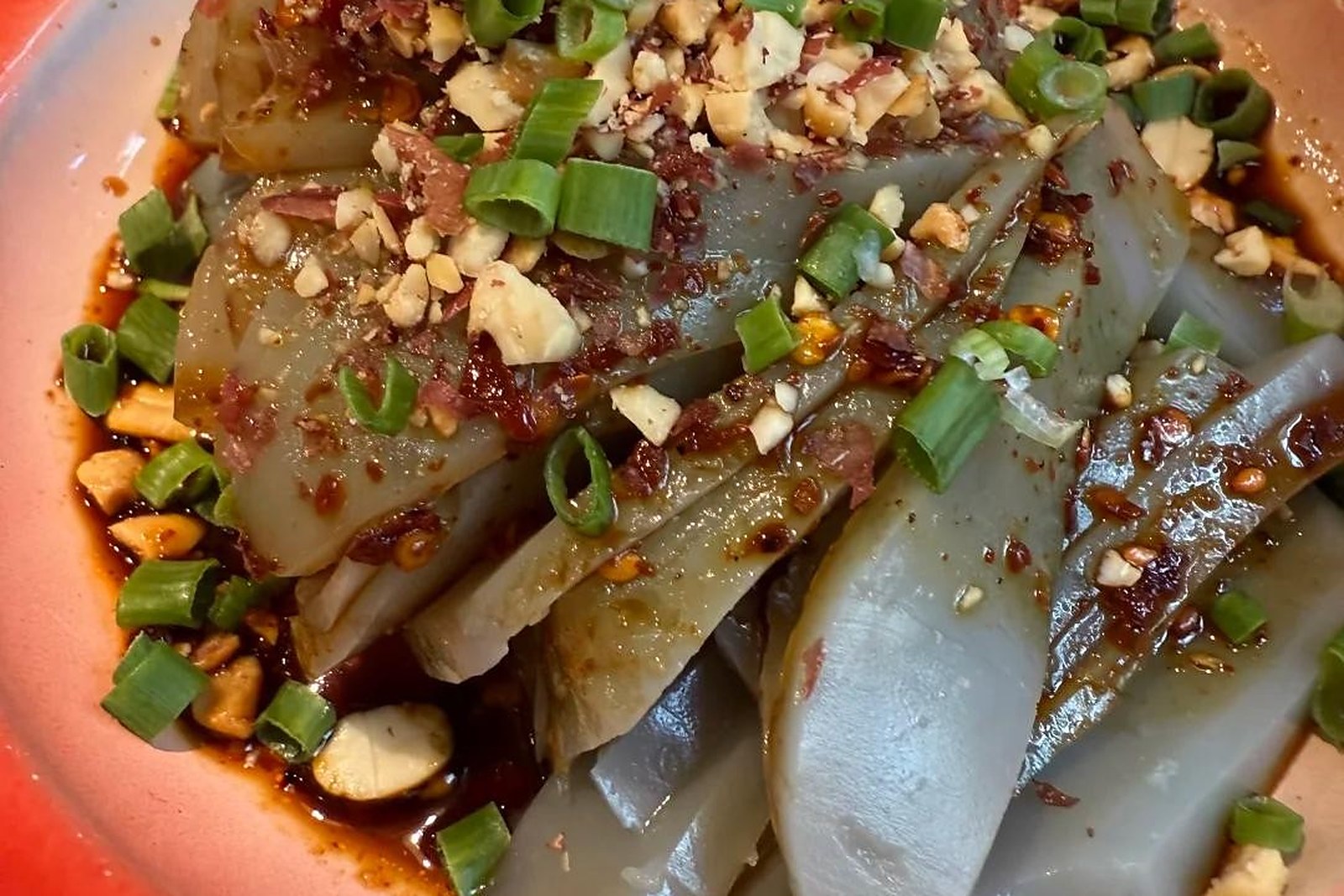
flowcloud would say that the chicken-bean jelly is a black pea turned to slate – set firm, dressed cold in summer and griddled golden in winter, five yuan a bowl – and that the honest move is to buy it standing at the market stall with the local queue, because the colour is the identity and the dressing is the choice. All checked October 2026.
Where to find it: the snack lanes of 忠义市场 Zhōngyì Shìchǎng at the south gate inside 丽江古城 Lìjiāng Gǔchéng, and the small stands around 四方街 Sìfāng Jiē; ask for 鸡豆凉粉 Jīdòu Liángfěn, cold or griddled, about 5-8 yuan a portion. The market opens at first light and the snack lanes are busiest between seven and nine, before the tour coaches reach the square, and the stalls at 忠义市场 Zhōngyì Shìchǎng are the local benchmark (checked October 2026, subject to change).