
一墙腊排骨,一锅奶白汤。Yī qiáng là páigǔ, yī guō nǎibái tāng – A wall of cured ribs; one pot of milky broth.
腊排骨火锅 Là Páigǔ Huǒguō spare-ribs hotpot is the dish Lijiang cooks for guests – 土猪排骨 tǔzhū páigǔ local pork ribs cured with salt and air-dried the Naxi way, then stewed in plain water until the broth turns milky and the meat goes salty-sweet, served with 白萝卜 bái luóbo white radish, 韭菜根 jiǔcài gēn chive roots, 洋芋 yángyù potato, 粉丝 fěnsī vermicelli and, when the lakes are clean, 水性杨花 Shuǐxìng Yánghuā water cauliflower – 波叶海菜花 Bōyè Hǎicàihuā, the underwater plant that only grows in clear water and tastes like a silkier spinach. It is not a banquet dish but a hospitality dish: the pot goes in the middle of the table, everyone spoons the broth over rice, and the 蘸水 zhànshuǐ dip – 腐乳 fǔrǔ fermented tofu mashed with 辣椒面 làjiāo miàn chili powder – does the seasoning. A market-hall portion commonly runs about 60 yuan a head, vegetables often self-served off a tray, and the honest shape is that the salt is in the meat and the flavour is in the broth, so a cook who adds anything else is apologising for the cure. The pot is the town’s winter contract with a guest: it arrives before you have settled, it feeds a table from one pot, and the only decision left is how much broth to spoon over the rice.
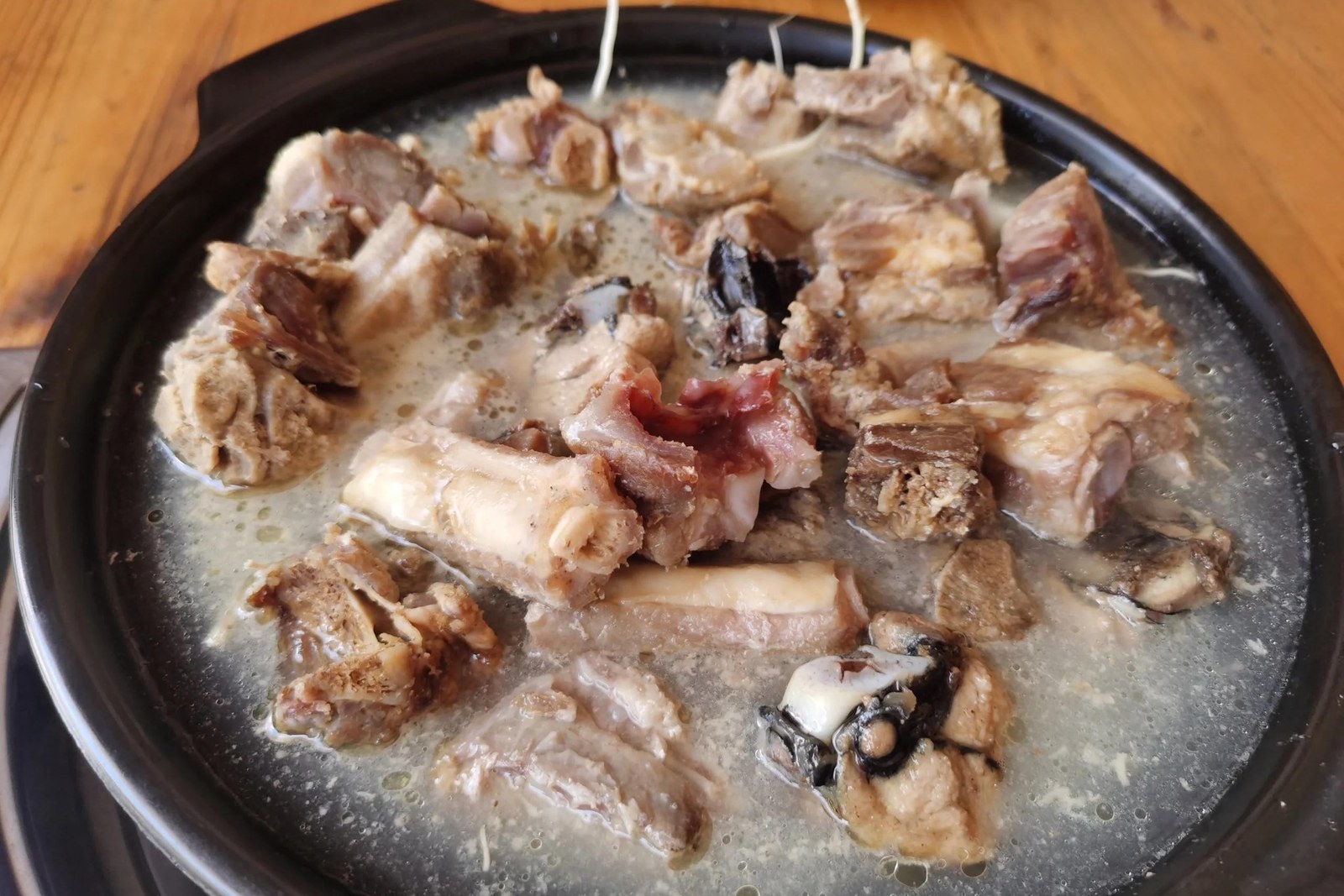
The mechanism is the plateau air. Lijiang sits at about 2,400 m with dry air, hard wind, big day-night temperature swings and fierce ultraviolet – the natural condition for 风干 fēnggān air-drying rather than the 烟熏 yānxūn smoking of Hunan or Sichuan, which is why a Lijiang 腊排骨 là páigǔ tastes of salt and wind rather than of pine smoke. The ribs are rubbed with salt, hung for weeks until the fat turns translucent, and then only need water and time: the rendered fat and dissolved cure turn the pot milky without any milk, and the radish and chive roots are there to cut the salt. The cure starts when the nights turn cold – the dry, windy months from November to January are when the walls fill – and by spring the hanging rows thin out and the pot comes off the menu, which is why the dish reads as a winter invitation rather than a year-round standard. The rub is salt alone – no chili, no spice – which is the discipline of the dish: everything the tongue wants beyond salt has to come from the 蘸水 zhànshuǐ, so the broth stays a broth and the dip stays a choice. The dish is the winter food of a cold basin – it appears on tables when the temperature drops and disappears again in spring – and its home is the 象山市场 Xiàngshān Shìchǎng Xiangshan market in the new town north of the old town, where a row of halls does nothing but this, each with the same signature: an entire wall of hanging cured ribs by the door. The comparison with 黑山羊火锅 Hēishānyáng Huǒguō black-goat hotpot a few kilometres away is the town’s own axis: the ribs are the salty winter pot, the goat is the clean winter pot.
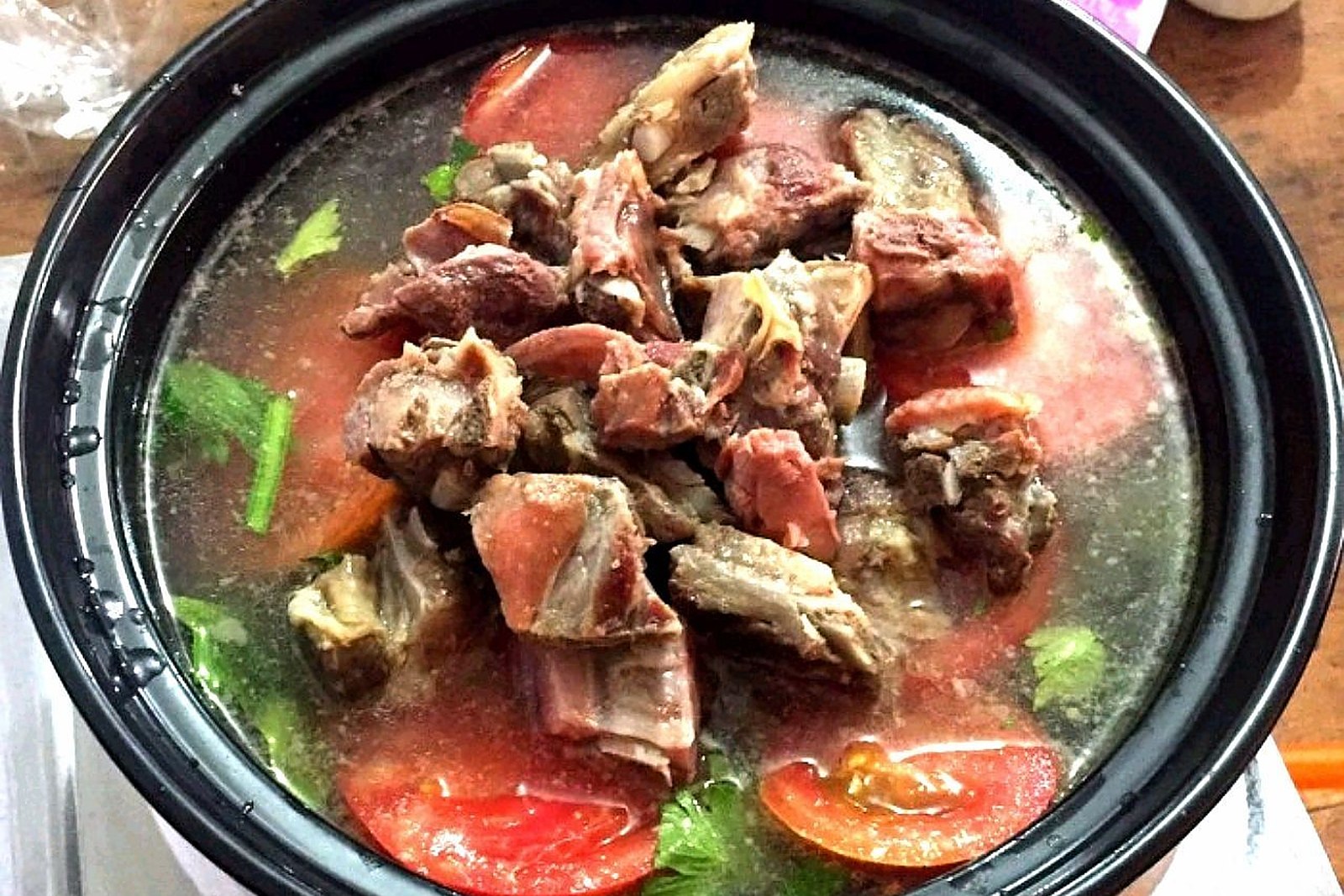
Locals eat it in the new town, not the old town. The move is to leave the cobbles and go to 象山市场 Xiàngshān Shìchǎng – the same pot runs meaningfully cheaper there than inside 古城 Gǔchéng, and the room is a market hall, so do not judge it: the ribs hanging by the door and the pot arriving before you have sat down properly are the point. Order 大份 dàfèn the large pot for two or more with 韭菜根 jiǔcài gēn and 洋芋 yángyù, take the self-serve vegetable tray, and taste the broth before you touch the dip, because the cure has already seasoned it. 钰洁腊排骨 Yùjié Là Páigǔ and 阿婆情 Āpó Qíng are the names locals cite at the market, and a useful honesty check is the wall: a hall with a full wall of hanging ribs is curing on site, a hall with an empty wall is buying its pork somewhere else. Winter is the season; summer is when the pot feels like an argument – and by spring the hanging rows thin out and the dish comes off the market’s menus entirely.
Words and Names
腊排骨火锅 Là Páigǔ Huǒguō spare-ribs hotpot · 纳西族 Nàxīzú the Naxi people · 风干 Fēnggān air-dried · 土猪 Tǔzhū the local pig · 大份 Dàfèn the large pot · 象山市场 Xiàngshān Shìchǎng Xiangshan market · 水性杨花 Shuǐxìng Yánghuā water cauliflower · 韭菜根 Jiǔcài Gēn chive roots · 洋芋 Yángyù potato · 腐乳 Fǔrǔ fermented tofu · 蘸水 Zhànshuǐ the dip
What the Locals Know
The local knowledge about the pot is about the wall and the broth, and it is the same check a Lijiang regular makes at any market hall. The broth is already seasoned by the cure – taste it before you reach for the 蘸水 zhànshuǐ, because the 腐乳 fǔrǔ dip is a choice, not a correction, and a table that drowns the first bowl is missing the point. The second check is the wall: a hall with a full wall of hanging ribs is curing on site, a hall with an empty wall is buying its pork elsewhere, and the honest order is 大份 dàfèn for two with 韭菜根 jiǔcài gēn and 洋芋 yángyù plus the self-serve vegetable tray. Winter is the season – the ribs are cured from November to January and the dish thins out by spring – so go in the cold months, and the useful pairing is 水性杨花 Shuǐxìng Yánghuā water cauliflower when the lakes are clean, because the radish and chive roots are there to cut the salt, not to fill the pot.
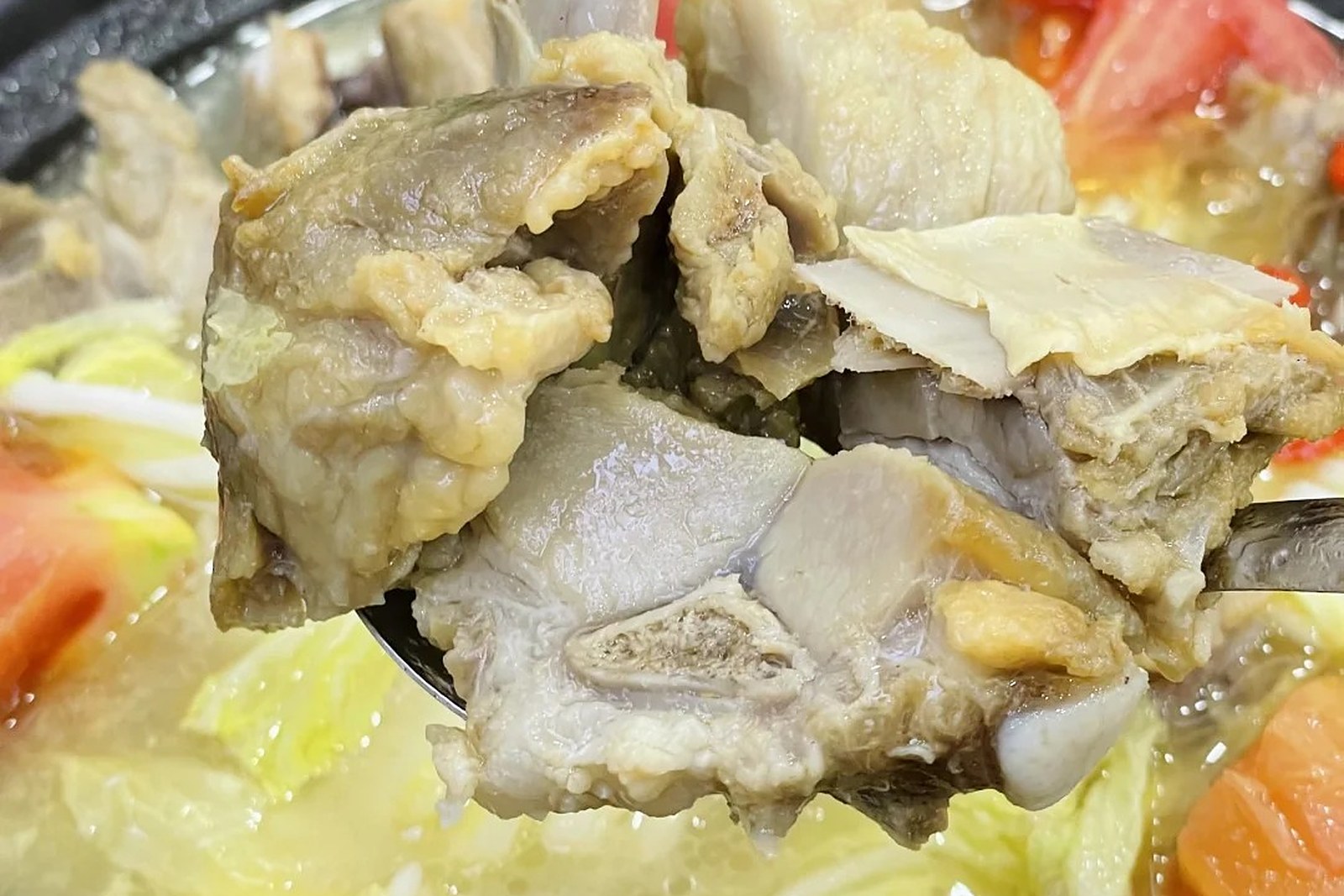
flowcloud would say that the spare-ribs pot is salt, wind and time – ribs air-dried on the plateau, stewed until the broth turns milky, dipped in fermented-tofu chili – and that the honest move is to leave the old town for the market hall and eat it standing where the ribs hang, because the cure is the recipe and the wall is the menu. All checked October 2026.
Where to find it: the market halls of 象山市场 Xiàngshān Shìchǎng Xiangshan market in the new town north of the old town – 钰洁腊排骨 Yùjié Là Páigǔ and 阿婆情 Āpó Qíng are the names locals cite, about 60 yuan a head, markedly cheaper than the same pot inside 古城 Gǔchéng; the hall with a full wall of hanging ribs by the door is the one curing on site, and the vegetable tray is usually self-serve (checked October 2026, subject to change).