
比粥稠来比饭软,手撕鸡丝待归人。Bǐ zhōu chóu lái bǐ fàn ruǎn, shǒu sī jīsī dài guīrén – Thicker than porridge and softer than rice; hand-torn chicken threads waiting for the ones coming home.
鸡肉烂饭 Jīròu Lànfàn chicken lanfan explains the Wa kitchen in one bowl: chicken and rice cooked together until the grains break down into something 比稀粥稠,比干饭软 bǐ xīzhōu chóu, bǐ gānfàn ruǎn thicker than porridge and softer than plain rice, a single pot that is both staple and dish. It is the most famous plate of the 佤族 Wǎzú Wa of 沧源 Cāngyuán Cangyuan in 临沧 Líncāng Lincang, and it takes the place of honour on the banana leaf at the 佤王宴 Wǎwáng Yàn Wa King’s Banquet. The Wa name for the dish is 布安纳亚 Bù’ānnàyǎ worth confirming. The story told over the pot is poverty turned into generosity: a Wa couple with many children, too poor to cook a table of dishes for the New Year reunion, killed their only chicken and dropped it into the earthen pot with the rice, and the family found the result so good the dish never left the table worth confirming. Behind the story sits the older logic of the hills: game too small to divide fairly was boiled into 烂饭 lànfàn lanfan porridge so everyone got a share, and the pot became the emblem of 同食一锅饭,永结一条心 tóng shí yī guō fàn, yǒng jié yī tiáo xīn one pot for all, one heart forever. The dish was named to Yunnan’s provincial intangible-heritage list in 2022 worth confirming.
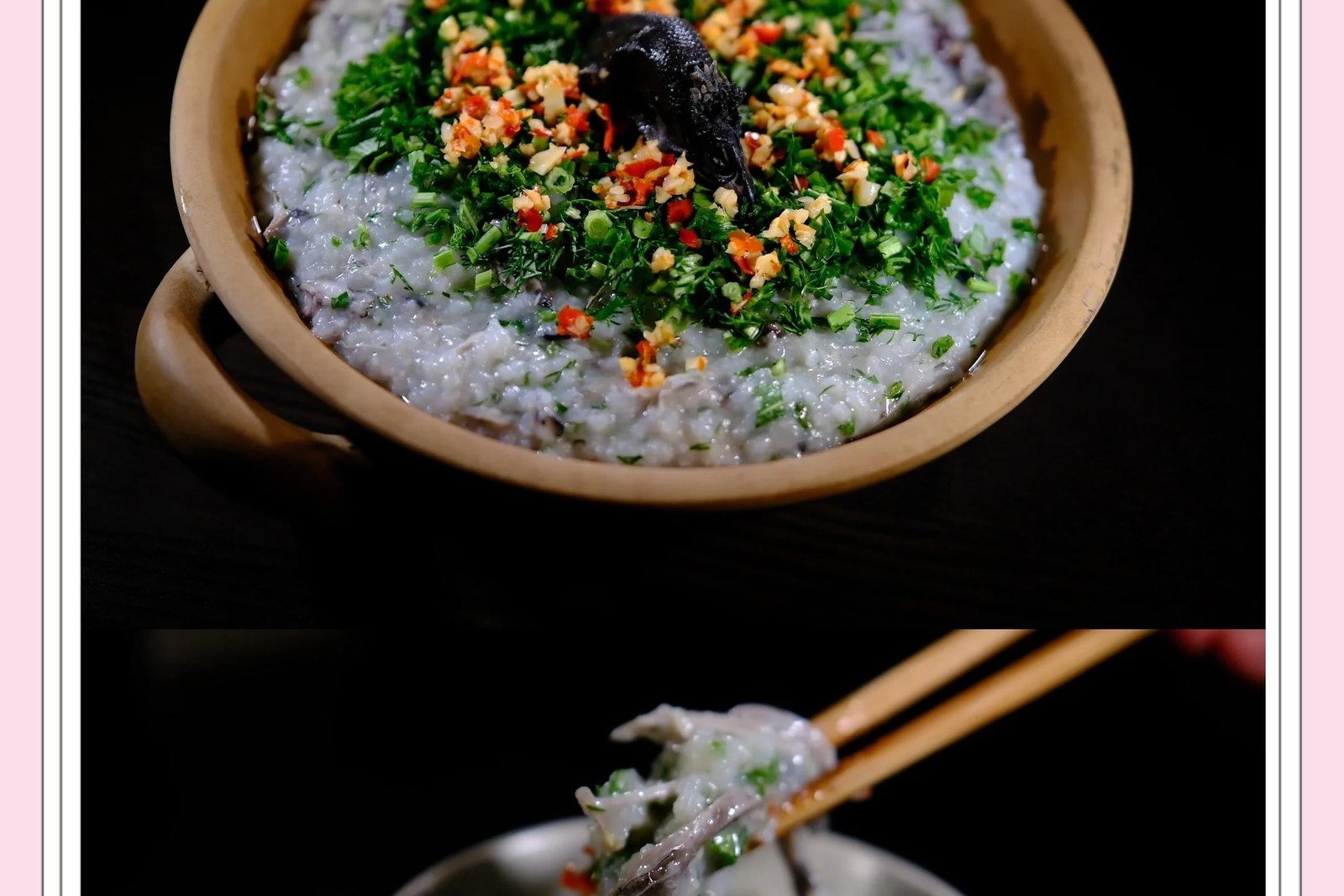
The mechanism is the broth and the tearing. A whole bird – the Wa insist on a 乌骨鸡 wūgǔ jī black-boned chicken or a local 土鸡 tǔjī yard chicken, and a white-feathered fowl is taboo in the pot – goes into cold water with 草果 cǎoguǒ tsao ko fruit and ginger and simmers until the meat is ready to fall from the bone. The bird is lifted out and the rice goes into the same broth, never washed away: a handful of 酸笋 suānsǔn sour bamboo shoots follows, and the pot simmers until the grains burst open like 云絮 yúnxù cloud-floss. The chicken is cooled and pulled apart by hand into threads – 手撕 shǒusī hand-torn is the traditional family, 刀砍 dāokǎn knife-chopped the quicker one, and the Wa say the knife-cut version tastes of the blade – then dressed with 阿佤芫荽 Āwǎ yánsuī Wa cilantro, 香蓼 xiāngliǎo smartweed, 茴香 huíxiāng fennel, 薄荷 bòhe mint, 小米辣 xiǎomǐlà bird’s-eye chilli, scallion, garlic, 花椒面 huājiāo miàn ground Sichuan pepper and chilli powder, and folded through the rice. What arrives eats 糯滑鲜香 nuòhuá xiānxiāng glutinous-smooth and fragrant: the chicken fat has oiled every grain, the bamboo shoots lift it with sourness, and the herbs read green and cooling against the chilli. It is eaten from the communal pot with the hand, with 舂辣椒 chōng làjiāo pounded chilli – salt, chilli, Sichuan pepper, litsea, garlic – on the side.
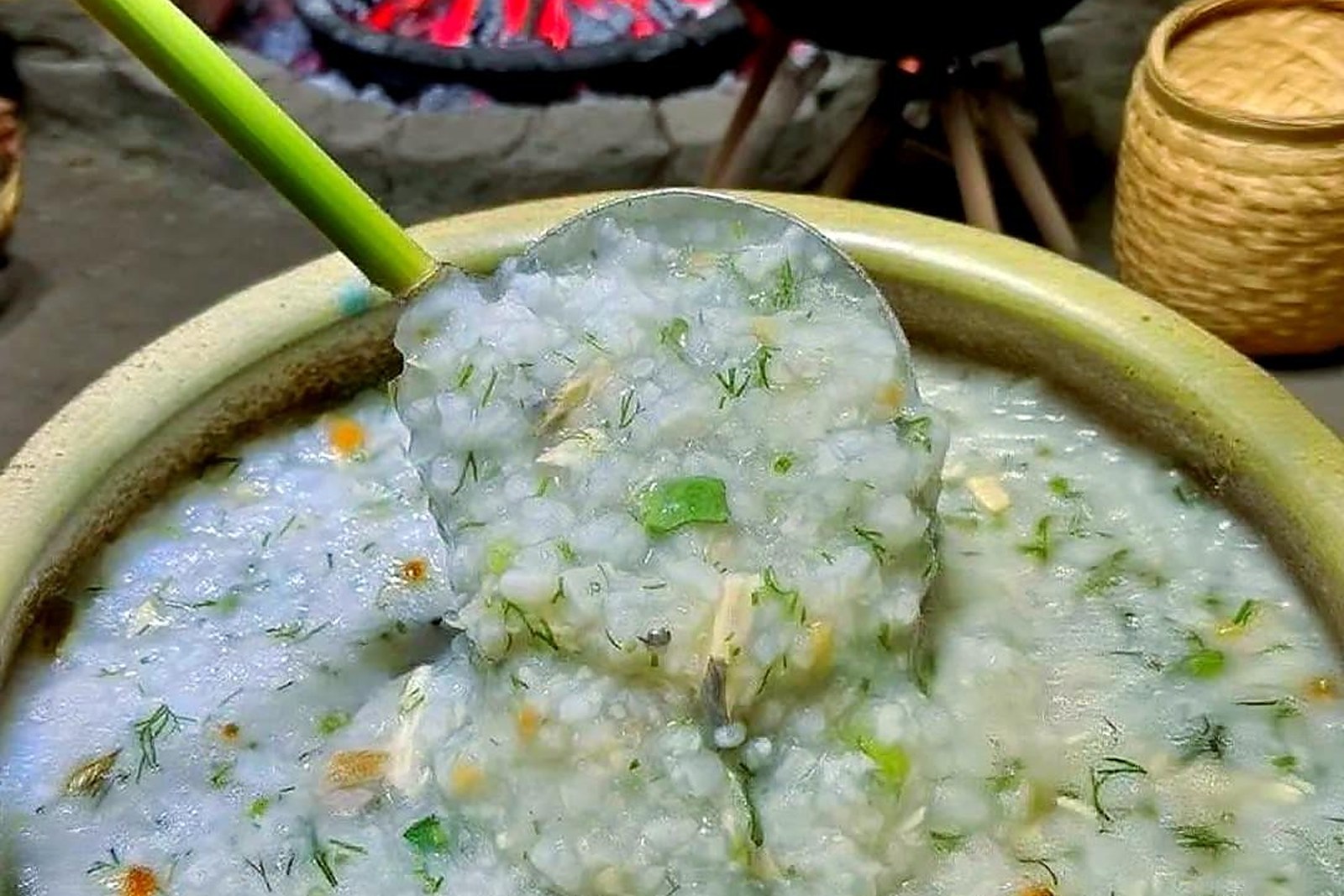
Locals eat it as both rice and dish, out of one pot, at the tables where the Wa gather – the New Year, the 新米节 Xīn Mǐ Jié New Rice Festival, and any visit that brings a guest to the door, since a chicken killed for 烂饭 lànfàn is the highest thing a house can offer. The bird is kept all year for the occasion, which is why the dish is festival food, not a Tuesday dinner. At village guesthouses and Cangyuan county-town restaurants it is sold by the pot or by the per-head banquet set, and the price follows the bird – a yard chicken costs more than a market one, a table pot in the tens-of-yuan band worth confirming current houses and prices. The ordering move is to ask whether it is 手撕 shǒusī or 刀砍 dāokǎn: the honest one is hand-torn, the rice should be broken but not pasty, the grains still visible in the oil, and the 鲜 xiān freshness should come from the broth rather than 味精 wèijīng MSG. Newcomers are told to eat it the Wa way – a handful from the pot, dipped into the 舂辣椒 chōng làjiāo – and to expect the herbs: the mint and the fennel are the signature, and a pot without them is just chicken rice. The dish thickens overnight, and locals say the second morning’s cold 烂饭 lànfàn, fried crisp in the pan, is the cook’s own breakfast worth confirming. All checked October 2026.
Words and Names
鸡肉烂饭 Jīròu Lànfàn chicken lanfan porridge · 佤族 Wǎzú the Wa people · 沧源 Cāngyuán Cangyuan · 佤王宴 Wǎwáng Yàn the Wa King’s Banquet · 烂饭 Lànfàn lanfan porridge · 布安纳亚 Bù’ānnàyǎ the Wa name for the dish · 乌骨鸡 Wūgǔ Jī black-boned chicken · 土鸡 Tǔjī yard chicken · 草果 Cǎoguǒ tsao ko fruit · 酸笋 Suānsǔn sour bamboo shoots · 手撕 Shǒusī hand-torn · 刀砍 Dāokǎn knife-chopped · 阿佤芫荽 Āwǎ Yánsuī Wa cilantro · 香蓼 Xiāngliǎo smartweed · 茴香 Huíxiāng fennel · 薄荷 Bòhe mint · 小米辣 Xiǎomǐlà bird’s-eye chilli · 花椒面 Huājiāo Miàn ground Sichuan pepper · 舂辣椒 Chōng Làjiāo pounded chilli dip · 新米节 Xīn Mǐ Jié the New Rice Festival
What the Locals Know
- The bird decides the dish: 乌骨鸡 wūgǔ jī or 土鸡 tǔjī, never a white-feathered chicken – the Wa will tell you the taboo is older than the recipe.
- Tear by hand. 手撕 shǒusī keeps the threads long and the meat juicy; 刀砍 dāokǎn is faster but reads of the blade, and the difference shows in the pot.
- The rice goes into the chicken broth uncleaned, with a handful of 酸笋 suānsǔn – the pot should be oily from the chicken and lifted by the bamboo shoots, never thin or plain.
- Order it with 舂辣椒 chōng làjiāo on the side and expect the herbs – 薄荷 bòhe, 茴香 huíxiāng and 阿佤芫荽 Āwǎ yánsuī are the signature, and a pot without them is just chicken rice.
- It is a festival and guest dish – a bird kept all year for the occasion – so look for it at the New Year, the 新米节 Xīn Mǐ Jié and at village guesthouses rather than a weekday menu worth confirming current houses and prices.
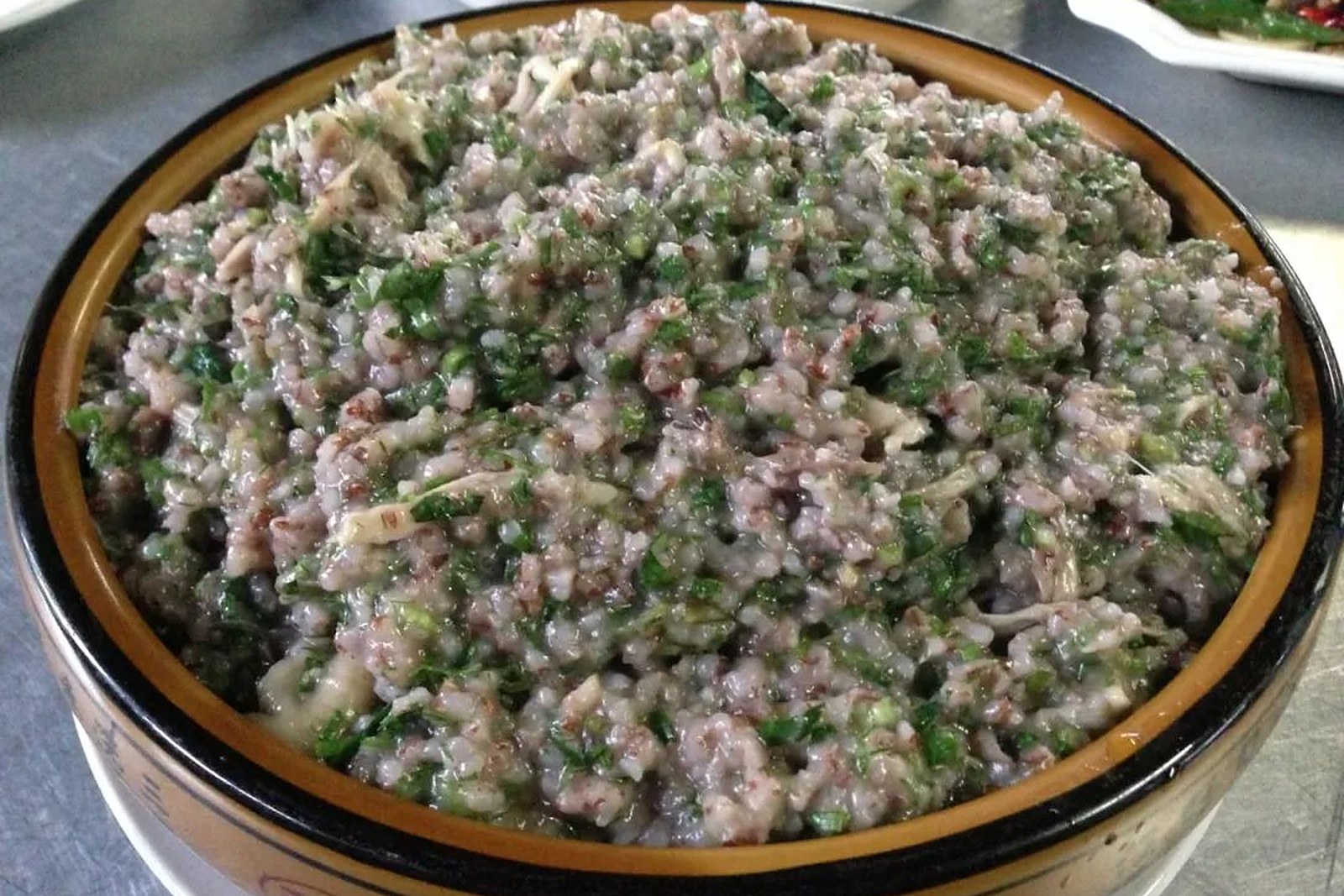
flowcloud would say that chicken lanfan is one pot that is both rice and dish – a whole 乌骨鸡 wūgǔ jī simmered with 草果 cǎoguǒ, the rice broken into the broth with 酸笋 suānsǔn, the bird hand-torn and dressed with 薄荷 bòhe and 阿佤芫荽 Āwǎ yánsuī – and that the honest move is a village pot at 新米节 Xīn Mǐ Jié or a booked guesthouse table in Cangyuan, eaten with the hand and the 舂辣椒 chōng làjiāo, because the dish is 同食一锅饭,永结一条心 tóng shí yī guō fàn, yǒng jié yī tiáo xīn. All checked October 2026.
Where to find it: the tables where the Wa gather – the New Year, the 新米节 Xīn Mǐ Jié New Rice Festival, and village guesthouses that will cook a bird for guests (worth confirming the details); it is festival food rather than a weekday dish, because the chicken is kept all year for the occasion, and the honest move is to ask a 农家乐 nóngjiālè a day ahead. All checked October 2026.