
寒露宰牛盐入缸,一片干巴香一年。Hánlù zǎi niú yán rù gāng, yī piàn gānbā xiāng yī nián – At Cold Dew the steer is slaughtered and the salt goes into the jar; one slice of dried beef perfumes the year.
牛干巴 Niú Gānbā niu ganba is Yunnan’s salt-cured, air-dried beef – heavy slabs the colour of chestnut husks, dry to the knife and dense as cheese – and in 临沧 Líncāng Lincang it is the craft of the 回族 Huízú Hui, whose villages around 云县 Yúnxiàn Yun County have raised 菜牛 càiniú table cattle and cured 清真牛干巴 qīngzhēn niú gānbā halal dried beef for generations. The reason the dish belongs to the Hui is written in the butchering calendar: where the Han kill the 年猪 niánzhū New-Year pig, Hui families – who do not eat pork – turn the year’s beef into the household larder, and the making of 干巴 gānbā at the autumn slaughter is the Hui New Year. Yunnan’s most famous 干巴 comes from 寻甸 Xúndiàn Xundian in the northeast, with a legend reaching back seven centuries to the Mongol campaigns worth confirming; every Hui county keeps its own jar, and Lincang works the same craft on border cattle. The form is exact: one animal is cut along its muscle seams into 24 pieces – twelve pairs – and every piece has a trade name, with 饭盒 fànhé and 里裆 lǐdāng the prime cuts that slice thin and fry fast. Dried hard, 干巴 gānbā keeps for months without a cold room – the travelling meat of the old caravan roads, today the gift a Lincang visitor carries home.
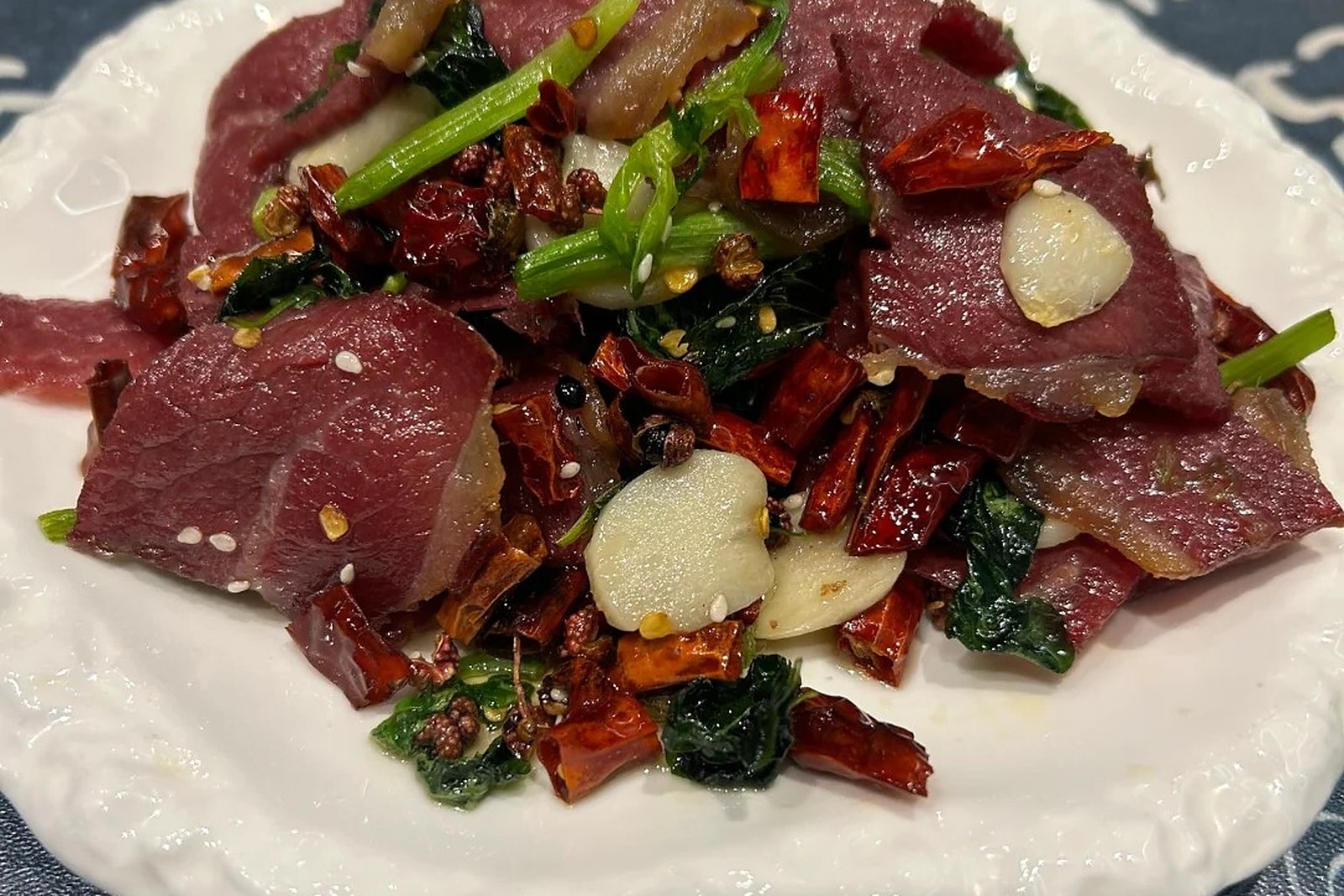
The mechanism is salt, time and air, and it starts a year before the jar. The cattle are 菜牛 càiniú table cattle, fed from the first lunar month – tender grass to put on condition, then 蚕豆面 cándòu miàn broad-bean flour and fine bran – and the old Hui hands groom them and bed them on dry straw, because a comfortable steer is a fat one. The slaughter comes at 寒露 Hánlù Cold Dew, around early October, when the air itself begins to dry the meat, and the knife is the 阿訇 Āhōng imam’s; the carcass is halved, wind-cooled and cut into its twenty-four named pieces. The curing is a rub and a seal: salt is worked into every piece – three to five kilos of salt per hundred kilos of meat, with 花椒 huājiāo Sichuan pepper and 五香粉 wǔxiāng fěn five-spice in some houses – and the pieces are packed flat into an earthen 陶缸 táogāng jar, salted between layers and sealed with paper and cloth for twenty to thirty days. Then the air: the pieces are strung up and sun-dried, pressed between boards to squeeze the water out, until the surface is hard and the colour has turned 板栗色 bǎnlì sè chestnut-brown. What leaves the jar is dense, salty and faintly spiced – beef reduced to its own essence, chewy where a fresh steak is tender, the wine-drinker’s meat rather than the rice-eater’s.
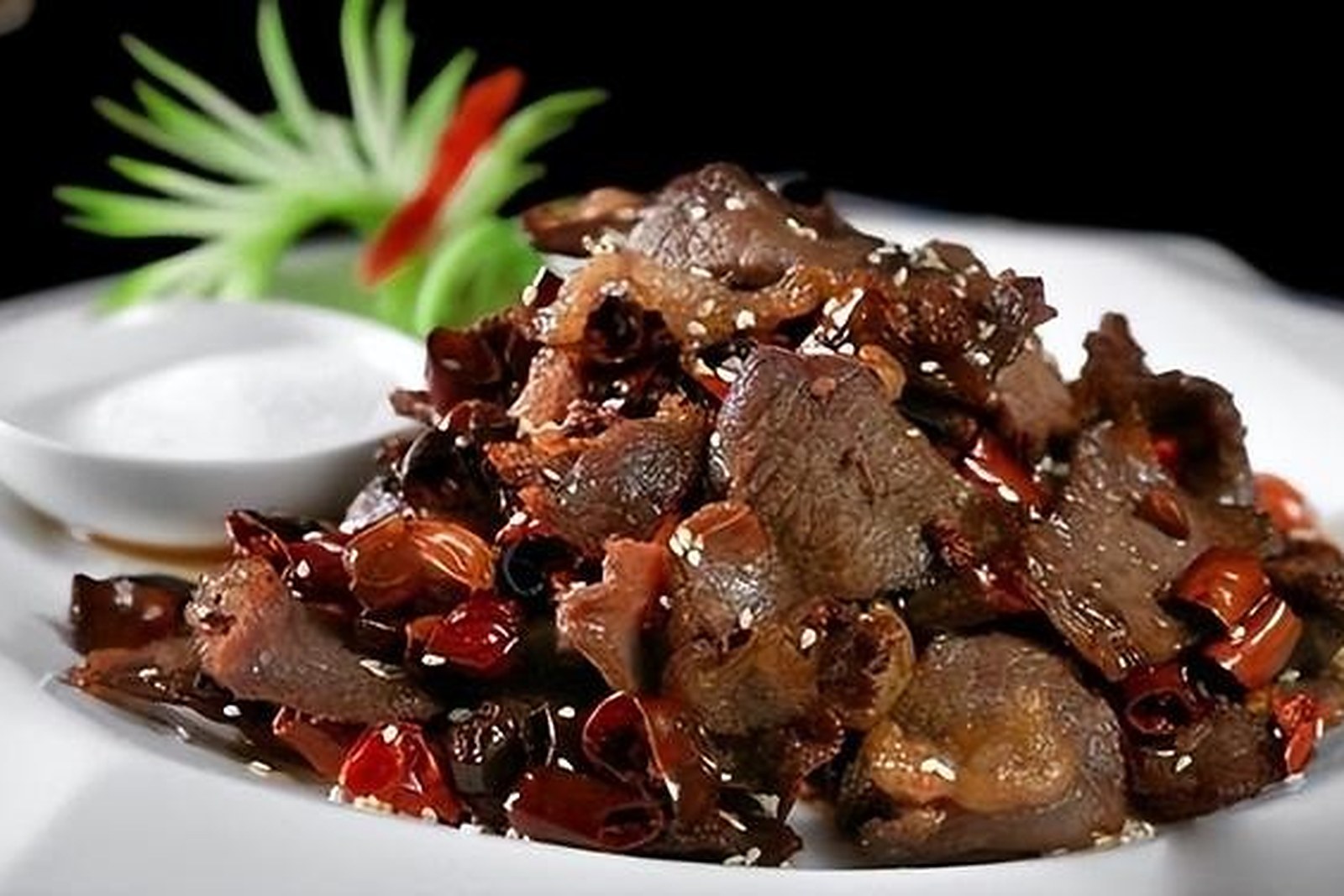
Locals eat it all year, but it is a winter and festival meat: made at Cold Dew for the household’s year, brought out at the Hui festivals and the New Year table for guests with the wine. The classic plate is 油淋干巴 yóulín gānbā oil-drizzled dried beef: the slab is sliced thin across the grain, laid in hot sesame oil until the edges curl, finished with 干辣椒 gānlàjiāo dried chilli and 薄荷 bòhe mint – the first bite is crisp, then the chew begins, in the local phrase 先脆后软 xiān cuì hòu ruǎn crisp first, soft after, 越嚼越香 yuè jiáo yuè xiāng the longer you chew the more fragrant it gets. The other family ways are 油炸 yóuzhá deep-fried into crisp threads, 水煮 shuǐzhǔ boiled and sliced for the pot, and 火烧 huǒshāo held over the fire until the surface chars, then pounded into a floss – the way the 傣族 Dàizú Dai neighbours cook their own cured beef. At Lincang restaurants the plate is fried to order and priced by the portion, commonly in the tens-of-yuan band for a small plate worth confirming current houses and prices; the honest slice is thin, dark and dry at the edge with a red centre; a pale, wet slab has been rushed out of the jar. A little goes a long way – it is salty and dense, a dish to pick at with 白酒 báijiǔ or tea rather than to finish – and the market gift is the vacuum-packed piece: chestnut colour, a firm grain, the smell of salt and Sichuan pepper. All checked October 2026.
Words and Names
牛干巴 Niú Gānbā cured dried beef · 回族 Huízú the Hui people · 临沧 Líncāng Lincang · 云县 Yúnxiàn Yun County · 菜牛 Càiniú table cattle · 年猪 Niánzhū the New-Year pig · 寒露 Hánlù Cold Dew · 阿訇 Āhōng the imam · 饭盒 Fànhé the ’lunch-box’ cut · 里裆 Lǐdāng the inner-haunch cut · 花椒 Huājiāo Sichuan pepper · 五香粉 Wǔxiāng Fěn five-spice powder · 陶缸 Táogāng earthen curing jar · 板栗色 Bǎnlì Sè chestnut-brown · 油淋干巴 Yóulín Gānbā oil-drizzled dried beef · 干辣椒 Gānlàjiāo dried chilli · 薄荷 Bòhe mint · 先脆后软 Xiān Cuì Hòu Ruǎn crisp first, soft after · 寻甸 Xúndiàn Xundian
What the Locals Know
- The cattle are fed for a year before the jar – tender grass first, then 蚕豆面 cándòu miàn broad-bean flour – because the Hui saying is that a comfortable, well-fed steer is what makes a 干巴 gānbā worth slicing.
- Slice thin and fry fast: 油淋干巴 yóulín gānbā wants a hot pan of sesame oil, 干辣椒 gānlàjiāo and 薄荷 bòhe, and the honest bite is 先脆后软 xiān cuì hòu ruǎn – a thick slab fried short is leather.
- Read the slab before you buy: the cured piece should be 板栗色 bǎnlì sè chestnut-brown, dry at the surface and firm in the grain; pale or wet means it was rushed out of the 陶缸 táogāng.
- A little goes a long way – it is salted dense, meant to be picked at with 白酒 báijiǔ or tea rather than finished – and the market gift is the vacuum-packed piece from a county-town butcher worth confirming current houses and prices.
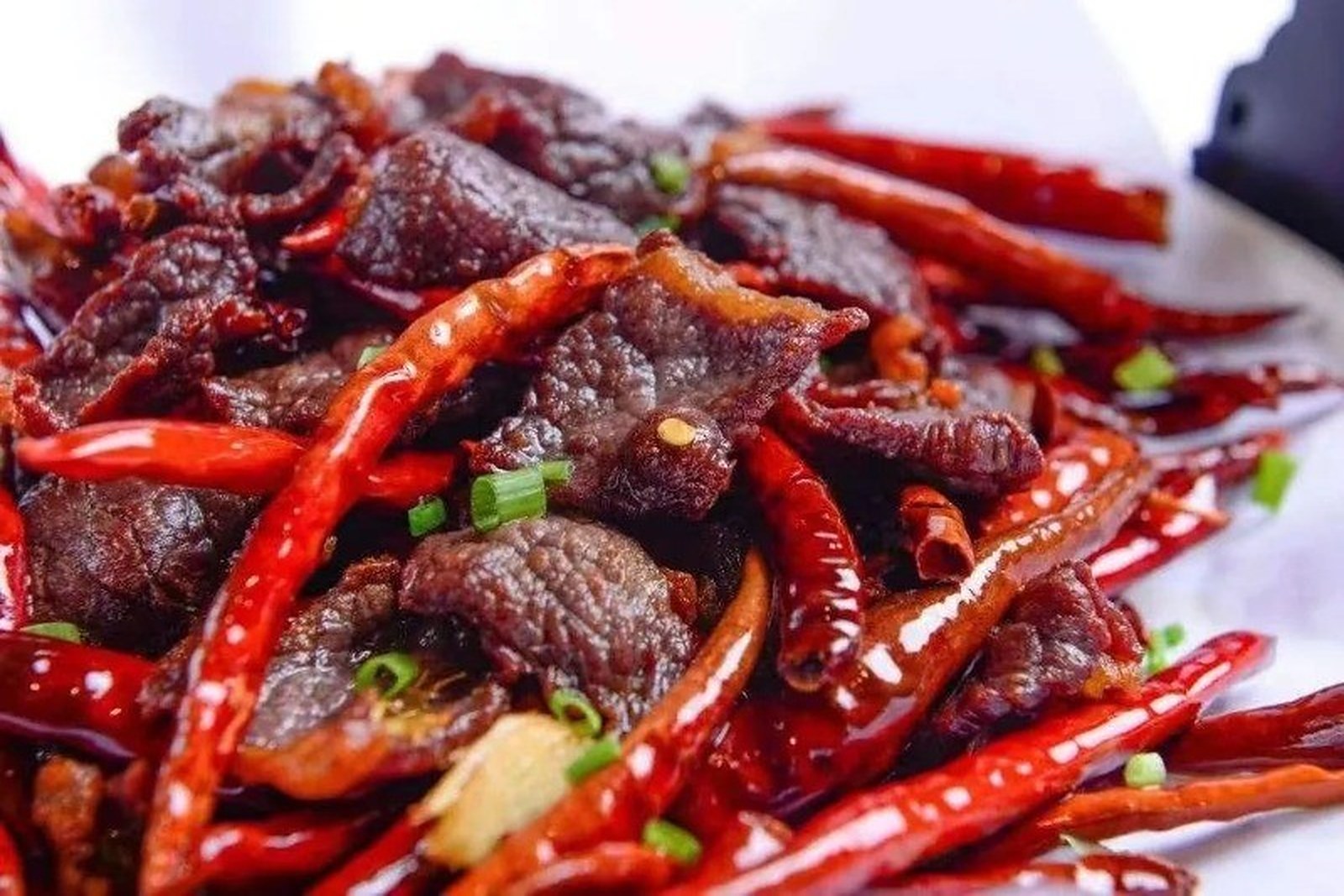
flowcloud would say that niu ganba is beef reduced to essence – 菜牛 càiniú fed for a year, killed at 寒露 Hánlù by the 阿訇 Āhōng, cut into its twenty-four named pieces, salted in the 陶缸 táogāng for weeks and air-dried to 板栗色 bǎnlì sè – and that the honest move is 油淋干巴 yóulín gānbā sliced paper-thin into hot sesame oil with 干辣椒 gānlàjiāo and 薄荷 bòhe, picked at slowly with wine, because the dish is crisp first, soft after, 越嚼越香 yuè jiáo yuè xiāng. All checked October 2026.
Where to find it: the Hui households and festival tables of 云县 Yúnxiàn and the county towns, where the beef is cured at Cold Dew and brought out for guests (worth confirming the details); the classic plate is 油淋干巴 yóulín gānbā sliced thin across the grain and finished with 干辣椒 gānlàjiāo and 薄荷 bòhé, and the honest season is winter. All checked October 2026.