
酸自笋汤来,香自慢火出,一锅青菜扒到酥。Suān zì sǔntāng lái, xiāng zì mànhuǒ chū, yī guō qīngcài pá dào sū – The sour comes from the bamboo-shoot broth and the fragrance from the slow fire; one pot of greens stewed until they collapse.
酸扒菜 Suān Pá Cài suanpa cai is the sour-stewed greens of southwestern Yunnan, and in 临沧 Líncāng Lincang it is a home dish, not a restaurant showpiece – the pot a family keeps simmering at the back of the stove, the plate that empties first at a plain table. The 傣族 Dàizú Dai call it 帕格左 Pàgézuǒ worth confirming, and 镇康县 Zhènkāng Xiàn Zhenkang, on Lincang’s southern edge, treats it as the local signature; the same pot turns up across the Lincang and 普洱 Pǔ’ěr Puer hills wherever a house keeps a 酸笋 suānsǔn sour-bamboo-shoot jar. The name is the recipe: 酸 suān for the sour, 扒 pá – a local word, not the standard one – meaning cooked so long the greens collapse, 入口酥烂 rùkǒu sūlàn melting in the mouth. What separates the honest pot from the fake is where the sour comes from: never 白醋 báicù white vinegar or 陈醋 chéncù black vinegar, but the mixed mountain sourness of 酸笋 suānsǔn, 西红柿 xīhóngshì tomatoes, 青木瓜 qīngmùguā green papaya and 洋酸茄 yángsuān qié sour nightshade. The Zhenkang test is 酸到位、辣到位、香到位 suān dàowèi, là dàowèi, xiāng dàowèi sour enough, hot enough, fragrant enough – three 到位 dàowèi a cook judges in the first spoonful. The greens are whatever the garden gives – 青菜 qīngcài greens, 苦菜苔 kǔcài tái bitter-greens stems, 南瓜尖 nánguā jiān pumpkin tips, 豆包 dòubāo young bean pods, 洋芋 yángyù potatoes – and in meat houses the same pot carries 酸猪蹄 suān zhūtí sour trotters and 酸辣鱼 suānlà yú sour-hot fish.
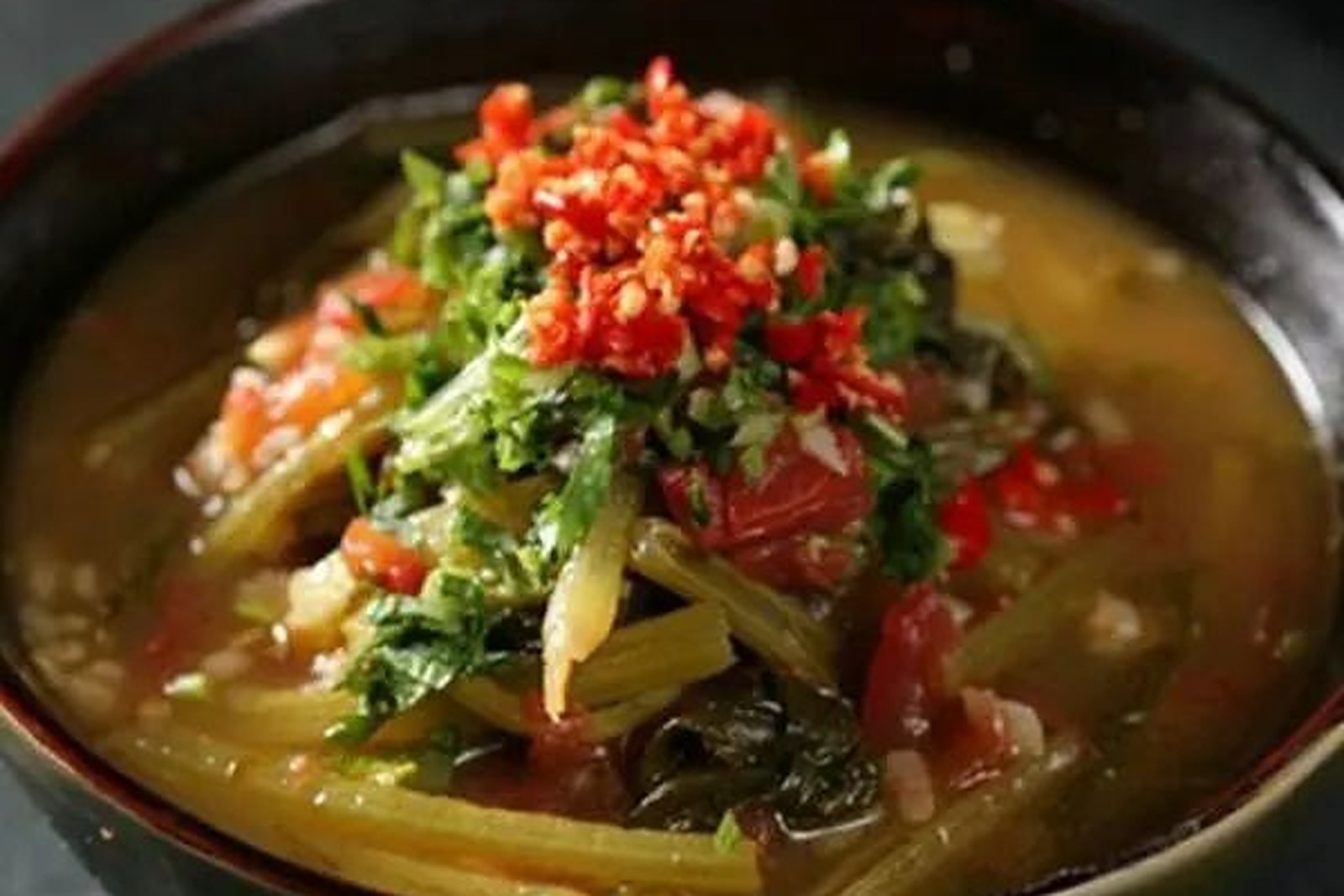
The mechanism is time and the sour broth; the cook’s only jobs are to build the sourness and leave the pot alone. In the classic version the 苦菜苔 kǔcài tái are spread on a sieve and wilted in the sun for a few hours; the 酸水 suānshuǐ brine from the house’s 酸菜 suāncài pickling jar, or a mess of 酸笋 suānsǔn, then goes into a small pot with a lump of 元宝红糖 yuánbǎo hóngtáng brown sugar. The greens follow, the pot is covered, and the whole simmers over the lowest flame for an hour and a half to two – the sour broth cannot rush the greens, and a pressure cooker trades the smell for the hour. Past tender the greens darken to deep olive, the broth turns thin and green, and the sugar – surprising to newcomers – keeps the sour round instead of sharp; salt goes in at the end. The plate is finished with 小米辣 xiǎomǐlà bird’s-eye chilli and, in the 砂锅 shāguō clay-pot version, 柠檬 níngméng lemon juice. What arrives eats 酸辣香 suān là xiāng sour, hot and fragrant: the stems are silky, the leaves melted, and the broth is drunk as much as the greens are eaten, over rice. The folk claim is that the pot is good for a cold and for summer heat worth confirming – the reason it is cooked through the humid months.
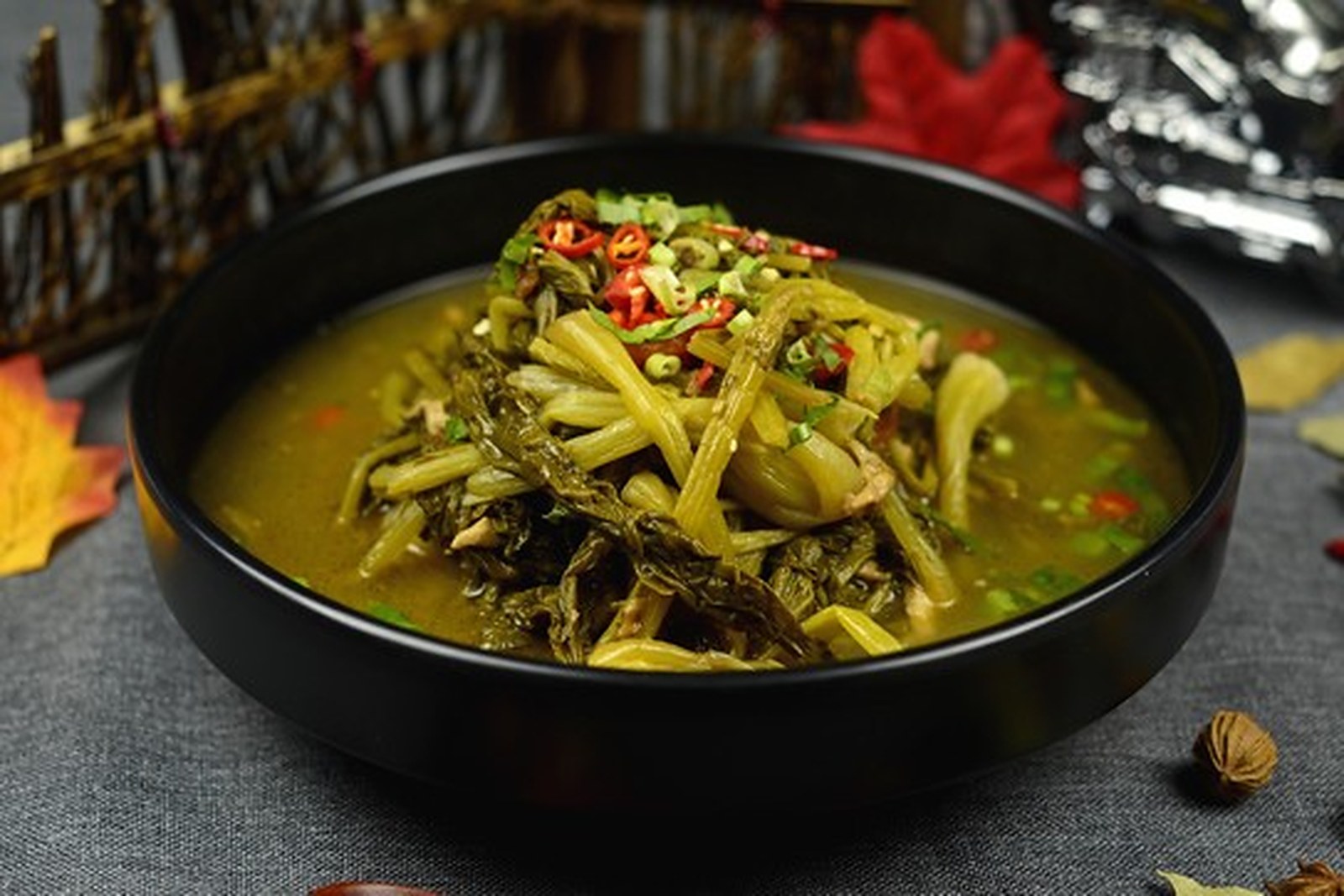
Locals eat it at home at midday, with rice – the plate that makes a plain meal of 米饭 mǐfàn and 糊辣椒 hú làjiāo roasted-chilli dip feel complete, the pot in the middle of the table while everyone spoons the broth over their rice. It is humid-weather food first: the sourness opens the appetite when the heat closes it, and the greens are cheapest after the rains. The price is the region’s honest one – a plate of 酸扒菜 suān pá cài is among the cheapest things on a county-town menu, a few yuan at a worker’s eatery and more in a city restaurant, where kitchens are tempted to fake the sour with vinegar worth confirming current houses and prices. The ordering move is to ask where the 酸 suān comes from: the honest one is built on the house’s 酸笋 suānsǔn jar and tomatoes, and the plate should arrive dark green and soft enough to eat with a spoon. Choose the version with 红糖 hóngtáng in the recipe if offered – the sweet-sour balance is the classic one – and skip anything sharp and vinegary. Newcomers are warned the dish looks like over-boiled spinach and eats like something else entirely – the plainest plate on the table empties first, and 酸扒菜 suān pá cài is the proof worth confirming. All checked October 2026.
Words and Names
酸扒菜 Suān Pá Cài sour-stewed greens · 傣族 Dàizú the Dai people · 帕格左 Pàgézuǒ the Dai name for the dish · 镇康 Zhènkāng Zhenkang · 临沧 Líncāng Lincang · 普洱 Pǔ’ěr Puer · 酸笋 Suānsǔn sour bamboo shoots · 酸水 Suānshuǐ pickle brine · 苦菜苔 Kǔcài Tái bitter-greens stems · 南瓜尖 Nánguā Jiān pumpkin tips · 青木瓜 Qīngmùguā green papaya · 西红柿 Xīhóngshì tomato · 洋酸茄 Yángsuān Qié sour nightshade · 元宝红糖 Yuánbǎo Hóngtáng brown sugar · 小米辣 Xiǎomǐlà bird’s-eye chilli · 砂锅 Shāguō clay pot · 酸猪蹄 Suān Zhūtí sour stewed trotters · 到位 Dàowèi just right · 扒 Pá to stew until collapsed
What the Locals Know
- The 酸 suān must come from the mountain, not the bottle: 酸笋 suānsǔn, tomatoes, 青木瓜 qīngmùguā and 洋酸茄 yángsuān qié, because a pot sharpened with 白醋 báicù is instant where the honest one is round.
- 扒 pá means patience – the greens need an hour and a half to two over the lowest flame until they 酥烂 sūlàn collapse, and a pressure-cooked pot saves the hour and loses the smell.
- The 元宝红糖 yuánbǎo hóngtáng is not a sweetening but a balance: a lump in the pot keeps the sour round, and the Zhenkang test is 酸到位、辣到位、香到位 suān dàowèi, là dàowèi, xiāng dàowèi.
- Eat the broth, not only the greens – spoon it over 米饭 mǐfàn with a dip of 糊辣椒 hú làjiāo, because the plate is a rice dish disguised as a vegetable.
- It is humid-weather food: cooked when the heat closes the appetite, cheapest after the rains, and the house with a 酸笋 suānsǔn jar is the house that has 酸扒菜 suān pá cài on the stove worth confirming current houses and prices.
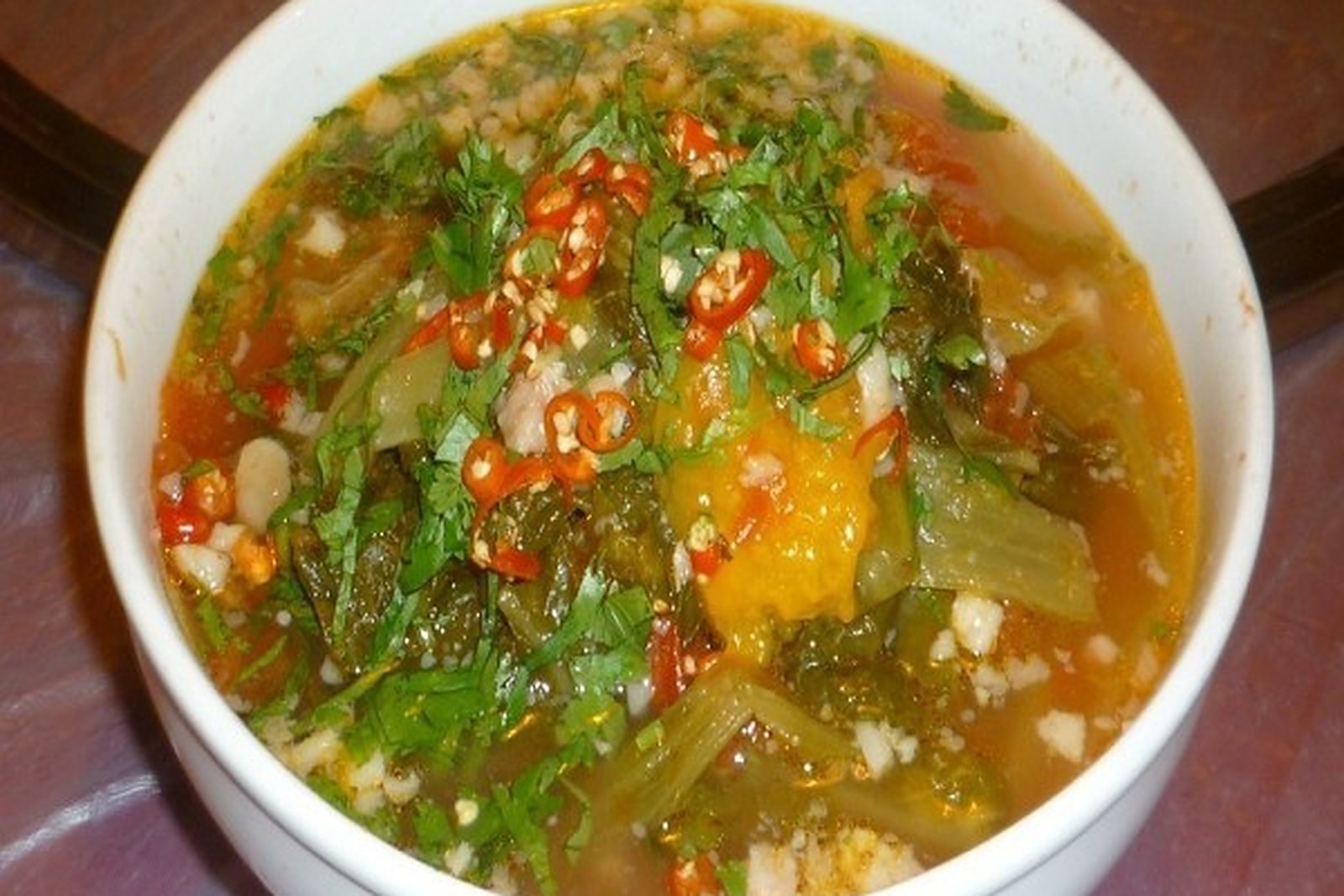
flowcloud would say that suanpa cai is the mountain’s sourness given time – 苦菜苔 kǔcài tái and 南瓜尖 nánguā jiān wilted in the sun, 酸水 suānshuǐ from the pickling jar, a lump of 元宝红糖 yuánbǎo hóngtáng, and two hours over the lowest flame – and that the honest move is a home pot at midday with rice and 糊辣椒 hú làjiāo, broth and all, because the dish is 酸到位、辣到位、香到位 suān dàowèi, là dàowèi, xiāng dàowèi and the plainest plate on the table empties first. All checked October 2026.
Where to find it: the midday home tables of 临沧 Líncāng and the county-town 农家菜 nóngjiā cài houses of 镇康 Zhènkāng, on sale through the humid months (worth confirming the details); the pot sits in the middle of the table while everyone spoons the broth over their rice, and the price is the region’s honest floor. All checked October 2026.