
临高玻璃鱿鱼 Lín gāo bō lí yóu yú, Lingao glass squid, is a trade name before it is a species, and the name describes what a buyer sees rather than what a biologist would classify. Squid landed at the county’s western harbours come out of the water pale, almost luminous in the sun, and the flesh under the thin skin is translucent enough that light passes through a cleaned body; the county’s own descriptions call it 雪白透明 xuě bái tòu míng, snow-white and transparent, with 肉质粉红 ròu zhì fěn hóng, flesh of a pink cast, and the official seafood brand launched in 2026 uses the compound 玻璃鲜鱿 bō lí xiān yóu, glass fresh squid, for exactly the same animal. Eleven harbours lie along the county’s coastline and four of them, 金牌 Jīn pái, 新盈 Xīn yíng, 调楼 Diào lóu and 黄龙 Huáng lóng, are natural deep-water ports, but the glass squid belongs almost entirely to two of them: 新盈镇 Xīn yíng zhèn and 调楼镇 Diào lóu zhèn, with the 东英镇 Dōng yīng zhèn and 马袅 Mǎ niǎo waters contributing some of the catch. The 新盈中心渔港 Xīn yíng zhōng xīn yú gǎng, the Xinying central fishing port, is recorded in the provincial history archives as a bay whose shallows suit both aquaculture and the squid fishery, and it is there that the county’s own trade literature says most plainly what the product is: 所产的鱿鱼素有「玻璃鱿鱼」之称 suǒ chǎn de yóu yú sù yǒu bō lí yóu yú zhī chēng, the squid it produces has long been known as glass squid. That is the closest thing to an official definition of the name, and it is a statement about a port rather than about a genus.
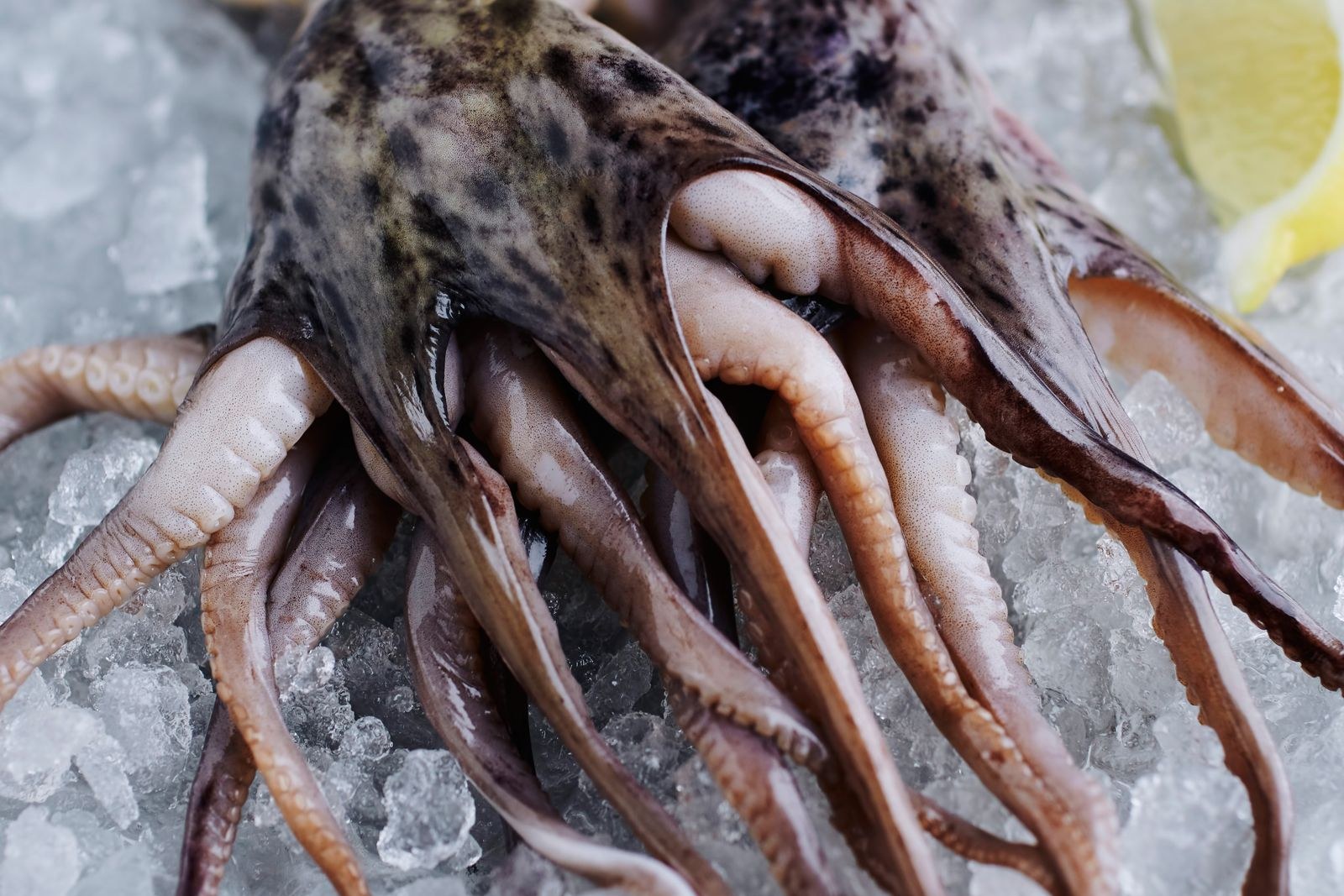
Before anything else, one warning, because the Chinese name is shared with a completely different animal and the mistake is easy for an English-language writer to make. In Chinese reference works, 玻璃鱿鱼 and the English phrase glass squid also denote the deep-sea cephalopods of the family Cranchiidae, and the species most often illustrated under that name, Vitreledonella richardi, is a transparent, luminous animal of the open ocean, living between roughly 600 and 2,000 metres down; the family includes a species whose mantle alone has been recorded at about 2.7 metres. That is not this. The Lingao glass squid is a small, edible, neritic squid caught in the near-shore waters of the 北部湾 Běi bù wān, the Gulf of Tonkin, and hoisted onto a boat deck by fishermen who will have it on ice before the next haul. The two animals share a Chinese name and a property, transparency, and nothing else, and none of the deep-water facts – the depth, the size, the light organs – belongs in an article about dinner. The county has never designated a species for its glass squid, and the identification that follows from the literature is a suggestion rather than a finding. The two commercially important loliginid squid of the gulf are 中国枪乌贼 Zhōng guó qiāng wū zéi, Uroteuthis (Photololigo) chinensis, and 剑尖枪乌贼 Jiàn jiān qiāng wū zéi, Loligo edulis, and the first of them is recorded in the waters north of the gulf, around Hainan Island and across the South China Sea, with a peak in spring and early summer, a thin and sweet flesh that is usually stir-fried or eaten raw, and a dried product that the international trade grades with the best; the second has been rising in the gulf’s catch and is now the dominant species in some surveys. Which of them, or which mixture, ends up under the name 玻璃鱿鱼 at 新盈 is not something any government document answers, and the honest description is the one the county’s market uses: a small, pale, thin-bodied squid landed on this coast, named for how it looks in the ice.
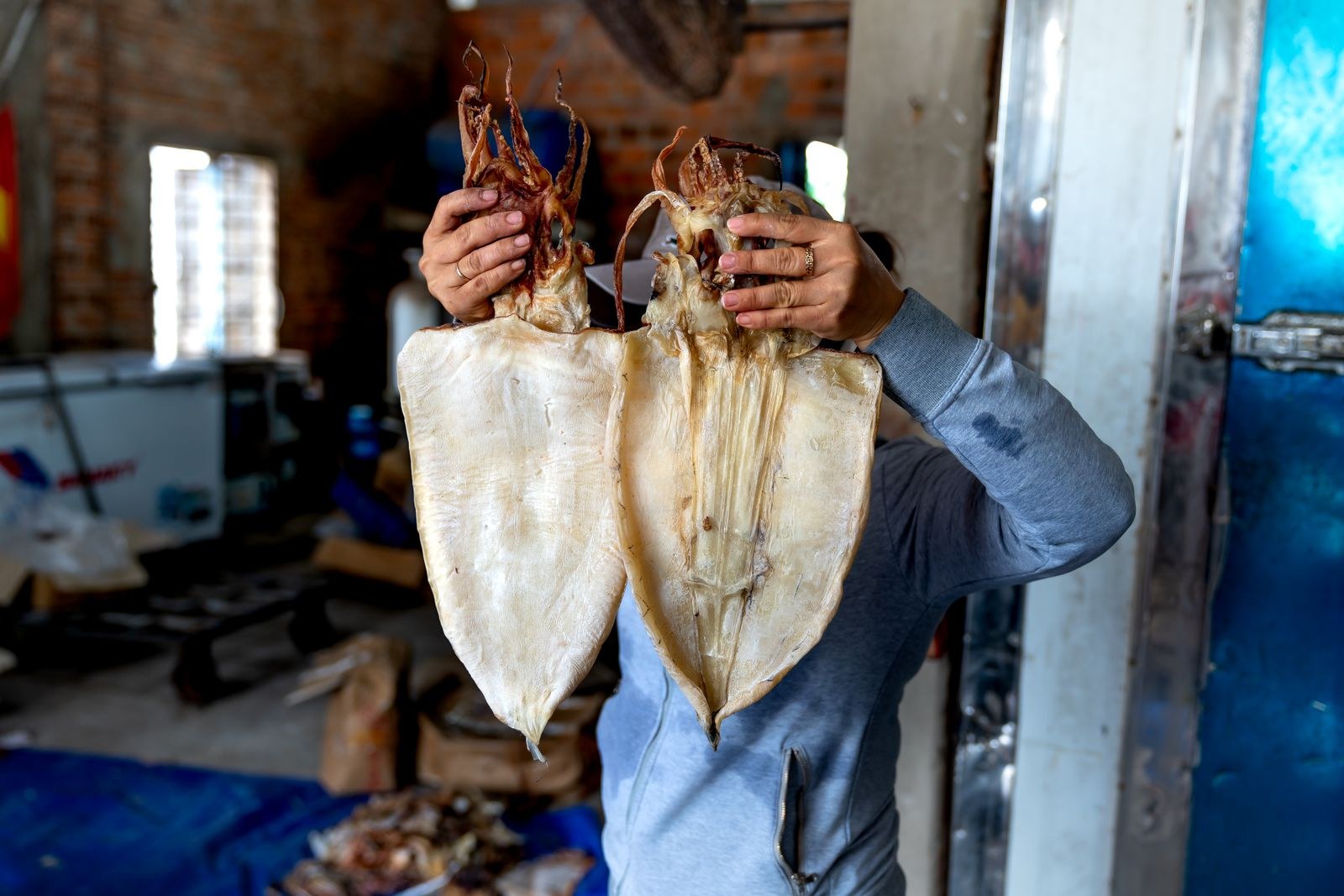
The official language about the transparency is consistent in a way that is worth collecting, because it amounts to a house style. The provincial government’s introduction to the county’s seafood describes 临高玻璃鱿鱼 as famous for being transparent, thick in the flesh and delicious. The 海8鲜 hǎi bā xiān, eight sea delicacies, brand copy says that the squid comes from the inshore waters of the gulf and is 外观通透,像海水凝结而成 wài guān tōng tòu, xiàng hǎi shuǐ níng jié ér chéng, transparent in appearance, as though it had been condensed out of seawater. A Hainan Daily series that profiles the county’s local specialities heads its entry 玻璃鲜鱿·海中水晶 bō lí xiān yóu · hǎi zhōng shuǐ jīng, glass fresh squid, crystal of the sea, and describes the flesh as 通透透亮 tōng tòu tòu liàng, clear right through, small and tender with a natural sweetness of its own. The dried form is where the name is most literally justified, since a sun-dried squid body is a sheet of amber that you can read a newspaper through, and the trade calls that 呈透明状 chéng tòu míng zhuàng, of a transparent appearance. Two explanations of the word 玻璃 therefore coexist and both are right: the fresh animal is half-transparent because its muscle wall is thin, and the dried one is transparent because drying removes the water that was scattering light. What is not in the official copy, and should not be, is anything about the squid glowing.
How it gets from the water to the ice is the part of the story the county’s industry statistics actually document. The boats working out of 新盈 and 调楼 on a squid trip are reported by local fishermen as staying out for one to three days, taking squid along with cuttlefish, octopus, flounder and the local bottom fish, and landing directly into a harbour that is built for speed at the quay: the Xinying port market, which turns over something like 650 million yuan a year, runs forty wholesale counters and is served by ice plants capable of about 800 tonnes a day, which is the unglamorous machinery behind the word fresh. Whether these particular boats fish for squid with lights is a question the record does not settle for Lingao. Light attraction is the standard commercial method for squid the world over, and the technique is well documented in the Chinese fishery: a boat runs out, switches on banks of high-power lamps that turn the hull into a small sun, waits while the squid gather, and then takes them with hand jigs or a net. Hainan’s own reporting describes fishing boats here targeting squid as a main catch, but no official or mainstream account was found that states that Lingao’s boats use lamps, so the light fishery belongs in this article as the industry’s normal practice on this coast rather than as a documented local fact. The seasonal picture is similarly borrowed from the species rather than from the county: for the squid of the northern gulf, the literature gives spring and autumn runs, with a peak in May and June, and around Hainan Island itself a summer and autumn fishery. Anyone who wants a fixed month for 临高玻璃鱿鱼 will not find one in an official source, because the county has never published one.
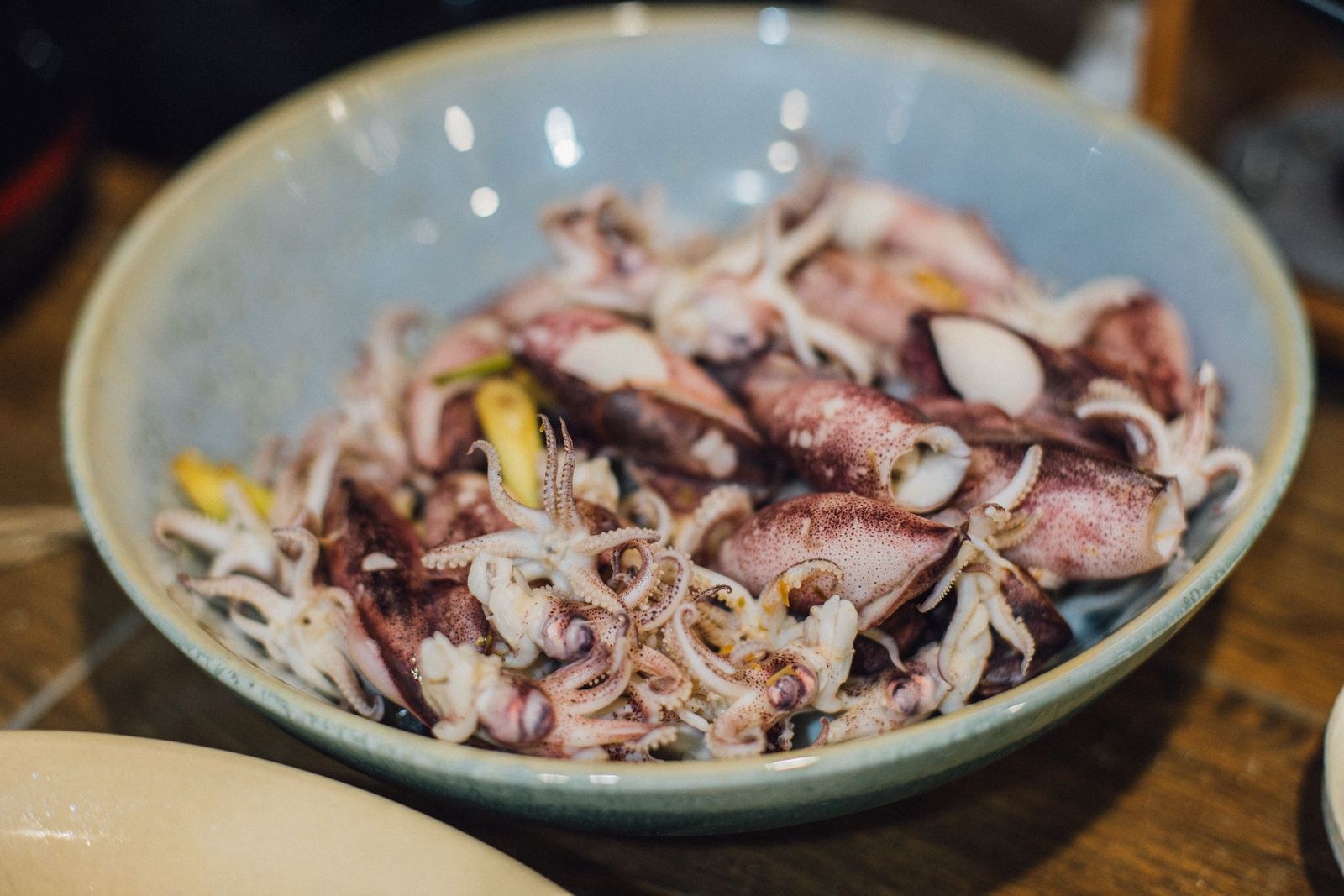
The kitchen treatment of this squid is deliberately minimal, and the official brand copy is unusually prescriptive about it, naming four preparations: 白灼玻璃鲜鱿 bái zhuó bō lí xiān yóu, glass fresh squid blanched in plain water; 姜葱爆炒鲜鱿 jiāng cōng bào chǎo xiān yóu, fresh squid stir-fried hard with ginger and scallion; 砂锅焗鲜鱿 shā guō jú xiān yóu, fresh squid baked in a clay pot; and 清蒸玻璃鲜鱿 qīng zhēng bō lí xiān yóu, steamed. The general line attached to them is that a bowl of clear water keeps the original flavour, that ginger and scallion make it savoury enough to eat with rice, and that a clay pot brings the aroma out slowly. The flesh is described as 入口软糯弹滑 rù kǒu ruǎn nuò tán huá, soft and glutinous and springy in the mouth, with no coarse fibre, which is the quality the transparency is really advertising; and there is one local distinction that deserves more attention than it gets, which is 带膏 dài gāo, carrying roe, since a squid with its roe sac intact is denser and more savoury inside and is preferred by people who know the fish. A home cook’s version of the stir-fry, for what it is worth, is a proportioned recipe that pairs a kilogram of squid with 300 grams of celery, 100 grams of red pepper, 50 grams of garlic, 10 grams of salt, 5 grams of monosodium glutamate and 5 grams of starch, which is the sort of ratio a county kitchen arrives at by cooking the same thing for thirty years. Raw preparation follows the ordinary method: the head is twisted off, the quill pulled out, the skin, beak and ink sac removed, the body opened and cleaned, and the flesh scored in a crosshatch before cooking if it is going into a hot wok. One popular idea about this squid should be set aside: there is no reliable source for the claim that 临高玻璃鱿鱼 is commonly eaten as sashimi, and the raw-eating references in the literature attach to the species rather than to this county’s product. Order it blanched or fried.
Words and Names
鱿鱼 yóu yú is squid, as distinct from 墨鱼 mò yú, cuttlefish, and 章鱼 zhāng yú, octopus, and all three are landed here; 玻璃鱿鱼 bō lí yóu yú is the local trade name for the pale inshore squid of this coast, and 玻璃鲜鱿 bō lí xiān yóu is the name the same animal carries in the county’s official seafood branding. 新盈镇 Xīn yíng zhèn and 调楼镇 Diào lóu zhèn are the two fishing towns where it is landed, 新盈中心渔港 Xīn yíng zhōng xīn yú gǎng is the main harbour, and 马袅 Mǎ niǎo and 东英镇 Dōng yīng zhèn appear in some accounts as secondary grounds. 海8鲜 hǎi bā xiān, the eight sea delicacies, is the county’s regional public brand launched in August 2026, and 玻璃鲜鱿 is one of its eight. 白灼 bái zhuó is blanching in plain water, the default treatment; 姜葱爆炒 jiāng cōng bào chǎo is a hard stir-fry with ginger and scallion; 砂锅焗 shā guō jú is a covered clay-pot bake; 清蒸 qīng zhēng is steaming; and 带膏 dài gāo, with roe, is the marker of the best ones. 鱿鱼干 yóu yú gān is the dried squid, 一斤 yī jīn is half a kilogram and the unit the grades are counted in, and 哩哩美 lī lī měi is the fishing work song of 新盈 and 调楼, which is the region’s national-level intangible heritage and the sound of the same harbours.
What the Locals Know
The dried squid is where this product is most clearly a craft, and the grading system is refreshingly concrete. Dried 临高鱿鱼 is sorted by how many make a 斤 jīn, half a kilogram: A1 takes 6 to 12 squid to the jin, A2 takes 14 to 20, A3 takes 20 to 30, A4 takes 30 to 45, and A5 takes 50 to 60. That is a complete commercial language for size, and it runs from a hand-sized drying rack item for a gift box down to the small, sweet ones that a household buys by the handful, and it is the same principle as grading prawns by count. The process behind the grades is a sequence worth listing because it is old and it is precise: 选料, select the raw material; 浸泡, soak; 剖割, split; 除内脏, gut; 洗涤, wash; 干燥, dry; 腌蒸, cure and steam; 分级, grade; 包装, pack. Nothing in it is industrial, and everything in it depends on weather, which is why the dried squid of this coast is a seasonal product of the sunny months. Bought dried, it is one of the county’s standard presents alongside 沙虫干 shā chóng gān, dried sandworm, 银鱼干 yín yú gān, dried whitebait, and 红鱼干 hóng yú gān, dried red fish, and it comes in a bag that looks like a stationery item until you notice the smell, which is sweet and oceanic rather than fishy. Rehydrating it is the one technique a buyer needs, and three methods are in circulation. The oil method is the gentlest: 500 grams of dried squid with 15 grams of sesame oil and a pinch of alkali, left to soak in water until it swells. The cooked-alkali method is the restaurant one: 500 grams of soda ash and 200 grams of lime are stirred into 4.5 kilograms of boiling water, then 4.5 kilograms of cold water is added, and once the liquid has cooled and the solids have settled it becomes an approximately 5 per cent solution; squid that has already had three hours in cold water goes into it for about three hours more, and is then rinsed repeatedly in cold water to remove the alkali taste. The raw-alkali method is the same idea with 500 grams of soda ash in 10 kilograms of cold water, with the soaking time adjusted by two to five parts of water according to how tough the squid is. What all three are doing is the same thing a Chinese kitchen does to any dry seafood, which is to put water back into a muscle that has had it taken out, and the only caution is that too long in alkali gives you a swollen, tasteless product, so rinse hard.
The commercial case for this squid is easier to document than for most county specialities, and the numbers are large and occasionally inconsistent in the way provincial statistics always are. 临高县 is the biggest marine-fishing county in Hainan, with eleven harbours and, by its own count, a fishery output value that has led the province for 27 consecutive years; the province’s agriculture department gives the county 416,000 tonnes of fisheries output in 2025 and 22.1 per cent of the province’s total, and a 2023 figure of 413,800 tonnes in one accounting against 428,500 tonnes in a projection published the following January, which is a reminder to date any number of this kind and to treat the difference between an actual and a forecast as a real difference. Add the macro picture and the brand becomes legible: Hainan as a whole landed 64,100 tonnes of squid in 2023, about 21.7 per cent of the national marine squid catch, third among the provinces, which means that the squid on this coast is not a boutique product but part of a national industry with a cold chain behind it. The county’s most recent institutional move came on 16 August 2026, at the opening ceremony of the fourth 开渔季 kāi yú jì, the fishing season, held at 武莲渔港 Wǔ lián yú gǎng in 调楼镇, when the county launched 临高海8鲜 Lín gāo hǎi bā xiān, its regional public brand for marine produce. The eight are 新盈兰花蟹 Xīn yíng lán huā xiè, the Xinying flower crab, 调楼琵琶虾 Diào lóu pí pá xiā, the Diaolou flathead lobster, 马袅沙虫 Mǎ niǎo shā chóng, the Maniao sandworm, 玻璃鲜鱿 bō lí xiān yóu, 后水金鲳 Hòu shuǐ jīn chāng, the Houshui golden pompano, 东英牛眼螺 Dōng yīng niú yǎn luó, the Dongying ox-eye snail, 富罗花虾 Fù luó huā xiā, the Fuluo flower prawn, and 博铺沙丁鱼 Bó pù shā dīng yú, the Bopu sardine. The glass squid is the only cephalopod on the list, which is a fair measure of what the county thinks it is for. What it is not is a geographical indication or a heritage designation; 海8鲜 is a marketing brand launched in 2026, and it is worth describing it as exactly that rather than inflating it. Two further claims are worth refusing. There is no sourced comparison showing that 临高玻璃鱿鱼 costs more than squid from elsewhere, and there is no official warrant for the much-quoted line that one of every three fish on a Hainan table comes from this county, which circulates only in self-published local writing. The case does not need either. The port, the ice and the twenty-seven years are enough.
There is a cultural layer to these harbours that is worth an hour between meals. 新盈 was the biggest fishing-boat wharf in Hainan in the late Qing, and the county’s two best-known living traditions come out of the same quays. The 哩哩美 lī lī měi work songs began, according to the tradition, as the calls of fisherwomen selling their catch at 新盈 and 调楼, and the song was entered in the second batch of national intangible cultural heritage in 2010; the county’s dragon-boat racing among fishing families has been running for around a century. Since the moratorium that closes the South China Sea to fishing each summer was instituted, the county has built a festival around its end, and the 开渔文化节 has run a first edition in 2023, a second in 2024 and, by the naming of the 2026 event, a fourth. If you go to 新盈 or 调楼 for the squid, go early, because the auction at the quay begins before dawn, and the thing to watch is not the boats but the tables: fish, squid, cuttlefish and octopus being weighed and boxed and argued over in the dark, with the shouting carrying across the water and the ice plant running behind it. That, rather than any adjective about transparency, is what the word fresh means on this coast.
flowcloud would say that the most interesting thing about 临高玻璃鱿鱼 is that it is a name built entirely out of a comparison and never quite becomes a species – a squid defined by how much light gets through it, which is a property that disappears the moment you cook it, and which is therefore the purest possible argument for eating it within sight of the harbour.
Where to find it: the quays and the market halls of 新盈中心渔港 Xīn yíng zhōng xīn yú gǎng in 新盈镇 Xīn yíng zhèn and the harbour at 调楼镇 Diào lóu zhèn, where the catch is landed and sold in the early morning and where the harbour-side kitchens will blanch it for you within the hour; the food streets of 临城镇 Lín chéng zhèn, the county town, where the county’s own four preparations are what to order; and the dried-goods counters of the county, where the squid is sold by the A1 to A5 grades and makes a good present if you are willing to carry something that smells of the sea. 新盈 and 调楼 lie on the north-western coast, roughly forty minutes to an hour by road from 临城镇, and the tide of the day runs early, so arrange to be at the port before the sun is properly up; ask for 带膏 dài gāo if you want the ones with roe, and ask for it 白灼 bái zhuó rather than anything more complicated.