
Liugou Tofu Banquet: Fire-Basin Pots, Sour-Slurry Tofu and the Village Spread of Yanqing District, Beijing
火盆一坐豆腐滚,三色锅中酸浆香。Huǒpén yī zuò dòufu gǔn, sān sè guō zhōng suānjiāng xiāng – Sit down at the fire basin and the tofu boils; in the three-colour pot the sour slurry gives up its fragrance.
柳沟豆腐宴 Liǔgōu dòufu yàn Liugou tofu banquet is not a restaurant set menu and not a vegetarian gesture – it is, plainly put, a farmhouse table sold by the head, built around a 火盆锅 huǒpén guō fire-basin pot in which tofu set with 酸浆 suānjiāng sour slurry, rather than the usual gypsum, simmers over live coals. The address is a village with a wall: 柳沟村 Liǔgōu Cūn Liugou village under 井庄镇 Jǐngzhuāng zhèn Jingzhuang town in 延庆区 Yánqìng Qū Yanqing District, Beijing, an old garrison settlement on the road running north out of the capital, where a few hundred households have turned their courtyards into numbered 民俗户 mínsú hù farmhouse kitchens (worth confirming how many are currently licensed to serve). The technical detail that makes the table worth the drive is the coagulant: sour slurry is the whey left from a previous pressing, kept and reused, and it sets the curd more slowly and more firmly than gypsum, leaving a faint acidity and a texture that holds its cut in a boiling pot. Everything else on the table exists to be cooked in that pot or dipped beside it.
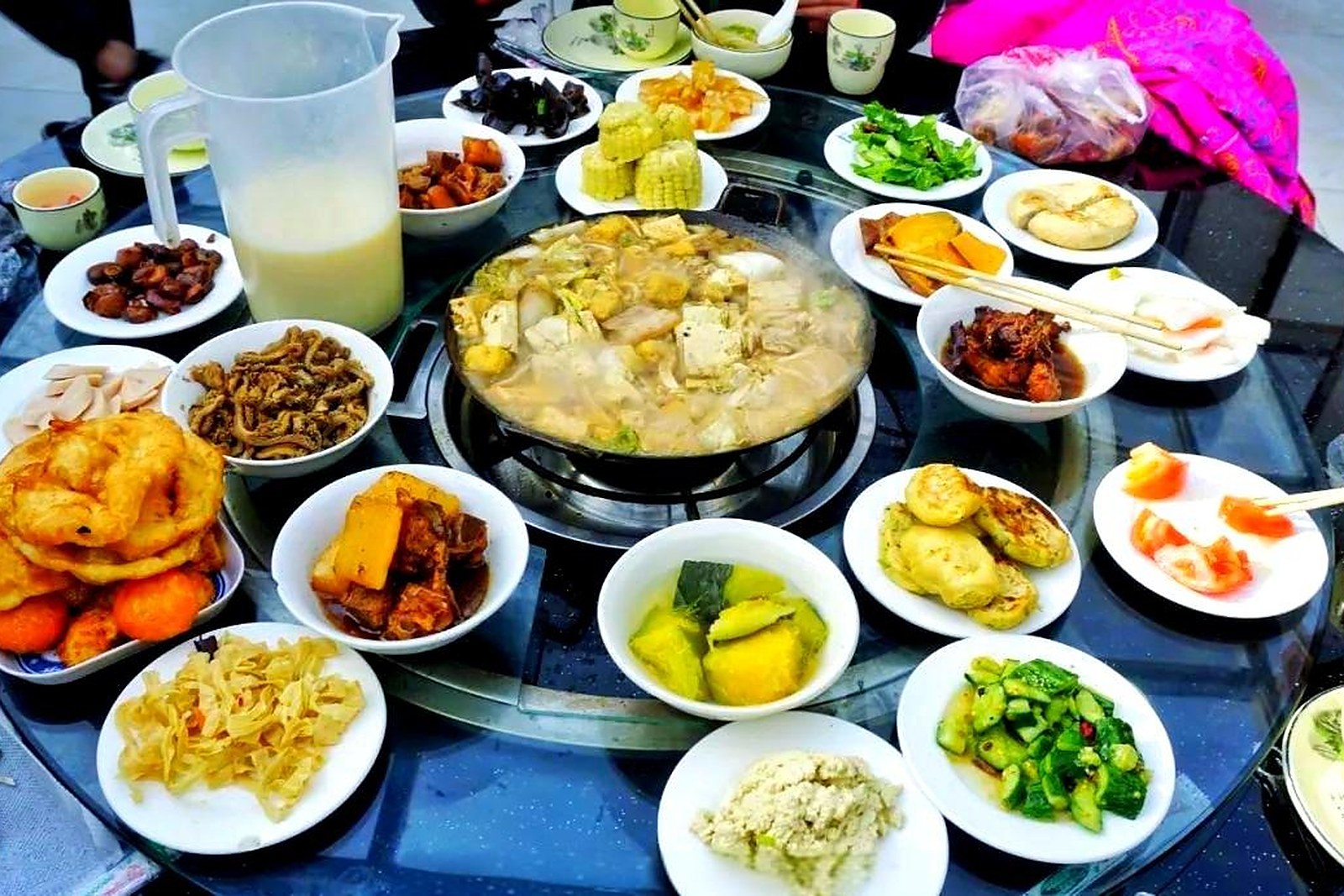
Call it honestly: there is no ordering. You sit, someone counts heads, and the dishes arrive in a sequence the house has settled over years – cold plates first, then the basin with its tofu and vegetables and pork, then the refills. The bill follows the head count and the house’s standing, so prices shift with the season and the house – worth confirming the details; what a visitor should understand is that the format, not the menu, is the product, and asking for à la carte in a 民俗户 mínsú hù is asking the wrong question. The traps are practical. The basin throws real heat, which is welcome in February and less so in July; the courtyards fill on autumn weekends and on public holidays, and a table for eight may wait an hour without a reservation; and the spread is long enough that most first-timers eat the cold plates too eagerly and then meet the pot already full. Pace yourself against the refills, not the first course.
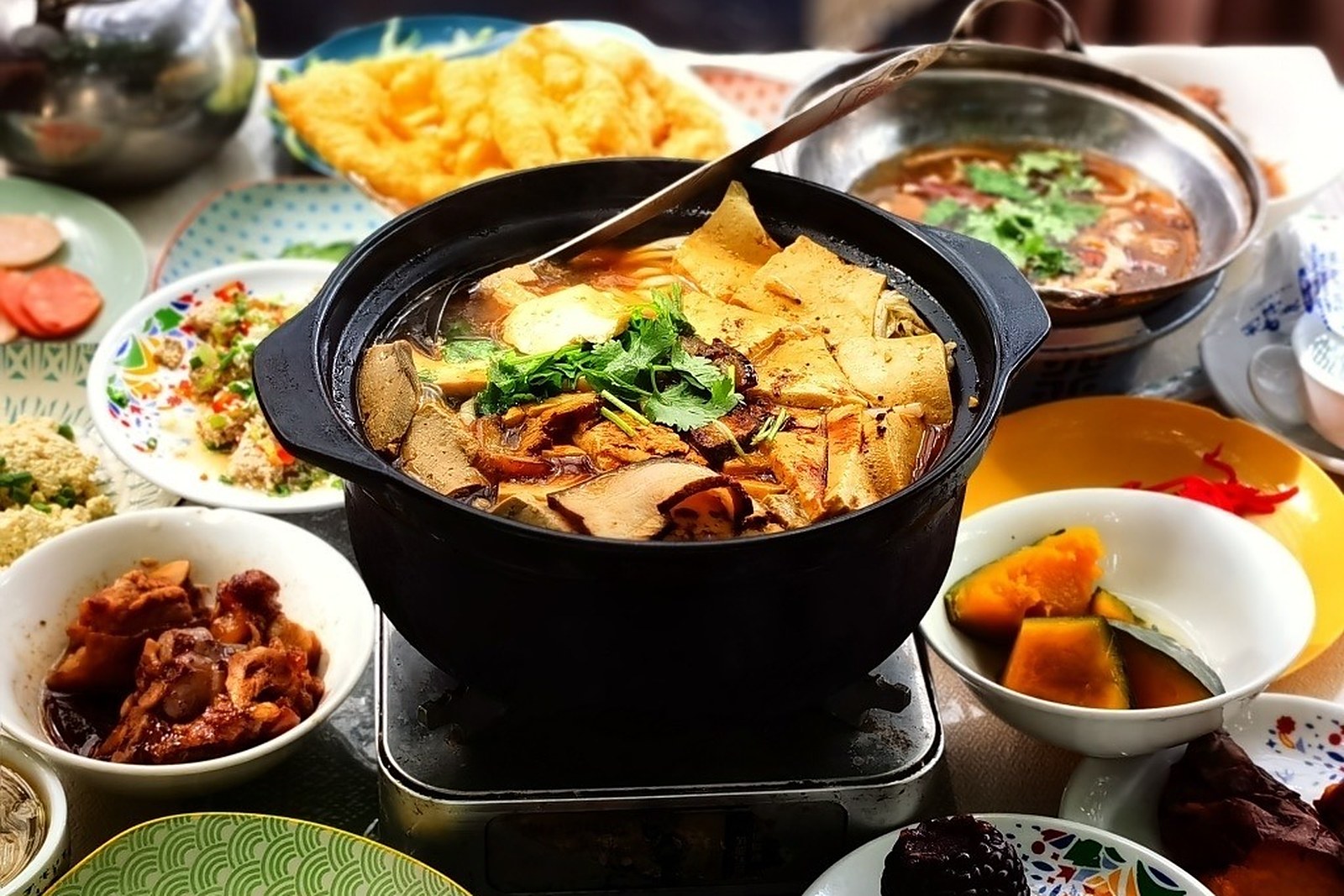
The honest star is the sour-slurry tofu itself, and what it does in a pot that keeps boiling. 酸浆豆腐 suānjiāng dòufu arrives pale and slightly rough-cut, and after ten minutes in the basin it has taken on the broth without disintegrating – the outside furred with flavour, the inside still yielding a clean, faintly tart curd. Close behind it come the 冻豆腐 dòng dòufu frozen tofu, whose honeycomb soaks the pot liquor like a sponge, and the black and green blocks made from black soybeans and mung beans, which is where the “three colours” of the local patter comes from. What gets oversold is the storytelling: the painted boards will credit the banquet to a Ming garrison’s winter rations or to a general’s gratitude, and the village’s own history is real enough without the embroidery (worth confirming the details with the village’s own accounts). The other oversell is the phrase “hundred dishes”, which in most houses means a generous count of small plates rather than a hundred anything.
The self-aware postscript: at a corner table in February, a grandfather lifts the basin lid, waves the steam away with the back of his hand, and ladles for the children first – tofu, then a slice of pork, then broth over rice – while the adults wait, because the pot does not care about seniority. That is the honest grade: a village that fed soldiers and then fed weekend drivers, still cooking the same curd the same slow way. The same 延庆区 Yánqìng Qū Yanqing District thread runs on: the breakfast ovens of 延庆火勺 Yánqìng huǒshao Yanqing huoshao are lit before dawn in the county town, the iron pots of 官厅水库鱼 Guāntīng shuǐkù yú Guanting reservoir fish simmer along the southwestern shore, the ridged fruit of 八棱海棠 bālèng hǎitáng baling crabapples reddens on the northern slopes, and the slow pots of 松蘑炖鸡 sōngmó dùn jī Songshan mushroom chicken come off the fire in the mountain villages – one district, four more tables.
Words and Names
- 柳沟豆腐宴 Liǔgōu dòufu yàn / Liugou tofu banquet · the village spread the district is known for - 火盆锅 huǒpén guō / fire-basin pot · the coal-fired basin the table is built around - 酸浆豆腐 suānjiāng dòufu / sour-slurry tofu · curd set with reused whey instead of gypsum - 冻豆腐 dòng dòufu / frozen tofu · the honeycombed blocks that drink the broth - 井庄镇 Jǐngzhuāng zhèn / Jingzhuang town · the town holding Liugou village - 民俗户 mínsú hù / licensed farmhouse kitchen · the numbered courtyards that serve the table - 延庆区 Yánqìng Qū / Yanqing District · the Beijing district holding the village
What the Locals Know
Locals arrive in numbers, because the table is built for numbers: four is the useful minimum, eight is comfortable, and a couple will be seated but will leave food. Book by phone rather than turning up – on autumn weekends the numbered houses fill by late morning, and the ones with the oldest reputation are spoken for days ahead. Once seated, do not treat the cold plates as the meal; they are the wait, and the pot is the point. Eat the tofu in the order the house intends: the fresh 酸浆豆腐 suānjiāng dòufu first, while the broth is clean, then the 冻豆腐 dòng dòufu once it has soaked, then the vegetables that would otherwise go to mush. Ask for refills plainly – they are part of the arrangement. One warning worth taking seriously: the fire basin is a live coal stove at table height, so keep children’s hands and loose sleeves clear of the rim, and in high summer ask for a table away from it. Prices shift with the season and the house – worth confirming the details on how each courtyard counts heads and what the refills include.
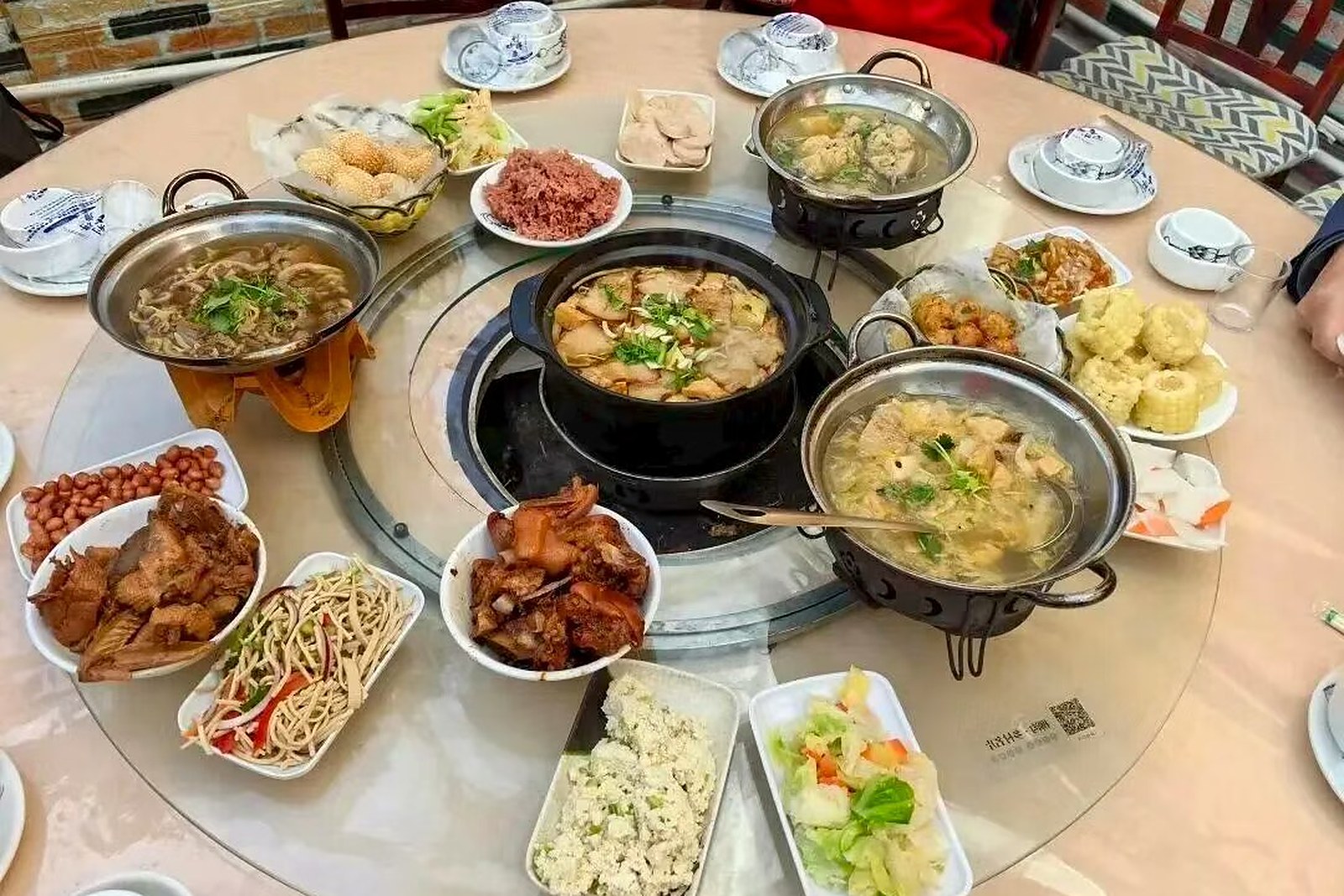
flowcloud would say that the 柳沟豆腐宴 Liǔgōu dòufu yàn is the fire-basin pots, sour-slurry tofu and the village spread of Yanqing District, Beijing – a 酸浆 suānjiāng discipline where the curd sets firm enough to hold a rolling 火盆锅 huǒpén guō – and that the honest move is to book by phone, eat the fresh tofu before the frozen, and ask for refills plainly, because the slurry built the texture and the village built the table. All checked October 2026.
Where to find it: Yanqing District Yánqìng Qū, Beijing – the numbered 民俗户 mínsú hù courtyards of 柳沟村 Liǔgōu Cūn Liugou village under 井庄镇 Jǐngzhuāng zhèn Jingzhuang town, a short drive southeast of Yanqing town, where the 火盆锅 huǒpén guō runs at lunch and again in the evening (worth confirming the details – which courtyards are currently licensed, their booking lines and whether they serve on weekdays out of season); prices shift with the season and the house – worth confirming the details. Liugou tofu banquet is the fire-basin pots, sour-slurry tofu and the village spread of Yanqing District, Beijing, head count before menu. All checked October 2026.