
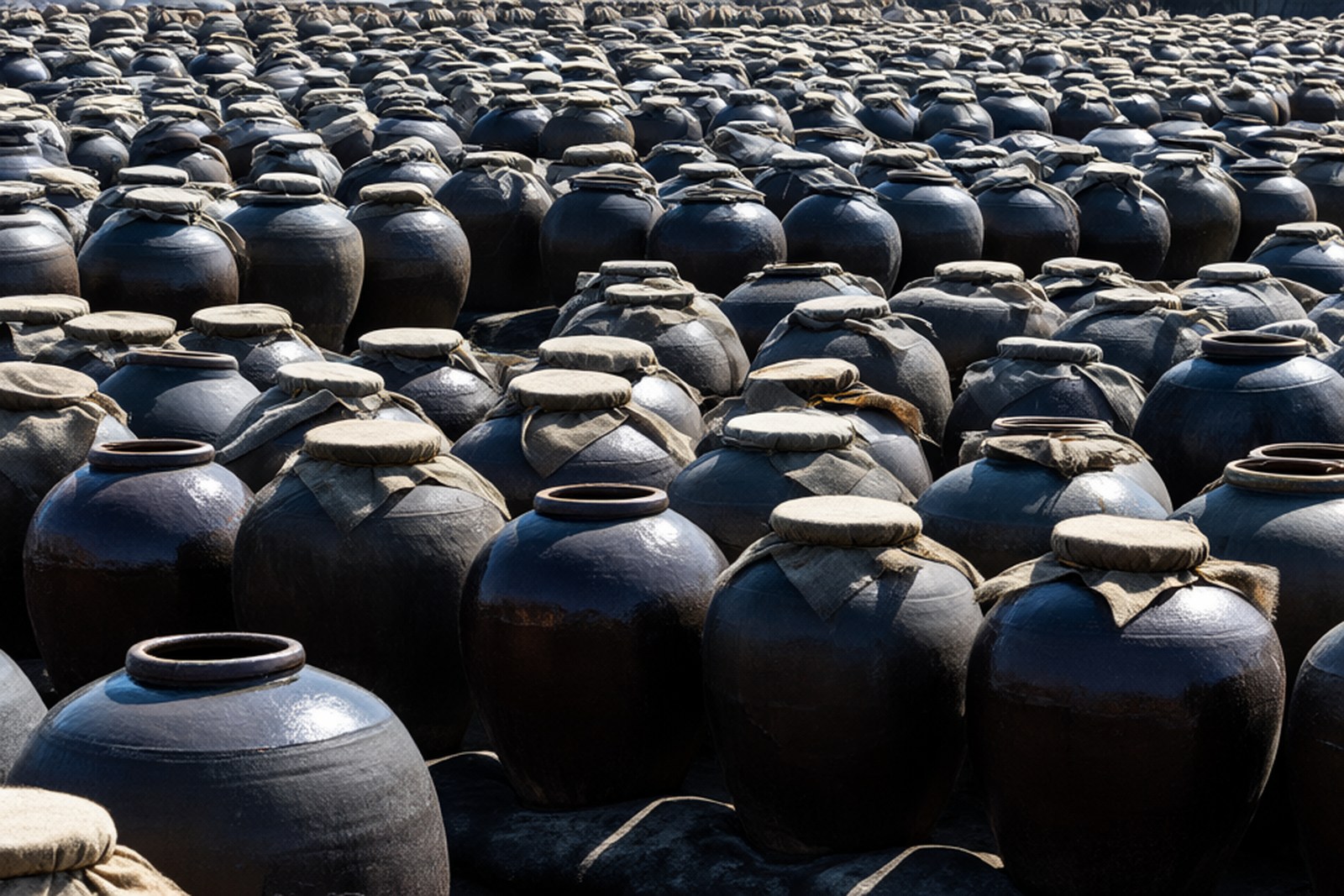
龙牌酱油 Lóng pái jiàng yóu is the soy sauce of 湘潭市 Xiāng tán shì, and the city’s claim on it is old enough to be a matter of civic identity. It is brewed from soybeans, wheat flour and salt water in earthenware jars that stand outdoors in rows by the thousand, exposed to sun and dew for the better part of a year, and the whole of the process – the投料 in early spring, the summer of turning and topping up, the drawing off in winter – is the traditional one rather than an industrial shortcut. 湘潭 has been called 酱油王国 jiàng yóu wáng guó, the kingdom of soy sauce, for most of a century, and the sauce is still made the slow way here on a scale nobody else in the country attempts.
The trade began in the workshops. Local chronicles record a sauce maker in Xiangtan in the early Qianlong years, and the first firm of consequence was 龚庆祥酱园 Gōng qìng xiáng jiàng yuán, a shop founded by a Xiangtan merchant named 龚裴然 Gōng Péi rán that made both wine and soy, and whose sauce was described in the old phrase as 汁浓、色乌红、香温馨 – thick in the body, dark red in the cup, warm in the nose – a combination the trade called 色香味三绝 sè xiāng wèi sān jué, the three perfections of colour, aroma and taste. In the Daoguang years a Zhejiang silk trader called 吴子楚 Wú Zǐ chǔ came to Xiangtan on business, decided that there was more money in sauce than in carrying silk, and opened 吴元泰酱园 Wú yuán tài jiàng yuán, bringing with him the flavours of the Huaiyang kitchen. A rival house, 吴恒泰, followed, and two competing families improving the same process is the usual way a local style gets fixed. The 1740 date is the one the industry and the city both use for the founding of the trade, which makes the sauce rather older than the United States.
The record since then is a list of firsts. In 1915 the sauce won a gold medal at the Panama-Pacific exposition, in the same competition and the same year as 贵州茅台酒 Guì zhōu Máo tái jiǔ, the province’s most famous liquor, which is a pairing Xiangtan has never stopped mentioning. In 1966 it became one of the first Xiangtan products to be exported, going to Singapore, Japan and the United States; in 1979 it was registered as a trademark, in the first batch of registrations issued in the People’s Republic; and in 1993 the domestic trade ministry named it a 中华老字号 Zhōng huá lǎo zì hào, China’s roll of time-honoured brands, a title the commerce ministry renewed in 2010 and again in 2023. It remains the only such brand in Xiangtan. The firm’s fortunes have not been uninterrupted – by the early 2000s its output had collapsed from around forty million yuan a year to a fraction of that, and the brand sat largely unused for a decade before a mixed-ownership restructuring in 2019 put it back into private hands and back on the shelves.
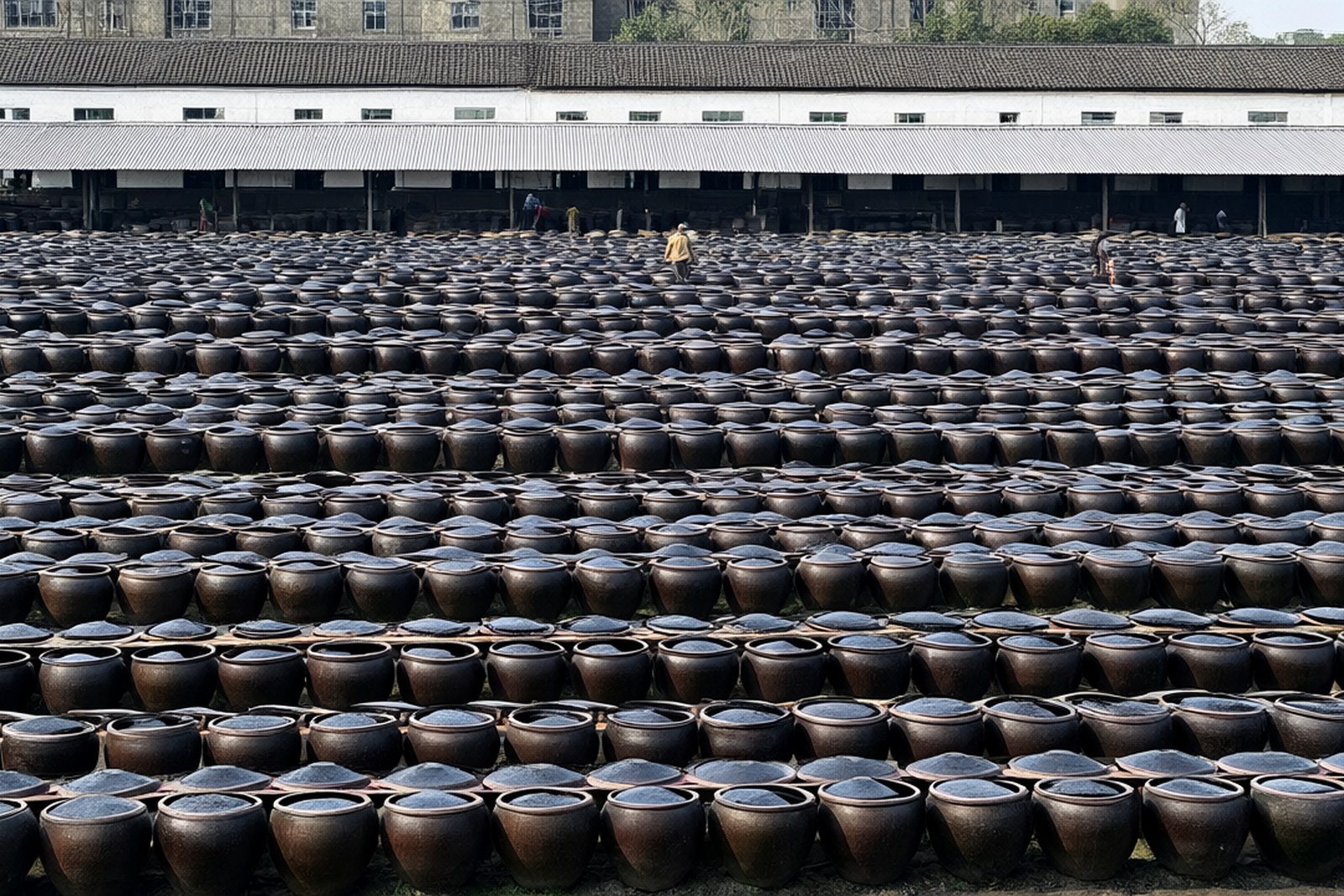
The method is the reason for all of it, and the method is unchanged. Soybeans and flour are mixed with salt water and packed into the jars; 立春 Lì chūn, the first solar term of the year, is the traditional moment for filling them, and the mash then goes through 小暑, 大暑 and 处暑 – high summer – being turned and topped up as it ferments under sun and dew, for ten months and more. A single jar yields around three hundred kilogrammes of sauce, and the first draw, the 头油 tóu yóu, is the best of it: darkest, thickest, highest in amino acids. Because the sauce is mildly acidic the jars cannot be metal; the traditional ones are fired from a blue-grey clay, and the sauce works still uses jars a century old. The finished product is described by its makers as having eighteen amino acids and more than two hundred and sixty aromatic compounds, and the makers’ own summary of its character is a set of paradoxes – deep in colour, thick in body, sweet without being sugary, salty without being briny, sour without being sharp. Xiangtan sits at twenty-eight degrees north, which gives the four distinct seasons and the long warm summer the fermentation wants, and the river gave it the transport it needed to sell the result.
Words and Names
酱油 jiàng yóu is soy sauce and 酱园 jiàng yuán a sauce works, the traditional compound with its own shop front. 晒露 shài lù, sun and dew, is the name of the outdoor ageing method and the thing that distinguishes this sauce from the industrial kind. 头油 tóu yóu, first oil, is the first and best draw off the jar. 醅料 pēi liào is the fermenting mash of beans, flour and brine. 老字号 lǎo zì hào, old brand, is the official honour roll, and 中华老字号 is its national form. 投料 tóu liào is the filling of the jars at the start of the year.
What the Locals Know
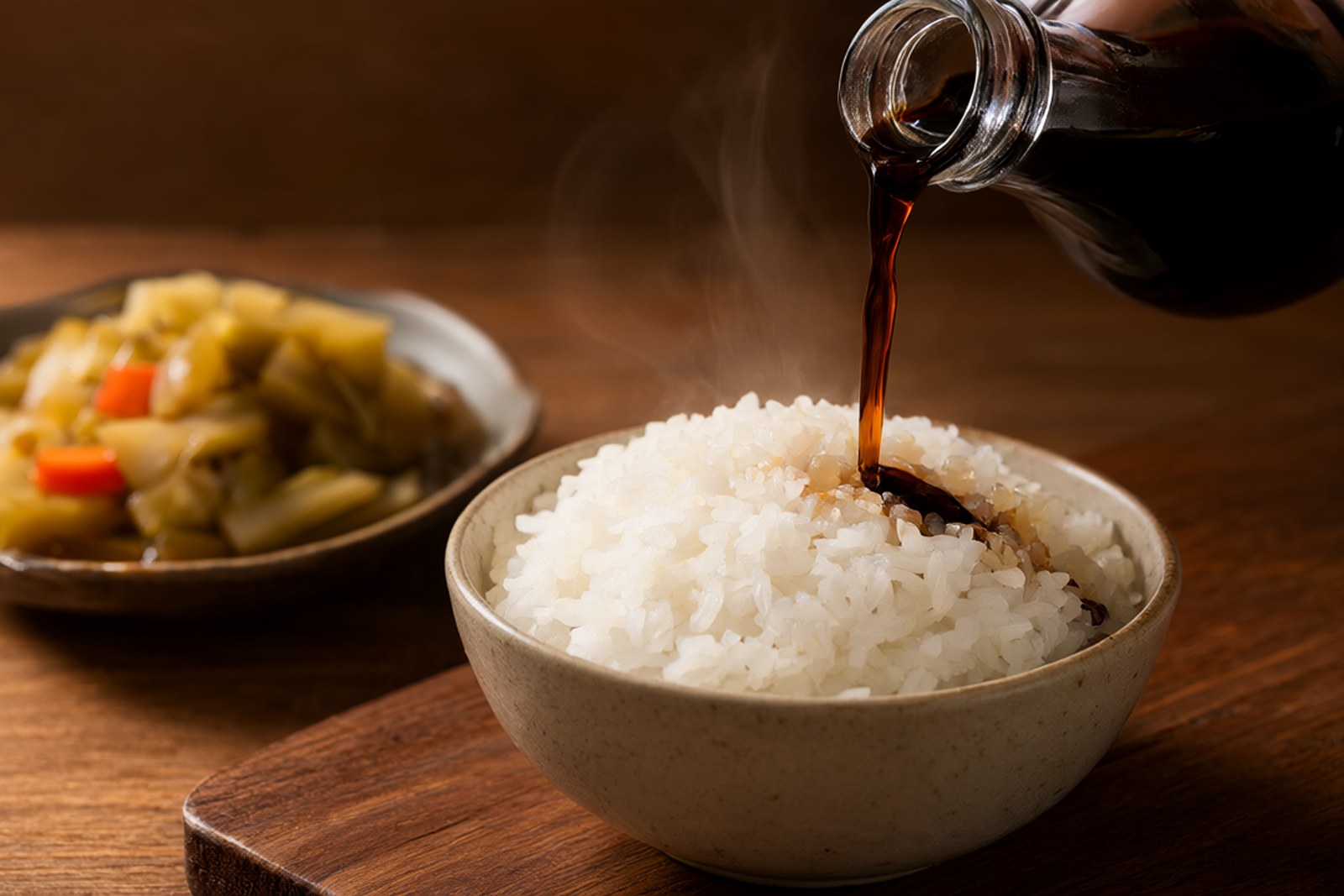
Xiangtan people will tell you that they were raised on 酱油泡饭 jiàng yóu pào fàn – hot rice with a spoon of this sauce and nothing else – and there are a lot of them who were. The city’s own proverb pairs the sauce with the local cake: 龙牌酱油灯芯糕 Lóng pái jiàng yóu dēng xīn gāo, which is how firmly the two are hooked together in the local mind. A line the shops like to quote is the one the Qing calligrapher 何绍基 Hé Shào jī is said to have left after eating a meal cooked with it, 三餐人永寿,一滴味无穷 – three meals a day and a long life, one drop and inexhaustible flavour. Buy it in the tall bottle rather than the sachet and look at the label for the words 天然晒露 rather than a fermentation time in days, because the honest indicator of the traditional method is the phrase and the price, not the wording of the marketing.
flowcloud would say that a sauce works which filled its jars at the start of spring, left them out for ten months, and then found that the first pour off the top was the best it had, has been running an argument with the modern food industry for two hundred and eighty years and is still winning the taste test.
Where to find it: every supermarket and grocery in 湘潭市 and anywhere else in Hunan, in bottles of about ¥15 to ¥40; the works itself is in the city’s economic development zone and runs a museum and a factory visit with the old clay jars on display, which is the one place to see the outdoor yard of fermenting jars at full scale. 湘潭站 Xiāng tán zhàn and 湘潭北站 Xiāng tán běi zhàn are both in the urban area, and the sauce travels well enough that a bottle is a reasonable thing to carry home.