
陆河擂茶 Lùhé léichá is Hakka pounded tea, and in 陆河县 Lùhé xiàn it is not a drink but a meal: a green paste ground in a grooved crock, cut with boiling water, salted, and eaten with a spoon and a bowl of rice. 汕尾市 Shànwěi shì is the prefecture the locals call 海陆丰 Hǎilùfēng, and 陆河 is the half of it that runs the other way, a wholly Hakka county in the hills behind the 莲花山脉 Liánhuā shānmài, while the coastal towns of 海丰县 and 陆丰市 below speak 福佬话 Fúlǎohuà. A coast that eats the tide flat and a hill country that pounds tea share one border.
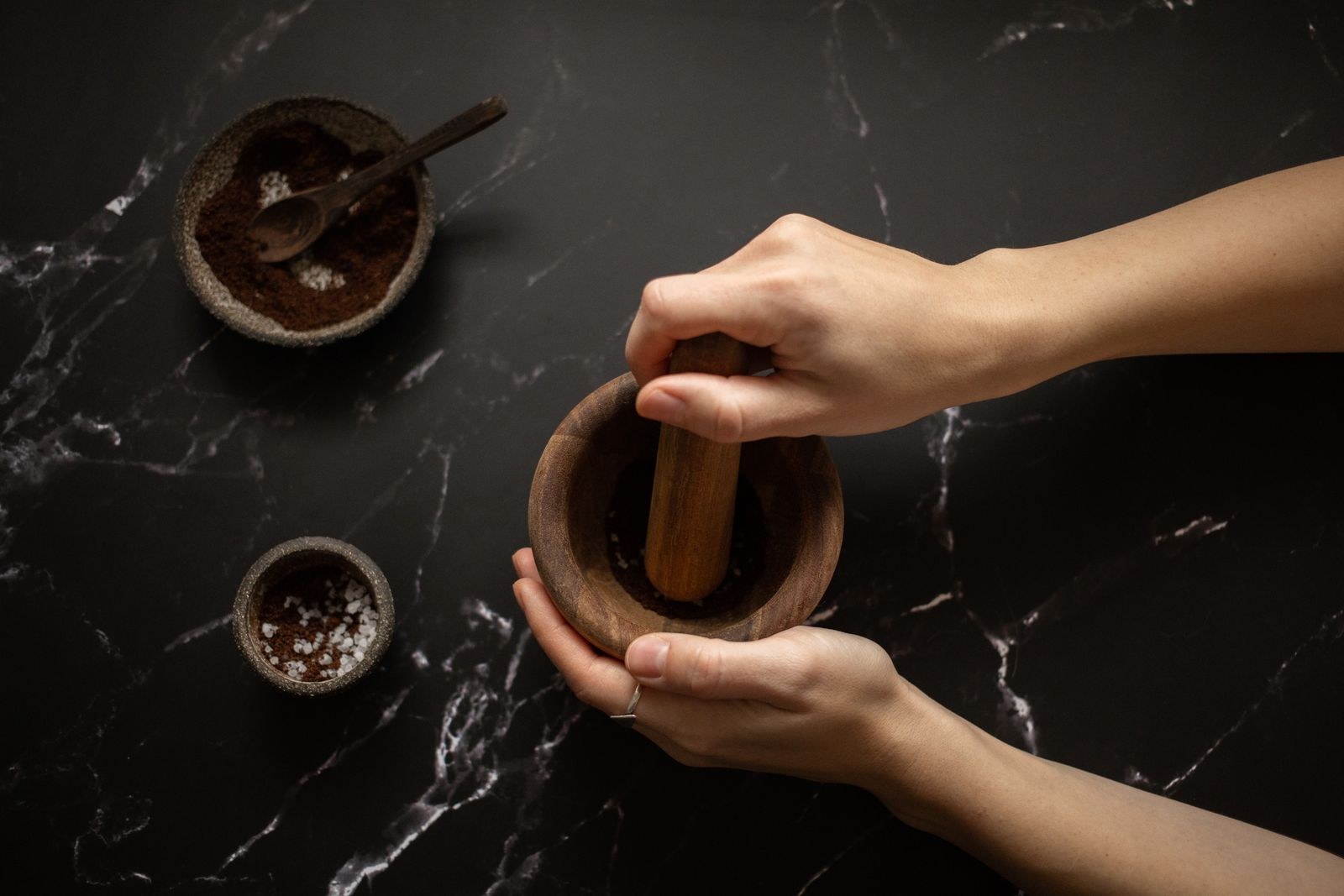
The equipment is specific. The 擂钵 léibō is a round pottery crock whose inner wall is cut with radiating grooves, an inverted cone about one and a half 市尺 across; the 擂茶棍 léichágùn, the pestle, is cut from 山苍树 shāncāng shù, the litsea, or from 油茶树 yóuchá shù, the oil camellia, and one county page adds 元樟木 yuánzhāng mù to that list, while every account agrees that other woods give the tea an off taste. You work it sitting, the crock between your legs, turning the stick round the inner wall.
Two forms come out of it. 咸茶 xiánchá, the plain tea, uses three things only – tea leaves, sesame and fried peanuts – ground to a paste, flooded with boiling water, salted and given a few mint leaves. 油茶 yóuchá, also called 生茶, is the elaborate one: mugwort, mint, fresh tea leaf, young maple shoots, 紫苏 zǐsū perilla, basil, coriander, 珍珠菜 and 苦刺心 are fried in oil, then pounded to a paste. The mnemonic for the grind is 一粗二顺三韧劲, tea leaves coarse, sesame smooth and even, peanuts added last and needing sheer persistence, and what comes out is the 茶泥 chání, the tea mud.
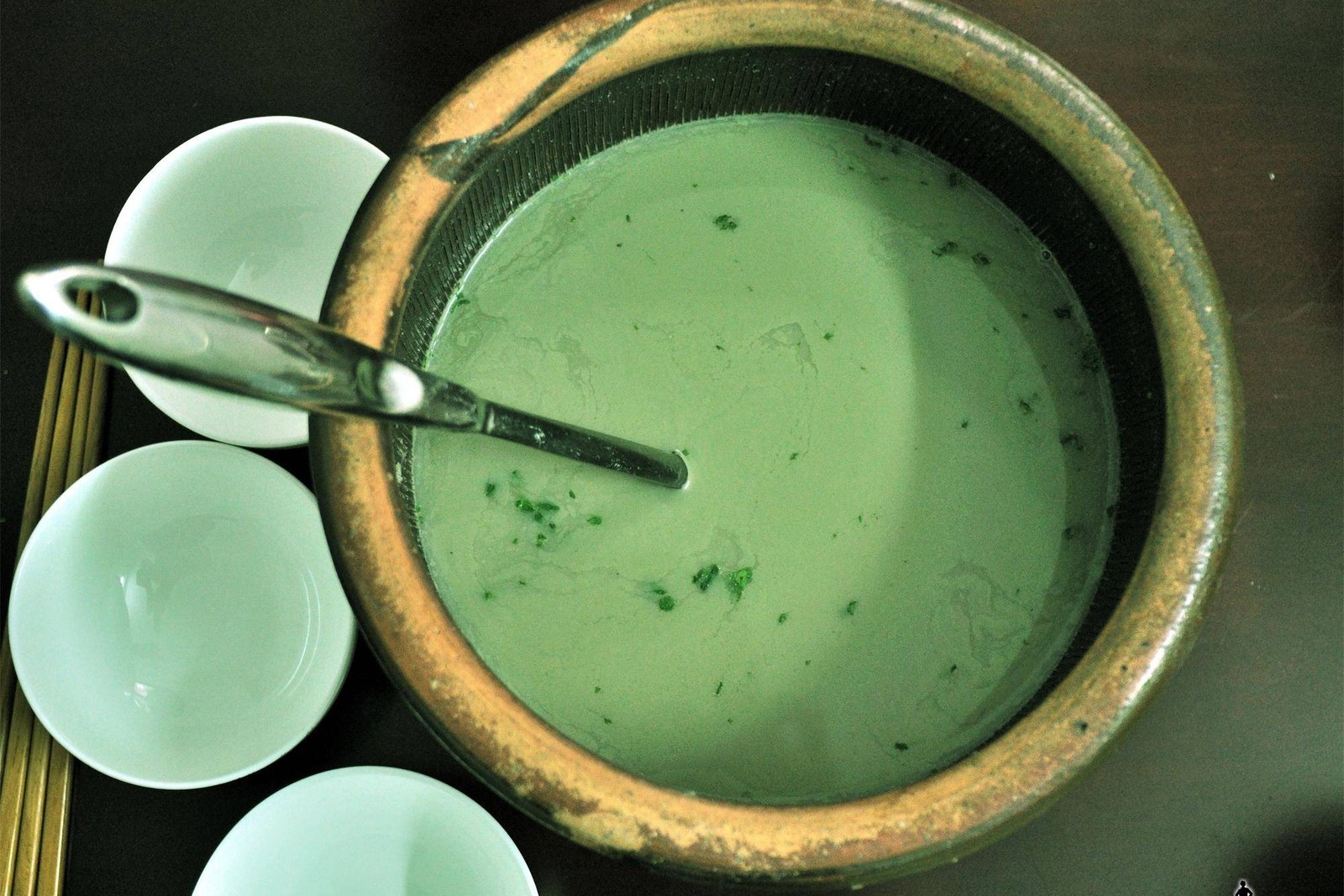
Eating it is a matter of what goes beside the bowl. The plain way is to drink it; the ordinary way is to float 炒米 chǎomǐ puffed rice, puffed glutinous rice, peanuts, rice crisps, beans and greens on the surface; the filling way, and the reason the county eats it every lunchtime, is to tip cooked rice into the paste and stir, which gives 饭茶 fànchá, rice tea, better again with shrimp, squid, shiitake and 芥兰 jièlán. The county’s own account of its effect – thirst, wind and cold, appetite, heat, the eyes, the skin – is attributed in the source to verification by Chinese medicine.
The history is the history of the Hakka migration. Ancestors moving south out of the central plains into the eastern Guangdong hills during the Tang and Song brought a tea habit that had already changed twice, the gruel tea of the Han and Wei and the salt tea of the Tang and Song, and 陆河擂茶 is the far end of that line: what the county calls the inheritance and mutation of Hakka pounded tea. The hills supply the reason, since a closed, wet, cold mountain country leaches iodine, sodium and selenium out of the body, and the tea that developed here is described as 暖胃、性温、理中, warming to the stomach.
Words and Names
擂茶 léichá is pounded tea; the verb 擂 léi is the grinding itself, and 陆河擂茶制作技艺 Lùhé léichá zhìzuò jìyì, the making technique, is the form on the provincial list. 咸茶 xiánchá and 油茶 yóuchá, also 生茶, are the two basic kinds, with 七样菜茶 qī yàng càichá, 山苍茶 shāncāng chá and 胡椒茶 hújiāo chá as named variations and 饭茶 fànchá the version with rice. 茶泥 chání is the paste; 牙钵 yábō is the mortar and 擂茶棍 the pestle; 炒米 chǎomǐ is the puffed rice floated on top. 开茶日 kāichá rì is the seventh day of the first month. In 海丰 the same two characters 咸茶 mean a different family of teas.
What the Locals Know
The day the county keeps is 正月初七 zhēngyuè chū qī, the seventh of the first lunar month, which 陆河 calls 开茶日 kāichá rì, the day tea opens. At noon every household lays out 七样菜茶, seven vegetables chopped small: red lettuce, celery, 芥兰, spring onion, garlic, coriander and snow peas, and only after that meal does pounded tea settle back into its ordinary place as the midday main dish. For the rest of the year it is the household stand-by, and the county’s own summary is that every family makes a crock a day. 以擂茶待客是最隆重的礼节, the most solemn welcome there is.
Two ways of drinking it are named. The elaborate one, several herbs and greens ground in, is 较丰富的饮菜, the richer way of drinking vegetables, and it is what the county’s tea shops sell; the plain three-ingredient 咸茶 is 较通俗的饮茶方式, the ordinary way, and it is what the villages of 南万镇 Nánwàn zhèn make. Recent years have added a public layer on top: pounded-tea competitions, heritage bases, school study sessions, a short-video collection, and, in 2025, the Olympic champion David Rudisha sitting down to try the pestle.
There is no single origin story. The county’s own pages carry three without choosing: a Three Kingdoms army under Liu Bei marching south and going down with vomiting and diarrhoea, which an old Hakka woman answered with pounded tea; the same Liu Bei at war with Cao Cao while a plague swept the camps; and a Han-dynasty general, 马援 Mǎ Yuán, on campaign in the south. A fourth is local, seven fairies picking greens in a farm garden at 东坑 and leaving seven vegetables behind. What is solid is the paperwork, since 陆河擂茶制作技艺 joined the fourth batch of Guangdong’s intangible cultural heritage on 21 February 2012, number VIII-48.
flowcloud would say that 陆河擂茶 is the one tea that comes with a spoon – three leaves, a handful of sesame and a fistful of peanuts ground against a grooved crock with a metre of litsea wood, salted, flooded, and poured over rice at noon by a county that has done it every day for as long as anyone has written it down.
Where to find it: the teahouses and family kitchens of 陆河县 Lùhé xiàn in the hills of northern 汕尾市 Shànwěi shì, above all in the county town 河田镇 Hétián zhèn and in the other seven towns; the villages of 南万镇 Nánwàn zhèn, where the plain three-ingredient 咸茶 is the local way; the ancestral halls on 正月初七 zhēngyuè chū qī, when the seven-vegetable bowl is made at noon; and the restaurants of 海丰县 and 陆丰市 that serve it beside 菜茶. The technique has also spread outward, into 揭西县 and northern 陆丰. Go at lunch, ask for it thick and with rice in it, and expect to be handed a spoon.