
One Pot at a Time: Lulang Stone-Pot Chicken
皂石为锅参作汤,一鸡香透鲁朗庄 Zàoshí wéi guō shēn zuò tāng, yī jī xiāng tòu Lǔlǎng zhuāng – A soapstone pot, ginseng in the broth; one chicken’s perfume fills the whole valley of Lulang
鲁朗石锅鸡 Lǔlǎng shíguō jī Every traveler on the G318 knows the moment: the road tops the pass, drops into the green valley of 鲁朗镇 Lǔlǎng Zhèn Lulang, and the lunch stops begin – because Lulang’s stone-pot chicken is not a dish you pass by. The pot arrives still boiling on its wooden trivet, a heavy cauldron of hand-carved 皂石 zàoshí soapstone from Motuo county, its dense grey stone holding heat for hours and lending the broth a smoothness diners swear they can taste.
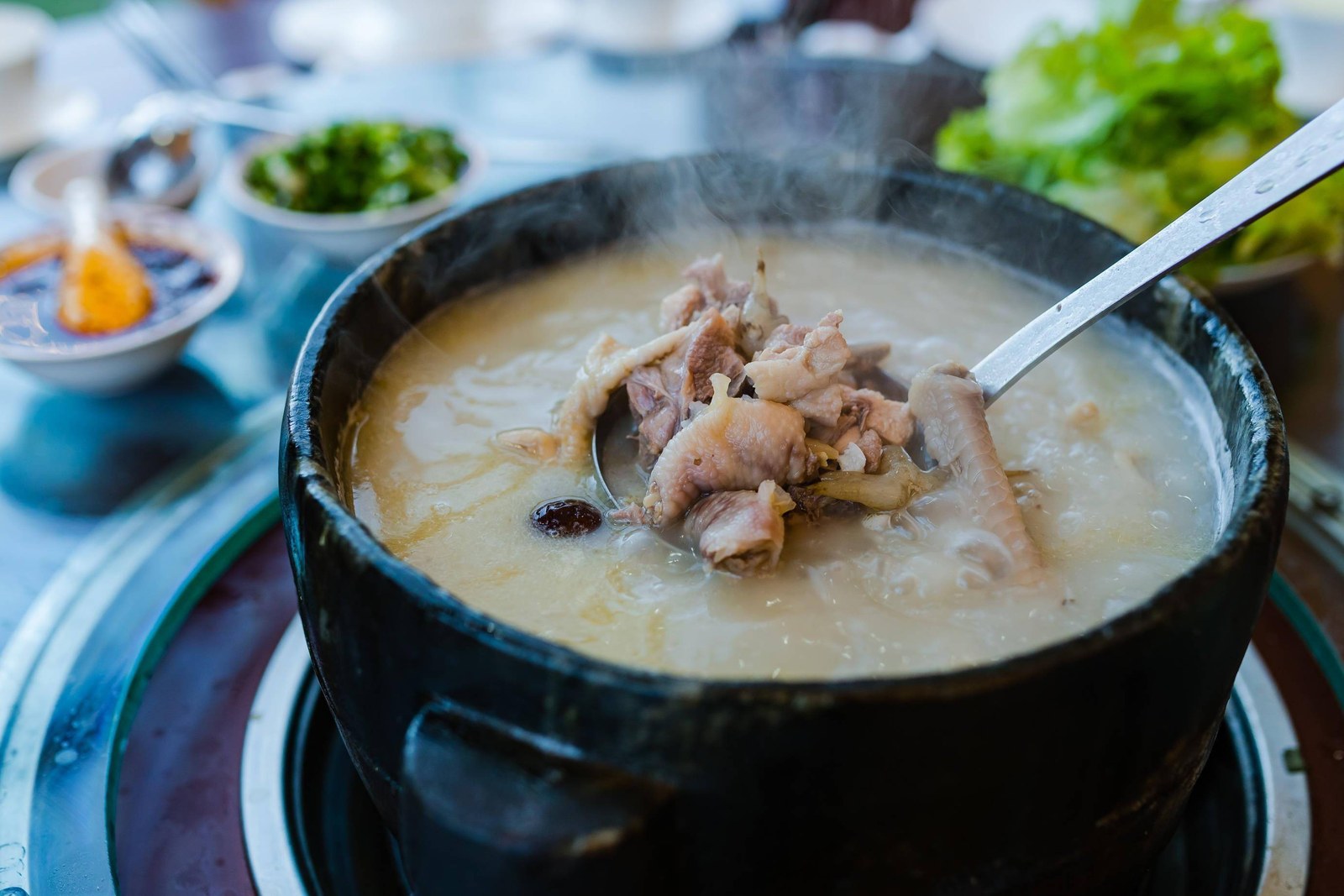
The recipe is simple and absolute: a whole highland chicken simmered since morning with 党参 dǎngshēn codonopsis and ginseng roots, white fungus, local mushrooms and goji berries, the broth pale, thick and fragrant with nothing but its own ingredients. The pot keeps cooking through the meal, so the soup deepens from first bowl to last – which is why tables order refills of broth rather than new dishes.
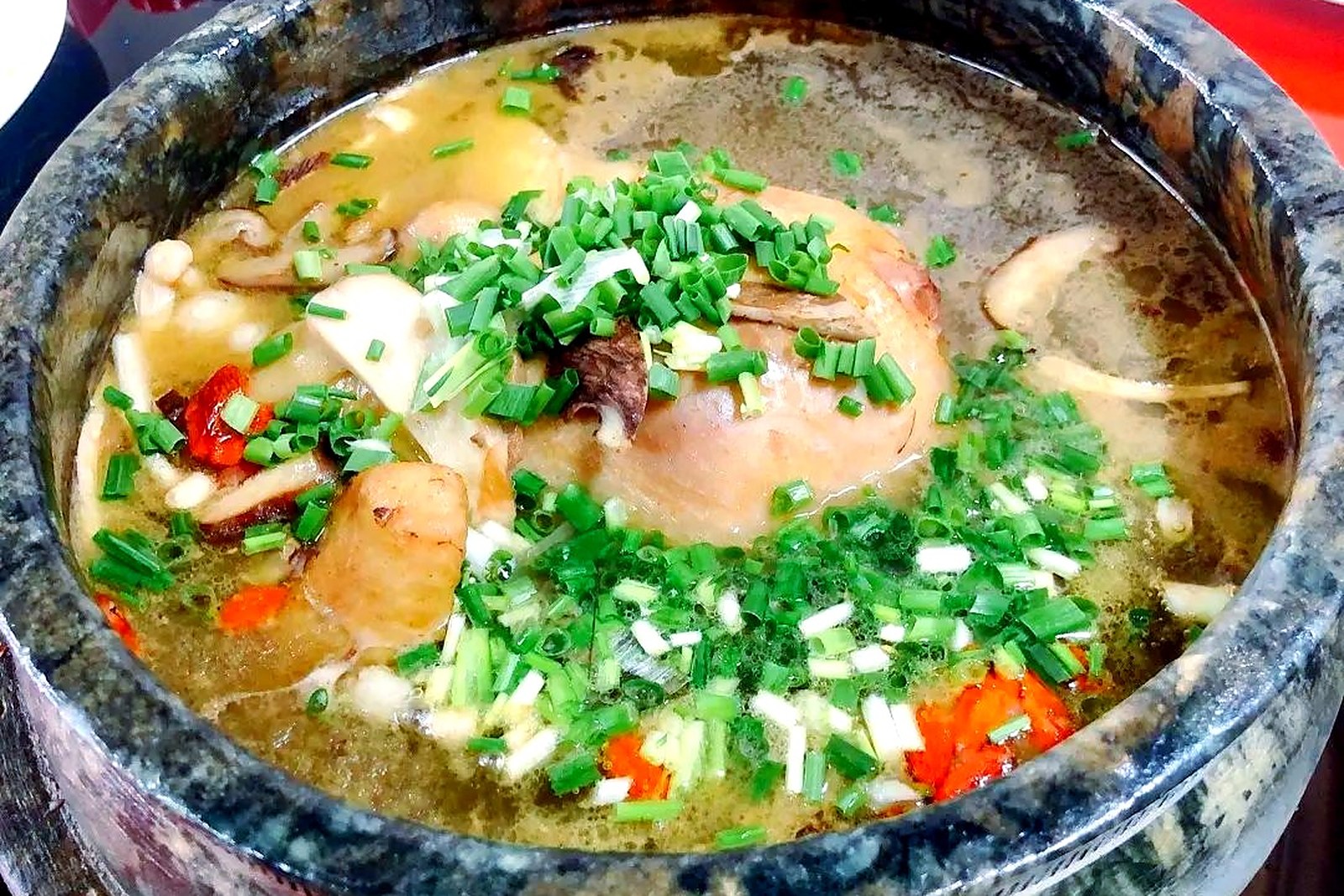
The stone itself is the story. Quarried in 墨脱县 Mòtuō Xiàn Motuo county, carved by hand into walls two fingers thick, each pot takes days to shape and seasons like cast iron over years of use; families pass them down, and Lulang’s restaurant street is lined with pots blackened by decades of broth. Locals credit the stone with trace minerals and a gentler heat; physics credits its thermal mass. Either way the result is a soup that stays at a rolling simmer until the last of it is gone.
Eating follows a rhythm regulars know. First the soup, ladled straight from the boil. Then the chicken, falling off the bone, and the roots and fungi from the bottom of the pot, by now soft and savory. Latecomers add greens, tofu or hand-pulled noodles to the remaining broth, and the pot keeps working until the last of it is gone. Bring an appetite: the pot is sized for the whole table, and no one leaves early.
Words and Names
鲁朗石锅鸡 Lǔlǎng shíguō jī Lulang stone-pot chicken, the valley’s signature dish; 皂石 zàoshí soapstone, the hand-carved Motuo stone the pot is made of; 党参 dǎngshēn codonopsis root, one of the tonic herbs in the broth; 手掌参 shǒuzhǎng shēn hand-shaped ginseng root, its partner in the pot; 墨脱皂石锅 Mòtuō zàoshí guō the Motuo soapstone cauldron that seasons like cast iron. The same 林芝市 Línzhī Shì Nyingchi holds more flavors worth chasing: 藏香猪 Zàngxiāng Zhū the forest pig of the oak valleys, 波密蜂蜜 Bōmì Fēngmì the blossom honey of the wet valley, 墨脱荞麦饼 Mòtuō Qiáomài Bǐng the hidden-valley buckwheat bread, or 青冈菌 Qīnggāng Jùn the wild mushrooms of the summer rains – four more doors into the same Nyingchi table.
What the Locals Know
Locals judge a stone-pot house by its broth refill: good kitchens top up the pot with the same stock it boiled in, not water. The first bowl is always the thinnest – drink it warm and wait for the second. And the stone pot never washes with detergent: hot water only, so the seasoned surface keeps doing its quiet work. All checked November 2026.
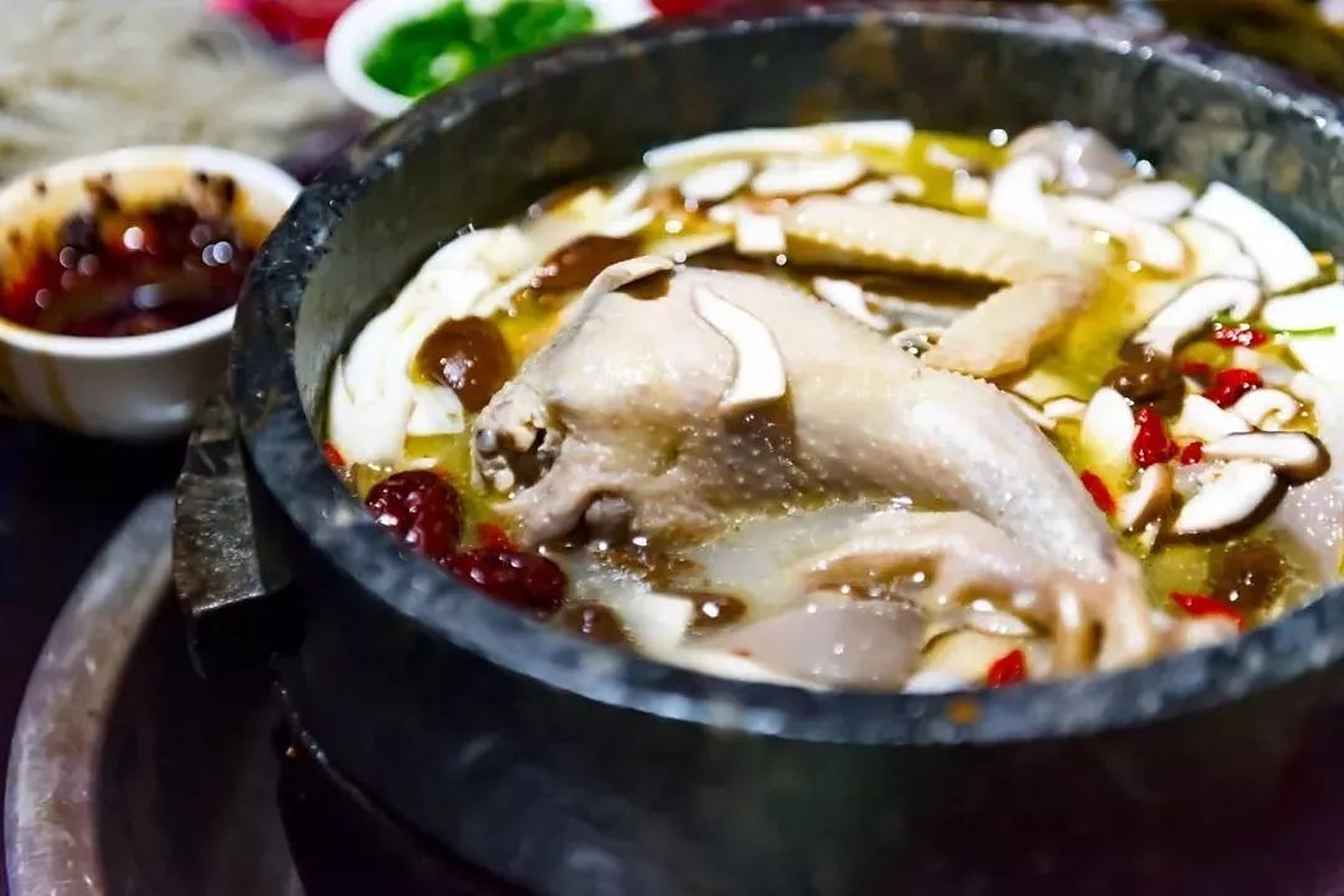
flowcloud would say the stone pot is a slow clock – the soup reads hours like minutes, and lunch lasts exactly as long as the broth keeps boiling.
Where to find it: The stone-pot restaurant street in Lulang town is the dish’s heartland, with reliable houses along the main row; Nyingchi’s Bayi town runs good kitchens a stone’s throw from the night market. All checked November 2026.