
腊风吹板陆良鸭,一片透明是冬藏。Là fēng chuī bǎn Lùliáng yā, yī piàn tòumíng shì dōngcáng – Cured wind presses the Luliang duck flat; one translucent slice is the winter’s store.
陆良板鸭 Lùliáng Bǎnyā Luliang board duck is the 腊味 làwèi cured-meat specialty of 陆良 Lùliáng Luliang county, in the 曲靖 Qūjìng Qujing basin south of the city – a whole 麻鸭 máyā local duck, salted, pressed into a flat 板形 bǎnxíng board shape and air-dried through the winter until the flesh goes firm, deep red and faintly 透明 tòumíng translucent at the edges. It is the north-east Yunnan answer to the region’s other famous cure, 宣威火腿 Xuānwēi Huǒtuǐ Xuanwei ham from the next county over, and the two divide the cured-meat trade: where the ham is a leg, the 板鸭 bǎnyā is a whole bird, bone-in, flattened so it dries evenly and ships flat. The ducks are fattened in the autumn, after the grain harvest when the paddy stubble feeds the flocks, slaughtered in the 冬月 dōngyuè winter months, and sold whole, wrapped in paper, through the 春节 Chūnjié Spring Festival as the county’s standard gift. A whole duck runs roughly 60-120 yuan depending on size (worth confirming the details), and the honest shape is that a 板鸭 bǎnyā is a provision rather than a restaurant dish: you buy one, keep it hanging cool and dry, and steam a piece when the table calls for it.
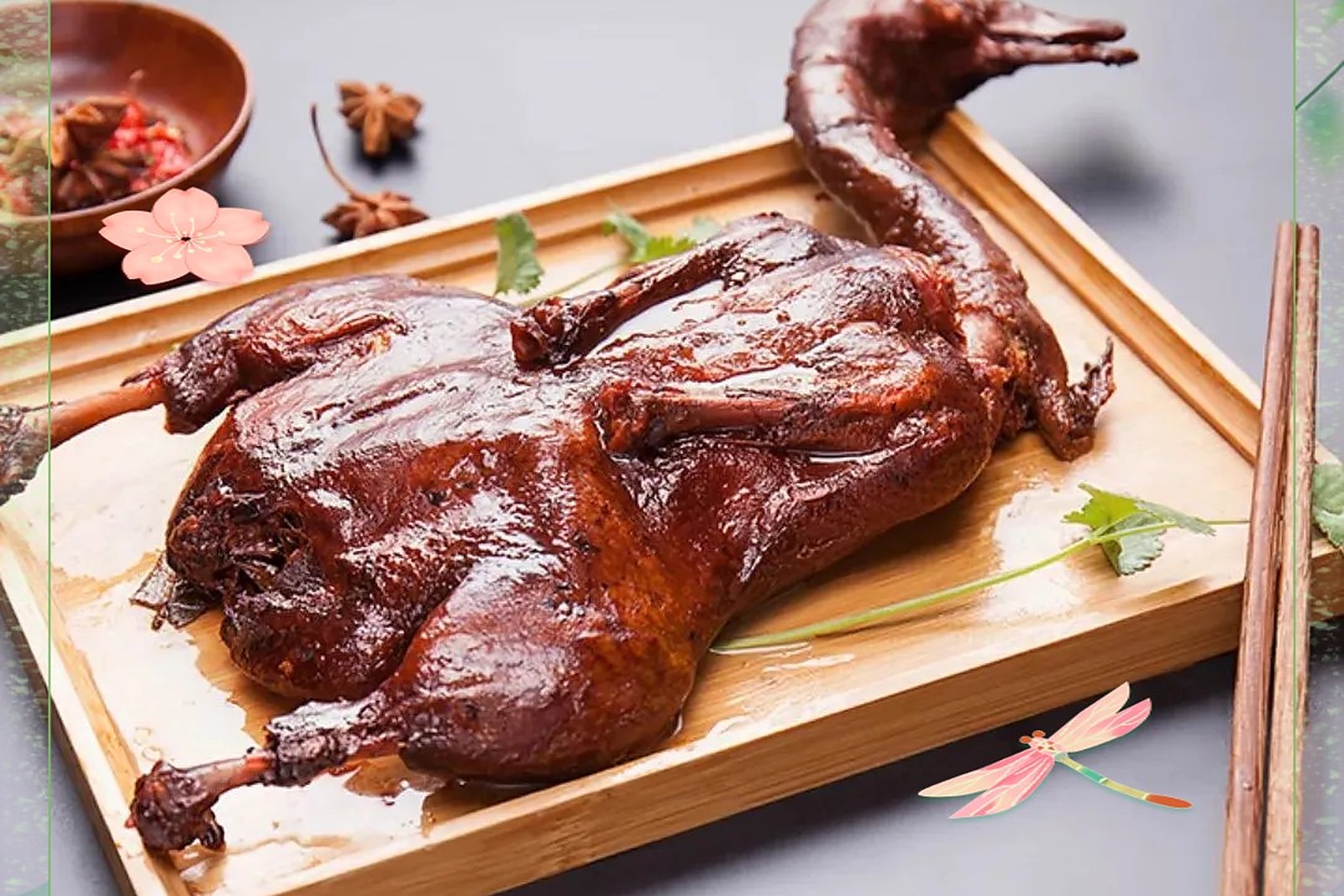
The mechanism is salt, press and dry winter air. The bird is cleaned, and the cure is plain: 粗盐 cūyán coarse salt rubbed inside the cavity and over the skin, with 花椒 huājiāo Sichuan pepper and a little 白酒 báijiǔ white liquor for the sharp, fragrant edge, and nothing else – no sugar cure, no smoking. The salted duck is laid between 木板 mùbǎn boards under a weight for days, which is what forces it into the flat 板形 bǎnxíng the name means: pressed, the muscles are squeezed evenly and the salt draws the water out in a straight line rather than letting the bird cure uneven and round. Then it hangs in the cool, dry 高原 gāoyuán air – Luliang’s sunny, arid winter is the right climate for it – for two to four weeks, until the skin tightens, the fat firms, and a sliced breast shows the colour that tells the cure worked: the 瘦肉 shòuròu lean 玫红 méihóng rose-red to deep red, the fat 洁白 jiébái white and still, the whole slice edged with translucence. That translucence is the test – an over-salted or under-dried duck reads opaque and chalky – and the honest cure eats 咸香 xiánxiāng salty-savoury rather than aggressively salty, because the salt was meant to preserve, not to season the meat into submission.
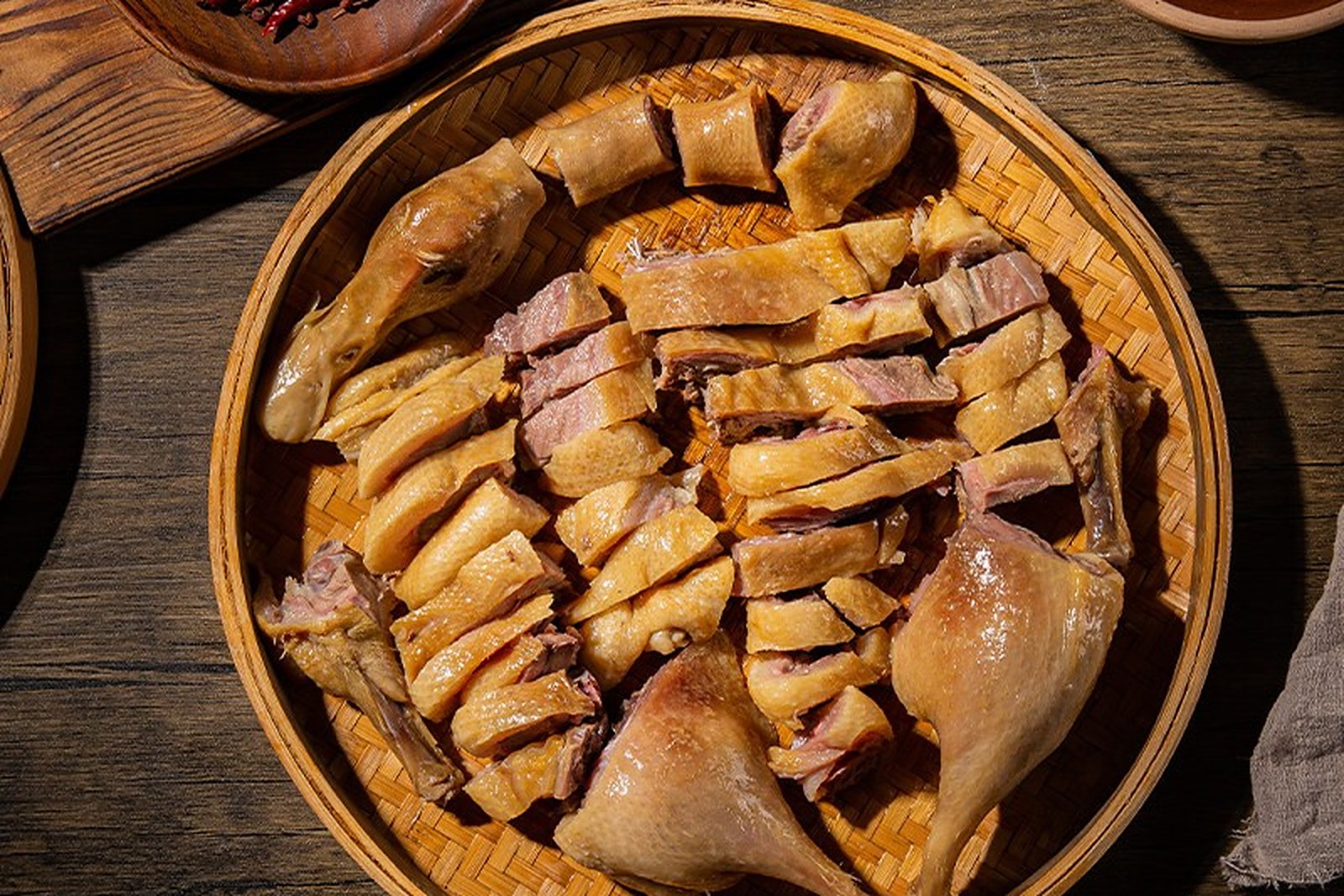
Locals eat it 蒸 zhēng steamed, and they eat it at the festival table. The move is to rinse the surface 盐霜 yánshuāng salt bloom off the duck, then steam it whole or halved for forty minutes to an hour, so the fat renders down and the meat goes tender under the skin, and carve it into 块 kuài chunks to be eaten warm, the skin first for its 腊香 làxiāng cured fragrance. The 蘸水 zhànshuǐ dip is optional and local: a mash of 糊辣椒 hú làjiāo roasted chili with 花椒面 huājiāo miàn and a splash of 醋 cù vinegar cuts the salt if the bird was cured heavy, and a thimble of 白酒 báijiǔ is the traditional partner. The honest tests are the slice and the smell: the lean should be 玫红 méihóng and faintly translucent rather than grey or chalky, and the aroma should be cured-meat 腊香 làxiāng with the duck underneath, never 哈喇 hālā rancid-fat or smoky, because Luliang’s duck is 风干 fēnggān air-dried, not smoked like the Sichuan versions. Newcomers are told one piece at a time – the duck is dense and salty, a 下酒 xiàjiǔ drink-with-it food rather than a rice-bowl centre – and that the season is the 冬月 dōngyuè cure months through 春节 Chūnjié, when the new crop of ducks hangs in every Luliang courtyard (worth confirming producers, sizes and prices).
Words and Names
陆良板鸭 Lùliáng Bǎnyā Luliang board duck · 陆良 Lùliáng Luliang · 曲靖 Qūjìng Qujing · 板鸭 Bǎnyā board (pressed) duck · 麻鸭 Máyā the local duck · 腊味 Làwèi cured-meat flavour · 粗盐 Cūyán coarse salt · 花椒 Huājiāo Sichuan pepper · 白酒 Báijiǔ white liquor · 风干 Fēnggān air-dried · 透明 Tòumíng translucent · 玫红 Méihóng rose-red · 蒸 Zhēng to steam · 糊辣椒 Hú Làjiāo roasted mashed chili · 宣威火腿 Xuānwēi Huǒtuǐ Xuanwei ham · 冬月 Dōngyuè the winter months · 春节 Chūnjié Spring Festival
What the Locals Know
The local knowledge about the duck is the press, the slice and the smell. The 板形 bǎnxíng board shape is the identity: the bird is weighted flat between 木板 mùbǎn so the salt cures it evenly, and a “board duck” sold slumped and round was pressed late or not at all. The second check is the slice: the lean should be 玫红 méihóng rose-red and faintly 透明 tòumíng translucent, the fat 洁白 jiébái and firm, and the taste 咸香 xiánxiāng rather than a mouthful of salt – an over-cured bird cannot be rescued, only soaked and steamed hard. The third is the smell: cured-meat 腊香 làxiāng with the duck underneath is right, and a 哈喇 hālā rancid or smoky note means the fat has gone or the bird was smoked rather than 风干 fēnggān air-dried. The fourth is the eating: steam it plain first, skin up, and only then the 糊辣椒 hú làjiāo dip with a splash of 醋 cù if the bird was cured heavy, because the duck is dense, salty and built to be eaten one piece at a time with 白酒 báijiǔ (worth confirming producers, sizes and prices).
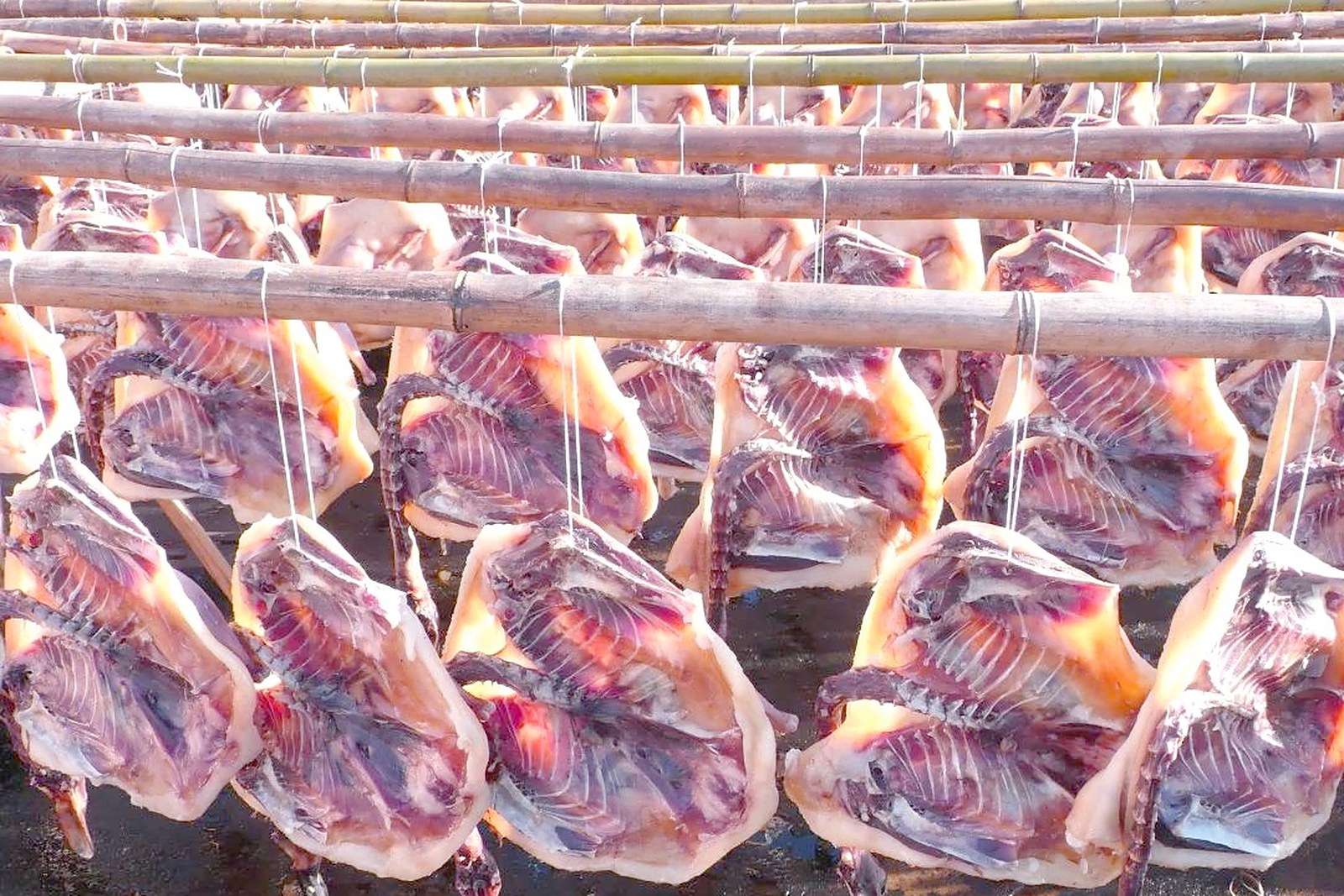
flowcloud would say that the Luliang board duck is salt, press and dry wind – a whole 麻鸭 máyā rubbed with 粗盐 cūyán and 花椒 huājiāo, weighted flat between 木板 mùbǎn and 风干 fēnggān until the lean turns 玫红 méihóng and translucent – and that the honest move is to buy one whole in the 冬月 dōngyuè cure season and steam it plain at the festival table, because the bird is a provision, not a restaurant order. All checked October 2026.
Where to find it: the cured-meat shops and producers of 陆良 Lùliáng county and the 曲靖 Qūjìng city markets – a whole 陆良板鸭 Lùliáng Bǎnyā runs about 60-120 yuan by size (worth confirming the details); look for the pressed 板形 bǎnxíng shape, 玫红 méihóng translucent lean and firm white fat, and steam it plain before reaching for the 糊辣椒 hú làjiāo dip. It is a winter cure, made from the 冬月 dōngyuè ducks and sold through the Spring Festival, air-dried rather than smoked. All checked October 2026.