
Lamb Raised on Poplar Leaves: Lop Sheep and the Red-Willow Skewer That Needs No Ceremony
红柳三签肉带香,火边风味是家常 Hóngliǔ sān qiān ròu dài xiāng, huǒ biān fēngwèi shì jiācháng – Three red-willow skewers carry the scent; by the fire, this flavor is simply home
The Lop sheep Luóbù Yáng grazes along the Tarim River in Yuli County, its range overlapping the poplar forests and the lush ma grasslands: the flocks eat poplar leaves, lush ma, and riverbank grass, and drink the Tarim’s mildly alkaline water. That menu builds mutton that is fine-grained, tender, and nearly free of gaminess – a top entry in any Xinjiang lamb ranking. Yuli people summarize its cooking bluntly: good lamb needs no complicated seasoning – a handful of salt and a red-willow skewer are enough.
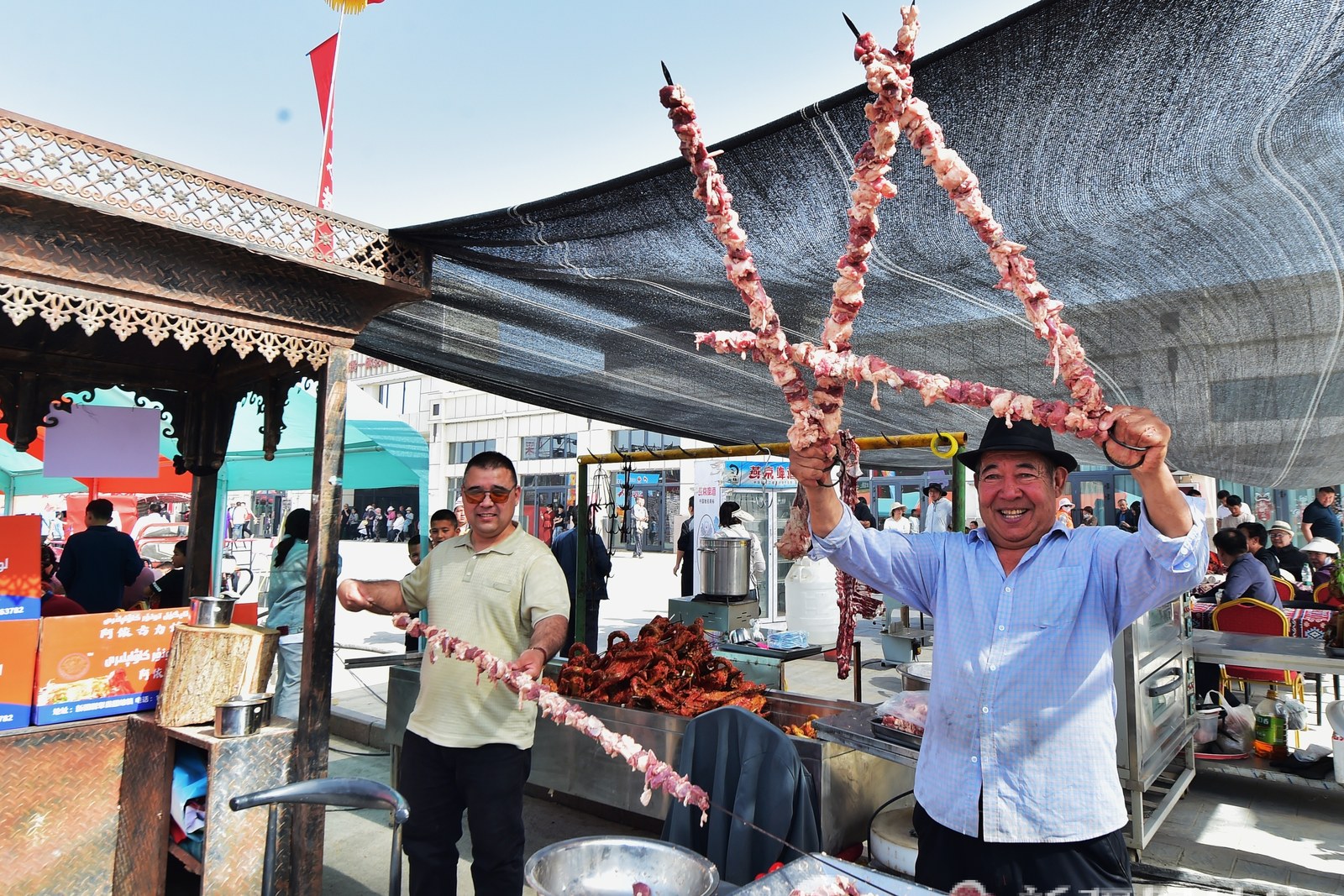
Red-willow skewer roasting is the landmark preparation: cut willow branches chopstick-thick, sharpen them, and thread big chunks of lamb. On the fire the willow weeps its own plant fragrance, and the sap in the wood cuts through the fat – the poplar forest’s private recipe for the grill. Yuli’s skewer stalls run chunks a size larger than elsewhere – three skewers make a meal – and the used sticks are collected and reused, a Tarim-basin tradition of thrift.
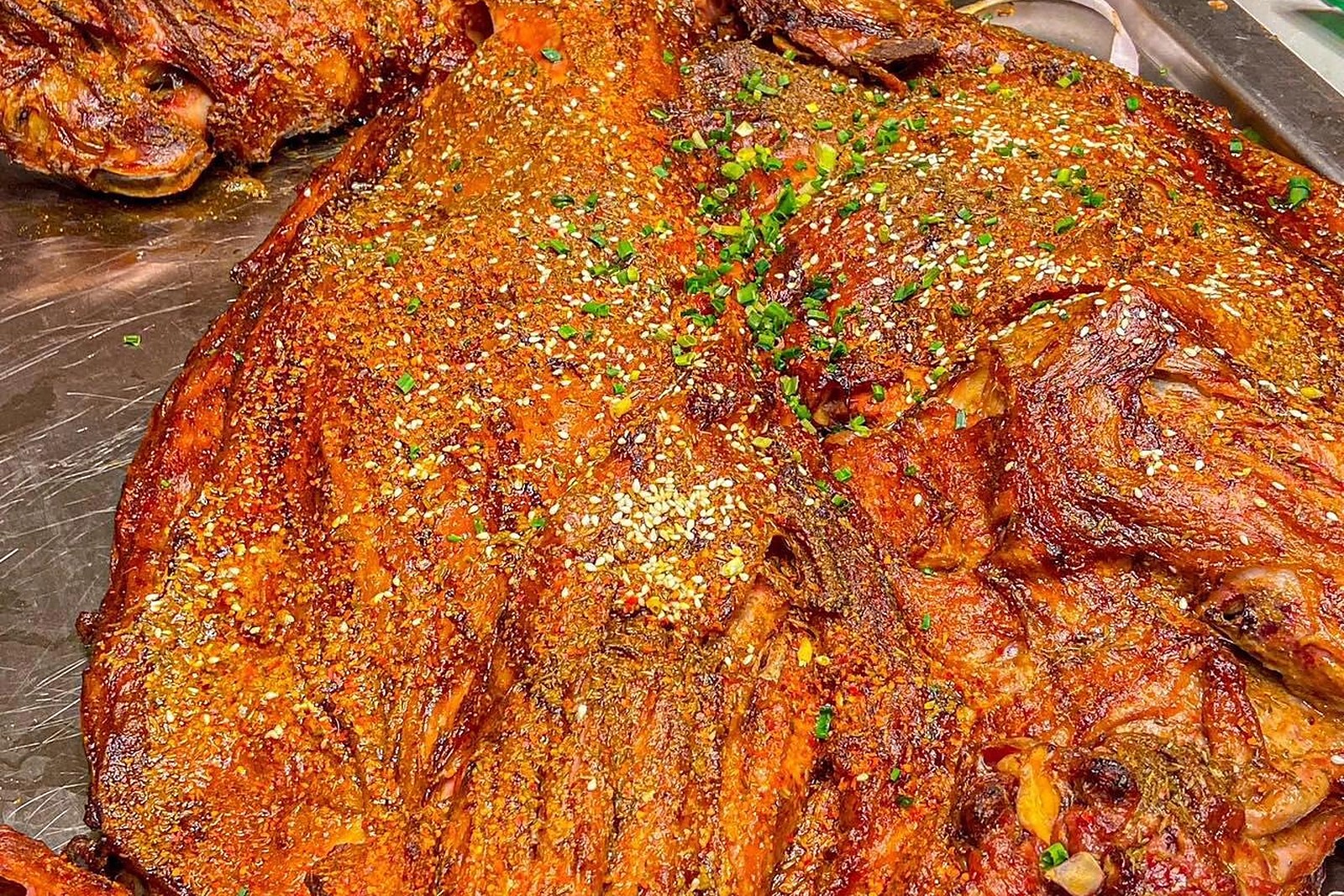
Whole-roast lamb is the ceremonial form: a whole animal slow-baked in a naan pit for two or three hours, coming out with skin so crisp it peels off in whole sheets by hand. Yuli banquets, festivals, and honored guests all end on it, served with naan and piyaz (onion), and the host cuts the fattest piece first for the elders. Travelers can book it with a farm-stay courtyard ahead of time – priced per animal, worth it with a group.
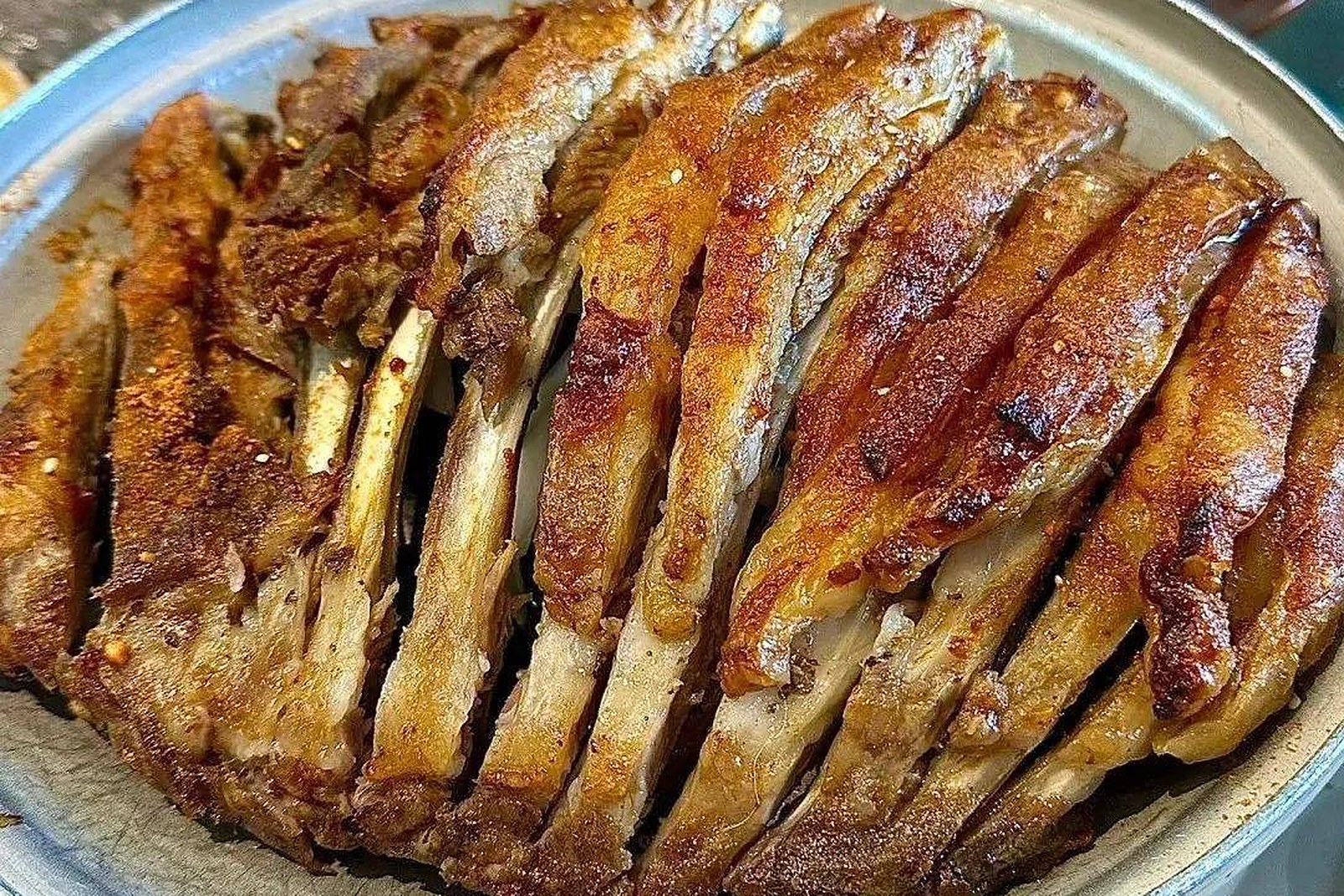
Naan-pit lamb is the whole roast’s everyday cousin: bone-in chunks marinated through, slapped against the inner wall of the pit, and baked until the crust crackles and the inside stays juicy. The roadside pits of Yuli town open at dawn – travelers on the road buy two pieces and pocket them, and the lamb’s residual warmth perfumes the naan it rides with. The local breakfast is hardcore: naan-pit lamb with brick tea, and no hunger until nightfall.
Yuli keeps a public test for lamb quality: boil a pot in clear water – no salt, no spices – and if the broth runs clear and the meat smells clean, the sheep is good; anything less cannot hide. Herders’ hand-pulled lamb follows exactly this logic, dipped in pepper salt with a bowl of the broth. The Lop sheep passes this exam, which is why the 「clear-water test」 sign can hang in the market at all.
Beyond the grill, the same 巴音郭楞蒙古自治州 Bāyīnguōléng Měnggǔ Zìzhìzhōu Bayingolin Mongol Autonomous Prefecture holds other flavors: 库尔勒香梨 Kù’ěrlè Xiānglí Korla fragrant pear, 博斯腾湖鱼 Bósīténg Hú Yú Bosten Lake fish, 若羌灰枣 Ruòqiāng Huīzǎo Ruoqiang grey jujube, and 胡杨菇炖鸡 Húyáng Gū dùnjī poplar mushroom chicken – four more doors into the same 巴音郭楞蒙古自治州 Bāyīnguōléng Měnggǔ Zìzhìzhōu Bayingolin Mongol Autonomous Prefecture. With the roast still on your mind, our Bazhou travel map fills the day.
Yuli’s night market lays the whole vocabulary out for you: skewer rows, ribs, rack meat, kidneys, all in one line, charcoal fires never dying along the street. The ordering strategy is simple – pick the stall with the fiercest coals and the busiest hands, sit down, order five to taste, then add ten. A cold kvas on the side completes the Yuli summer night.
To take away: air-dried lamb and vacuum-packed roast fill the specialty shops year-round. The dried version uses hind leg, torn into shreds as you chew, better with every bite; look for the 「Yuli Lop Lamb」 mark and complete origin and quarantine information before buying.
The flocks follow the Tarim through the year: riverbanks in spring, poplar-forest edges in summer, stubble fields after the harvest in autumn – four seasons, four menus. On migration days the sheep walk the highway, herders escort on motorbikes, and traffic yielding to a river of sheep is the most everyday scenery Yuli owns.
Offal soup is the other banner: tripe, lung-flour sausage, and rice sausage diced, scalded with bone broth, showered with coriander and chili flakes – one bowl and the whole body steams. Yuli mornings start on it, especially in winter: finish the soup before the pasture and the cold cannot catch you.
The history runs several layers deep: Silk Road caravans grilled meat on red-willow branches for the twin economy of fuel and flavor, and today the willow skewer has become a geographic signature in itself – any impostor roast elsewhere must first answer to the stick.
Family grills are standard courtyard equipment in Yuli, pit-style or rack-style; on weekends the family circles the fire, children turn the skewers, elders salt. Take a seat at a herder-stay dinner and there is always one empty stool by the grill – the host hides nothing, and teaches you to turn the skewers with more patience than he would teach you to ride a horse.
Cut-by-cut ordering is the connoisseur’s password: ribs for the grill, leg for the pit, neck torn by hand at peak aroma, tail fat saved for the soup pot. Regulars ask the cuts before the price, and the stall owner, hearing it, threads the next skewers with visible extra care.
Words and Names
What the Locals Know
flowcloud would say the Lop sheep eats like a local and tastes like a legend: poplar leaves in, gentle meat out, and a red-willow skewer is all the ceremony it needs. All checked November 2026.
Where to find it: Pick your charcoal stall by the fire in Yuli’s night market; for whole-roast lamb and hand-pulled lamb, contact the herder courtyards around Lop People Village in advance – freshly slaughtered and freshly roasted is the only way it lands. All checked November 2026.