
Luodian Lamb: White-Cut Mutton Early Tea, Mutton Soup Noodles and the Old-Street Broth Belt of Baoshan District, Shanghai
罗店晨光羊汤沸,白切一碟酒一盅。Luódiàn chénguāng yángtāng fèi, báiqiē yī dié jiǔ yī zhōng – At Luodian in the morning light the mutton broth boils; a plate of white-cut meat and a single cup of liquor.
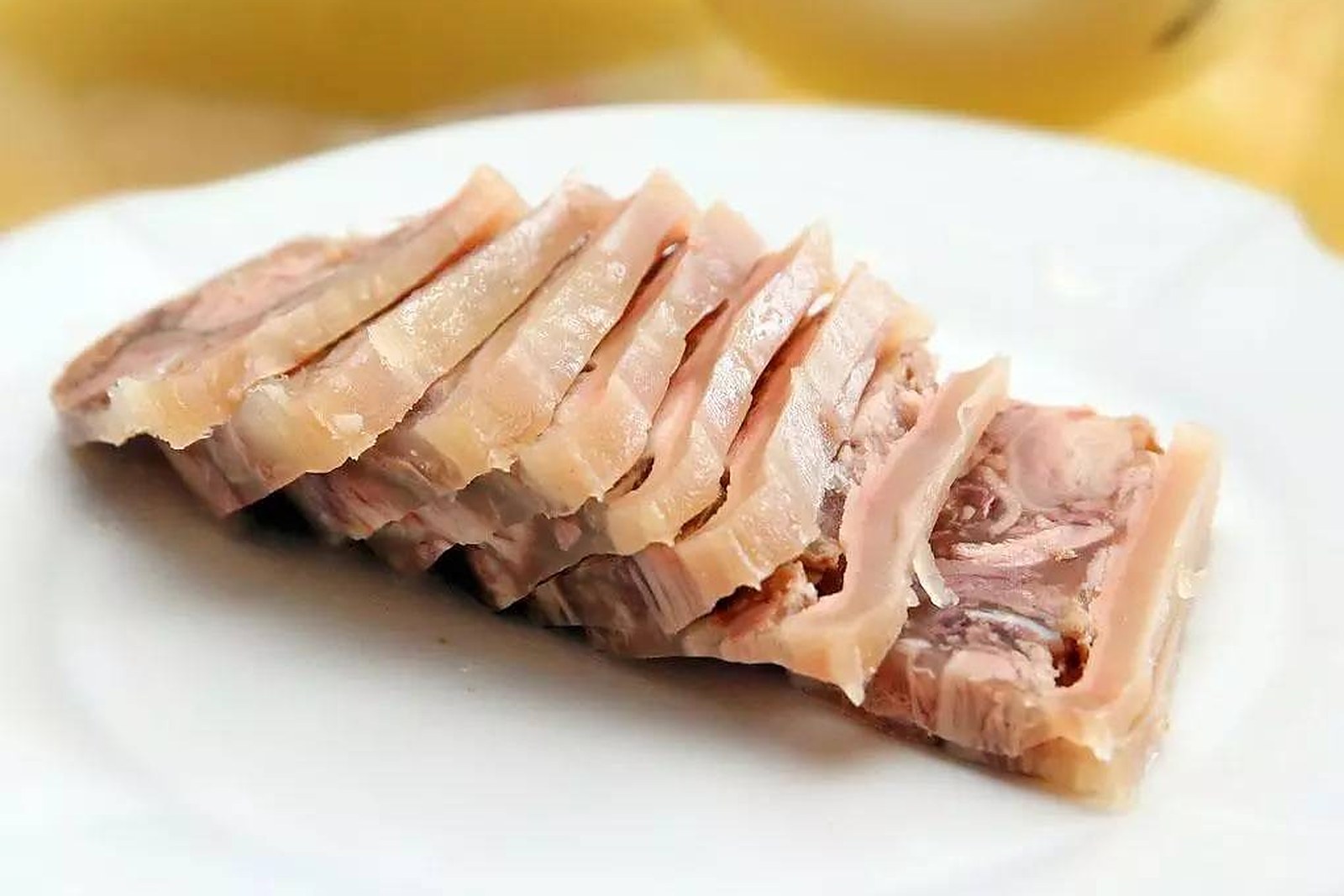
罗店羊肉 Luódiàn yángròu Luodian lamb is the mutton trade of 罗店老街 Luódiàn Lǎojiē Luodian Old Street, the old-town core of 罗店镇 Luódiàn Zhèn Luodian town in 宝山区 Bǎoshān Qū Baoshan District, Shanghai – the old river-market town on the district’s northern edge whose eating calendar runs on a single dish: 白切羊肉 báiqiē yángròu white-cut mutton and 白切山羊 báiqiē shānyáng white-cut goat, sliced thin from the morning pot and laid over 羊汤面 yángtāng miàn mutton soup noodles in the old street’s early-tea rooms. The custom is the 羊肉早茶 yángròu zǎochá mutton morning tea – breakfast taken as a proper seated meal of broth, meat and noodles, and for the old regulars the pairing of 羊肉配烧酒 yángròu pèi shāojiǔ mutton with a cup of 白烧酒 bái shāojiǔ clear white liquor, a dawn ritual the town keeps while the rest of Shanghai eats standing up (worth confirming the details – which soup house holds which frontage on the old street turns over as old towns do, and the specific doors are best confirmed on the street rather than recited). The trade runs strongest through winter, when the broth pots draw drivers and families from across the district. The clientele is the town itself: pensioners holding the dawn tables, weekend day-trippers filling the seats after them. The blunt definition: the early tea that eats mutton for breakfast – the taste of Baoshan eaten off a morning bowl in an old river town.
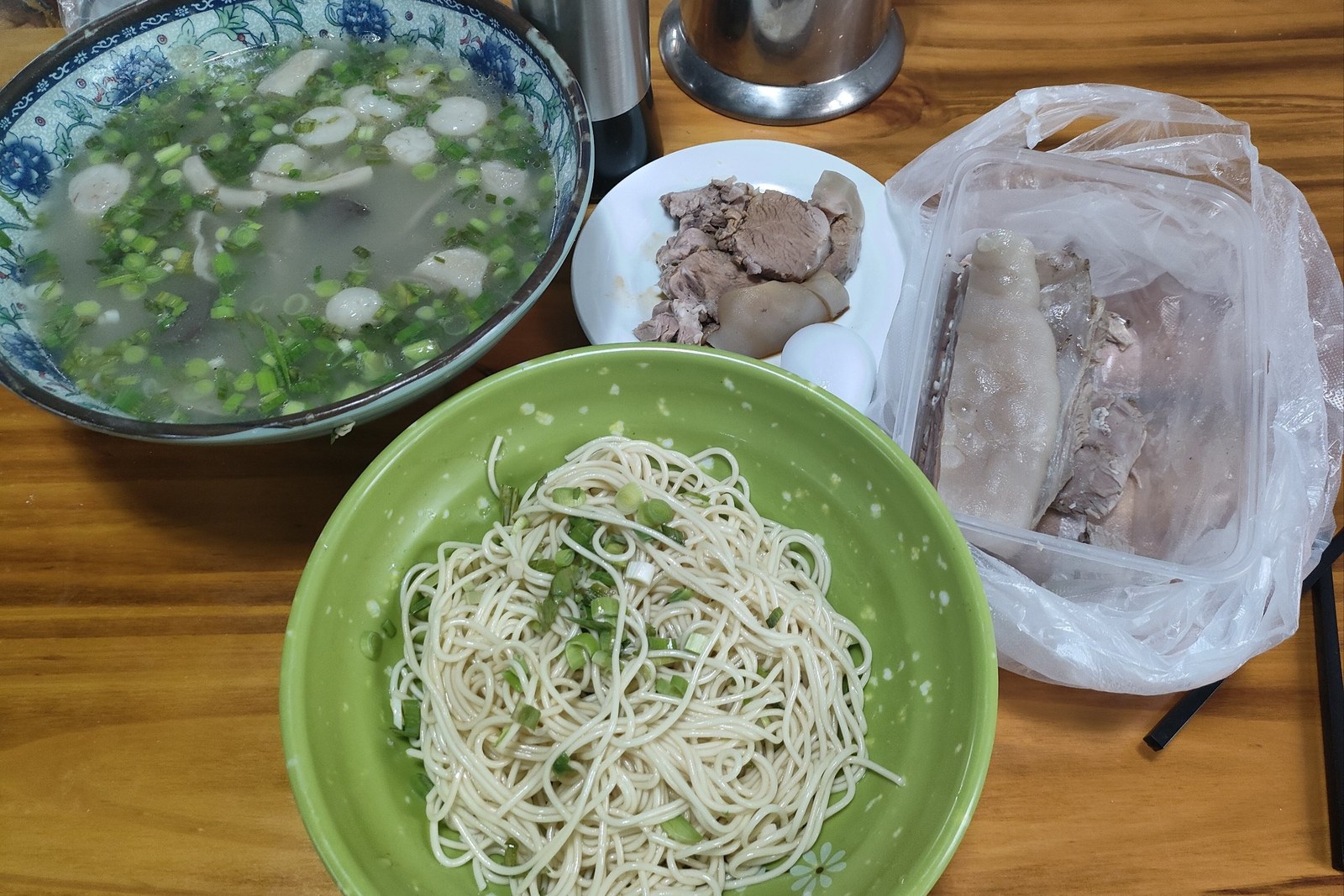
Call it honestly: old-town money on a winter-morning clock. Getting there is one door plus a connection: 地铁7号线 dìtiě qī hào xiàn Metro Line 7 to 美兰湖站 Měilán Hú zhàn Meilan Lake station brings you up the line’s northern reach, and the last stretch into the old town runs by bus – 公交 gōngjiāo local services connecting from the station toward the old-street lanes (worth confirming the details for the connecting routes and their frequencies, which follow the town’s market calendar more closely than the metro’s). A mutton soup noodle bowl prices at street-snack money, a full early-tea table of sliced mutton, noodles and liquor at casual-neighbourhood money – though exact figures are worth confirming the details on rather than quoting, the rooms being small, family-run and priced for the dawn regulars. The crowds run to the season and the clock together: winter weekends pack the soup houses through late morning, warm-weather weekdays thin the trade to the locals, and a winter weekday early morning, when the broth is at its overnight best and the tables belong to the regulars, is the eater’s own hour (worth confirming the details for individual rooms’ hours, which follow the early-tea clock rather than any posted sign).
The honest star is the morning itself, and the mutton is graded against it. What gets oversold is the “hidden food town” framing: guides sell a secret lamb capital of sensational bowls, and a first-timer may meet an ordinary old-street row of soup houses and breakfast windows – which is not the disappointment but the point. What repays the effort is grading the row the way the town does: a soup house judged by whether the broth is the same overnight pot the dawn regulars have drunk from for years, a white-cut plate judged by whether the goat is sliced warm with the skin on, a noodle bowl judged by whether the broth answers the noodles rather than the menu card. The test costs nothing: arrive at the early-tea hour rather than the lunch one, take the room with the oldest men at the tables, and order what they ordered – a town that has eaten mutton for breakfast for generations grades its kitchens daily, and the dawn queue is the certificate (worth confirming the details – the rooms migrate with the leases, and today’s plainest frontage may be next winter’s remembered one).
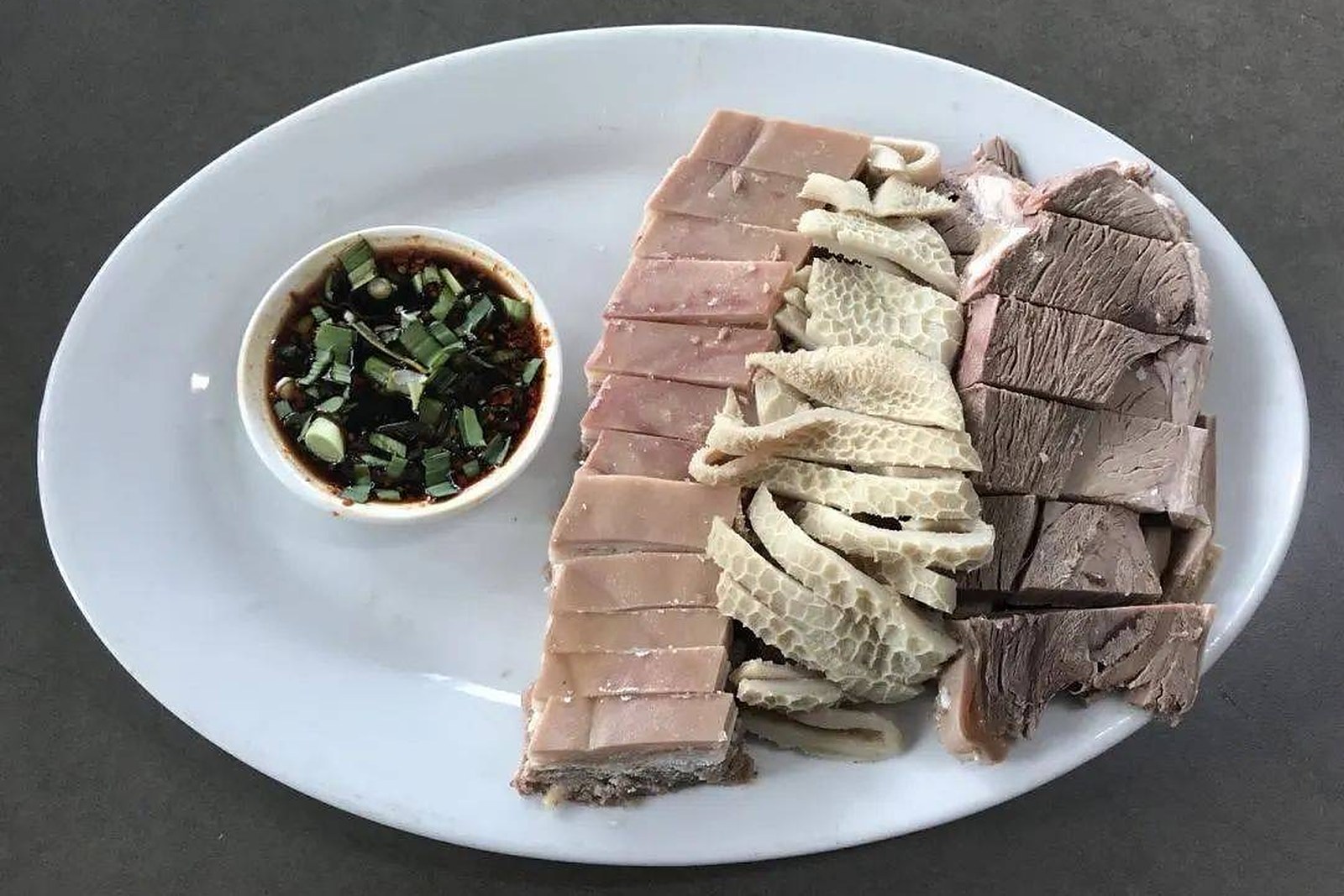
The town’s deepest habit is the pairing itself: 羊肉配烧酒 – the morning cup of white liquor set beside the sliced mutton, taken unhurried at the wooden tables while the broth pots steam behind the counter. Time it right – an early Line 7 ride out and the connecting bus on a cold weekday – and the bowl arrives as the tradition meant it: broth drawn from the overnight pot, meat cut from the morning batch, the dawn ritual intact (worth confirming the details – which rooms still serve the full early-tea pairing today, the custom thinning as the trade turns more seasonal).
The rest of this Baoshan list keeps other tables: the old-port benbang rooms of 吴淞老镇本帮菜 Wúsōng Lǎozhèn běnbāng cài Wusong Old Town eats simmer south along the river mouth, the shopping-district matrix of 牡丹江路商圈餐饮 Mǔdānjiāng Lù shāngquān cānyǐn Mudanjiang Road dining stacks up at the riverside commercial core, the workers’ breakfast belt of 张庙一条街小吃 Zhāngmiào yī tiáo jiē xiǎochī Zhangmiao street eats runs its morning griddles along Changjiang West Road, and the park-gate mall tables of 顾村周边美食 Gùcūn zhōubiān měishí Gucun area eats steam by the cherry groves – one district, four more tables, all inside 宝山区 Bǎoshān Qū Baoshan District; and when the early-tea morning needs a bed nearby or a broader route, the stay-and-street notes for the district pick up where the broth leaves off.
Words and Names
What the Locals Know
flowcloud would say that the 罗店羊肉 Luódiàn yángròu is the white-cut lamb and lamb-soup noodle mornings, broth pots and the old-street breakfast ritual of Baoshan District, Shanghai – a 羊肉早茶 yángròu zǎochá discipline where the winter cold answers the garlic-leaf scatter and the poured-out sorghum glasses of the regulars – and that the honest move is to sit down before nine, order the soup noodles with a side of white-cut, and let the locals-only table cast the vote, because the town built the habit and the habit keeps the town. All checked October 2026.
Where to find it: 宝山区 Bǎoshān Qū Baoshan District, Shanghai – the mutton early-tea belt of 罗店老街 Luódiàn Lǎojiē Luodian Old Street in 罗店镇 Luódiàn Zhèn Luodian town, reached from 美兰湖站 Měilán Hú zhàn on Metro Line 7 and the connecting buses into the old town, where the trade keeps the dawn clock – winter weekday mornings the early-tea regulars over their broth and liquor, winter weekends the day-trip tide through late morning, warm-weather weekdays a thinned, local trade (worth confirming the details – which soup house holds which frontage today, old-street doors turning over as old streets do); noodle-bowl to casual-neighbourhood table money, so call it worth confirming the details rather than a fixed number, and let the dawn table of regulars cast the vote. Luodian lamb is the white-cut mutton early tea, mutton soup noodles and the old-street broth belt of Baoshan District, Shanghai – the taste of 宝山区 Bǎoshān Qū Baoshan District eaten where the town takes its mutton at breakfast. All checked October 2026.