
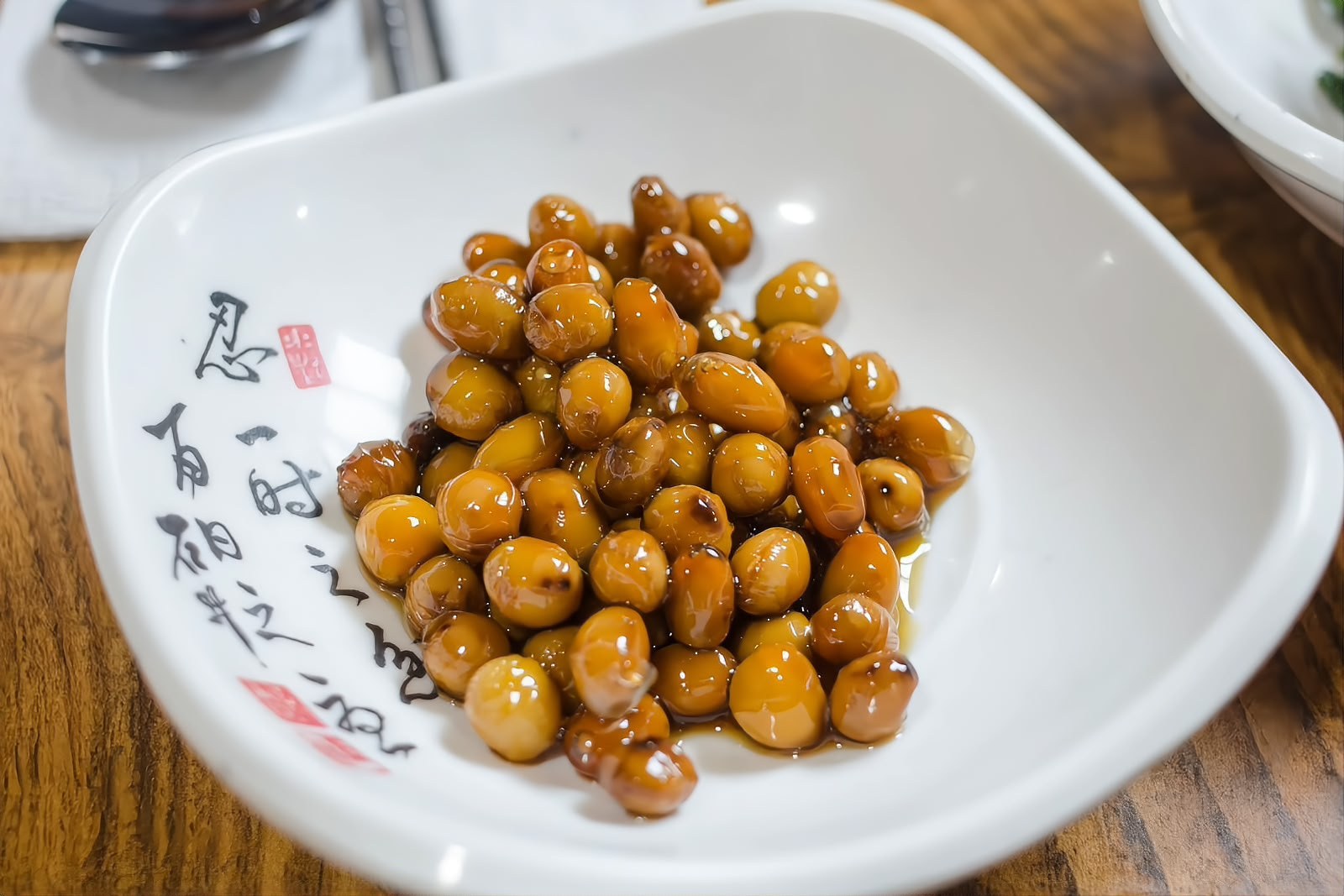
罗定豆豉 Luó dìng dòu chǐ is a fermented black bean, and the first thing to understand about it is that it is not salted and sold the same month. The bean goes through twelve steps and then sits out in a yard under the sun and the night dew for the better part of a year, and it is that year that makes it what it is. 豆豉 dòu chǐ is the general southern name for a fermented bean – the Japanese natto’s Chinese cousin, though nothing here is slimy – and China grows several regional styles: the black dry-cured bean of 阳江 Yáng jiāng in the west of Guangdong, the soft dark paste of Sichuan, the sweetened black bean sold in jars across the Cantonese world. The 罗定 version belongs to the dry, whole-bean family and is generally regarded, in the province’s own packaging language, as the standard bearer of the type. What comes out of the curing jar is a bean 乌黑油润 wū hēi yóu rùn, black and oiled-looking, whose flesh has gone 松化 sōng huà, crumbling into a savoury dust under the teeth, with a deep cured smell that has no sourness or mould in it at all. It is 豉味浓香醇厚 chǐ wèi nóng xiāng chún hòu, thick and mellow in the fermented-bean register, and the phrase the county keeps for the finish is 余味绵长 yú wèi mián cháng, the taste lasting on. It is a seasoning and also a dish in its own right, and one of the great Cantonese home dishes – 豆豉蒸排骨 dòu chǐ zhēng pái gǔ, pork ribs steamed under a spoonful of these beans – is barely more than the beans, the ribs and some garlic. That economy is the reason a county in the far west of the province has been making it for four hundred years: the bean is cheap, and it can make a small quantity of meat taste as if it had been cured.
The county’s dating is broad and consistent. The bean was 享有盛誉 xiǎng yǒu shèng yù, well known, by the end of the Ming and the start of the Qing; the county’s own reference texts say that domestic production began in the early Qing, 清初,罗定民间开始制作豆豉 Qīng chū, Luó dìng mín jiān kāi shǐ zhì zuò dòu chǐ, and that the trade reached its peak in the 民国 Mín guó, the Republican decades. That is a span of roughly three hundred and fifty years, and the period in which the county’s cured-meat trade was at its widest. The evidence for how old this is does not come only from the industry’s own papers, and the best piece of it is a poem. A scholar called 徐逢举 Xú Féng jǔ, of 东安县 Dōng ān xiàn – the county that is now part of 云浮 – who had passed the highest examination in the second year of the 乾隆 Qián lóng reign, which is 1737, wrote a small song about the food of the district which survives as a couplet: 榄角咸鱼豆豉蒸,蚝豉虾米买多丁 lǎn jiǎo xián yú dòu chǐ zhēng, háo chǐ xiā mǐ mǎi duō dīng, preserved olive and salt fish steamed with black beans, dried oysters and dried shrimps bought by the handful. It is a market list in verse and it is the sort of line that only gets written in a place where the cured bean is ordinary, and it puts 罗定’s kind of household provisioning on the page two hundred and eighty years ago.
The reason the bean cures as well as it does here is partly the climate and the county says so. 罗定 sits in a shallow basin shaped, in the county’s own image, like a winnowing basket with its mouth opened towards the north-east, 向东北开口的箕状盆地 xiàng dōng běi kāi kǒu de jī zhuàng pén dì, with an annual mean temperature of about 22.1 degrees Celsius, between 1260 and 1700 millimetres of rain a year, an average of roughly 1500, and a mean annual sunshine ratio of 42 per cent. The two properties that matter to a fermented bean are in that list. The first is the wet heat, which lets the mould grow outdoors without a climate-controlled room. The second is the wide swing between day and night, 昼夜温差变化大 zhòu yè wēn chā biàn huà dà, which is what a basin in the hills does in autumn and winter, and the county’s argument is that the swing is what makes the microflora of the curing bean more complex and the flavour more layered than a bean cured in a flat, even place. The same argument is made in wine regions about diurnal range, which is not to say the county borrowed it, only that it is a real thing that happens to organisms.
The twelve steps in the county’s own geo-indication text are 筛选 → 浸泡 → 蒸煮 → 冷却 → 制曲 → 洗曲 → 配料 → 装罐 → 后发酵 → 晾晒 → 挑选 → 包装 shāi xuǎn, jìn pào, zhēng zhǔ, lěng què, zhì qū, xǐ qū, pèi liào, zhuāng guàn, hòu fā jiào, liàng shài, tiāo xuǎn, bāo zhuāng – sift, soak, steam, cool, grow the mould, wash the mould off, season, fill the jars, ferment again, sun, sort, pack – and they can be simplified to nine core operations, which is the way the older texts give them. Beans are sifted and soaked; the county’s own ratio for the soak is one part water to one or two parts beans, at a water temperature of 20 to 25 degrees, for 15 to 25 hours depending on the season. They are then steamed in a flat pan for three to four hours, left to stand in the steamer off the heat for another four, and come out at about 50 per cent moisture. They are spread to cool to about 34 degrees and then go into trays and into the fermenting room, where the old method is not to add any starter culture at all: 不接种、常温制曲自然接种 bù jiē zhǒng, cháng wēn zhì qū zì rán jiē zhǒng, no inoculation, a natural culture grown warm. The room is held at 28 to 30 degrees, the bean mass must not get above about 36, and the mould runs for about ten days to a moisture of 20 to 25 per cent. In the version that does use a starter, taken from an old batch, the room is held under 40 degrees and the trays are turned twice – once when the white mycelium has covered the beans, once when its colour has begun to deepen. That is 制曲 zhì qū, the making of the mould, and the next step is the one that most surprises people who have only met a soy product in a factory.
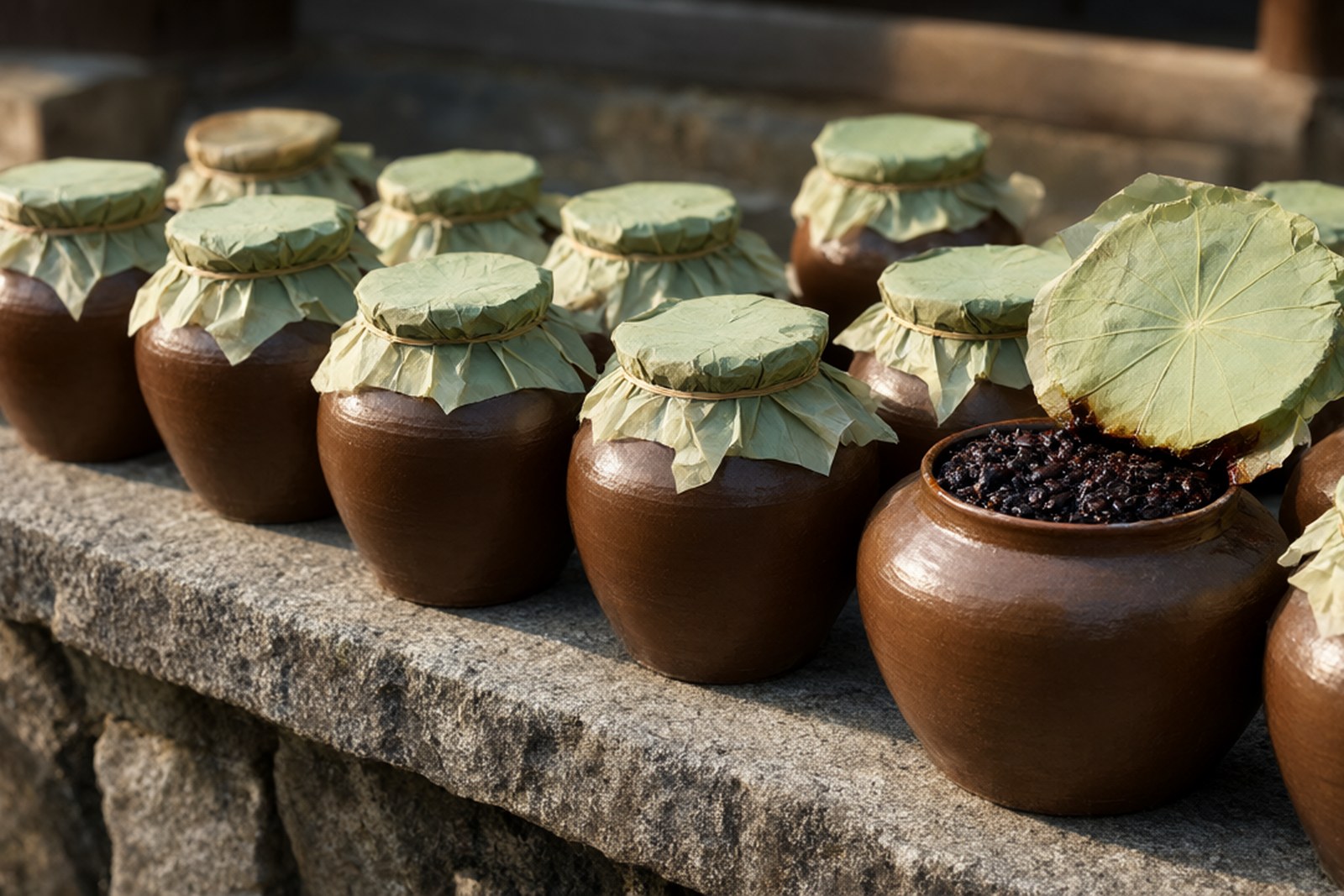
The mould is washed off. 洗曲 xǐ qū is done in running water – the county’s own texts say stream water – with the beans rubbed between the hands to take off the yellow mould and the surface, and rinsed and tossed until there is no yellow in the water and a handful of beans will not clump. Then the beans are soaked again in cooled boiled water until they have swelled back to the size and softness they had when they came out of the steamer. Only then does the salt go in: about 15 per cent by weight, or, in the account given by the modern standard, mixed at the point where the beans are at 50 per cent moisture and have come up to about 38 degrees, along with fresh ginger juice and a rice spirit. The dressed beans are packed into small-mouthed earthenware jars, filled right up, and sealed with oiled paper and a lotus leaf and a lid. Then the jars go out. In spring and autumn they stand in the open air; in summer they are moved into the shade, because the point is not to cook them but to let the weather work on them slowly. This last stage is called 晒露 shài lù, sun and dew, and it runs for about a year, which is why the county’s own literature describes a production cycle of one year and why a jar in a courtyard is not really being stored but still being made.
The Trade, the Grades and the Name
The bean is sold in a number of forms and the differences matter in the kitchen. There is 黄豆豉 huáng dòu chǐ, the yellow-soybean version, which is the more common one; 黑豆豉 hēi dòu chǐ, made from black beans, which is darker and slightly more medicinal in register; and 姜豉 jiāng chǐ, the ginger bean, with the fresh ginger worked in so that it can go into a dish more or less by itself. The dressed ginger version is the one that a household uses for fish and for steaming, because the ginger is already there and the flavour is more or less balanced for a Cantonese kitchen. The county’s output runs to about two thousand tonnes of beans a year, 2000 吨, most of which goes to the cities of the Pearl River Delta where the Cantonese cooking that uses them most is done. Production is concentrated in a handful of townships: 船步镇 Chuán bù zhèn, 附城镇 Fù chéng zhèn, 素龙镇 Sù lóng zhèn, 围底镇 Wéi dǐ zhèn and 罗城镇 Luó chéng zhèn. 船步 is the one that has been counted separately, and the figures are worth having because they show the size of a workshop: as of the end of 2017 the township had fifteen bean-curing households making about five hundred tonnes a year between them, worth four to five million yuan. Fifteen households, five hundred tonnes: that is a workshop of thirty-odd tonnes a year, which is a courtyard, a steamer, a few dozen jars and a man.
The official recognition has three separate layers and they are often collapsed into one another, so they are worth laying out. At the municipal and county level the technique was entered on the first batch of 罗定市 Luó dìng shì’s own intangible-heritage list in 2006, and it also sits on the third batch of 云浮市 Yún fú shì’s municipal list. At the provincial level, 2013 saw 豆豉酿制技艺(罗定豆豉酿制技艺)dòu chǐ niàng zhì jì yì (Luó dìng dòu chǐ niàng zhì jì yì), the bean-fermentation technique of Luoding, added to the fifth batch of the Guangdong provincial intangible-heritage list as an extension item. None of these is a national listing and the county does not claim one. What it does have at the national level is a geographical indication: on 8 March 2018 the national quality inspection administration granted protection to the name 罗定豆豉, under announcement number 31 of that year. In between, in 2017, the bean went onto the province’s second list of famous, special and excellent new agricultural products. The distinction matters because a geographical indication protects the name and the place of production, while the heritage listing protects the technique, and the bean has both.
The twentieth century left two marks on the trade worth mentioning. In January 1982 the county set up the 罗定县调味食品厂 Luó dìng xiàn tiáo wèi shí pǐn chǎng, the Luoding condiment factory, which mechanised what had been a hand trade; and in 1985 the export of the traditional-cured 原豉 yuán chǐ was resumed, which is to say the whole bean cured the old way and shipped out rather than sold locally. The modern brand most associated with the product is 泷江桥 Lóng jiāng qiáo, after the old name of the river and the bridge over it, and in 2023 that brand was one of the hundred 广东非遗手信 Guǎng dōng fēi yí shǒu xìn on the province’s intangible-heritage gift list. The bean has also had a small modern moment abroad: in a tasting event run as part of a Guangdong prepared-food promotion in the United States, a 豆豉鸡 dòu chǐ jī, chicken cooked with the beans, came first with 317,000 votes, which for a dish that in its classic form is a chicken, a handful of beans and a few aromatics is a fair result.
Words and Names
罗定豆豉 Luó dìng dòu chǐ is the bean: 罗定 the county, 豆 dòu a bean, 豉 chǐ the fermented preparation, so together the fermented bean of Luoding. 黄豆豉 huáng dòu chǐ is the soybean version, 黑豆豉 hēi dòu chǐ the black-bean one and 姜豉 jiāng chǐ the one made with fresh ginger. 制曲 zhì qū is the mould-growing step and 洗曲 xǐ qū is washing that mould off; 晒露 shài lù, sun and dew, is the year of standing in the weather that follows. 原豉 yuán chǐ is the whole bean aged the traditional way, as opposed to a ground or sweetened preparation. 船步镇 Chuán bù zhèn is the township whose workshops have been counted separately, 泷江桥 Lóng jiāng qiáo is the best-known modern brand, and 徐逢举 Xú Féng jǔ is the 1737 scholar whose couplet is the oldest written trace of the bean in this part of the province.
What the Locals Know
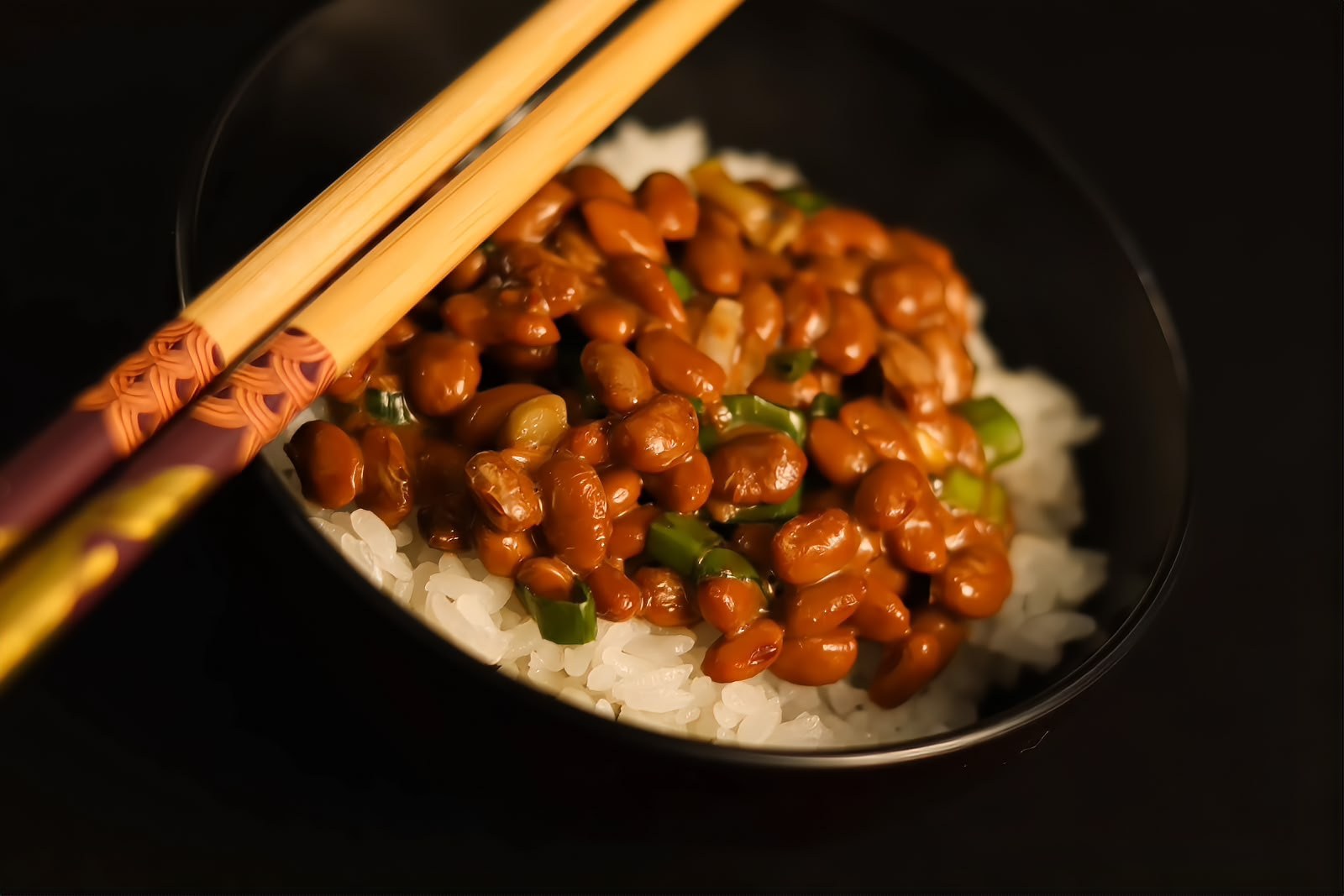
Judge the bean by its smell and its surface. A good 罗定豆豉 smells of cured bean and salt with a faint sweetness and no ammonia, no vinegar and no wet cardboard; the beans should be separate and dry to the touch, dark and glossy with their own oil rather than damp or greasy, and a bean broken between the fingers should give up its flesh like a crumb rather than a mush. Shake a handful in a paper bag and there should be almost no dust at the bottom. Look out for the difference between the plain bean and the ginger bean, because they are not interchangeable in a recipe: the 姜豉 jiāng chǐ has the ginger already worked in and is the one to buy if you are only buying one. In the kitchen, the beans are used in several distinct ways and it is worth knowing which you are doing. Steamed with ribs, chicken or fish, they are scattered on top with a little garlic and oil and steamed as they are. Fried, they are chopped roughly and turned in oil until they split and smell nutty, which is what a 豆豉鲮鱼 dòu chǐ líng yú, the tinned fried dace with black beans that every Cantonese household knows, is built on. In a sauce, they lend the dark cured register to 豉汁 chǐ zhī, the black-bean sauce for fish and for clams. They are heavily salted in their own right, so salt the dish after they go in and not before. Kept in a jar in a cool dry place a bag of these lasts for many months and will not go off in the way a fresh fermented product does, because a year in the weather has already dried and stabilised it; a jar that has gone damp is one to throw out. If you can get to a yard in 船步镇 Chuán bù zhèn in the autumn, the thing to see is the rows of small-mouthed jars with their oiled paper and lotus leaves, because no part of the process is more counter-intuitive to a modern cook than a food that is deliberately left outdoors for a year.
flowcloud would say that the most interesting thing about 罗定豆豉 is that the recipe’s most important ingredient is a year of weather, and that a county in a damp basin worked out that the sun by day and the dew by night would do to a soybean what no amount of skill in a kitchen could.
Where to find it: the curing yards and shops of 船步镇 Chuán bù zhèn, 附城镇 Fù chéng zhèn, 素龙镇 Sù lóng zhèn, 围底镇 Wéi dǐ zhèn and 罗城镇 Luó chéng zhèn in 罗定市 Luó dìng shì, and the markets and condiment counters of 罗定市区 Luó dìng shì qū itself; the brand 泷江桥 Lóng jiāng qiáo, which is the one most widely stocked outside the county. 罗定 is in the west of 云浮市 Yún fú shì, about an hour and a half by road from 云浮市区 and reached by bus or car; the county has no useful rail service. Buy the 姜豉 jiāng chǐ if you are only buying one kind, ask for the plain whole bean 原豉 yuán chǐ if you want the older-style article, and check the date of curing rather than the date of packing if a shop can tell you what it is. A jar carries home easily and improves a kitchen more than almost any other food in the prefecture.