
Luzhu Huoshao: The Old-Broth Offal Pot of Beijing’s Deep Winter
一锅老汤煮下水,火烧吸饱深冬香。Yī guō lǎo tāng zhǔ xiàshuǐ, huǒshao xī bǎo shēndōng xiāng – One pot of old broth simmering the offal; the huoshao bread drinks its fill, fragrant in deep winter.
卤煮火烧 lǔzhǔ huǒshao luzhu huoshao is Beijing’s working-class answer to the banquet: a bowl of dense wheat 火烧 huǒshao unleavened flatbread cut into cubes and drowned in a dark, years-old broth with 猪小肠 zhū xiǎocháng pork small intestine, 猪肺 zhū fèi lung and 油豆腐 yóu dòufu fried tofu wedges, everything simmered in the same pot that never fully goes cold. The dish carries its own founding legend: it is traced back to 苏造肉 Sū zào ròu “Su-stewed meat”, a Qing-palace recipe attributed to a cook surnamed Su, which – the story goes – filtered out of the palace and onto the street, where costly pork was replaced by offal and the bread itself became the starch, putting a whole dinner in one bowl for a laborer’s coin (worth confirming the legend – the 苏造肉 Sū zào ròu palace origin is counter lore, and the best-known lineage name attached to the dish is 小肠陈 Xiǎocháng Chén “Chen of the Small Intestines”, a story to hear rather than a certificate to check). The craft is all pot and knife: the offal must be scrubbed and pre-cooked until it tastes of the broth and nothing else, the 火烧 huǒshao is cut to the customer’s request – 井字 jǐngzì cross-hatch or thick wedges – and the bowl is finished at the board with 蒜汁 suànzhī garlic juice, 韭菜花 jiǔcàihuā chive-blossom paste, 腐乳 fǔrǔ fermented bean curd and 辣椒油 làjiāoyóu chili oil (worth confirming the condiment set house by house).
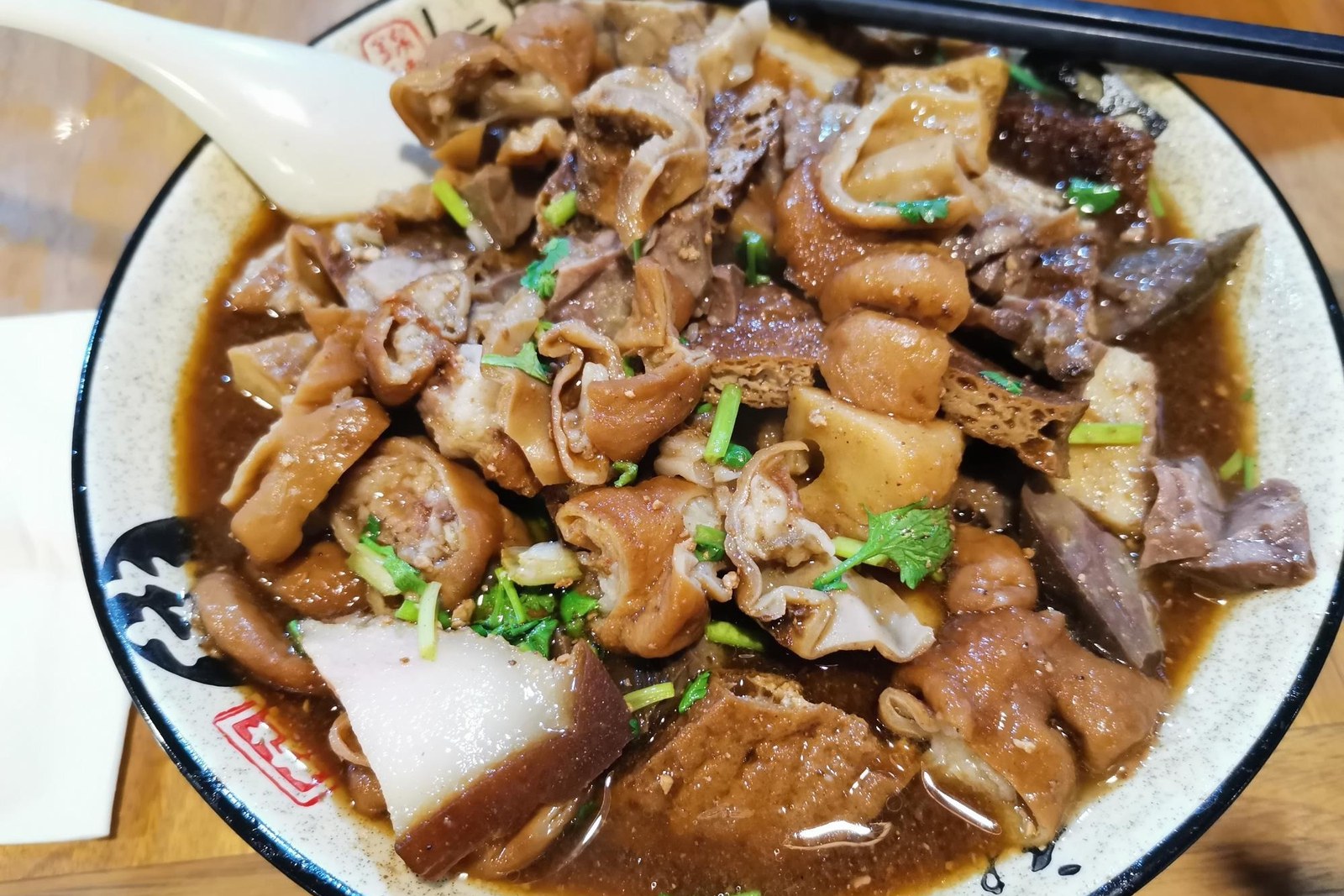
The honest grade is a winter grade. 卤煮 lǔzhǔ lives at plain counter shops – steam-fogged windows, a big pot at the front, a board and a cleaver – across 东城区 Dōngchéng Qū Dongcheng District’s older streets, and a loaded bowl runs roughly 30-50 yuan, with seconds on bread costing pocket change (worth confirming – the price tracks how much intestine and lung you ask for). Lunch through evening is the service window, and the honest order is spoken, not pointed: say what you want more of and less of – 肥 féi fatty, 瘦 shòu lean, more lung, no lung – because the pot is a menu, not a single dish. The test is the offal itself: a good house scrubs until there is nothing of the barnyard left, the broth – old, dark, soya-and-offal deep – should taste cleaned and layered, never sour or muddy, and the 火烧 huǒshao should be cut thick, saturated through but not collapsing, eating like dumpling dough that has been drinking broth all day.
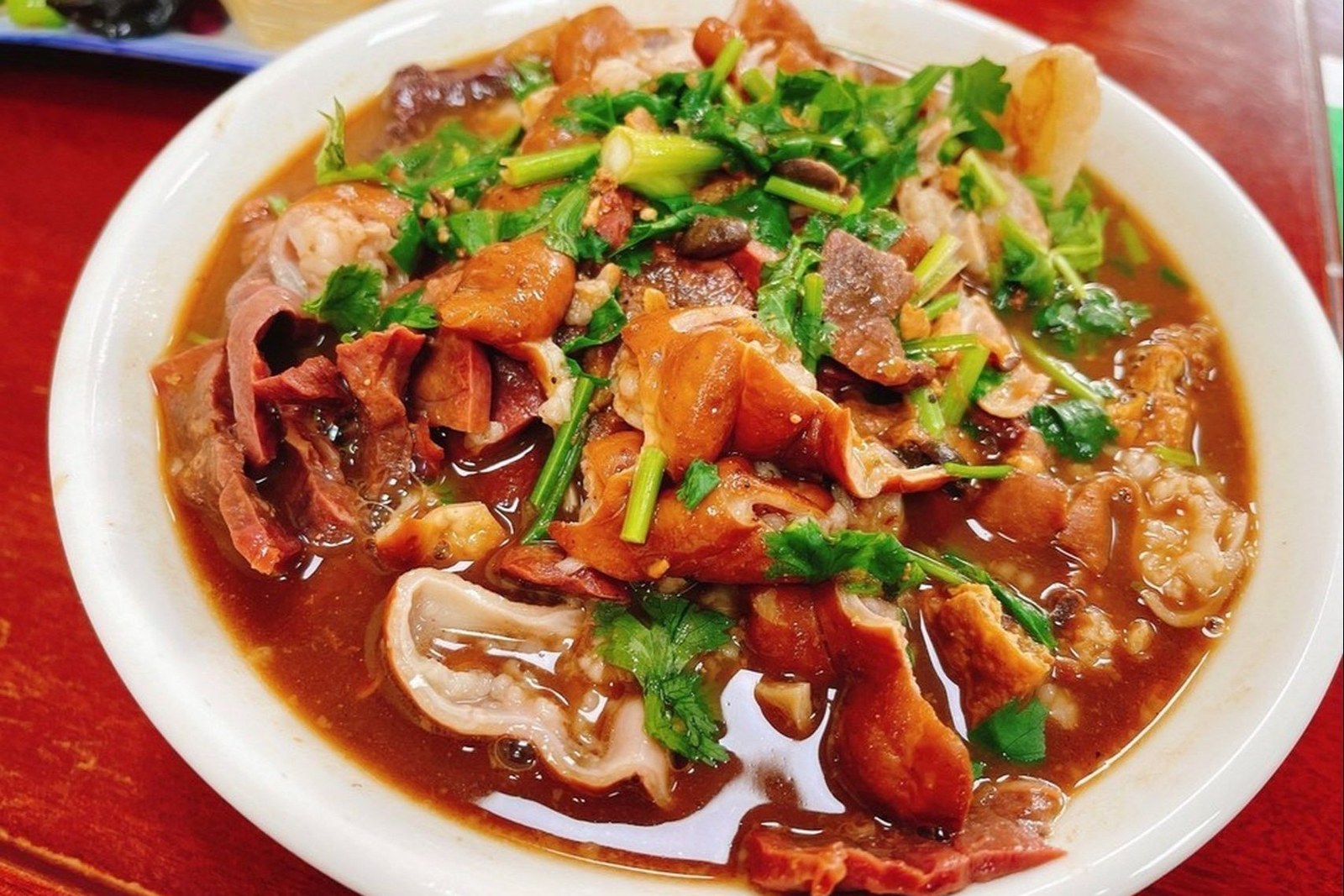
The wry truth is that 卤煮火烧 lǔzhǔ huǒshao is over-rated as adventure food and under-rated as engineering: the travel list files it under offal dare, while the shop files it under dinner – a complete carbohydrate-protein-fat engine built for people who unloaded carts all morning, priced so that a bread refill is the luxury, not the bowl. The real threshold is not courage but cleanliness: offal that still smells of organ means the kitchen failed, not that the diner is timid. Season is the strongest of any Beijing snack – this is a 深冬 shēndōng deep-winter dish, when steam, garlic juice and chili oil justify the pot’s existence, and a hot bowl at minus five degrees is the version the dish was invented for; in July it eats heavy and locals drift away from it (worth confirming summer hours – some counters trim the pot in hot months). The 小肠陈 Xiǎocháng Chén lineage story is worth hearing; the fame of any single queue-wrapped brand is worth resisting – the honest bowl is found by steam and regulars, not by storefront photography.
The self-deprecating footnote: a food writer will explain the Qing-palace origin story to a counter owner who interrupts to ask 大份 dà fèn large or 小份 xiǎo fèn small, pronounce on the aroma as “an acquired register”, and then stand at the board eating broth-soaked bread with chopsticks in one hand and a phone in the other, garlic-breathed and glistening, delivering a verdict nobody at the counter waited for – which is the honest grade: 卤煮火烧 lǔzhǔ huǒshao is a laborer’s dinner that outperforms its own mythology, and the writer who came for the legend leaves having ordered seconds of intestine.
Words and Names
卤煮火烧 Lǔzhǔ Huǒshao luzhu huoshao (old-broth offal and bread pot) · 火烧 Huǒshao huoshao (dense unleavened wheat bread) · 苏造肉 Sū Zào Ròu Su-stewed meat (the palace-origin legend) · 小肠陈 Xiǎocháng Chén “Chen of the Small Intestines” (the lineage legend) · 猪小肠 Zhū Xiǎocháng pork small intestine · 韭菜花 Jiǔcàihuā chive-blossom paste · 蒜汁 Suànzhī garlic juice · 深冬 Shēndōng deep winter
What the Locals Know
- Speak at the board: more intestine, no lung, bread cut 井字 jǐngzì crosswise – the pot is a menu, and silence gets you the house default (worth confirming each shop’s options).
- The offal is the exam: scrubbed clean means a house worth returning to; any barnyard smell is a one-visit lesson (worth confirming the details).
- Deep winter is the point: minus-five-degree air is the seasoning – the same bowl in July is a chore, and some counters trim the pot in hot months (worth confirming summer hours).
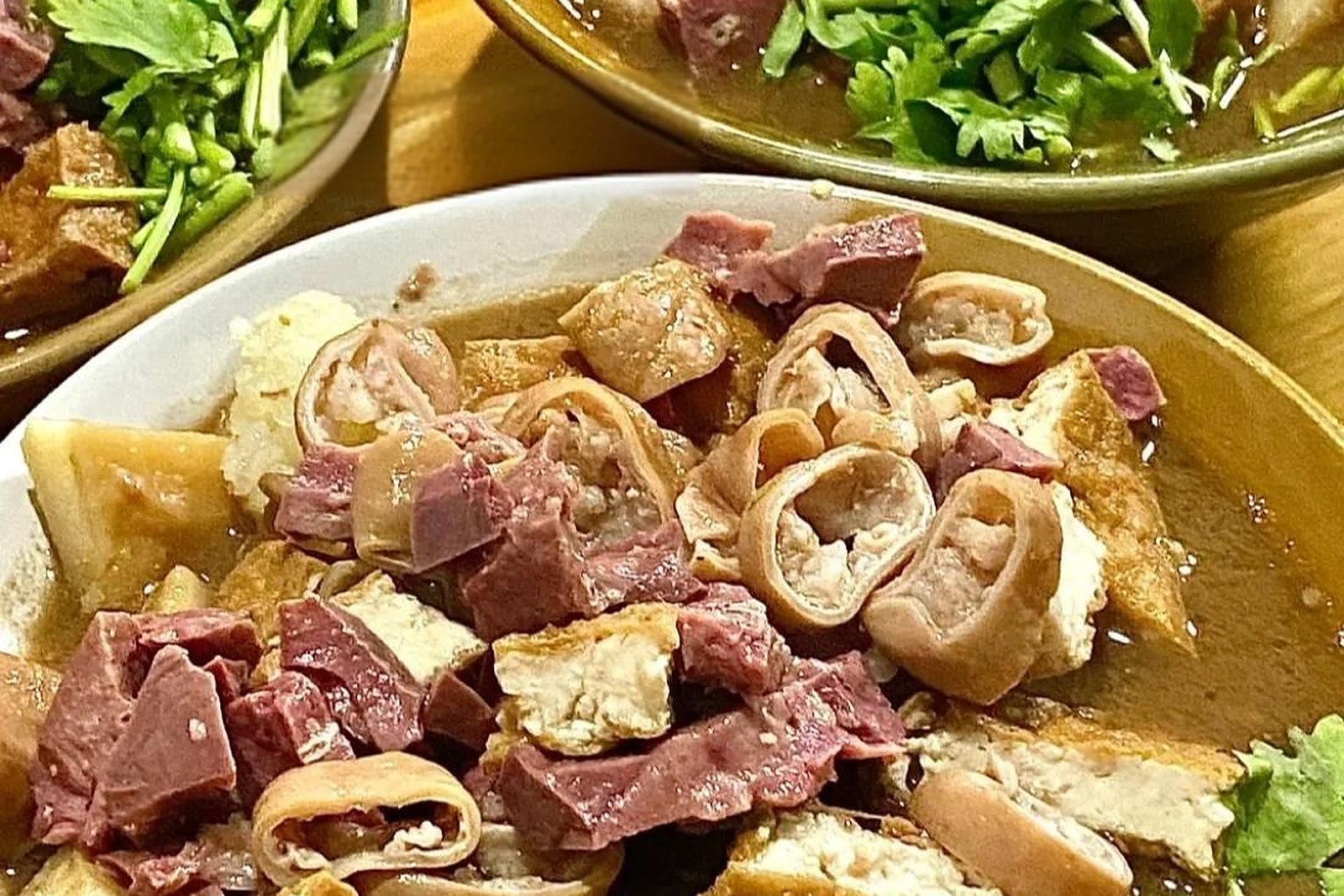
flowcloud would say that the 卤煮火烧 lǔzhǔ huǒshao is Beijing’s old-broth dinner – 火烧 huǒshao bread, 猪小肠 zhū xiǎocháng intestine and 猪肺 zhū fèi lung simmered in a pot that never quite cools, finished with 蒜汁 suànzhī garlic juice, 韭菜花 jiǔcàihuā and 辣椒油 làjiāoyóu – and that the honest move is to eat it in deep winter at a steam-fogged counter, order by parts, and judge the house by its scrubbing, because the palace legend is lore and the pot is fact. All checked October 2026.
Where to find it: counter shops with a front pot across 东城区 Dōngchéng Qū Dongcheng District – a loaded bowl about 30-50 yuan (worth confirming the details); go in deep winter, order at the board by parts, eat the bread while it still holds broth, and verify the offal is scrubbed clean. Luzhu huoshao is the old-broth offal pot of Beijing’s deep winter, pot before palace. All checked October 2026.