
Noodles Scraped Like Shrimp: Taizhou Mai Xia
一筷刮下面如虾,蛤蜊青菜滚汤花 Yī kuài guā xià miàn rú xiā, gélí qīngcài gǔn tāng huā – One chopstick scrapes noodles shaped like shrimp; clams and greens bloom in the rolling soup
麦虾 mài xiā mai xia – “wheat shrimp” – is 临海 Línhǎi Linghai’s own noodle trick: a wet wheat-flour paste, cut with chopsticks or a bamboo knife straight into the boiling pot so each blob twists off in curved, shrimp-like segments that poach into slippery, chewy ribbons. The soup around them is a working-man’s catch-all – 蛤蜊 gélí clams, 萝卜丝 luóbo sī shredded radish, greens, dried shrimp, lard and ginger – and the name is the recipe: poor households could afford no shrimp, so the wheat itself played the part. In Taizhou the dish is the rain-day default, and every old-quarter shop keeps its own paste-water ratio as a family secret.
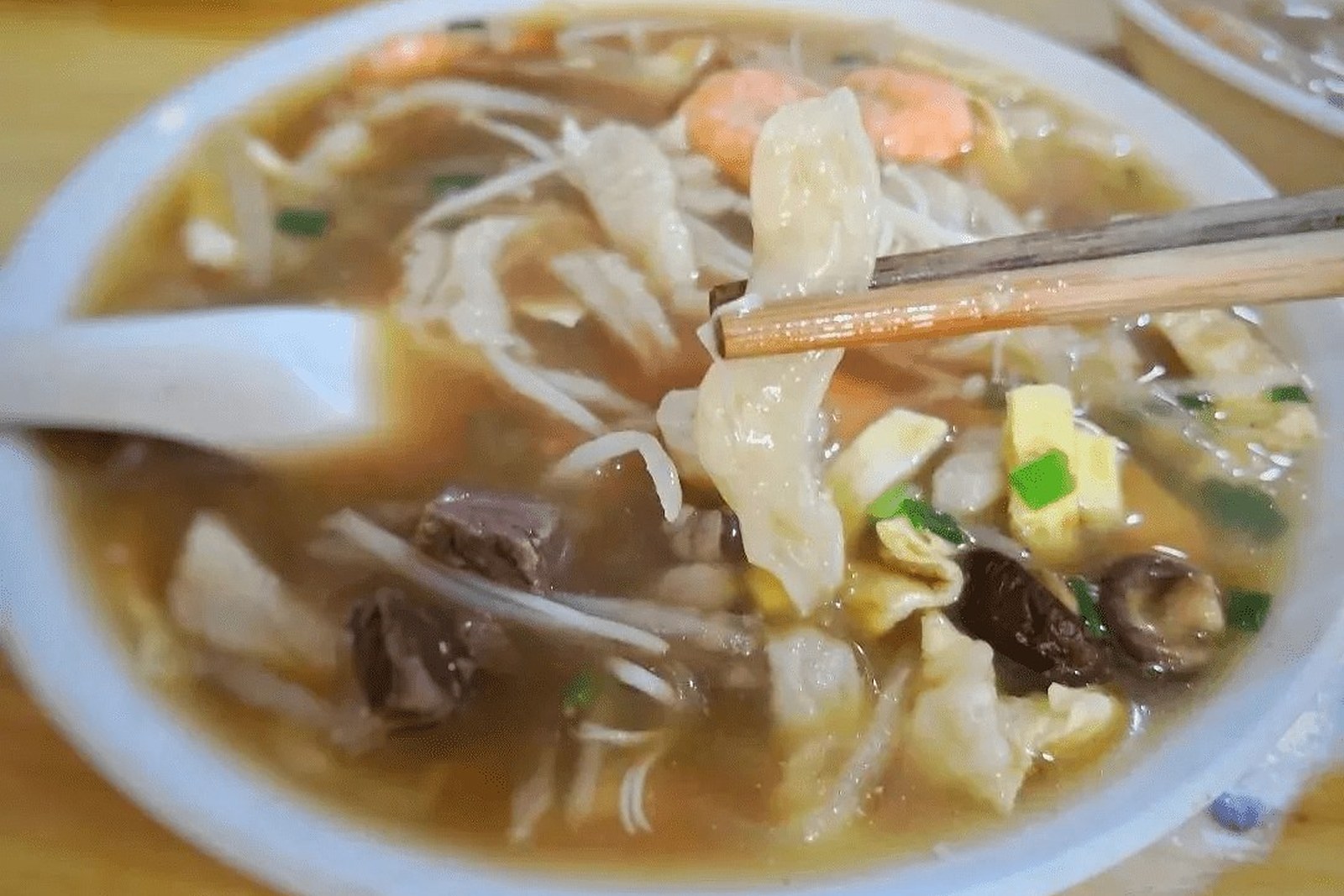
The scrape is the theater: the paste rests in a bowl, the cook tilts it over the pot and shears off thin slivers with a chopstick – each one curls as it hits the broth, cooks in under a minute, and floats up looking exactly like the shrimp it is pretending to be. Fresh shops scrape to order; the pre-cut version sold as 面疙瘩 miàn gēda elsewhere is a different, heavier animal.
The broth runs by season: clam and radish in winter, 青蟹 qīngxiè mud crab when Sanmen Bay runs fat, 蛏子 chēngzi razor clams in spring. The Linghai orthodox bowl keeps it lean – clams, greens, one egg – and lets the wheat texture carry it; the tourist-heavy stalls pile on seafood and lose the point, which is the dough, not the decorations.
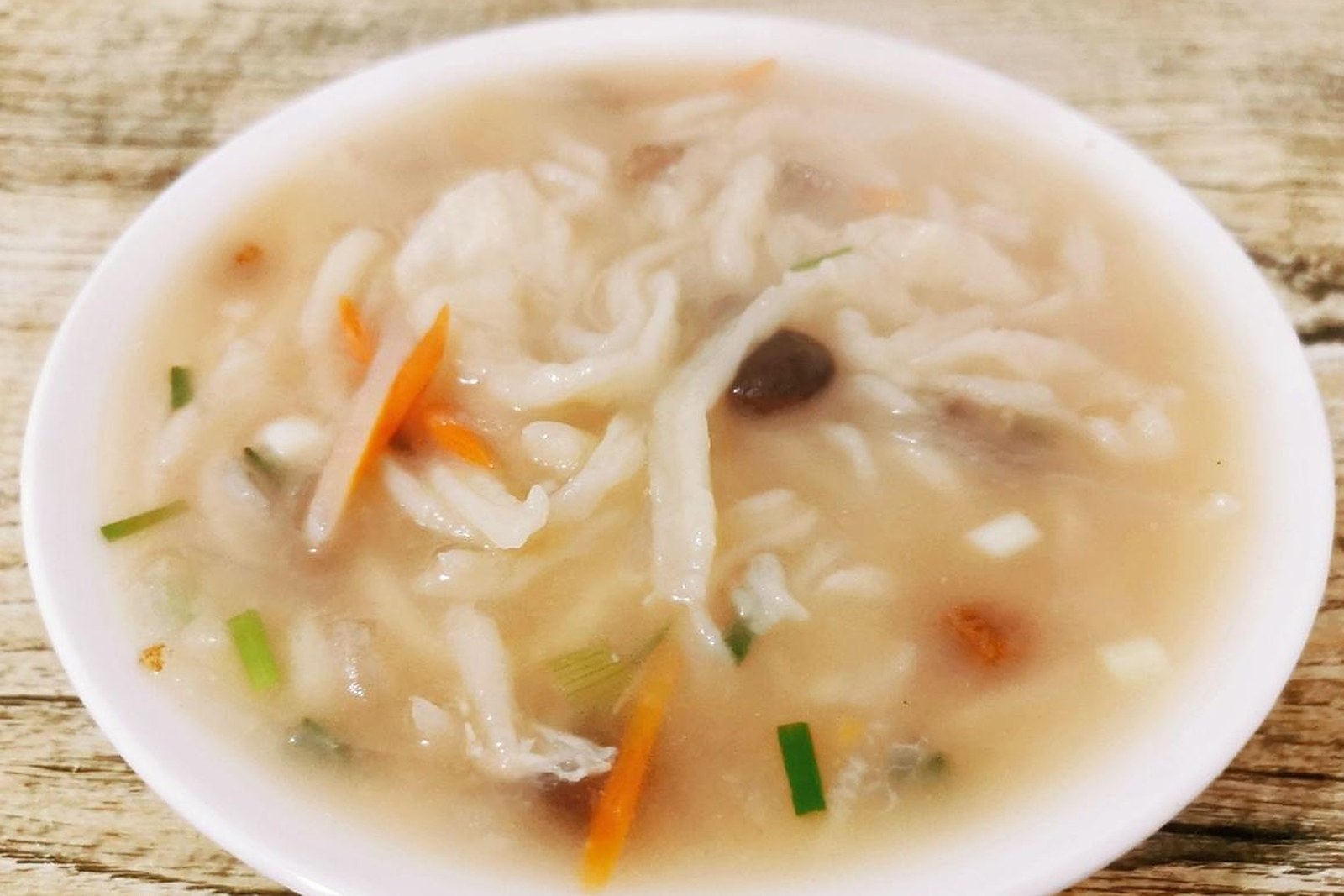
Order like a local: one bowl, clams and greens, extra radish, eaten with the spoon-and-chopsticks combination – scrape noodles slip off chopsticks by design. The proper texture pulls back when you bite, never doughy in the center; if the segments are uniform and round, the shop cheated and cut them with scissors.
The same city holds more flavors worth chasing: 姜汤面 jiāngtāng miàn the ginger-soup rice noodles, 蛋清羊尾 dànqīng yángwěi the fried egg-white fritters, 食饼筒 shíbǐng tǒng the stuffed wheat rolls, or 姜汁调蛋 jiāngzhī tiáodàn the ginger-juice custard – four more doors into the same 台州市 Tāizhōu Shì Taizhou City table.
Words and Names
麦虾 mài xiā “wheat shrimp”, the scraped-flour noodle; 临海 Línhǎi Linghai, the dish’s home town; 面疙瘩 miàn gēda dough drops, the heavier cousin to avoid; 蛤蜊 gélí clams, the classic broth base; 刮 guā to scrape, the verb that makes the dish.
What the Locals Know
The paste ratio is everything – wet enough to shear into ribbons, dry enough to hold the curve. Locals watch the cook’s chopstick angle before ordering, and the float test settles arguments: real mai xia rises curled and stays springy; over-hydrated paste dissolves into paste soup by the third minute.
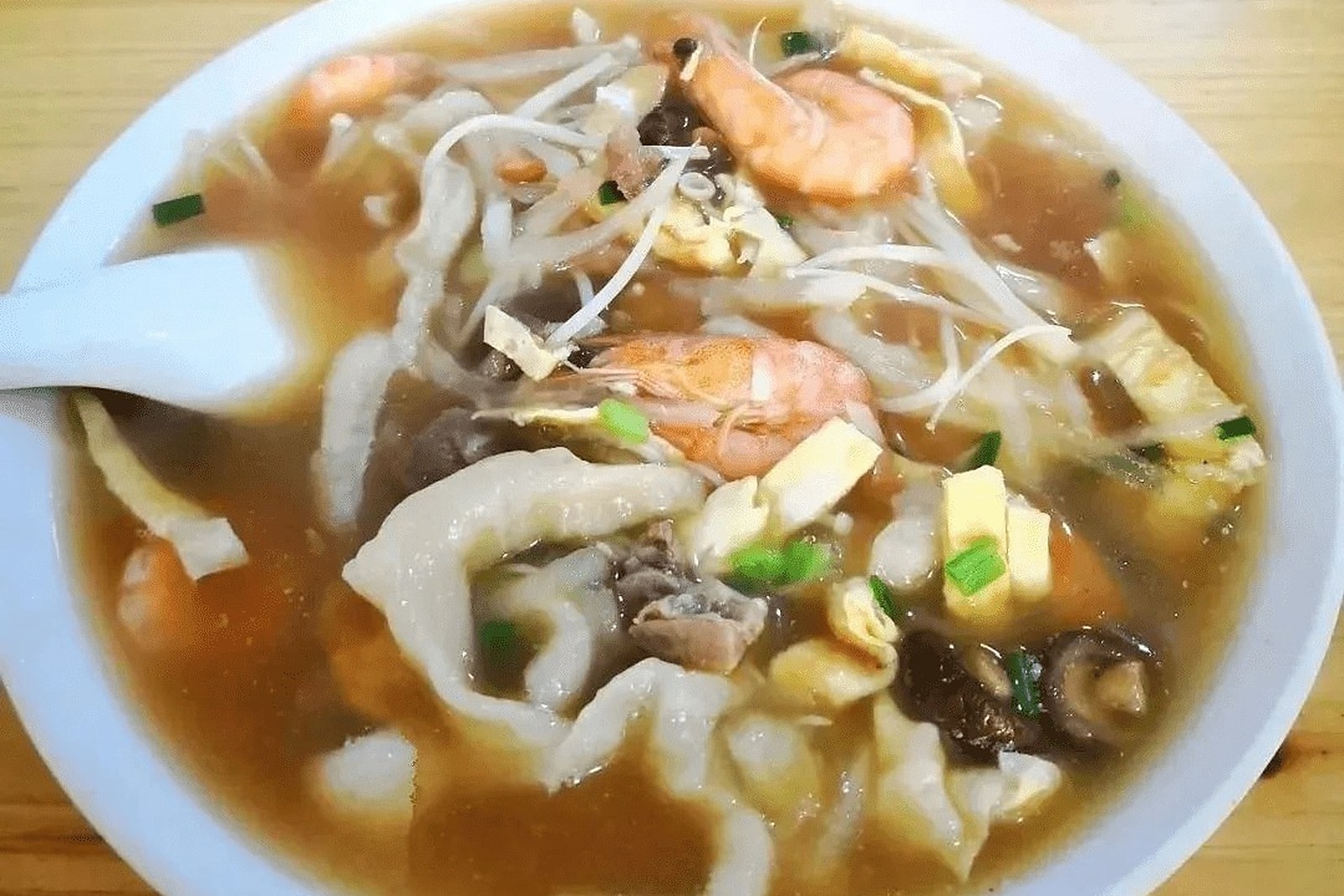
flowcloud would say mai xia is poverty cuisine that got elegant by accident: no shrimp, so wheat auditioned for the role – and got it, playing curved, slippery and slightly defiant in a clam broth that costs less than a coffee. All checked November 2026.
Where to find it: Mai xia counters cluster on and around 紫阳街 Zǐyáng Jiē Ziyang Street in Linghai and in every Taizhou county market – the pick is any shop scraping paste to order at a visible pot, ten to fifteen yuan a bowl, best at rainy-day lunch when the whole town agrees on the menu. All checked November 2026.