
The Egg That Steeps in Sesame: Majiang Jidan
泥封六十日,开壳蛋黄金 Ní fēng liùshí rì, kāi ké dàn huángjīn – Sealed in clay for sixty days; crack the shell and find gold
麻酱鸡蛋 májiàng jīdàn is Jizhou’s own cured egg in 天津市蓟州区 Tiānjīn Shì Jìzhōu Qū Jizhou District – fresh eggs coated in a paste of sesame-residue mash, salt and river clay, sealed in jars and cellared for up to two months, then steamed and cracked open to a yolk that runs orange-gold and oily, dense and sandy like the best salted crab roe. The town lists it among its ten signature snacks, and the farmhouse breakfast table without a plate of them is considered unfinished.
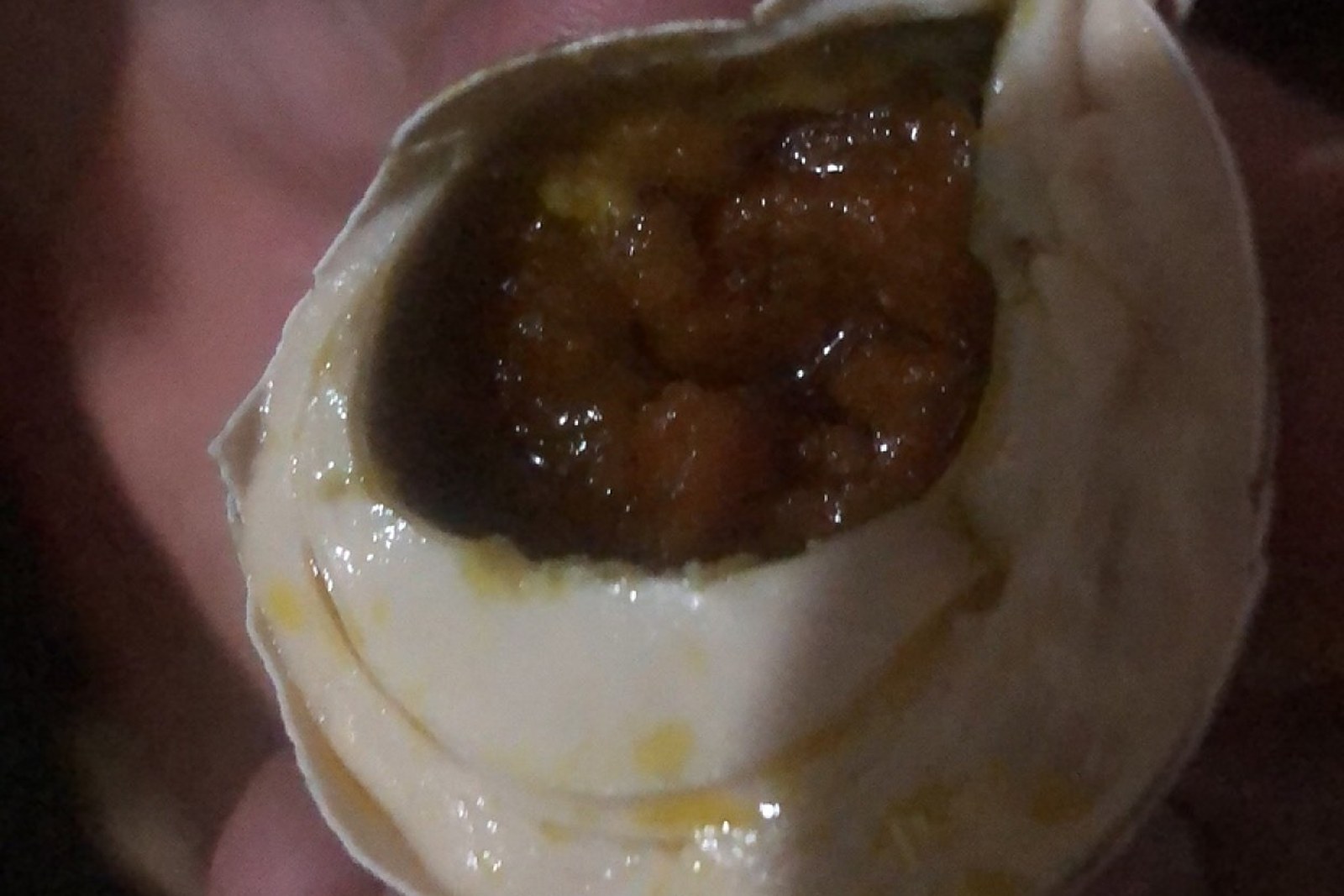
The curing is the whole secret. The paste – sesame press-cake ground fine with salt and yellow earth – wraps each egg like a small pot, and the months in the cool cellar do a slow double work: salt firms the white into a tea-tinted jade while the sesame’s oils work into the yoke until it weeps. Old recipes hold that the eggs must never touch metal until steaming; the jar is the vault.
The steaming is the reveal. Washed free of their clay shells, the eggs steam twenty minutes until the yolks liquefy into a slow, heavy gold, and the whites turn faintly amber and tender-firm. Eaten plain, the yolk sands on the tongue with a five-spice depth and a long sesame finish – a taste between a salted duck egg and a jar of roasted sesame paste, which is exactly what it is.
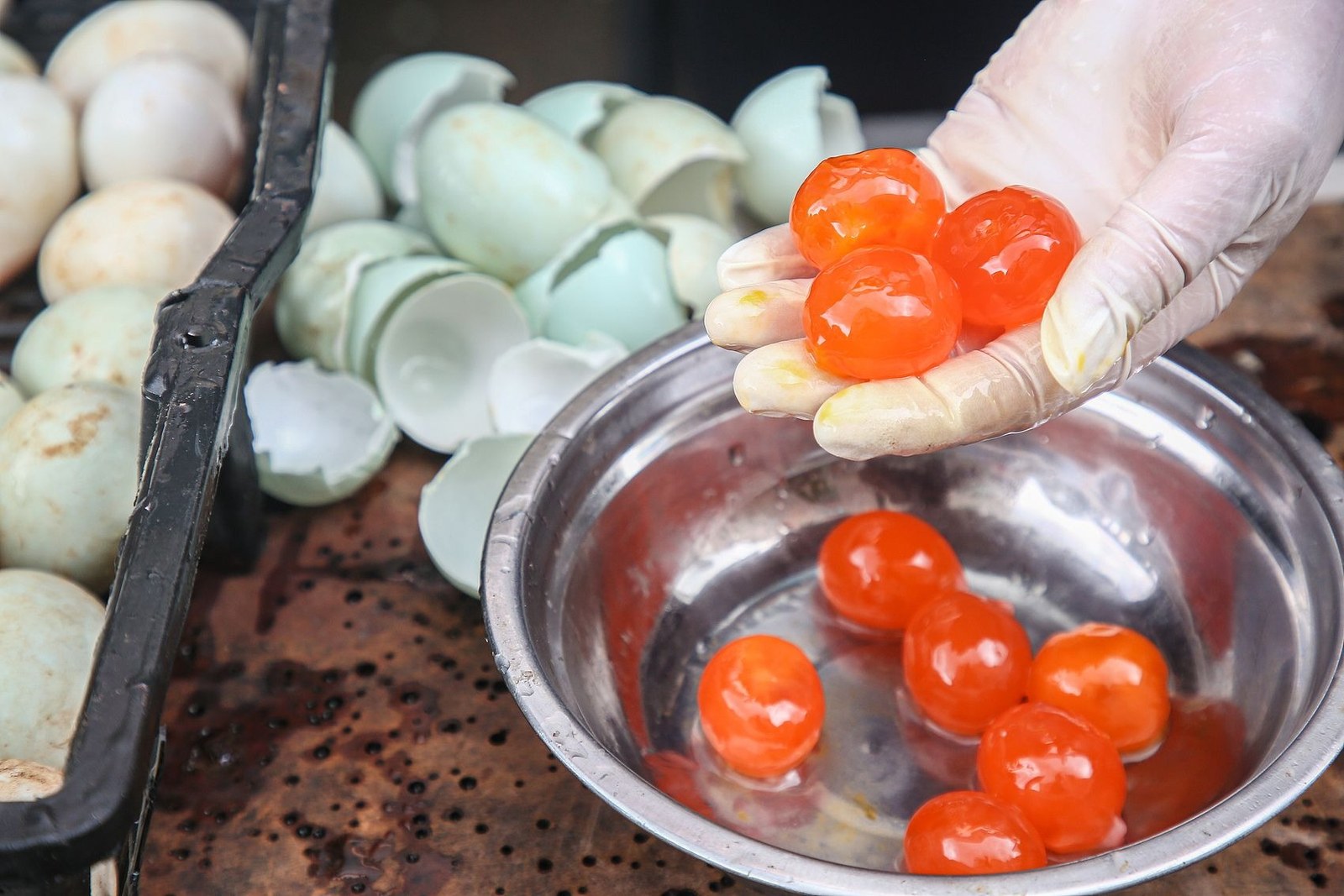
The eating is versatile by rule. Locals split them over congee, mash them into steamed bread where the yolk oil soaks the crumb, or slice them over cold noodles in summer; the tourism farms pack them for the drive home by the case. The craft’s village lineages even hold district-level intangible-heritage status, and the jars line farmhouse pantry shelves like a small industry of patience.
The same 天津市蓟州区 Tiānjīn Shì Jìzhōu Qū Jizhou District holds more flavors worth chasing: 贴饼子熬小鱼 Tiēbǐngzi áo xiǎoyú the iron-pot fish and cakes, 州河鲤 Zhōuhé lǐ the reservoir carp, 红花峪桑葚 Hónghuāyù sāngshèn the mulberry harvest, or 咯吱盒 Gēzhī hé the fried mung-bean rolls – four more doors into the same Jizhou table.
Words and Names
麻酱 májiàng sesame paste, the curing medium; 腌蛋 yāndàn the cured egg; 蛋黄溢油 * dànhuáng yìyóu* the oozing golden yolk; 非遗 fēiyí intangible cultural heritage, the craft’s listing; 窖藏 jiàocáng the cellar storage.
What the Locals Know
Season decides the oil: warm-month batches weep more freely, and locals steam winter eggs a few extra minutes to bring the yolk fully loose. The sandy yolk is the grade marker – regulars press one with chopsticks before buying the case. And the eggs are dinner-legal, not just breakfast: crumbled over steamed rice with a drop of soy, they carry a whole farmhouse supper without another dish. All checked November 2026.
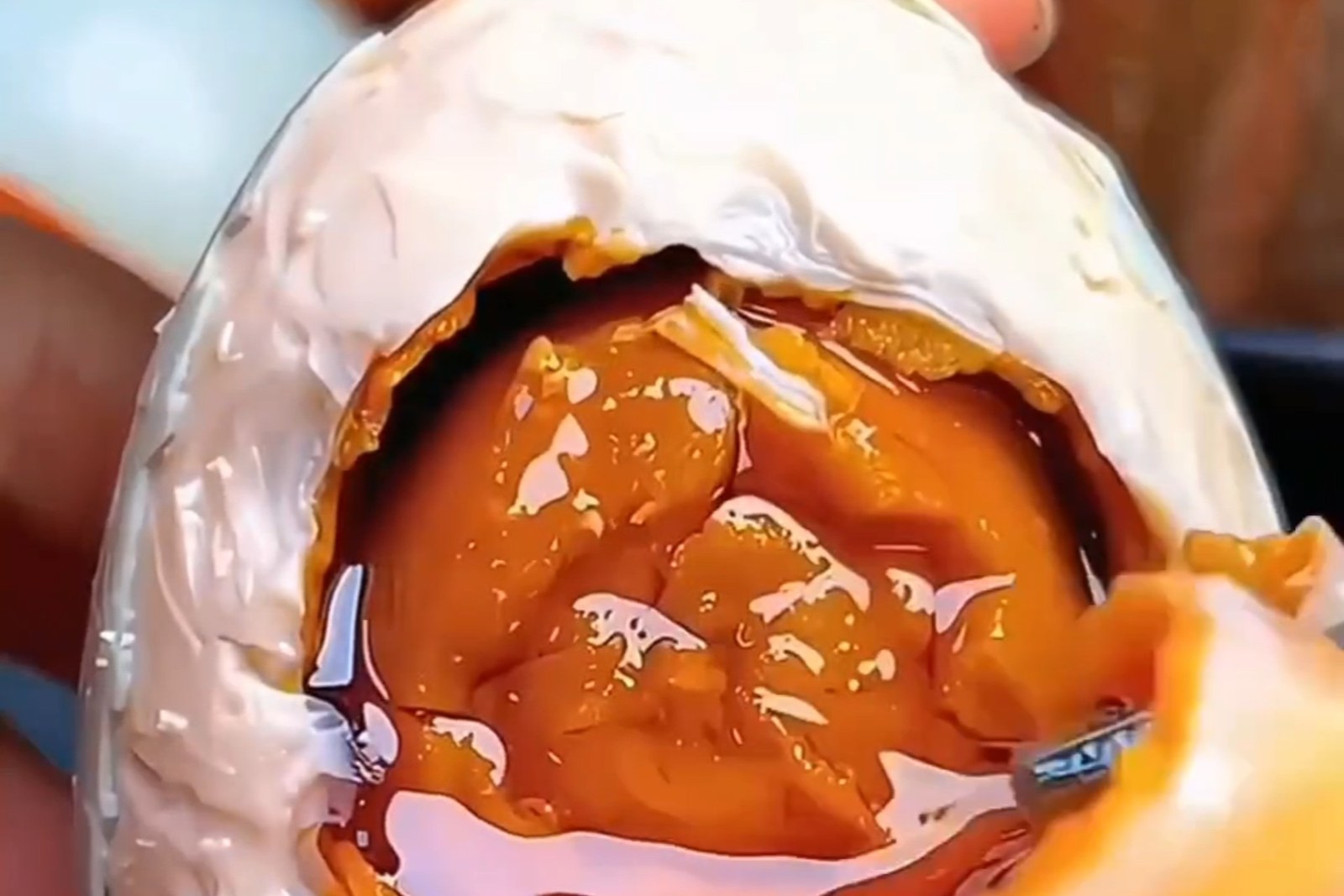
flowcloud would say the Jizhou cured egg is patience you can taste: two months of clay and cellar work folded into one sandy, sesame-deep gold.
Where to find it: The farmhouse restaurants serve them split over congee at breakfast, and the village shops around the mountain parks sell the vacuum-packed pairs by the box. All checked November 2026.