
四棱豆 sìléngdòu, the winged bean, also called the four-angled bean or asparagus pea, is the specialty vegetable of 毛感乡 Máogǎn xiāng Maogan Township in 保亭黎族苗族自治县 Baoting Li and Miao Autonomous County, a mountain township so given over to the crop that its official accounts put some 2,000 mu under it, most of the farmland it tends. The plant is a climbing legume with four wings along the pod, grown up trellises through a long season that opens after Spring Festival and runs to October. This is not a foraging story, since the site keeps a rainforest-wild-greens page for that, but the story of one township that bet on one bean.
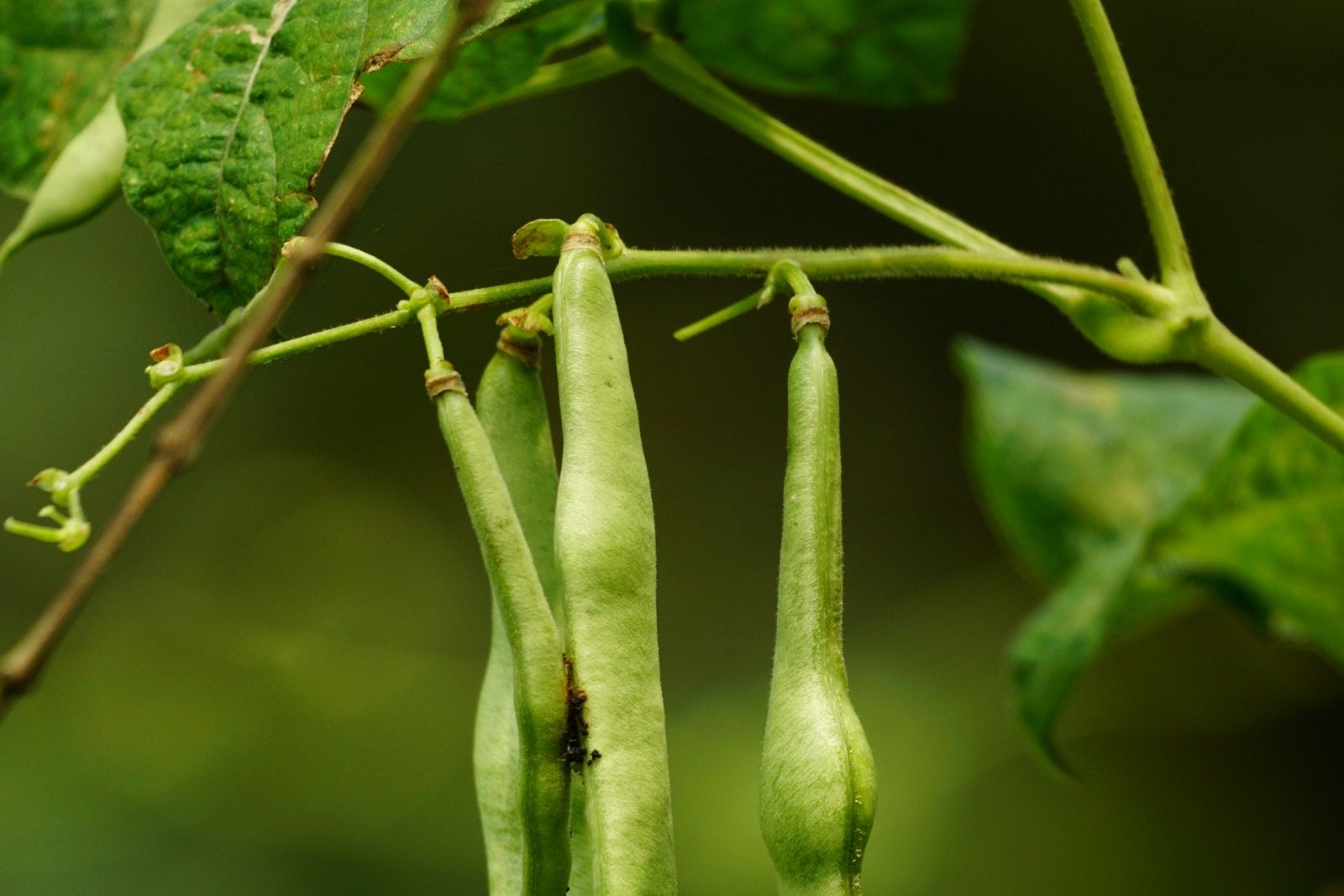
The hard line in the file is a single township figure with a year attached. Maogan Township’s winged-bean planting reached 2,000 mu, by the account the provincial ethnic-affairs commission carried in 2019, with most of the township’s fields given to it and the crop standing as the main source of farm income; the harvest is long, from just after Spring Festival into October. That is a township-level figure and it should not be added to anything else. The county separately counts 1,904.5 mu of certified year-round vegetable base across all its bases, a different measure covering many crops rather than just the bean, so the county total and the township crop are two different things and this text keeps them apart. What the bean earns a household is carried as farmers’ arithmetic with the year: one Maogan grower, fifteen years at the crop, said three mu in a good year brings the family close to ten thousand yuan, and a former poor household in 番兴村 Fanxing village who took up the bean in 2014 under a county trellis programme cleared nearly twenty thousand yuan the next year.
The household is the township’s own telling of the crop. 石志海 Shi Zhihai, listed a poor household in 2014, switched to winged bean on land the county rigged with free trellises; the next year brought nearly twenty thousand yuan and by the end of 2017 he was out of poverty, and he went on to add chilli, areca, ducks, chickens, geese and a five-toe pig, the last carrying a page of its own on this site, with per-capita net income approaching ten thousand yuan. The programme behind him has a slogan the county likes, from poverty bean to wealth bean, with the government paying for the trellises, handing out ducklings and running the planting training. There is a real tension in the file and it belongs in the open: as ecological protection tightened on the surrounding forest, the traditional bamboo-and-wood trellises a climbing bean needs ran short, and the growers began asking for state support for trellis material, wanting to protect the forest and grow the cash crop at the same time. The bean’s future is tied to that older quarrel over poles.
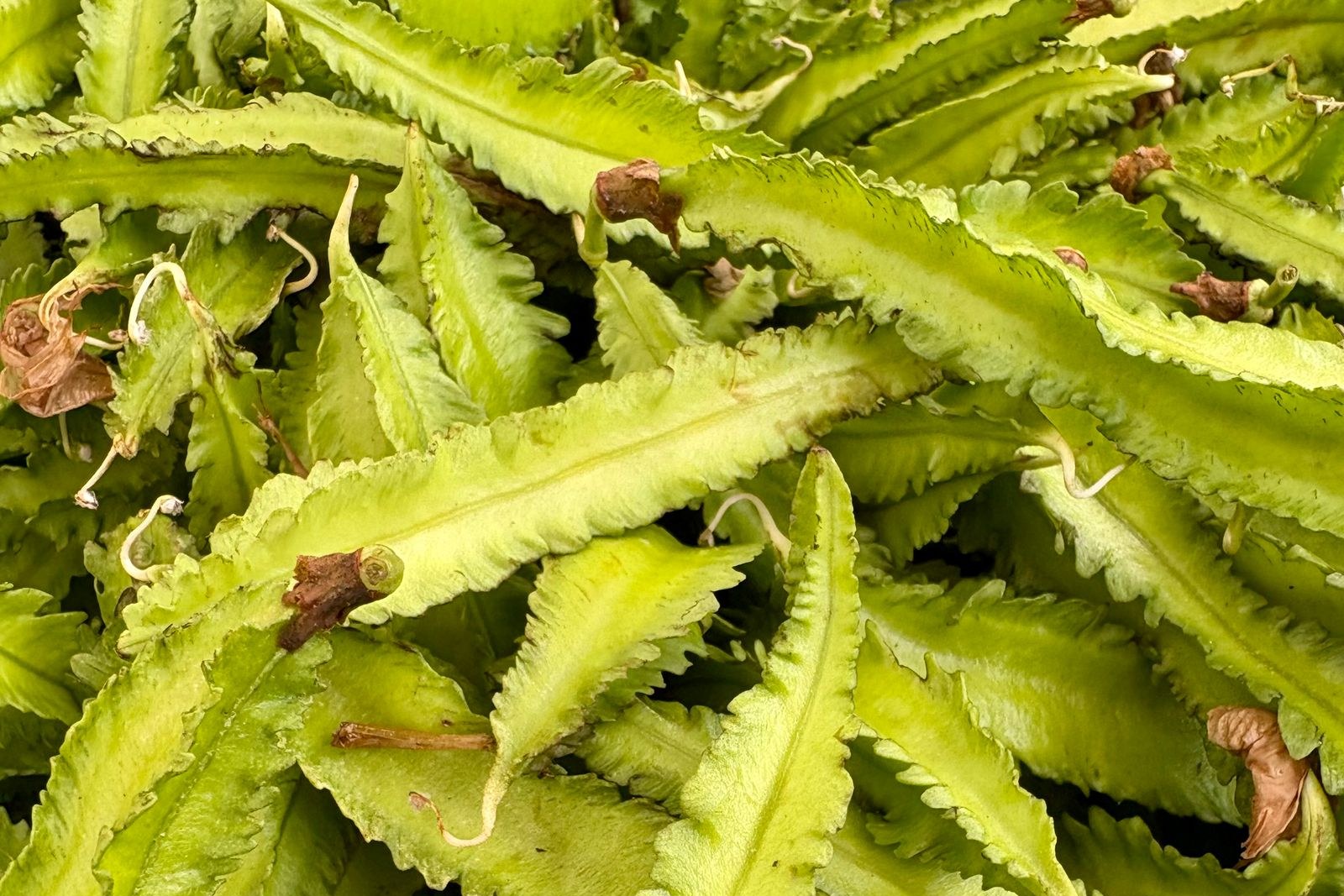
On the table the bean is a plain thing, which is the point. It is stir-fried with garlic as a daily vegetable rather than a banquet dish, crisp and green, and it appears across the county’s farm-stay kitchens. Around it sits the wild-green family of the Li and Miao table, purslane, tree vegetable, bamboo shoots and pennywort among the dozens of kinds the local paper lists as wild-grown without chemical fertiliser or pesticide, and one of those greens carries a national GI certification mark of its own: 保亭树仔菜, the sweetleaf shoot, appears on the county’s official list of protected names, and that is all this article will say of it. In the county farm-stay menus the greens turn up as betel-leaf fried egg and as a wild-greens tofu, the Qixianling version set with hot-spring water, and the rainforest-park restaurants fold them into medicinal cooking, one Yanoda dish simmering pennywort into a house tofu. One background line for the township’s other names: 毛感鸭, the Maogan duck, and 毛感牛, the Maogan ox, share Baoting’s protected-name family, mentioned here and no further.
There is an older organic thread in the file, dated and left dated. Back in 2010 the county brought in a company to sift local wild vegetable varieties, cataloguing thirty-two kinds and selecting fifty-six good ones, with a plan to push organic winged bean and organic tree vegetable from a thousand mu to two thousand over three years, a plan from 2010 rather than a present certification, so it is written as a plan. What the record refuses: any current retail or farm-gate price for the bean, which no source after 2019 supplies, so none is given; a county-wide acreage for the bean itself, which is not counted anywhere; and the organic label as a standing fact, which appears only in that 2010 development plan. The season matters to a traveller, since the harvest runs from after Spring Festival to October, which makes November through January the wrong window for the freshest pods.
Words and Names
四棱豆 sìléngdòu is the winged bean, 四角豆 and 翼豆 its other Chinese names, asparagus pea and four-angled bean its English ones. 毛感 Máogǎn is the township, and 番兴村 Fānxīng cūn Fanxing village is where the growers’ story is set. 树仔菜 shùzǎicài, the sweetleaf shoot, is the county’s GI-marked wild green, named once here. 山捞叶 shān lāo yè, betel leaf, is the herb beside it on the farm-stay menus. And the site’s rainforest-wild-greens page keeps the foraging generalities, while this page keeps one township’s one bean.
What the Locals Know
The county is where the bean is eaten rather than toured. In 毛感乡 Maogan Township the fields themselves are the landscape, best seen in the working season when the vines are trained up their trellises and the pods hang along the frame, and the township’s other draws are its karst, the stone forest and the cave system, so a visit pairs rock and bean. 番兴村 Fanxing village, where the farming story is set, has no visitor facility and is reached by arrangement. For eating, the county-seat farm-stay kitchens and the park restaurants are the surest places: stir-fried winged bean, betel-leaf fried egg and wild-greens tofu on the Li and Miao menus, and the rainforest parks’ medicinal dishes for the curious. The county’s old vegetable market sells the beans and the wild greens by the bundle when they are in season.
What the record refuses, once more and plainly: a reliable current price; a county-wide bean acreage; and any nutrition or health figure for the bean, which no source gives, so none is printed here.
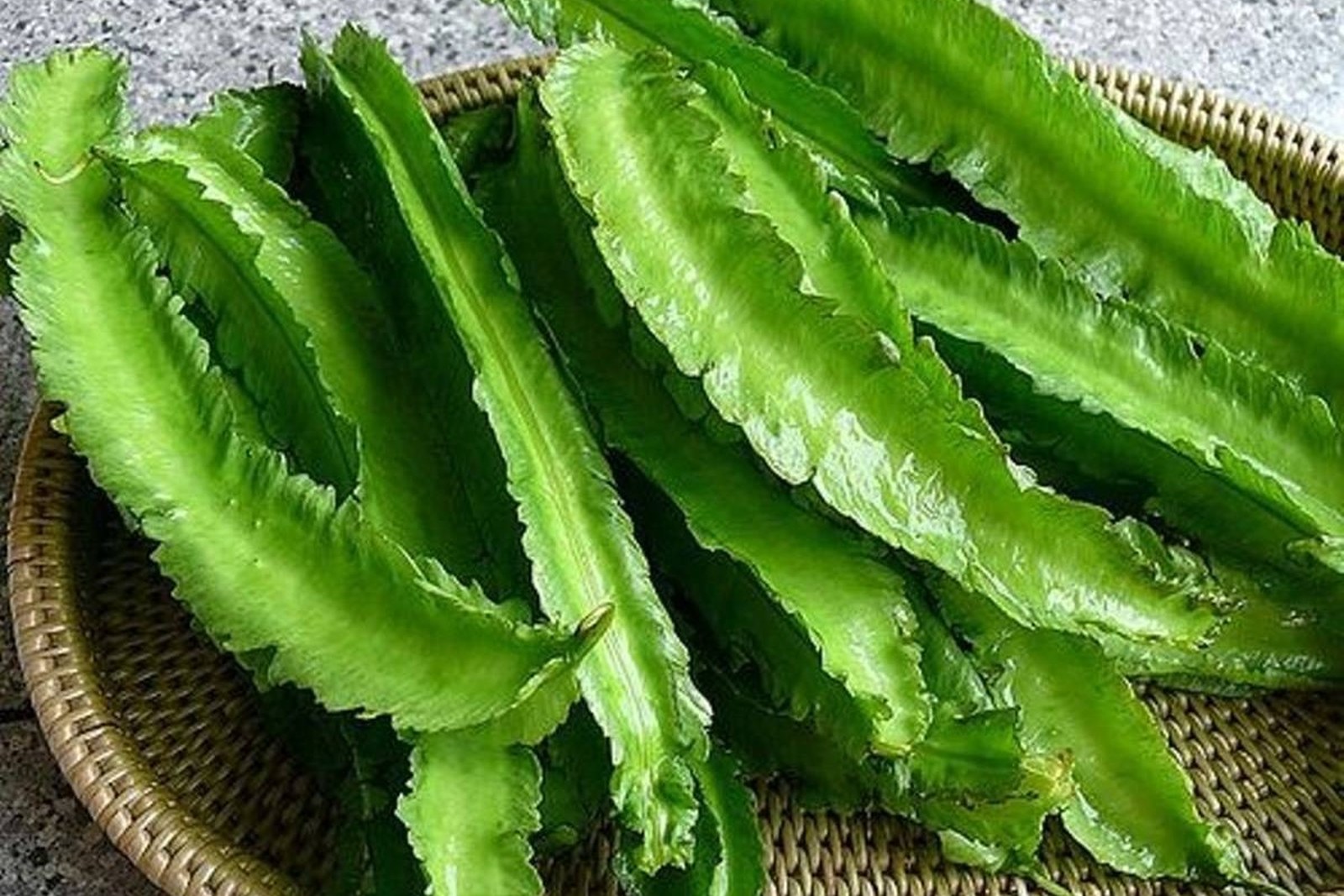
flowcloud would say that the Maogan winged bean is a town bet on a legume, 2,000 mu of climbing four-cornered pods by the 2019 count, trellised with government help, sold as a daily green rather than a banquet dish, and harvested from just after Spring Festival into October.
Where to find it: 毛感乡 Máogǎn xiāng Maogan Township and its fields, with 番兴村 Fānxīng cūn Fanxing village, plus the county-seat farm-stay kitchens and the Yanoda and Binglanggu park restaurants, in 保亭黎族苗族自治县 Baoting Li and Miao Autonomous County, Hainan; township visits and village access by arrangement, the beans stir-fried with garlic or the wild greens in egg or tofu. Come between March and October for the freshest pods.