
Mao’s Braised Pork
It is the dish that Hunan is proudest of, and the one that confuses outsiders most, because it looks like nothing special — a plate of square cubes of pork belly, glossy and dark, swimming in a reddish-brown sauce. Then you put one in your mouth and you understand why a whole province treats it as a point of national pride. The pork is soft enough to be broken with a chopstick, the fat has melted into the sauce, and the flavour is sweet, savoury, and gently warm with the heat of a little chilli.
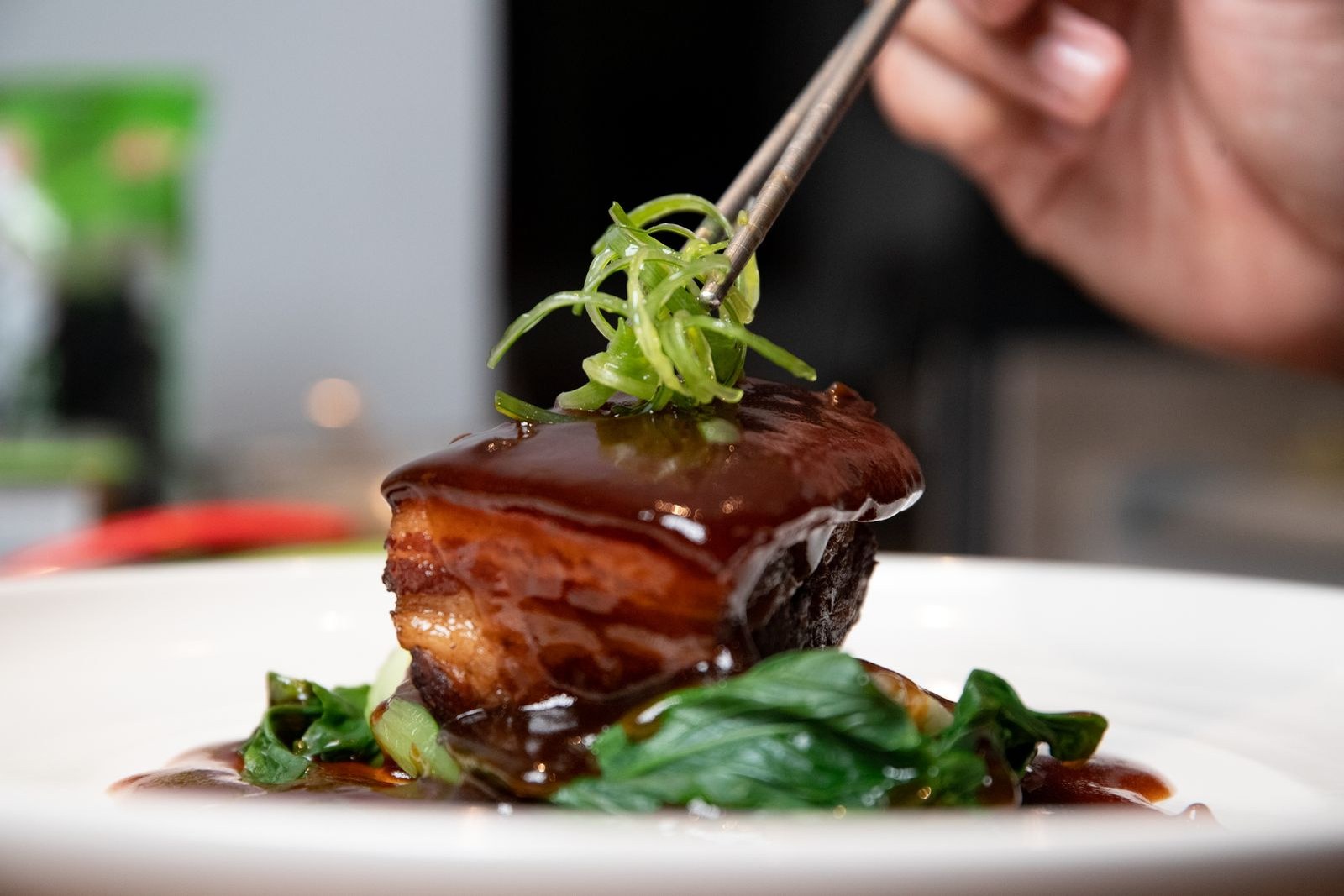
毛氏红烧肉 Máo shì hóngshāoròu is “Mr Mao’s braised pork,” and it is named after 毛泽东 Máo Zédōng, the Hunan-born leader who, according to the story, had a weakness for this particular dish and a particular way of wanting it cooked. Where most Chinese 红烧肉 is sweetened with sugar, the story goes that Mao asked for it without the caramel and with red fermented rice and chilli instead. Whether or not the story is precise, the dish that bears his name has a distinctly Hunanese character: it is less sweet and more savoury than the Shanghai version, and it carries a trace of heat.
The Idea
红烧肉 hóngshāoròu, “red-braised pork,” is one of the great dishes of Chinese domestic cooking. The method is a braise — pork belly cut into even cubes, browned, then simmered slowly in a dark, glossy sauce of soy, wine, sugar and aromatics until the fat renders and the meat turns spoon-tender. Every region has a version, and the argument over which is best is one of the oldest in Chinese food.
The Hunan version, 毛氏红烧肉, stands apart in three ways. First, it uses less sugar — the sweetness here is gentler, and often comes partly from 醪糟 láozāo, the sweet fermented rice, rather than plain caramel. Second, it uses 红曲米 hóngqūmǐ, red fermented rice, to get the deep red colour rather than relying on caramelised sugar alone. And third, it carries the signature Hunanese 辣 là — heat — which the oily-sweet pork of Shanghai and Jiangsu would never allow.
The Craft
The method looks simple and takes patience. Pork belly — usually the thick, layered kind, 五花肉 wǔhuāròu — is cut into neat squares. They are blanched or fried to set the shape and render some fat, then set aside. Aromatics — ginger, scallion, star anise, a little dried chilli — go into the pot, then the pork, then a mix of light and dark soy, 料酒 liàojiǔ cooking wine, the 红曲米 that gives it colour, and water or broth to cover.
The pot is brought to a boil and then turned down to a bare simmer, covered, for a long time — an hour minimum, often two. The lid stays on; the pork needs no attention beyond the occasional check. Slowly the sauce reduces and darkens, the fat melts into it, and the cubes take on their glossy, mahogany-coated look. The final step is often a blast of high heat to tighten the sauce so it clings to each cube.
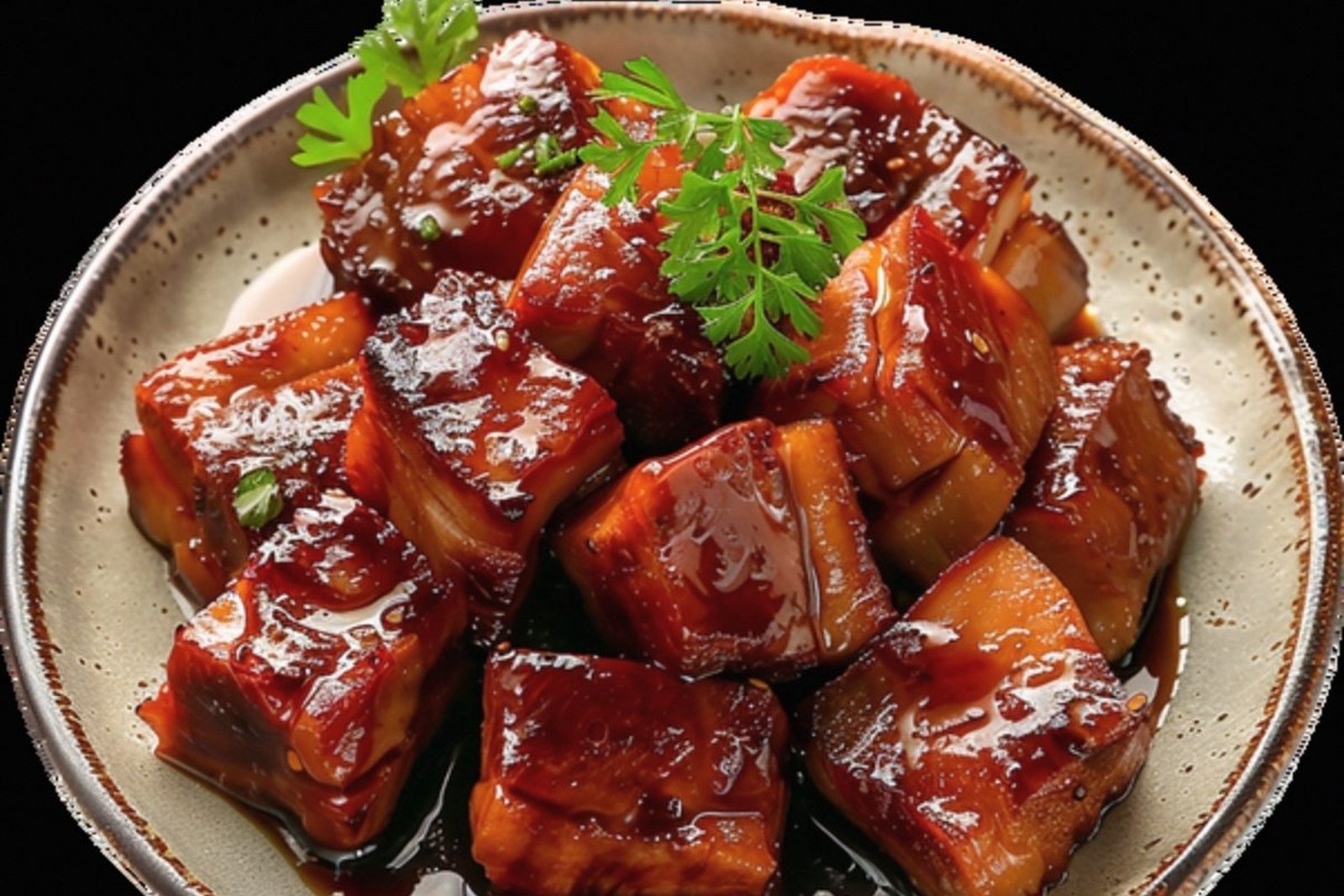
The trick, as with all braises, is not to rush it. If the pork is tough, it was not simmered long enough; if the sauce is watery, it was not reduced. The finished dish should be deeply savoury, faintly sweet, and carrying a warmth that comes from the chilli rather than a sharp heat.
How It Is Eaten
毛氏红烧肉 is a 下饭 xiàfàn dish — one that makes you eat rice. You take a cube, lay it over a mound of plain steamed rice, and let the sauce soak in. The sweetness of the pork against the plainness of the rice is the whole point, and the chilli keeps it from being cloying. It appears at banquets and at family dinners, and in the Hunanese capital it is a standard order in any serious restaurant.
Because the pork is rich, it is usually served alongside greens and plenty of rice. The sauce is worth spooning over the rice generously.
Words and Names
毛 Máo is the surname Mao (of 毛泽东), 氏 shì means “of the family of,” 红烧 hóngshāo is “red-braise,” and 肉 ròu is “meat” — here almost always pork belly. So the name reads “Mr Mao’s red-braised pork.”
You will also hear 红烧肉 hóngshāoròu on its own (the general dish) and 五花肉 wǔhuāròu for the layered pork belly it calls for. The version reddened with 红曲米 hóngqūmǐ is sometimes called 红曲肉 hóngqūròu. The Hunanese character 辣 là (spicy-hot) is worth knowing, because this dish, unlike other braised pork, is meant to have a whisper of it.
What the Locals Know
The colour matters. A good 毛氏红烧肉 gets its deep red from 红曲米, not just from caramel. If the dish is a flat brown, it is a generic braise, not the Hunan classic.
It should not be too sweet. The Shanghai version leans sweet; the Hunan one keeps the sugar low and the savouriness high. If it tastes like dessert, it is not this dish.
The heat is gentle, not fiery. It should warm the back of the mouth, not burn it. A 毛氏红烧肉 that sets your mouth alight is usually a restaurant getting the balance wrong.
Eat it with rice, early. The sauce is the point, and it is best over plain rice before the plate cools.
Give it time. Two hours is not overdoing it. Pork belly this tender does not come from a hurry.
When in Changsha, order it at one of the big Hunan restaurant houses (湘菜馆, xiāngcàiguǎn) rather than a noodle shop; it is a banquet dish, not a street one, and they take it seriously.
flowcloud would say that 毛氏红烧肉 is Hunan’s joke on the rest of China: a dish that looks like simple braised pork, and is actually a carefully balanced study in savoury, sweet, and heat — and the story of a man who wanted his pork a particular way, and gave his name to it.
Where to find it: 毛氏红烧肉 Máo shì hóngshāoròu is a dish of 长沙 Chángshā, the Hunanese capital, and it is on the menu of every serious 湘菜馆 xiāngcàiguǎn (Hunan restaurant) in the city. A plate at a good restaurant runs about ¥45 to ¥90; it is a 下饭 dish, so order rice. For the name on it, try a well-known Hunan restaurant in Changsha such as 火宫殿 Huǒgōngdiàn or one of the big well-known chain restaurants, where you can try it alongside 剁椒鱼头 duòjiāoyútóu and 辣椒炒肉 làjiāo chǎoròu. If you are cooking it at home, remember: low sugar, 红曲米 for colour, a whisper of chilli, and a long, patient simmer — never hurry the pork. It is the warmth, not the sweetness, that is the point.