
The Winter Storehouse on a Plate: Horse Sausage over Hand-Pulled Naren
肠陈千里香,面宽一指柔 Cháng chén qiānlǐ xiāng, miàn kuān yī zhǐ róu – The sausage carries a thousand li of smoke; the noodle runs a finger wide and soft
正文:马肠纳仁 Mǎcháng Nàrén horse-sausage naren is the Yili valley’s winter storehouse served as dinner: rings of smoked horse sausage, steamed until the fat turns glassy, laid over a wide nest of hand-pulled noodles with raw onion shreds and the broth it traveled in. On the tables of 可克达拉市 Kěkèdálā Shì Keketokala City and the Fourth Division farms around it, this is the dish that marks the cold months – the plate that says the horse herds came through the snow, the smokehouses ran on schedule, and the family that pulled your noodles did it that morning.
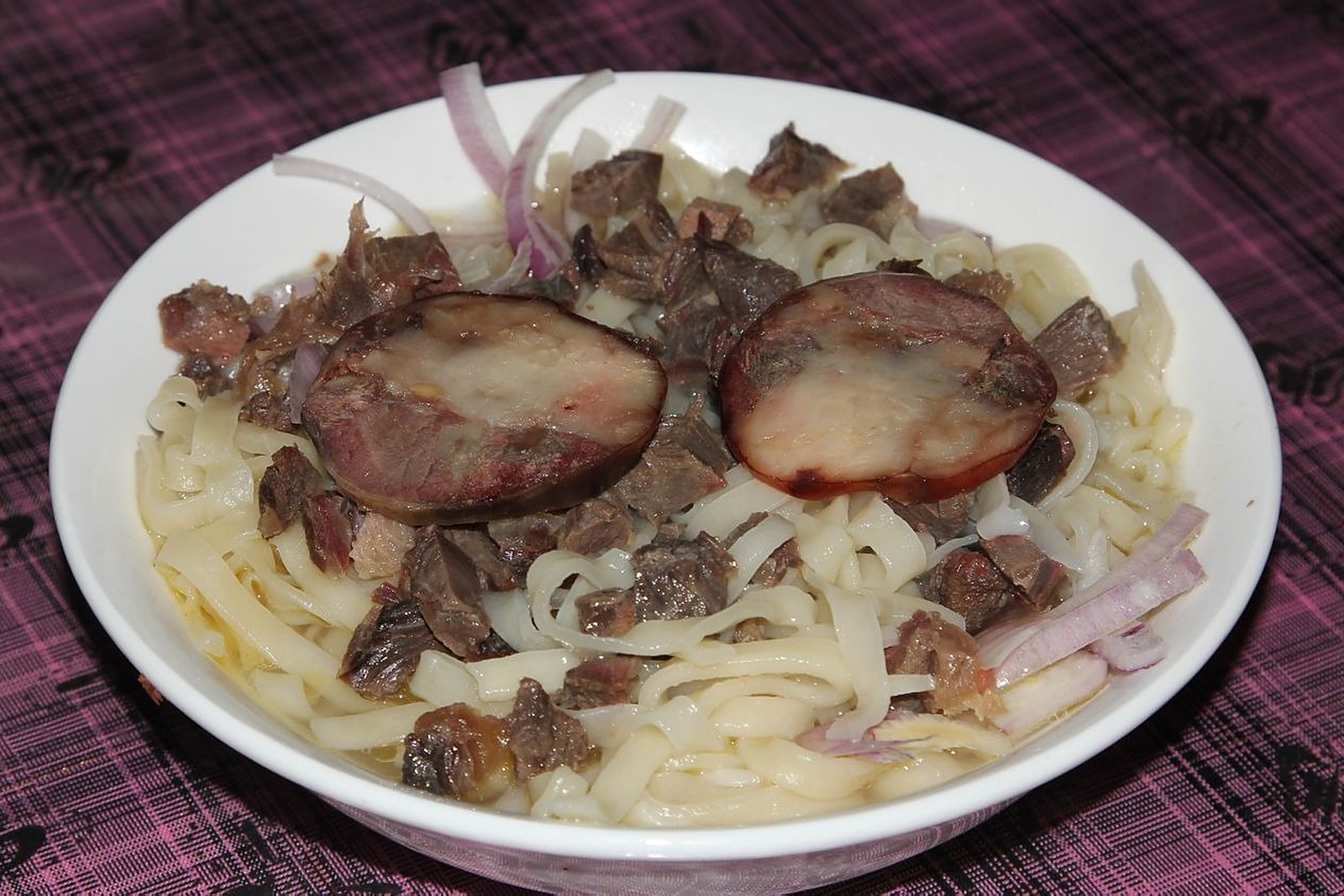
The sausage is the star and the archive. Every November, Kazakh and bingtuan households across the valley butcher, season and stuff horse intestine with rib meat and fat, then hang the long coils in the smokehouse or the cold wind until the meat turns deep mahogany and keeps until spring. Steamed and sliced, a good ring shows a marbled cross-section – amber fat, wine-dark lean – and a smoke that arrives before the fork does. The naren under it is the humble counterweight: flour, water, salt, and the wrist knowledge to pull the dough into belts that stay chewy under broth.
The eating order is fixed and worth obeying. Noodles first carry the plain taste of the wheat; then a slice of sausage on top of every second forkful so the smoke meets the starch; then a strip of raw onion to reset the palate; and broth from the side bowl whenever the plate runs dry. Locals judge the house by two things – whether the sausage was smoked long enough to keep its spine, and whether the noodles were pulled that morning or defrosted their nerve. A plate that passes both tests gets repeated visits and word-of-mouth advertising across the whole valley.
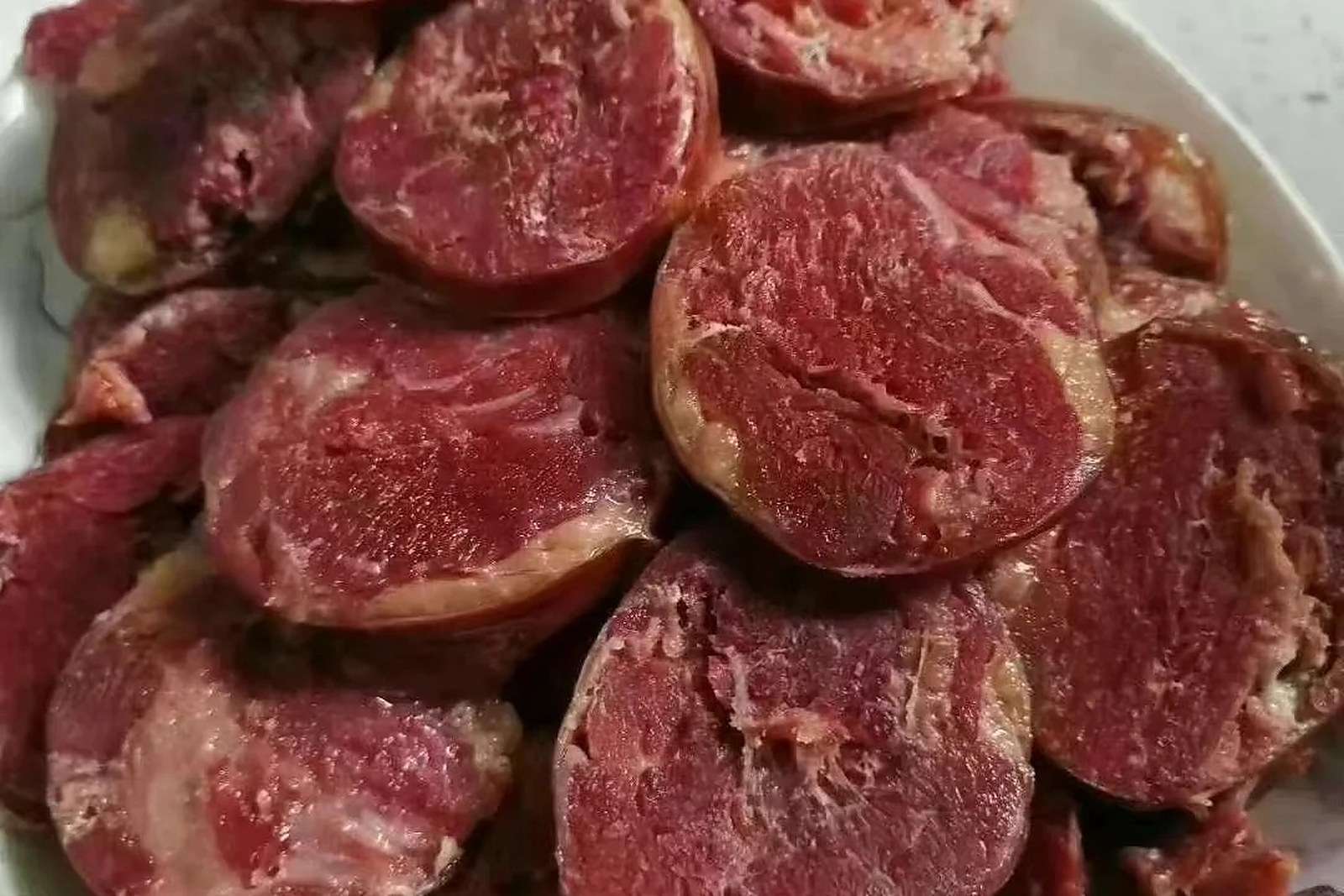
Beyond the naren, the same 可克达拉市 Kěkèdálā Shì Keketokala City keeps the rest of the winter larder on its menus: 熏马肉 xūnmǎròu smoked horse meat by the plate, 手抓羊肉 shǒuzhuā yángròu the boiled-lamb feast, 伊犁冰淇淋 Yīlí bīngqílín the valley’s hand-churned ice cream, and the round hearth bread of 馕 náng naan – four more doors into the same 可克达拉市 Kěkèdálā Shì Keketokala City. With the naren finished, our Keketokala travel map fills the day.
The dish rewards the cold. Order it from late autumn through early spring, when the smokehouses are full and the noodles pull best in cool kitchens; summer serves it too, but the sausage steams better against a window fogged by frost. A plate for two is a meal; a plate for four with tea and naan is the farm-lunch arithmetic the valley has used for generations – and nobody at that table leaves hungry or unschooled in the valley’s favorite noun.
Words and Names
What the Locals Know
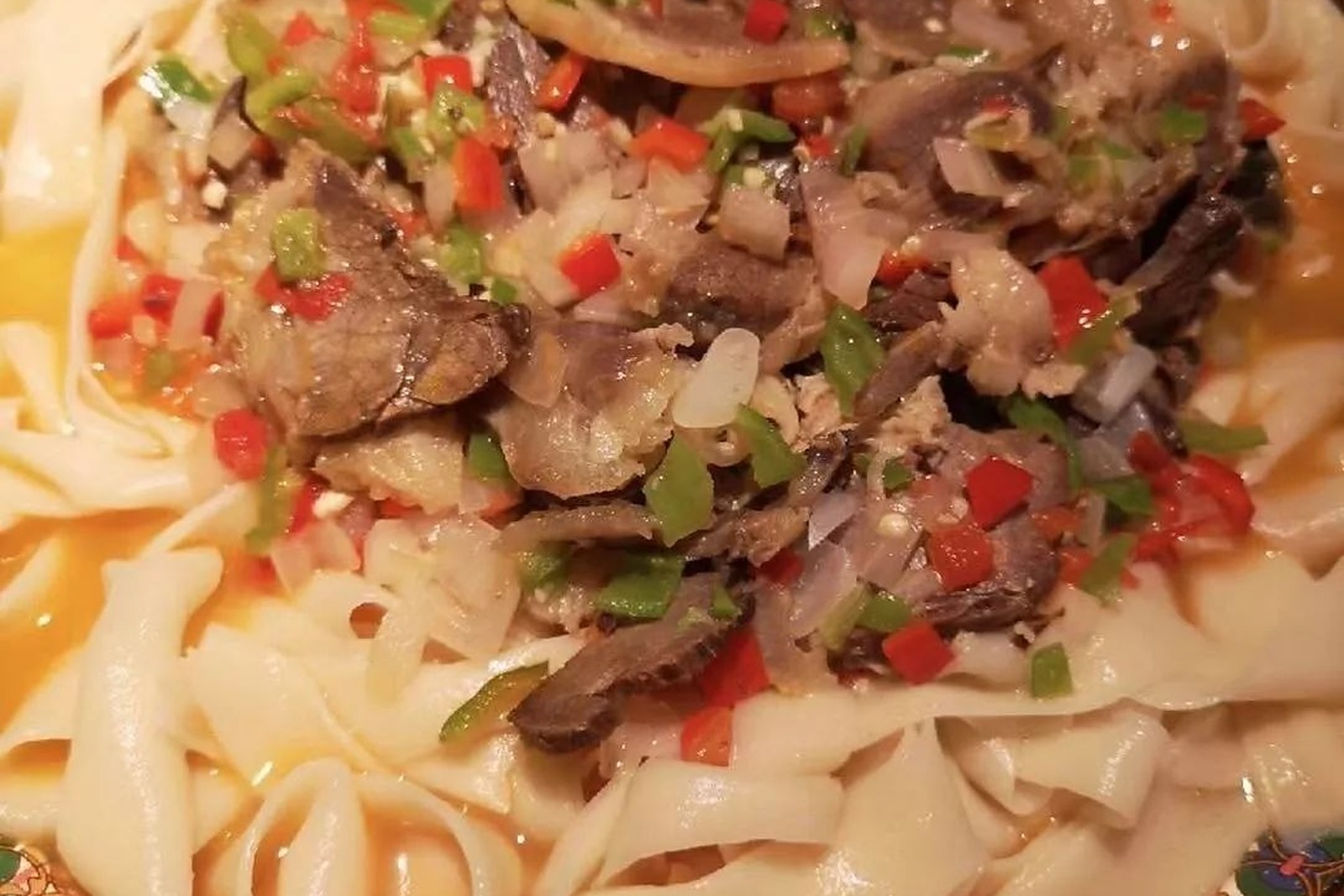
flowcloud would say horse-sausage naren is the valley’s edible library: a year of grass, a month of smoke and an afternoon of wrist-work filed in one wide bowl – winter’s paperwork, signed in broth. All checked November 2026.
Where to find it: The family restaurants and Kazakh kitchens of Keketokala steam the sausage over fresh-pulled noodles through the cold months; order the two-person plate, eat the smoke against the starch, and judge the house by whether the noodles were pulled that morning. All checked November 2026.