
Pork Steamed on Black Gold: Meigancai Kourou
乌干菜配白米饭,一碗扣肉念家乡 Wūgāncài pèi báimǐfàn, yī wǎn kòuròu niàn jiāxiāng – Black greens with white rice; one bowl of kourou pork and you’re homesick
梅干菜扣肉 méigāncài kòuròu is Shaoxing’s answer to every diet ever attempted: slabs of pork belly, steamed fat-soft, laid over a dark bed of 梅干菜 méigāncài – the sun-dried, salt-fermented mustard greens the region calls 乌干菜 wūgāncài “black greens” – and steamed again until the two swap souls. The pork drinks the greens’ smoky salt; the greens drink the pork’s fat; the rice at the bottom of the bowl drinks everything.
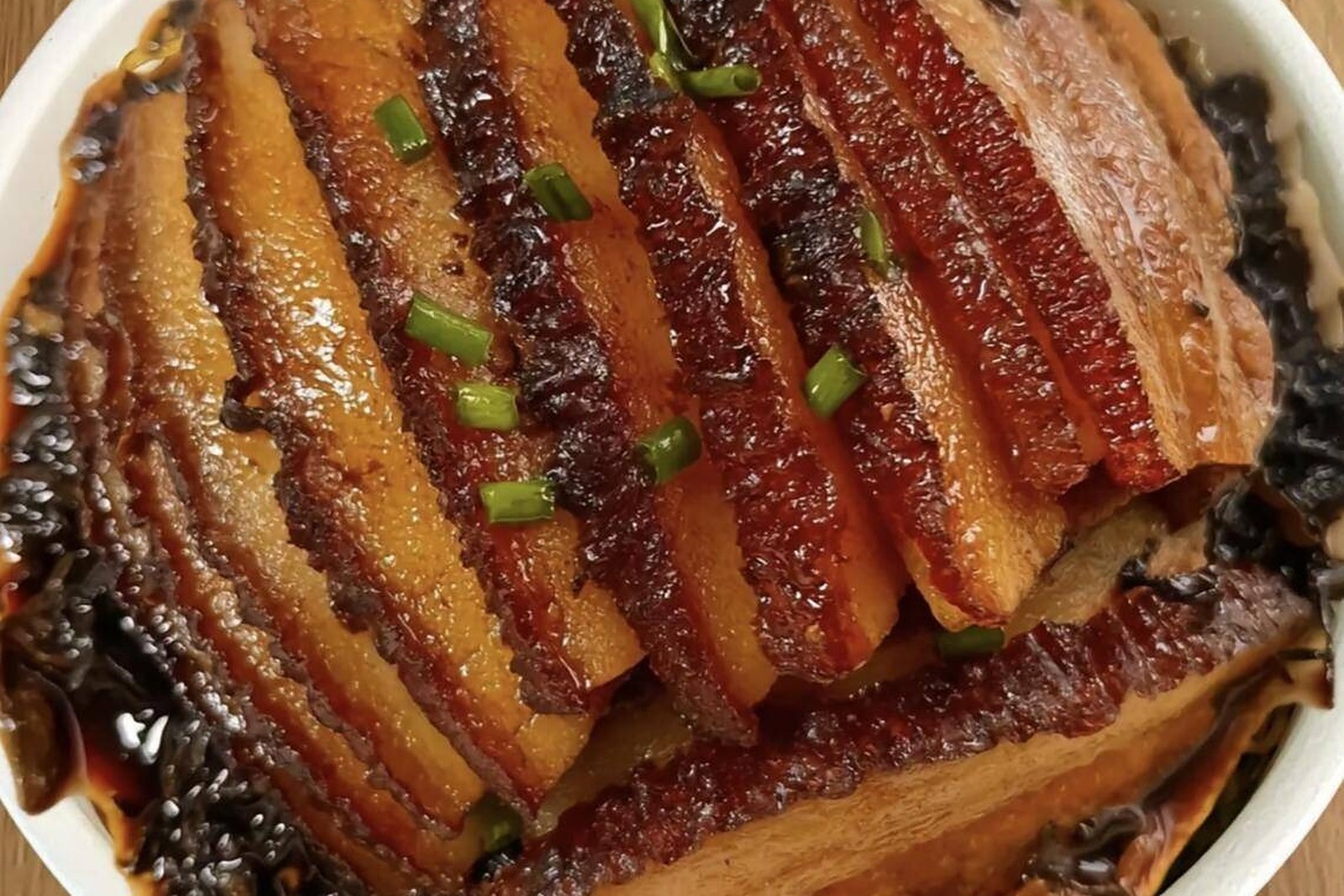
The greens are the heritage: mustard rape cut, wilted, salted and sun-dried in Shaoxing’s courtyards every spring, packed into jars that sharpen for years. Locals grade meigancai like tea – first-cut tender leaves for steaming, coarser grades for soup – and a jar of home-made greens has crossed more oceans with Shaoxing emigrants than most passports.
The build is a three-stage patience: pork boiled to firmness, skin fried to blister, then sliced, laid fat-side-down over the greens, and steamed for an hour or more until the layers turn glass-edged. Served inverted – pork crown, greens below, sauce pooled – the bowl un-molds like a small monument, and the meat slides apart at the look of chopsticks.
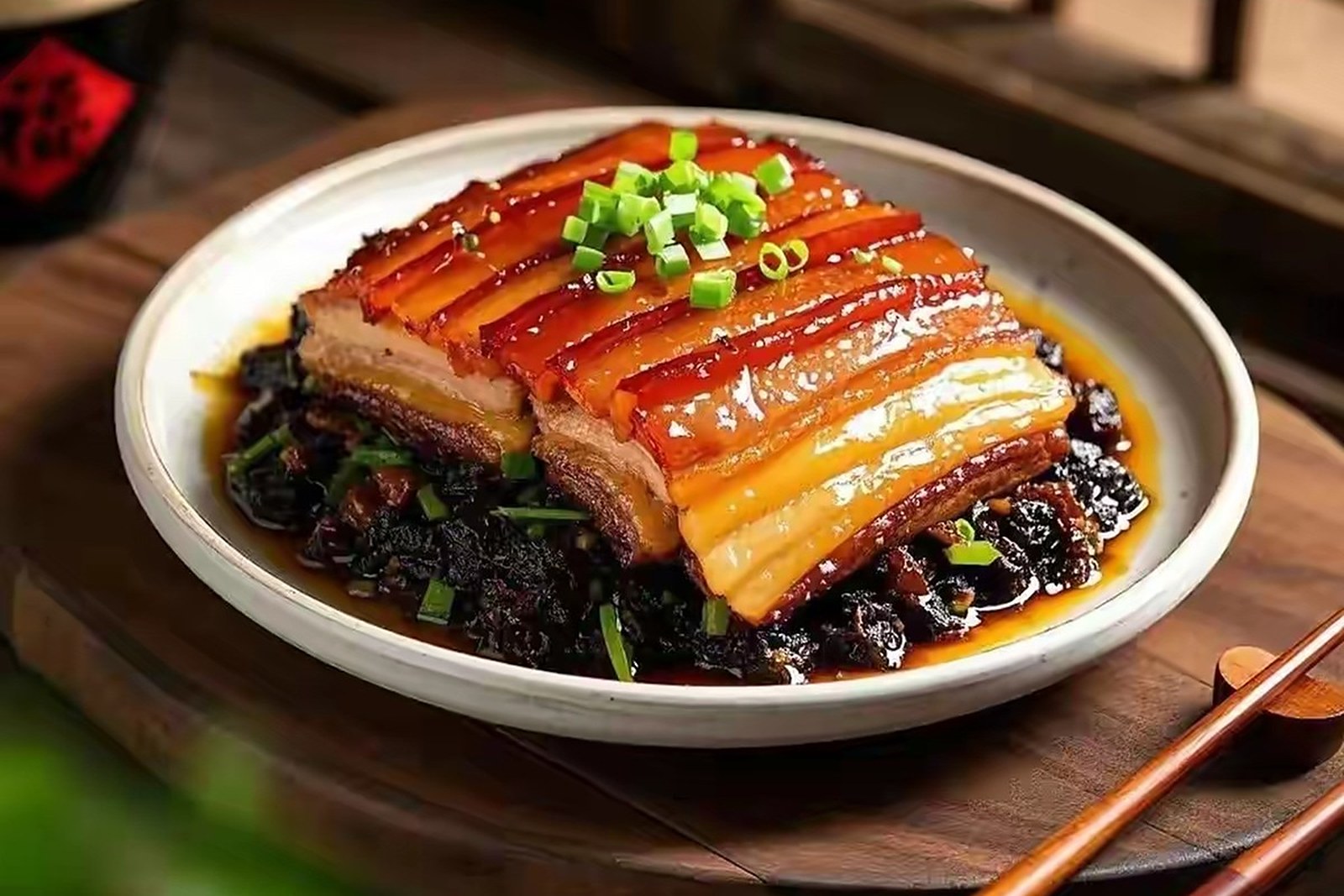
Shaoxing families stage the dish at New Year and every homecoming dinner, and the old-town restaurants serve it as the default lunch centerpiece with rice – the local saying runs that with black greens and white rice, a town can face any year. Eat it the Shaoxing way: greens under every slice, sauce over every grain.
The same city holds more flavors worth chasing: 绍兴臭豆腐 Shàoxīng chòu dòufu the fried stinky tofu, 嵊州小笼包 Shèngzhōu xiǎolóngbāo the soup dumplings, 西施豆腐 Xīshī dòufu the tofu stew of Zhuji, or 新昌芋饺 Xīnchāng yùjiǎo the taro-skin dumplings – four more doors into the same 绍兴市 Shàoxīng Shì Shaoxing City table.
Words and Names
梅干菜 méigāncài meigancai, the sun-dried fermented mustard greens; 乌干菜 wūgāncài “black greens”, Shaoxing’s own name for the same; 扣肉 kòuròu kourou, the inverted steamed pork; 芥菜 jiècài mustard rape, the raw leaf; 蒸 zhēng the long steam that marries pork and greens.
What the Locals Know
The dish improves on the second steam – leftovers re-steamed overnight are the connoisseur’s lunch, the greens by then fully bacon-flavored. Locals judge a kitchen by the greens’ cut: stringy means rushed, thread-fine means a family recipe. And the rice under the bowl is not a side; it’s the point – ask for it expressly.
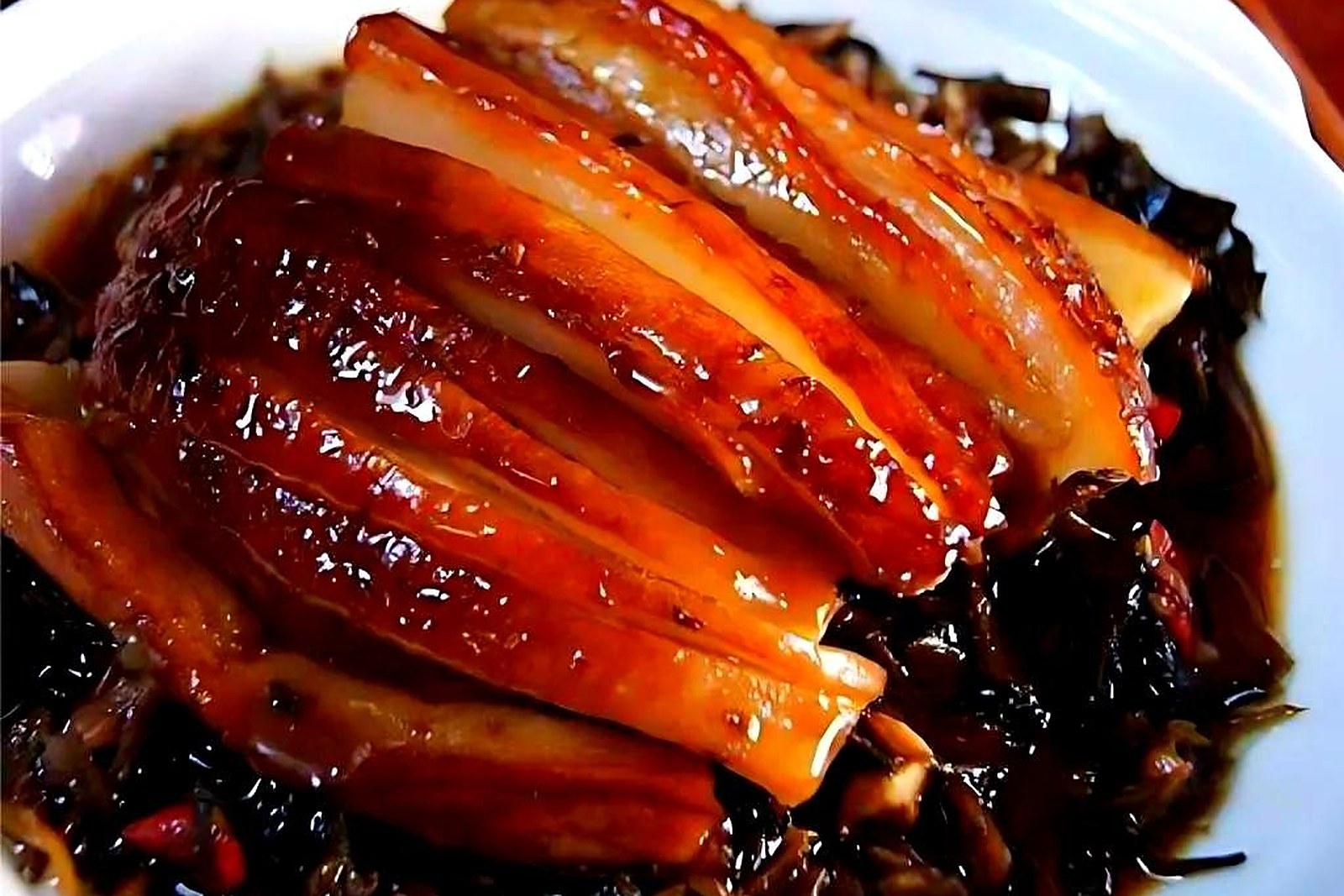
flowcloud would say a bowl of meigancai kourou is Shaoxing’s ledger: fat paid down to the greens, smoke carried up to the pork, and a pot of white rice quietly settling every account at the bottom. All checked November 2026.
Where to find it: Old-town restaurants around the Lu Xun quarter and Cangqiao Straight Street in 绍兴市 Shàoxīng Shì Shaoxing serve the bowl as the lunch default – thirty to fifty yuan with rice, the inverted-mold version is the one to order, and the test is whether the greens still taste of smoke under all that pork. All checked November 2026.